Vilsandi maastik — History & Facts
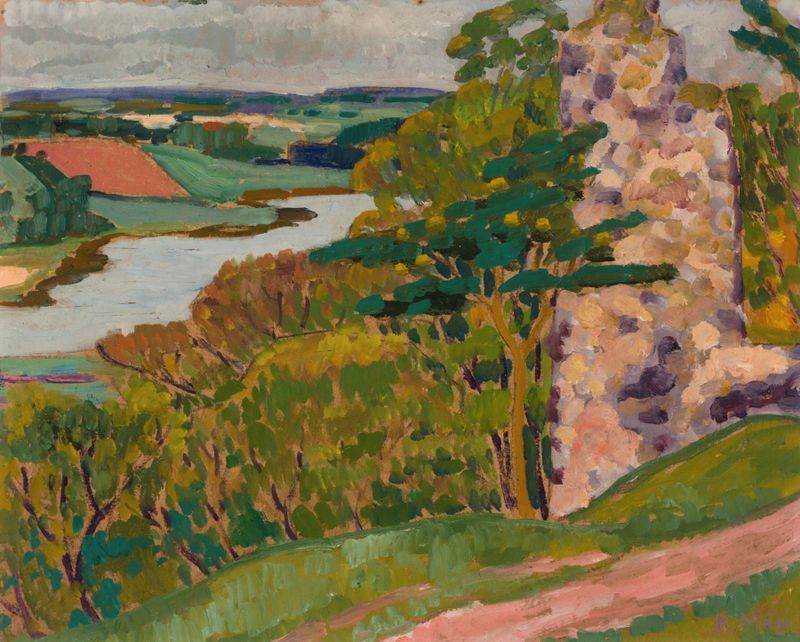
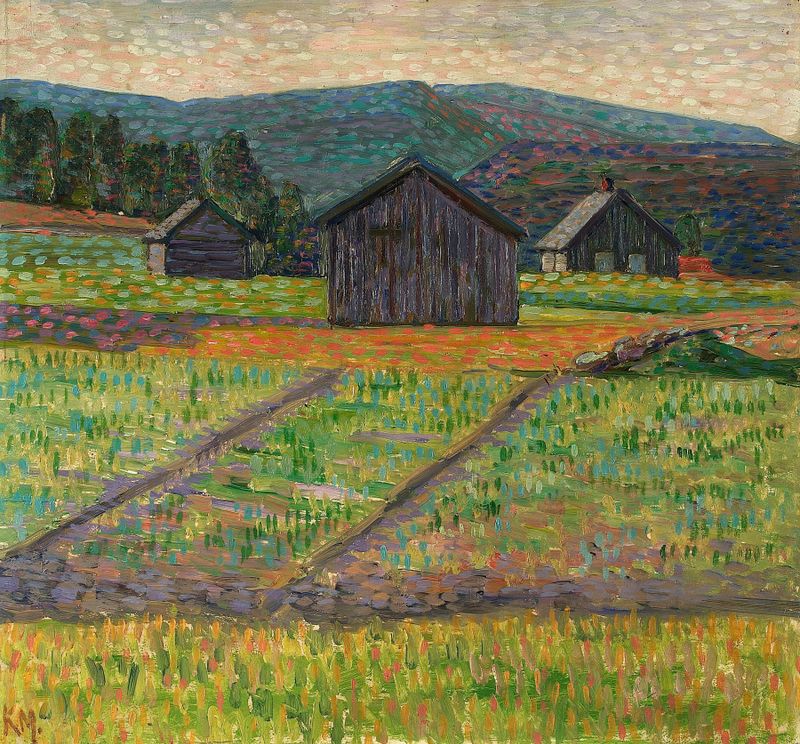
Could a single brushstroke hold eternity? In Konrad Mägi's Vilsandi maastik, each gentle stroke whispers of longing, inviting us into a world where the landscapes speak of more than mere geography—they echo the heart's desires. Look to the foreground, where the vibrant greens of the grass seem to dance under the weight of the sky. The light spills across the canvas in soft, hazy layers, illuminating the delicate interplay between land and sea. Notice the horizon, where deep blues and ethereal whites blend, creating a fragile boundary that beckons the eye to wander beyond what is seen, into the essence of the landscape itself. This work captures an emotional tension as it juxtaposes the serene stability of the earth with the unfathomable vastness of the ocean.
The blurred edges suggest a yearning for connection, an exploration of the known and the unknown. Subtle contrasts between dark, shadowy areas and luminous highlights evoke a sense of nostalgia, as if the artist himself is reminiscing about a home that transcends time and space. Created between 1913 and 1914, this piece is significant in Mägi’s evolution as an artist, during a period of personal introspection amidst the broader struggles of the early 20th century. Living in Estonia, he was navigating the complexities of national identity in art, striving to capture the spirit of his homeland while drawing from the influences of European modernism.
This painting embodies that search, a bridge between the tangible and the ethereal.