Violin and Playing Cards on a Table — History & Facts
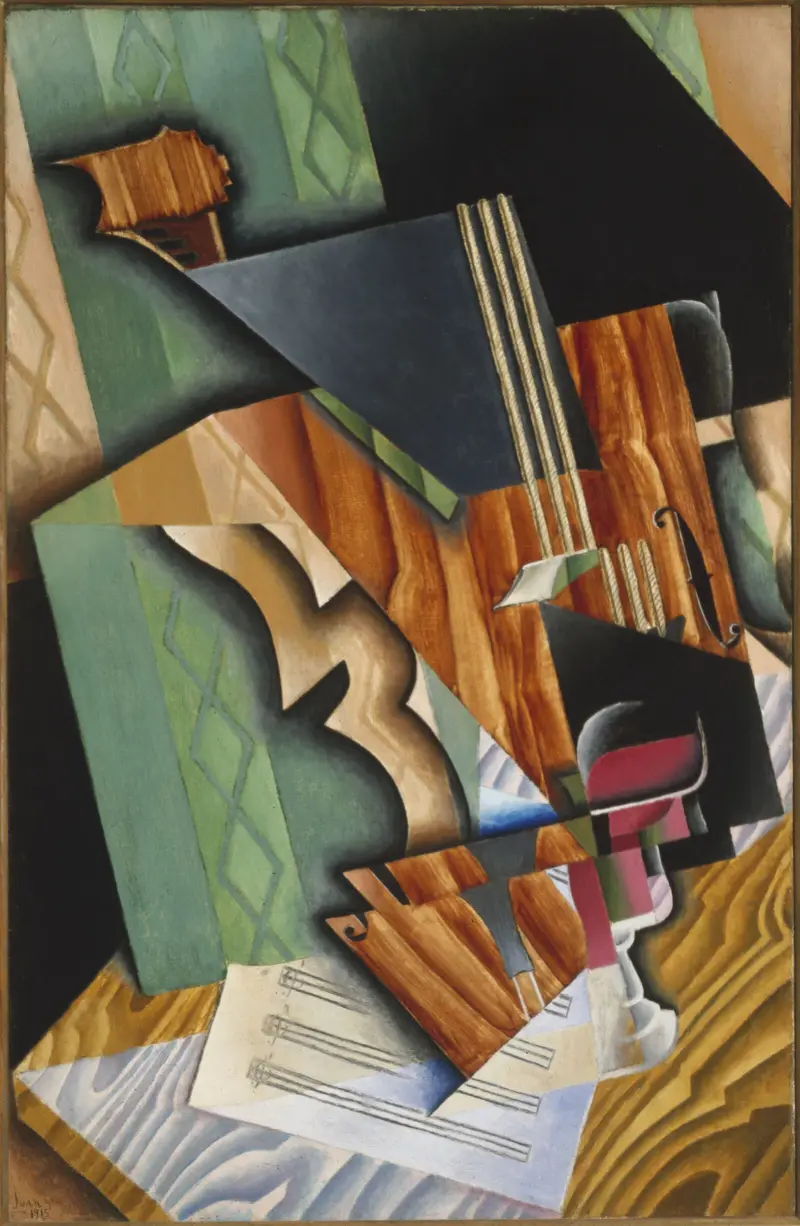
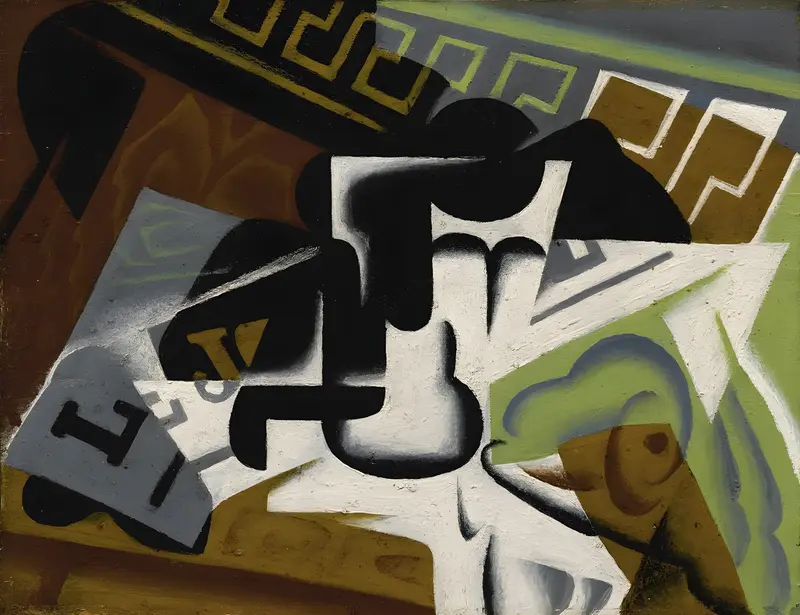
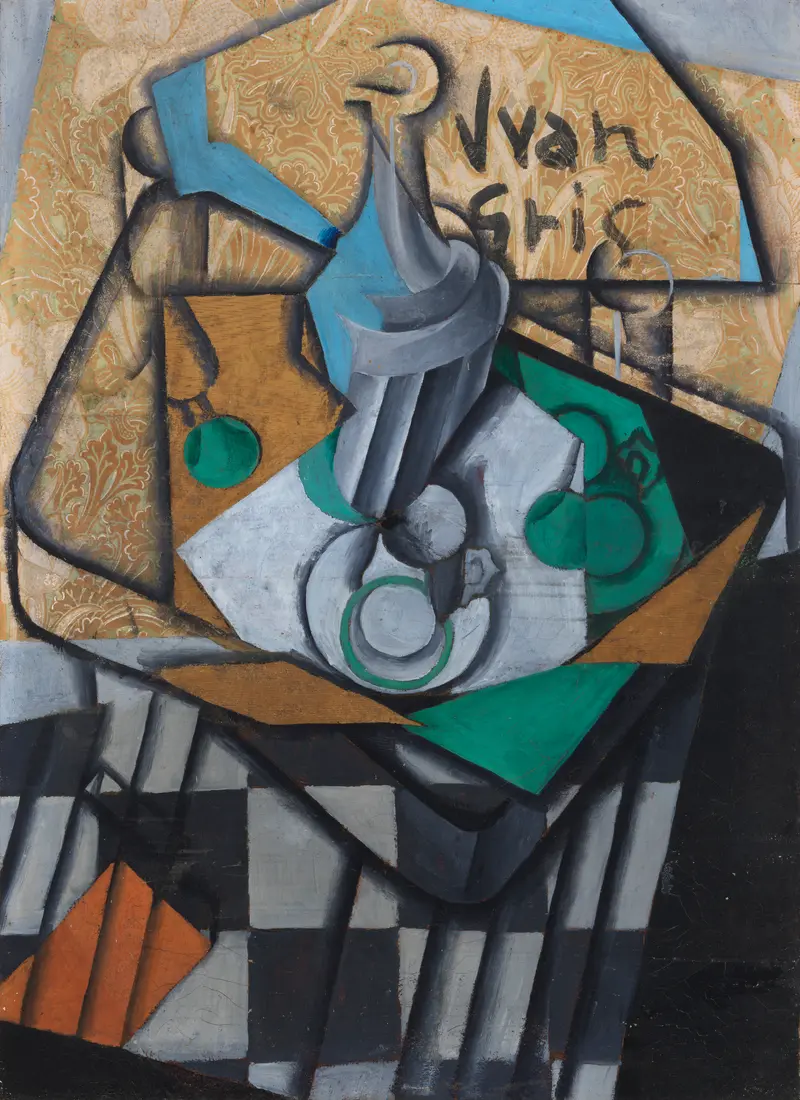
A violin, several playing cards, and a table are depicted in this oil on canvas by Juan Gris, dated 1913. The composition arranges these objects through a series of overlapping geometric forms, using a palette dominated by ochre, red, green, blue, and black. The background features a patterned red and orange surface, while the tabletop is rendered in stylized wood grain, supporting the cards and other angular fragments. The scene is constructed with the flat, interlocking planes characteristic of Cubism, breaking down the forms of the violin and cards into abstracted shapes.
The violin is identifiable by its striped wood texture and curved outline, partially obscured by blue and black planes. The playing cards are clearly rendered, with visible suit symbols, and the objects cast simplified shadows that reinforce the sense of depth within the shallow picture space. Violin and Playing Cards on a Table belongs to the Metropolitan Museum of Art in New York. Painted in 1913, this work belongs to a period when Juan Gris was actively contributing to the development of Cubism in Paris.
The painting exemplifies Gris’s analytical approach to still life, integrating everyday objects into a fragmented pictorial structure.