
Art movement · c. 1907–1914 · Paris
Cubism Art and Paintings
Cubism is an art movement that began in Paris around 1907–08, when Pablo Picasso and Georges Braque started breaking objects and figures into flat geometric planes seen from several viewpoints at once. It lasted until about 1914 and was taken up by Juan Gris, Fernand Léger, Albert Gleizes and Robert Delaunay in Paris, by Bohumil Kubišta in Prague, and in Russia by Kazimir Malevich and Lyubov Popova, who combined it with Futurism.
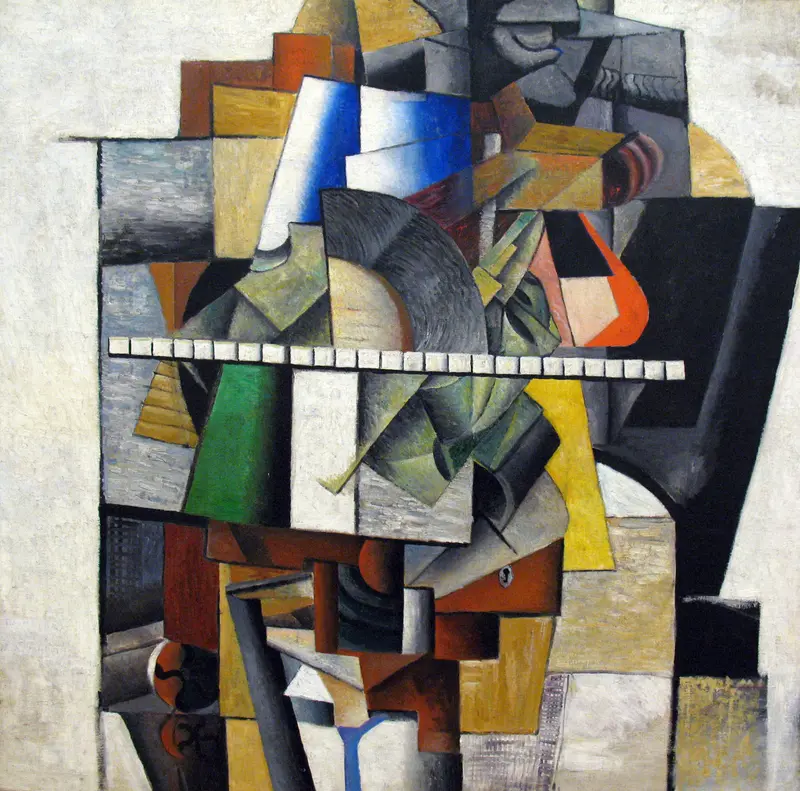
Picasso died in 1973 and Braque in 1963, and in Europe copyright lasts until 70 years after the artist's death, so their paintings are still protected; Tate and the Met still show them with a copyright line. They are named here but not shown. The famous paintings below are by Cubists whose work is in the public domain, such as Malevich's The Knife Grinder, in which one man's hands and feet repeat as he works.
Browse 247 Cubism paintings and artworks below, all public domain and free to download.
Selected and written by Pavel MazuelasUpdated November 5, 2026
Part of Art Movements and Painting StylesRelated: De Stijl, Modernism, Famous Still Life Paintings
All Cubism paintings and artworks
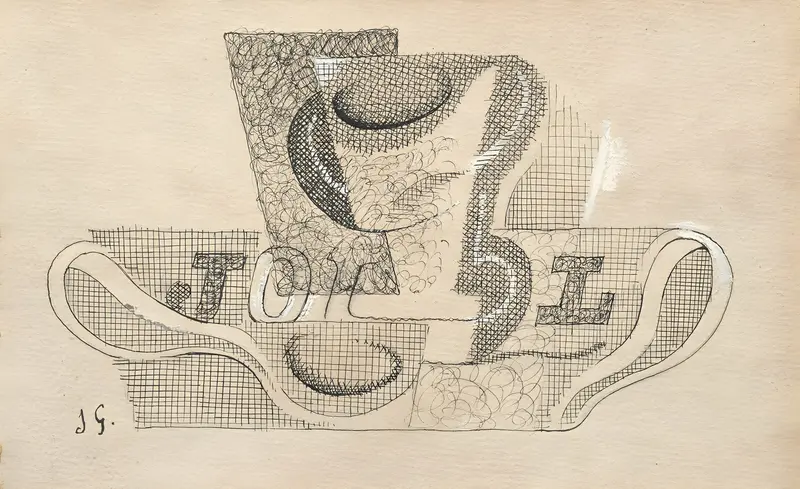
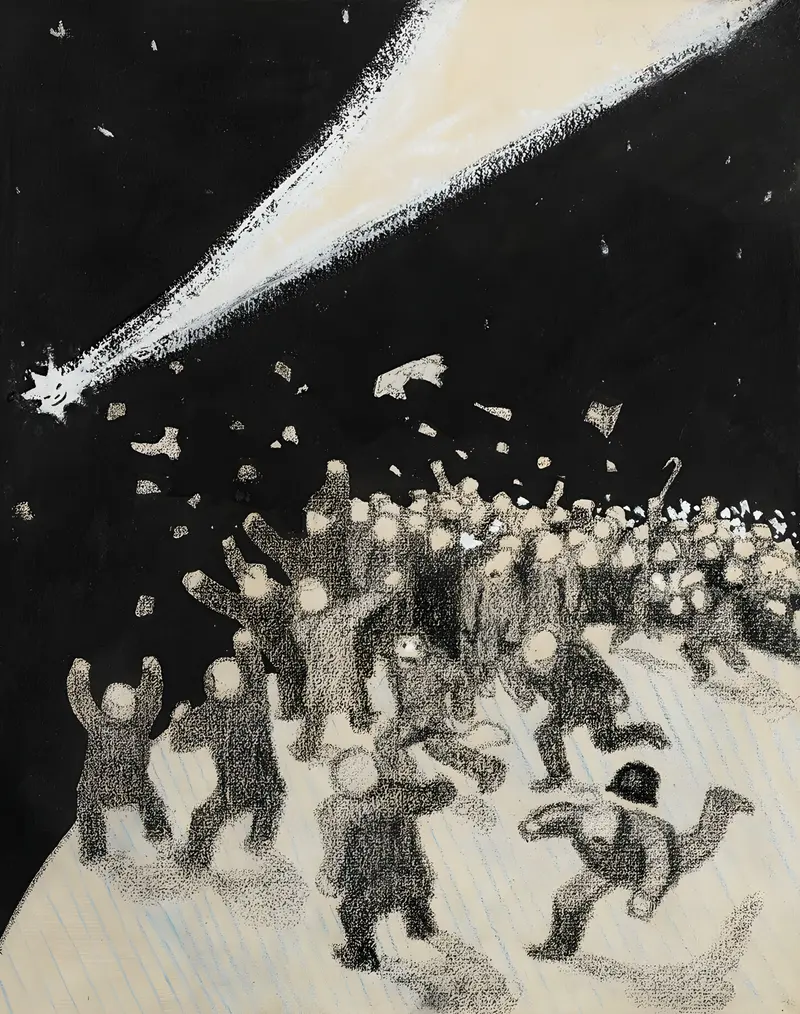
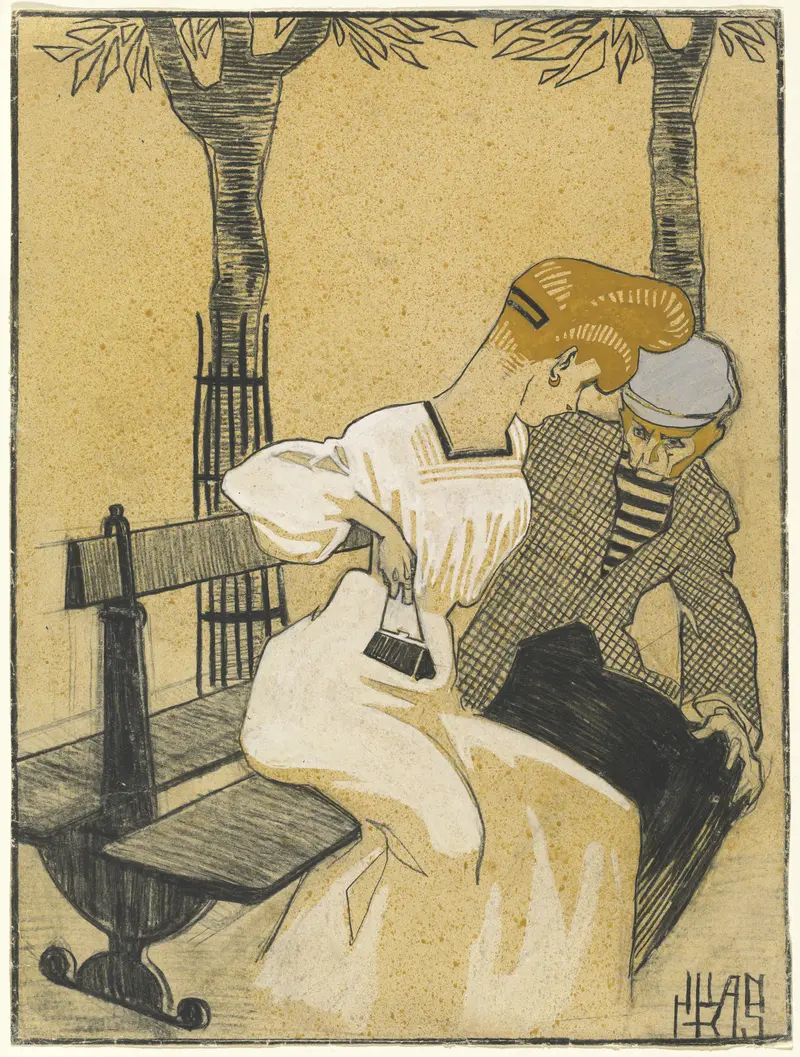
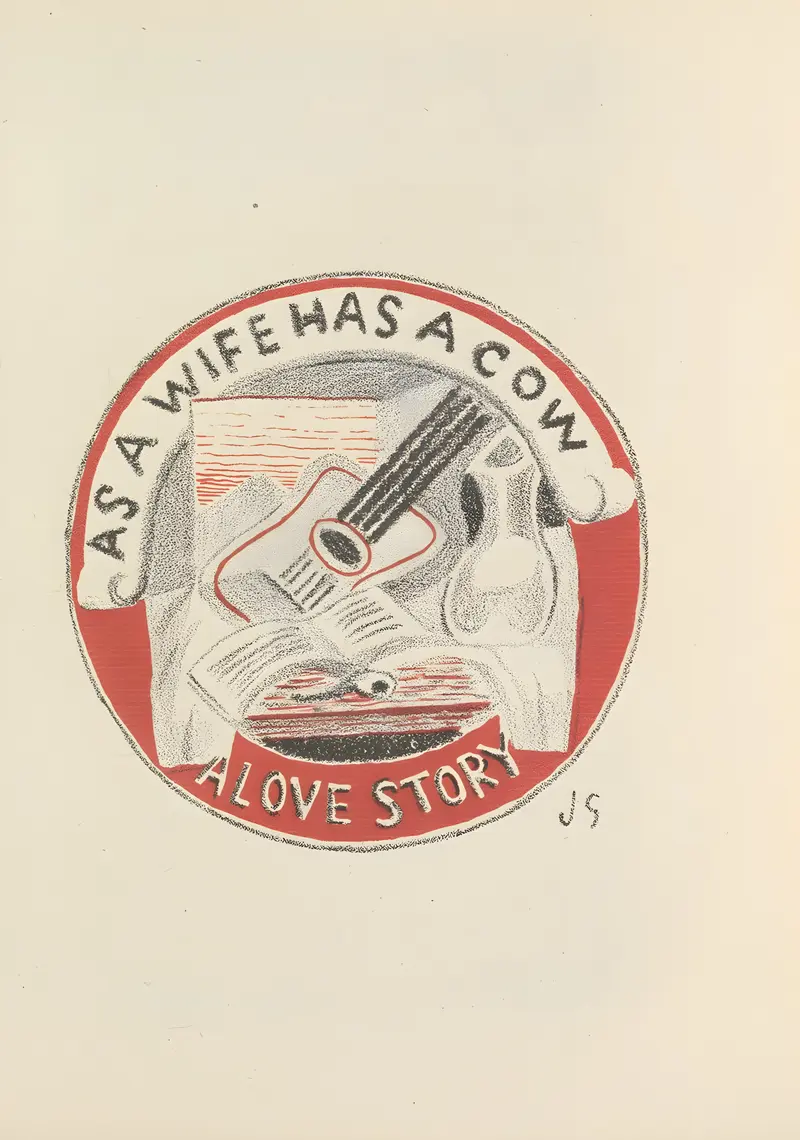
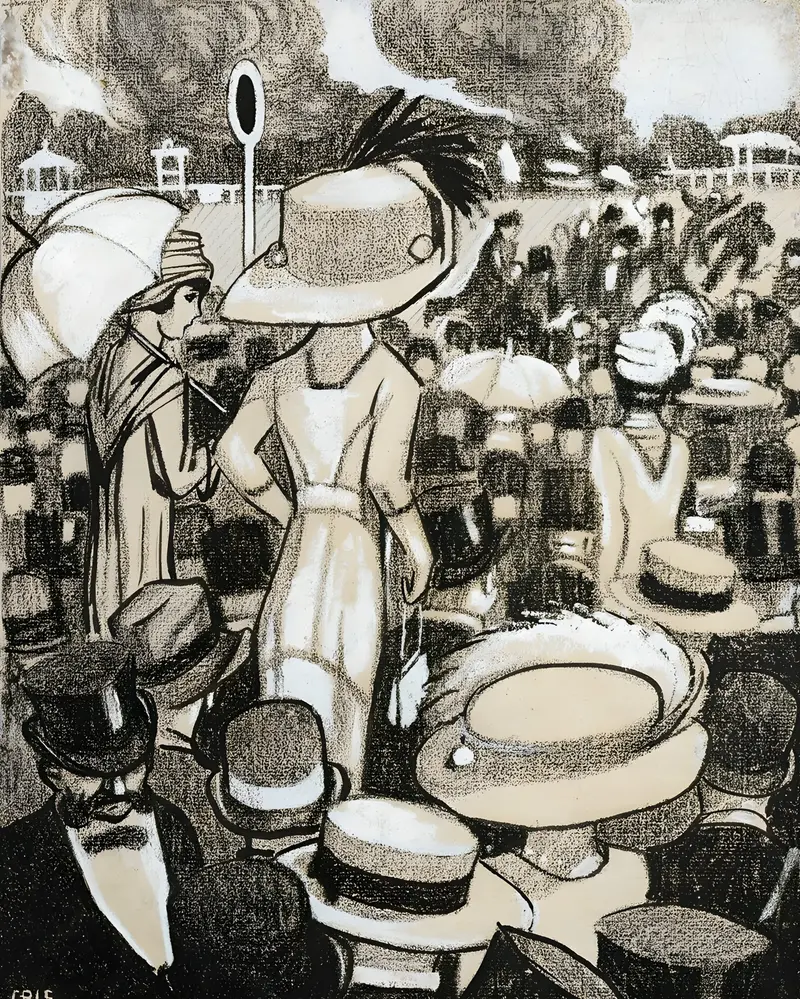
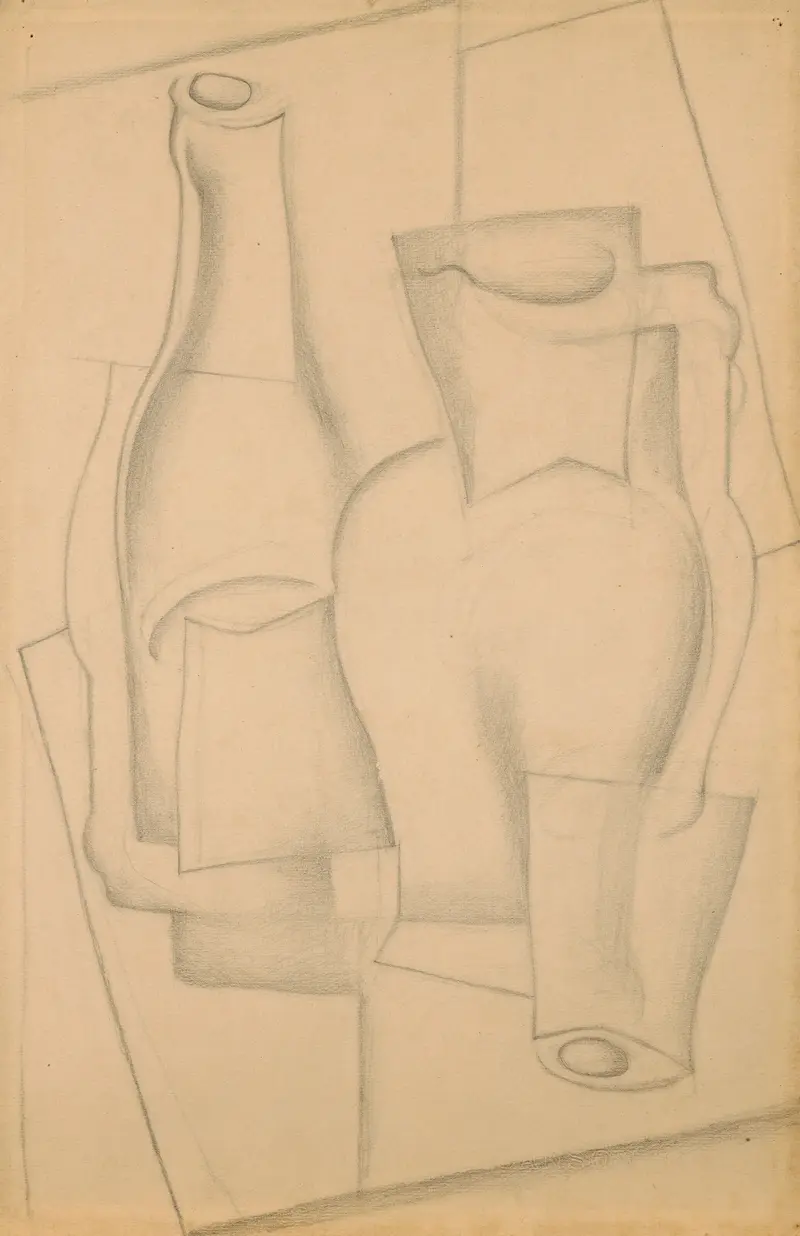
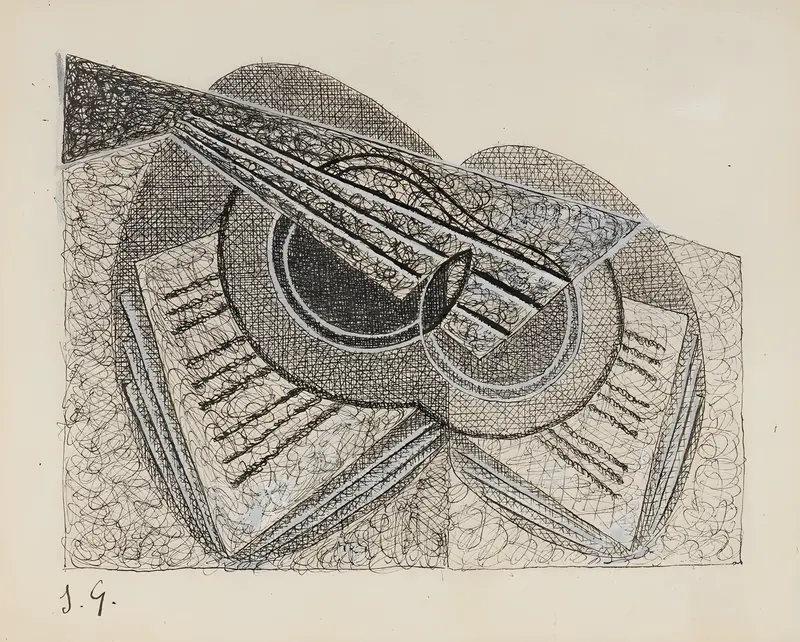
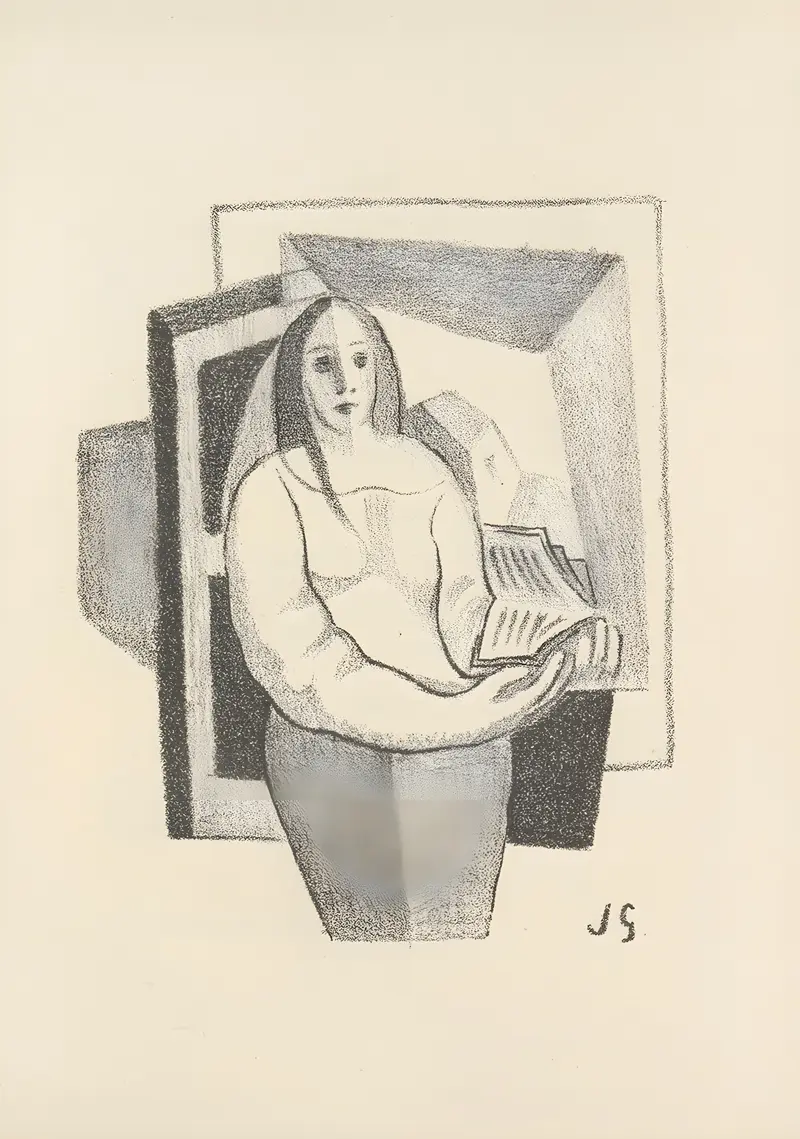
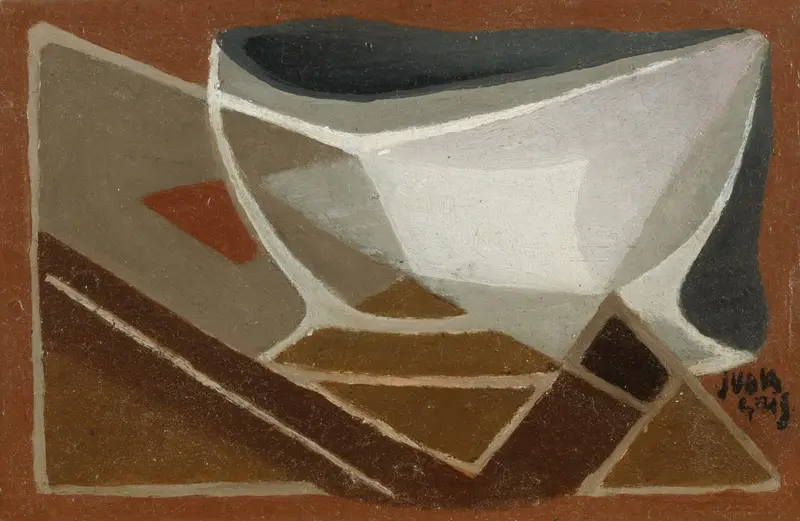
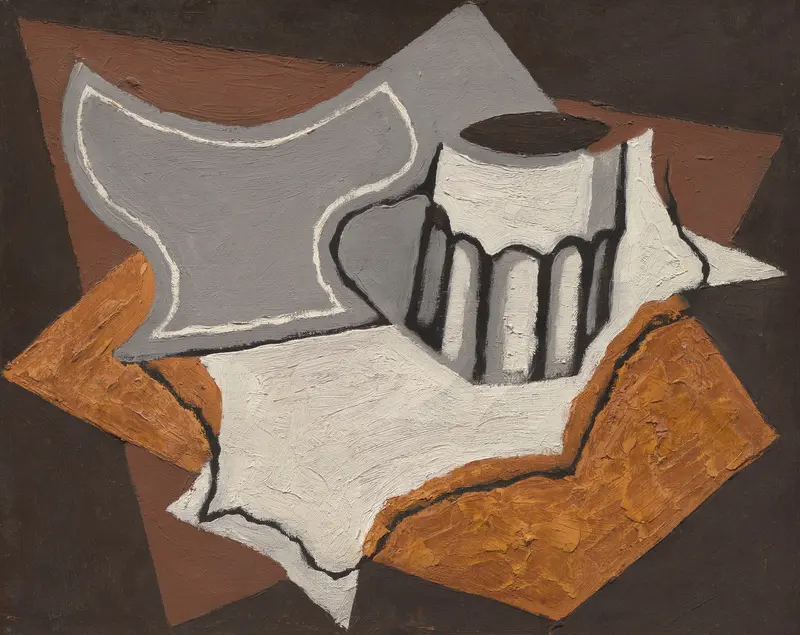
Still lifes, figures, abstract compositions, portraits, scenes of modern life and landscapes, with some drawings. All public domain, free to download.






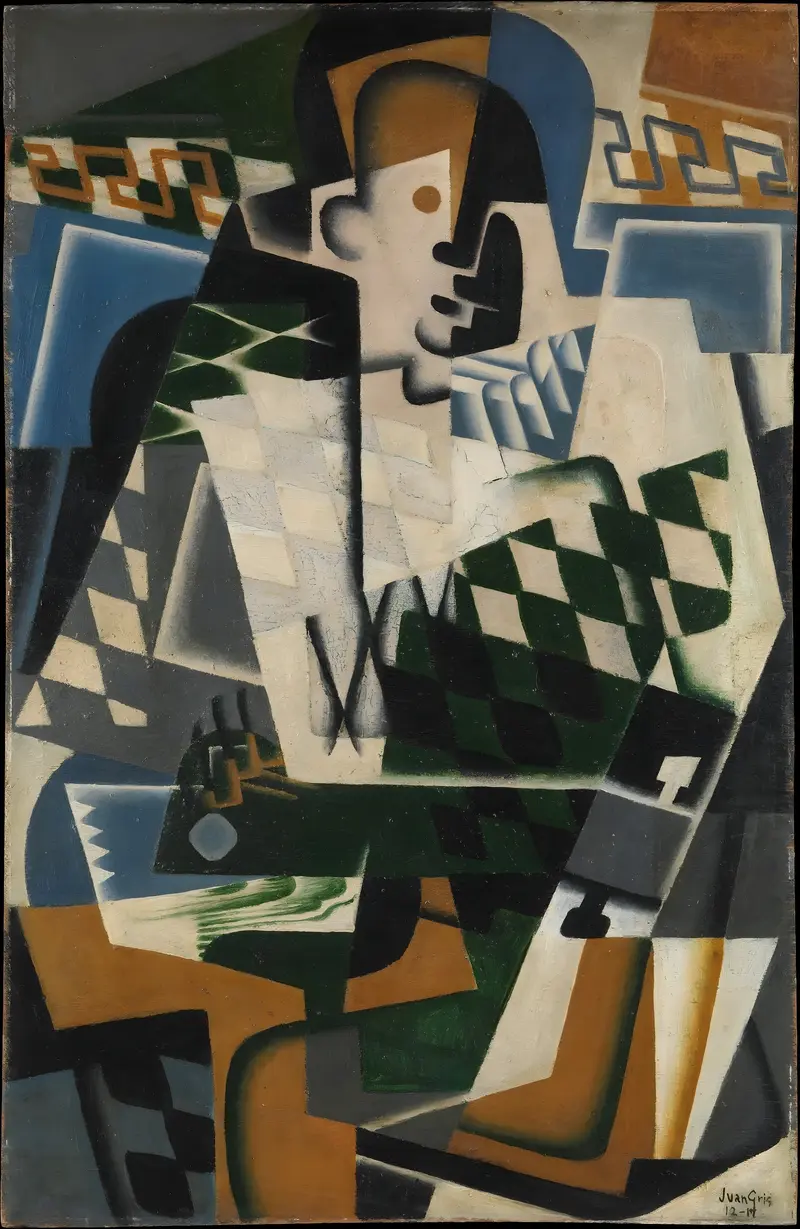
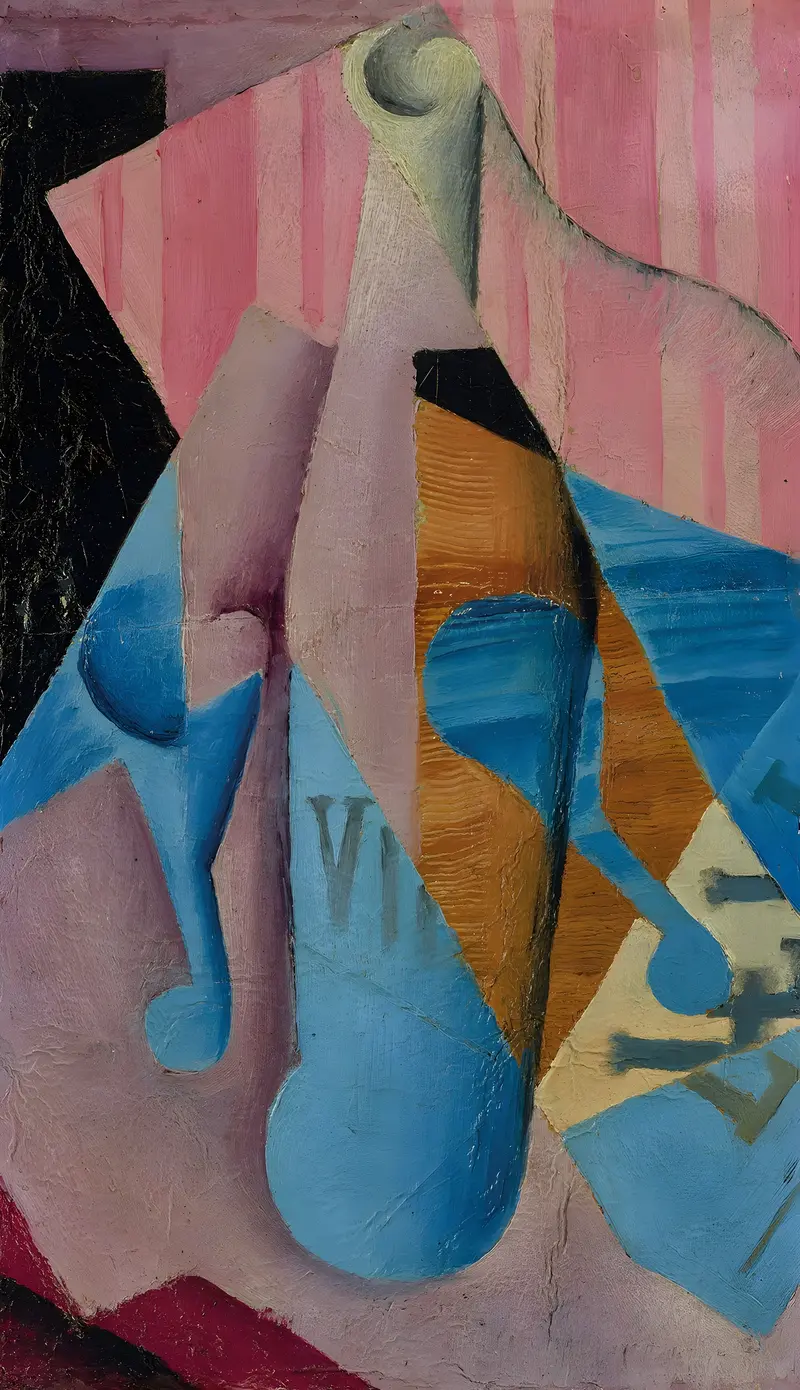
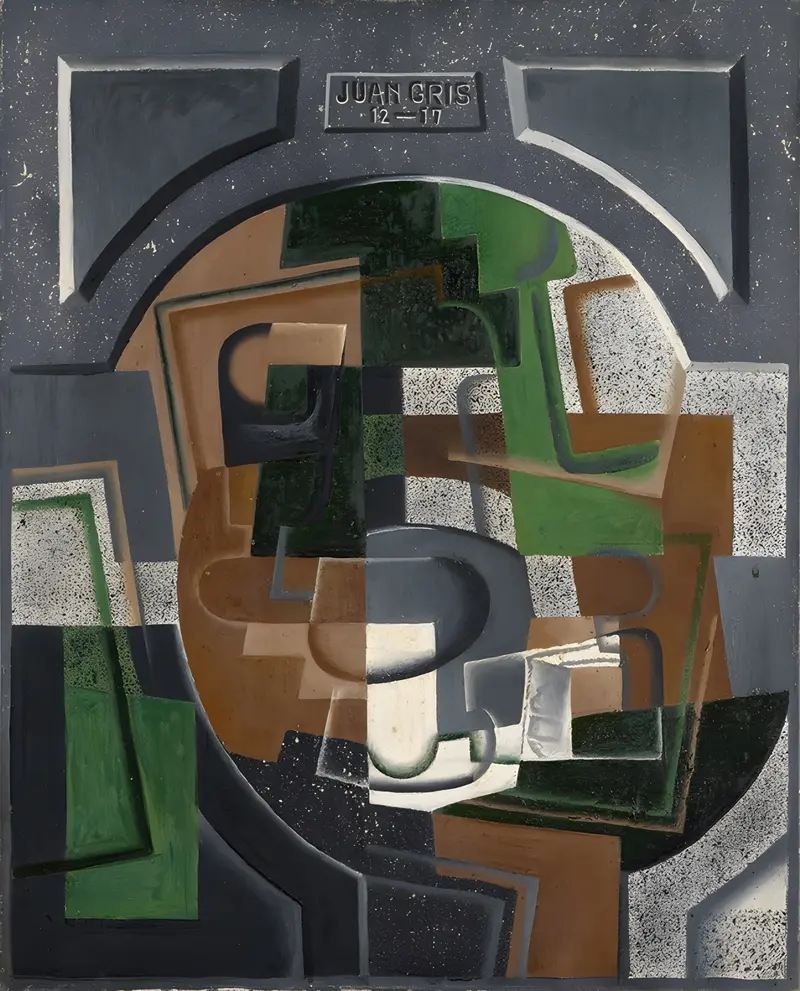
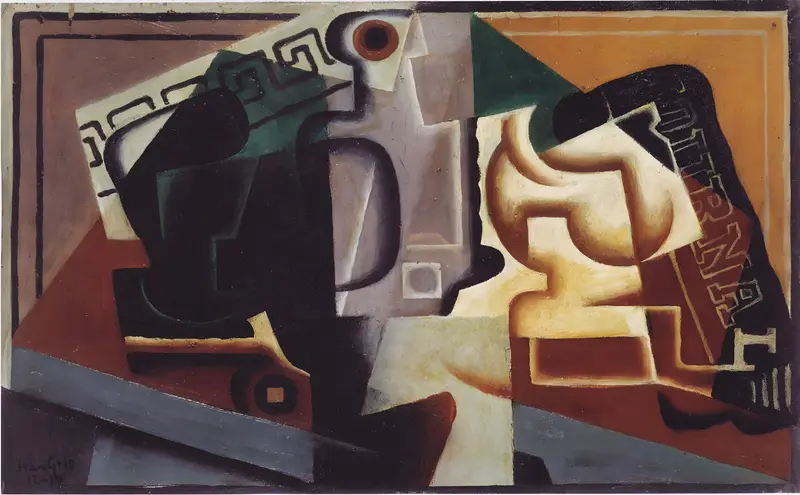
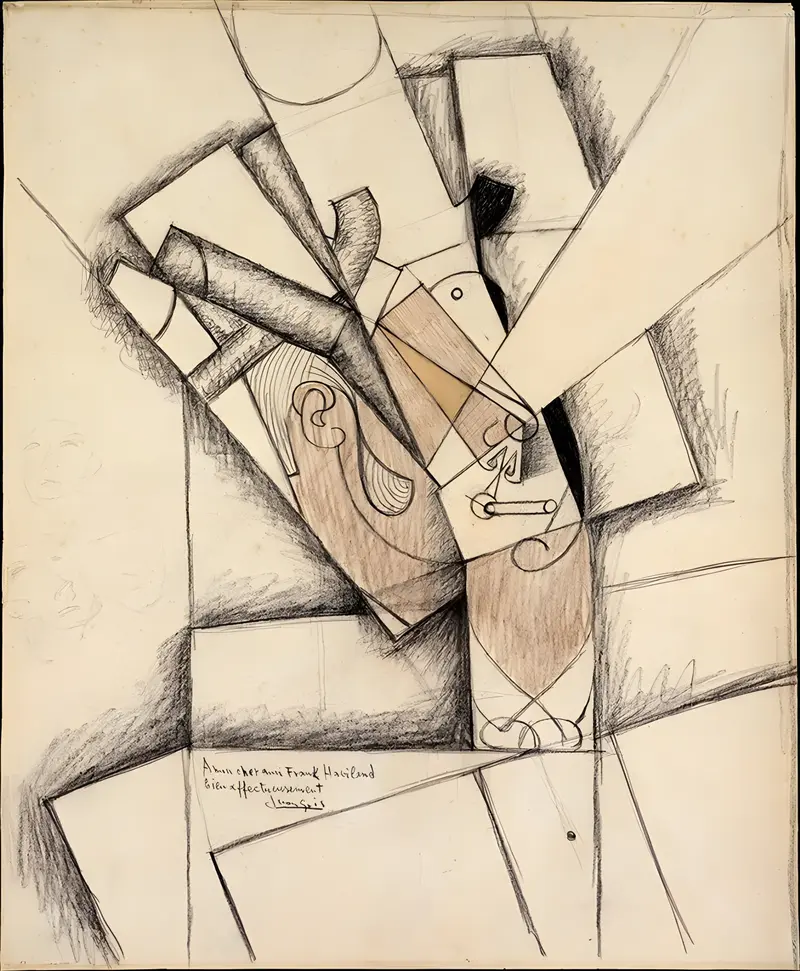
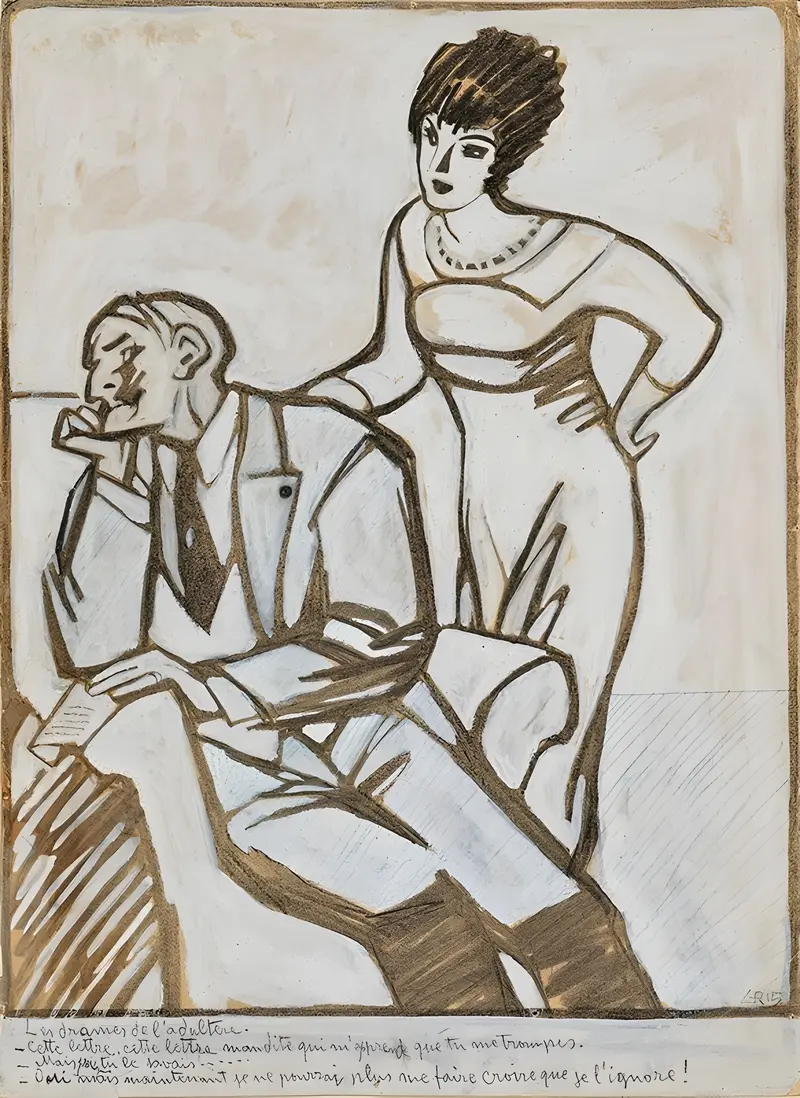


Famous Cubism paintings
The best-known Cubist paintings by artists whose work is in the public domain. Click any painting to see it up close and download it free.
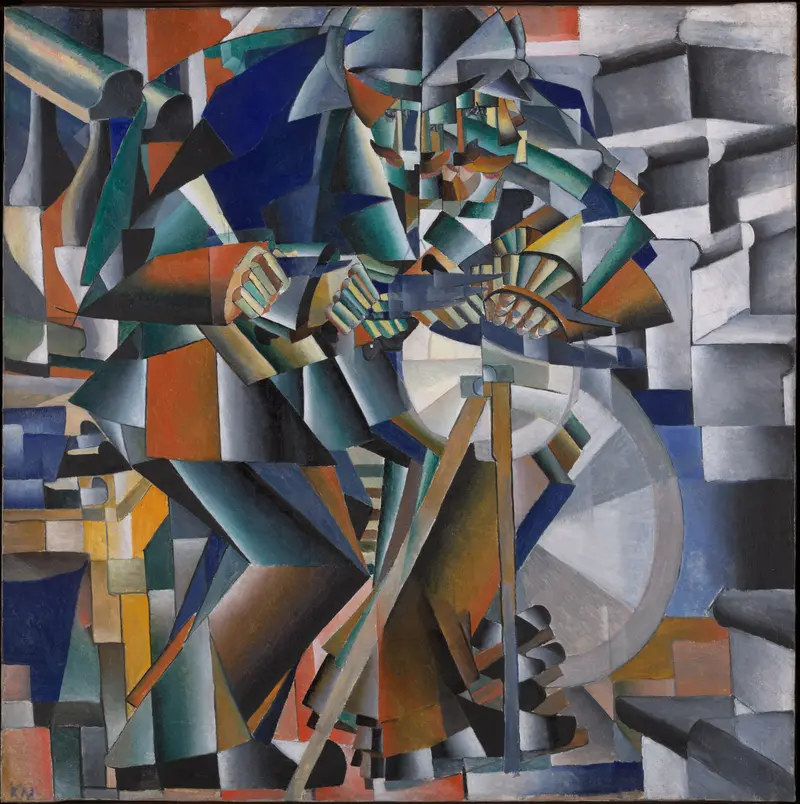 The Knife Grinder (Principle of Glittering)Kazimir Malevich
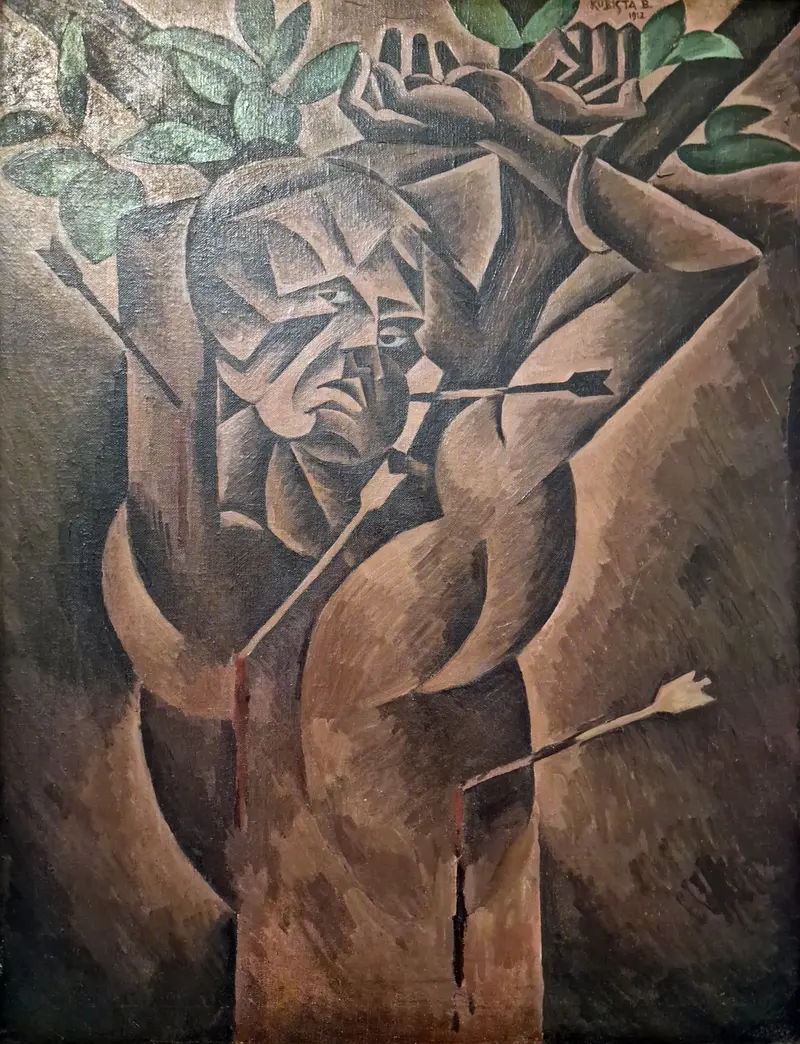 Saint SebastianBohumil Kubišta
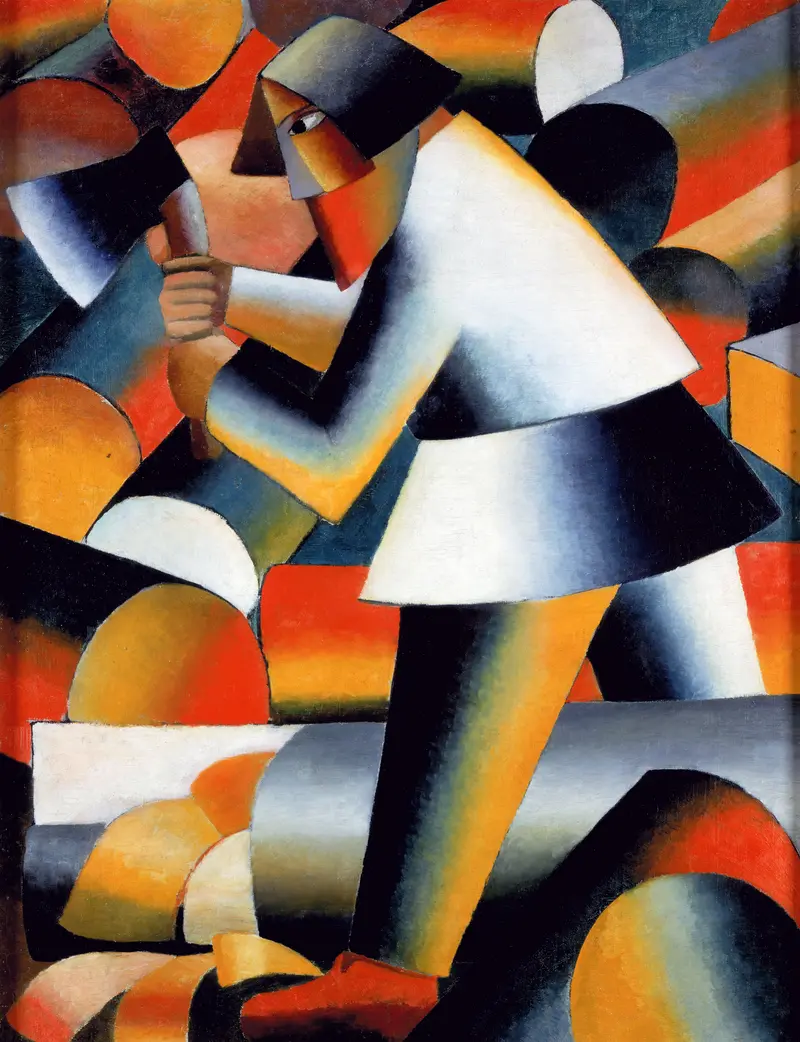 The WoodcutterKazimir Malevich
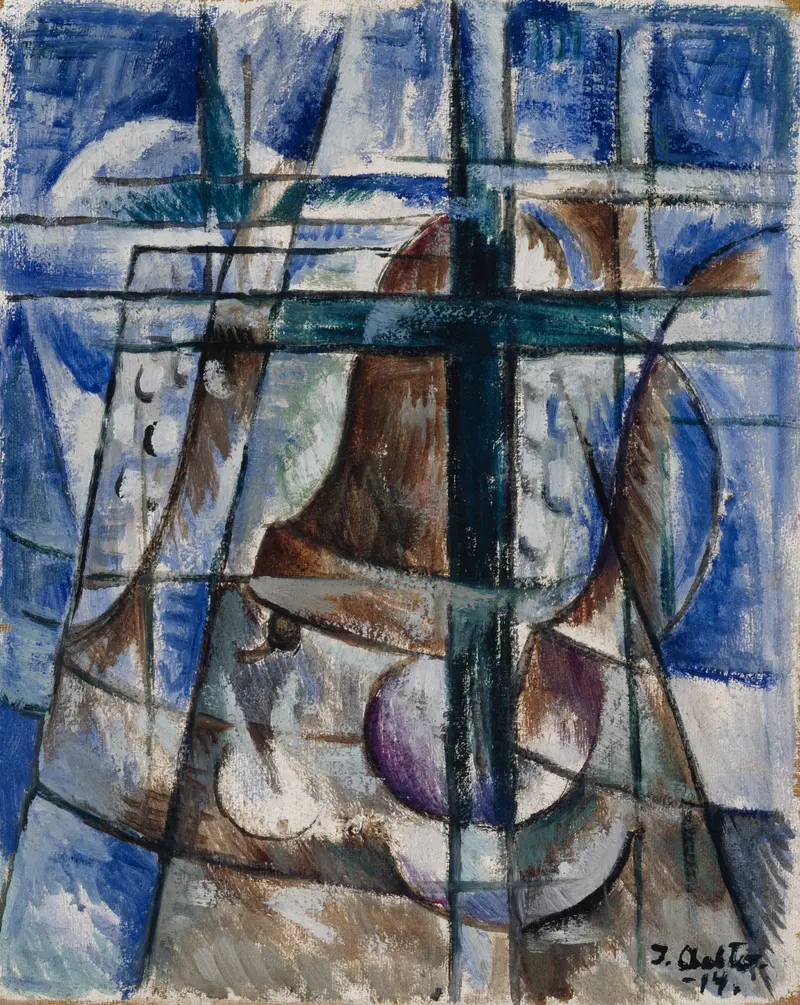 The BellsIlmari Aalto
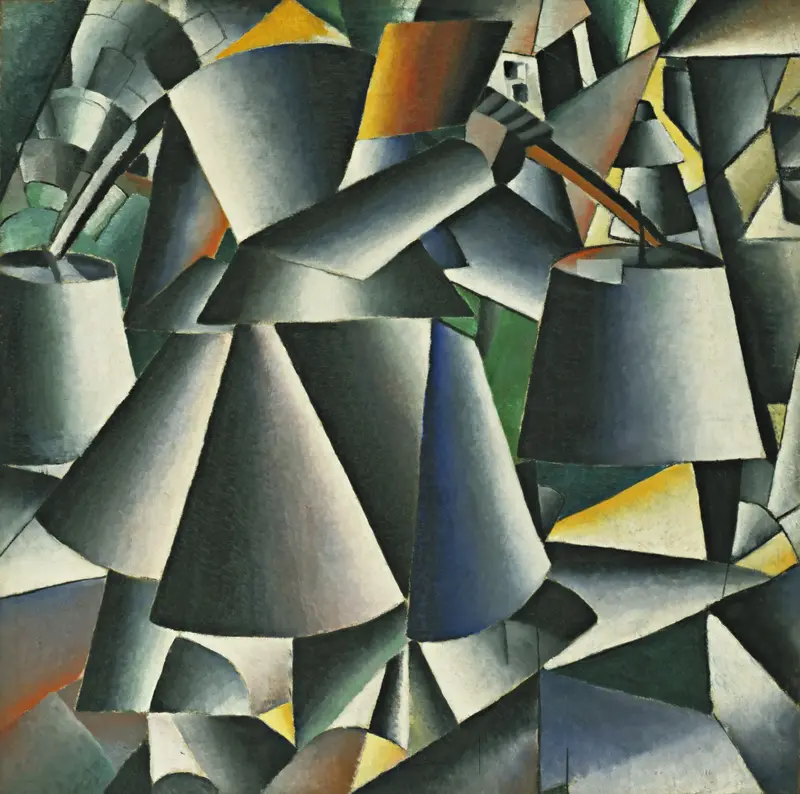 Woman with Pails: Dynamic ArrangementKazimir Malevich
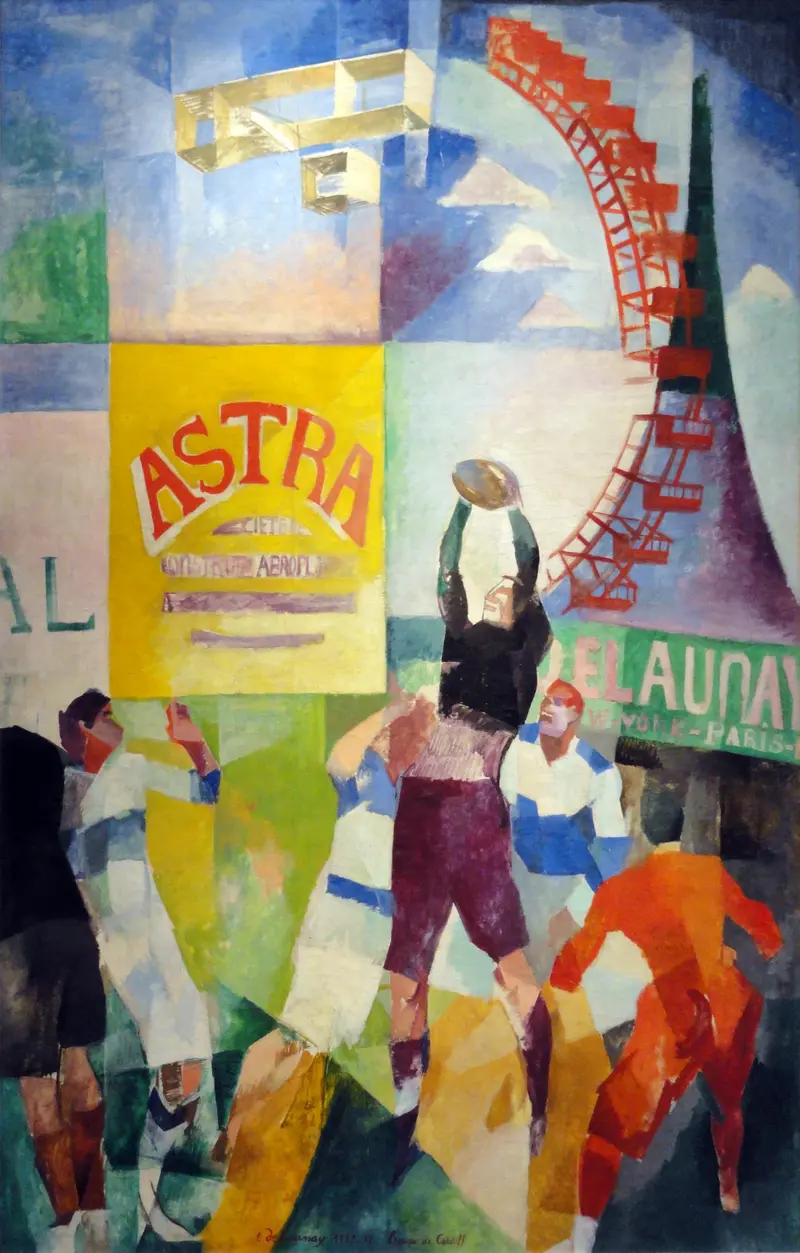 The Cardiff Team (L'Équipe de Cardiff)Robert Delaunay
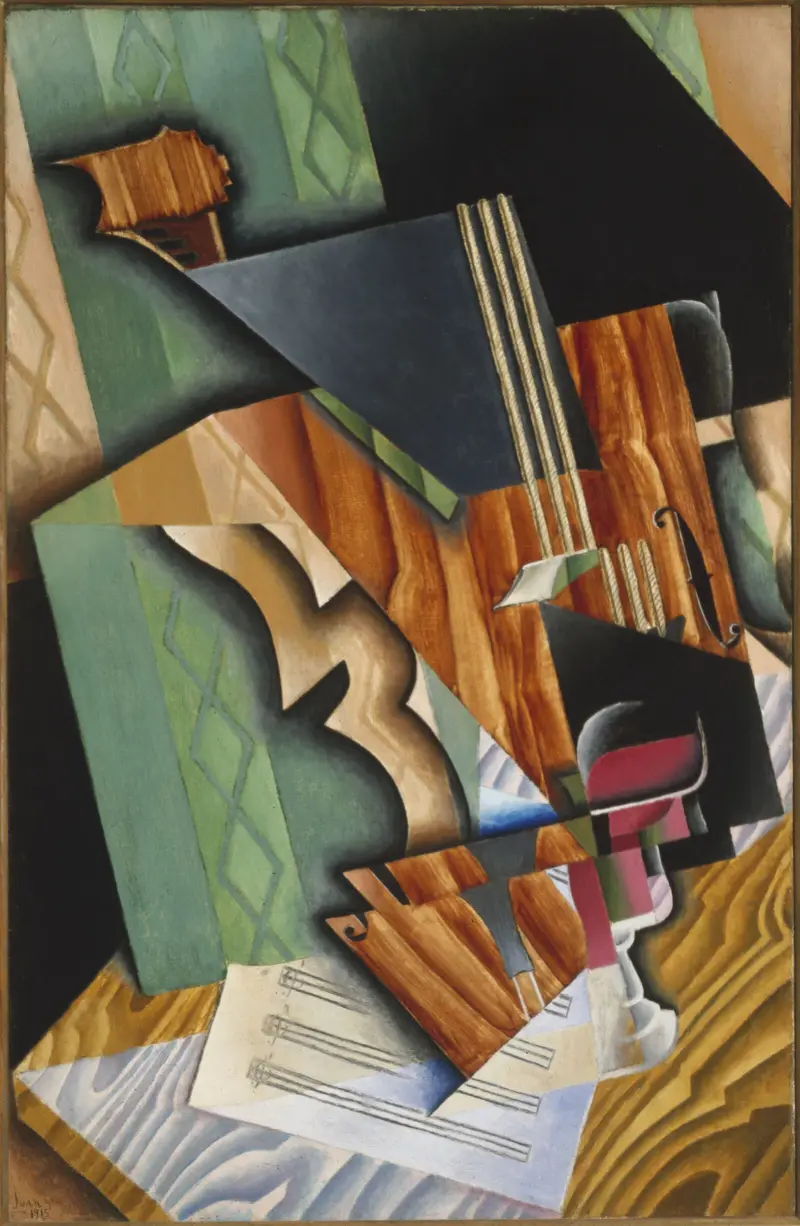
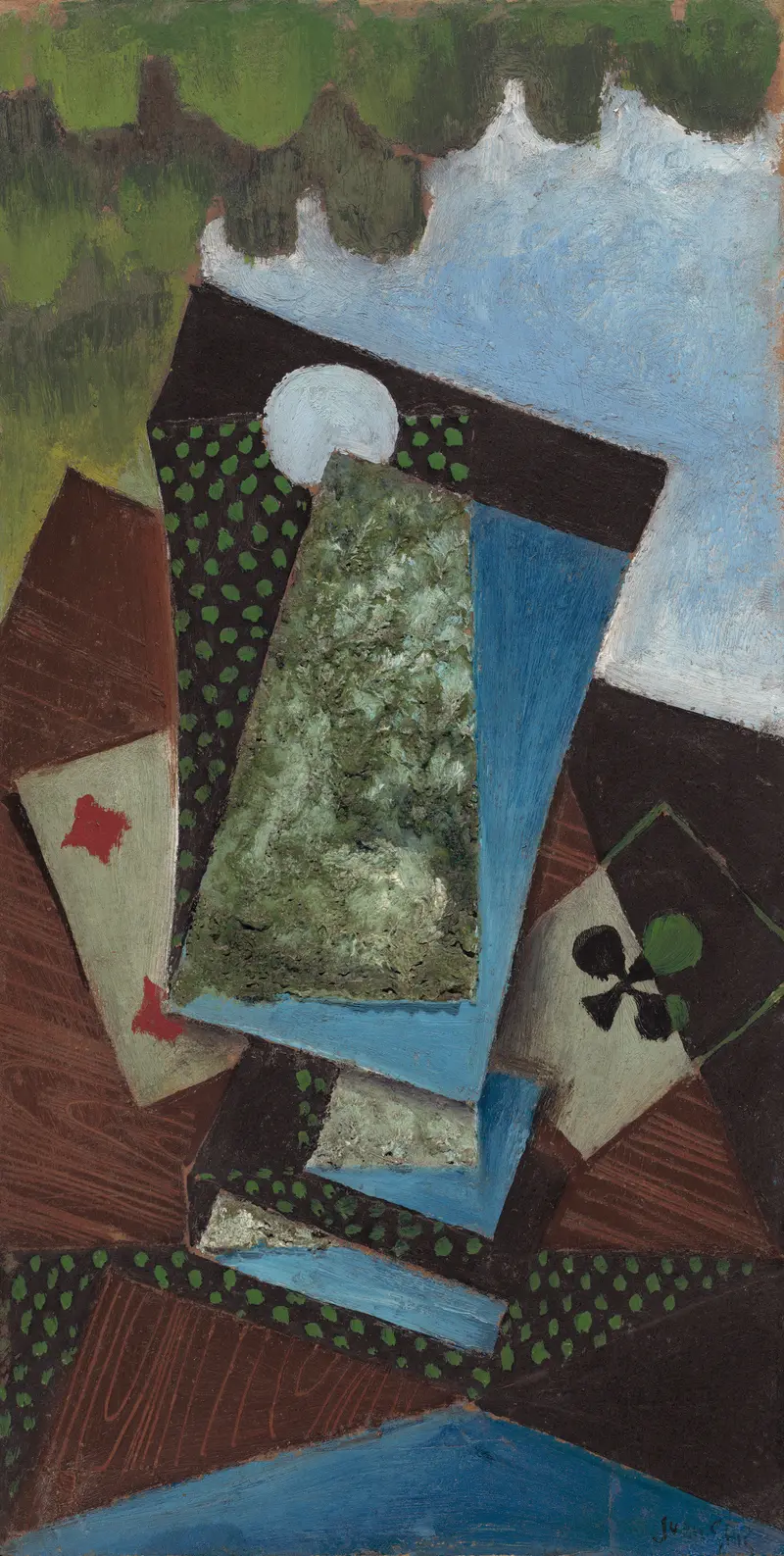
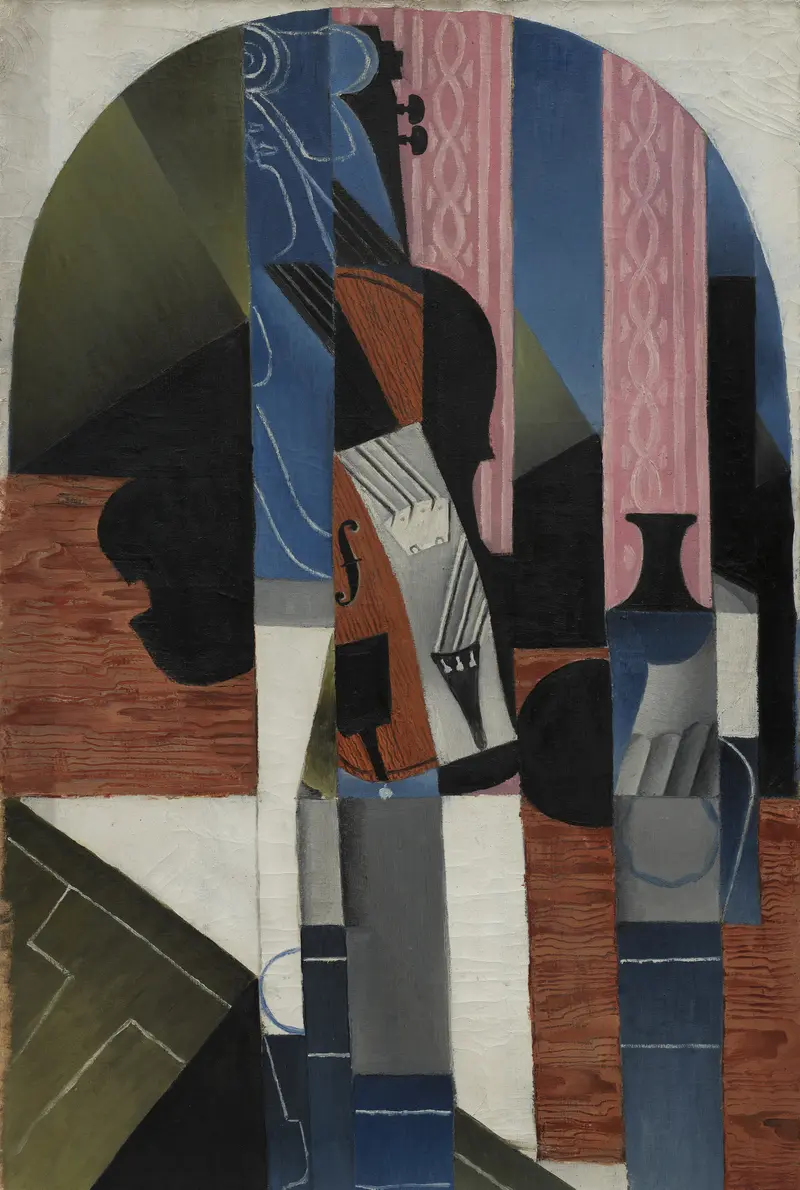
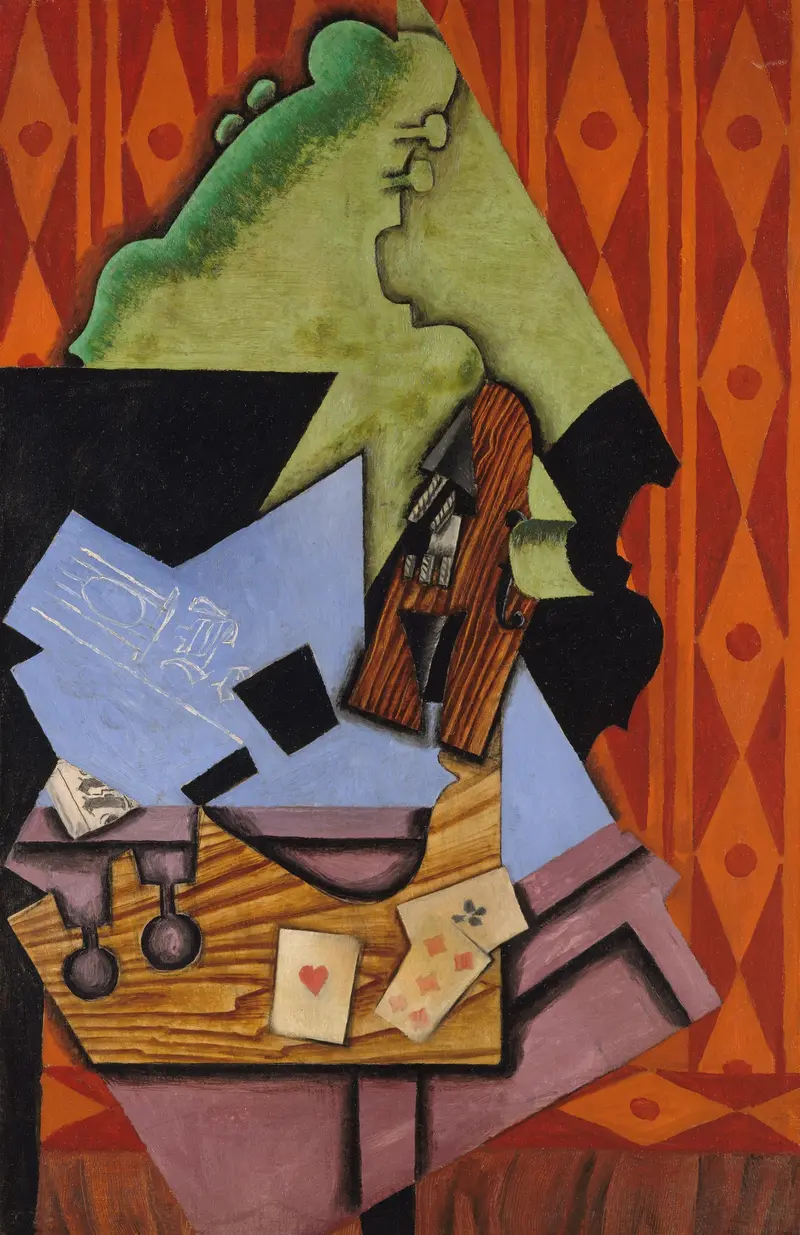 Violin and Playing Cards on a TableJuan Gris
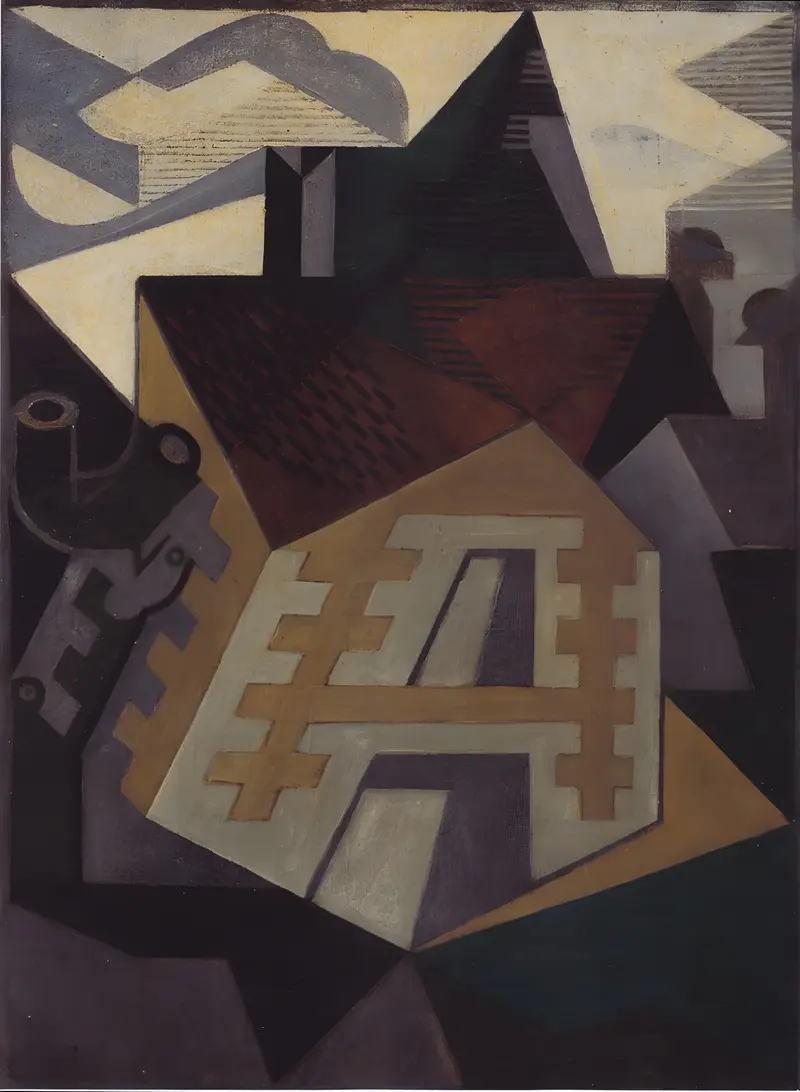
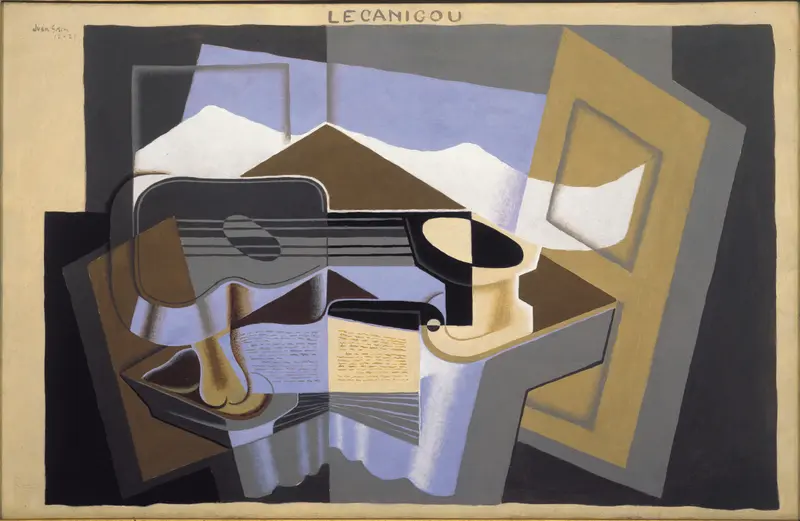 Le CanigouJuan Gris
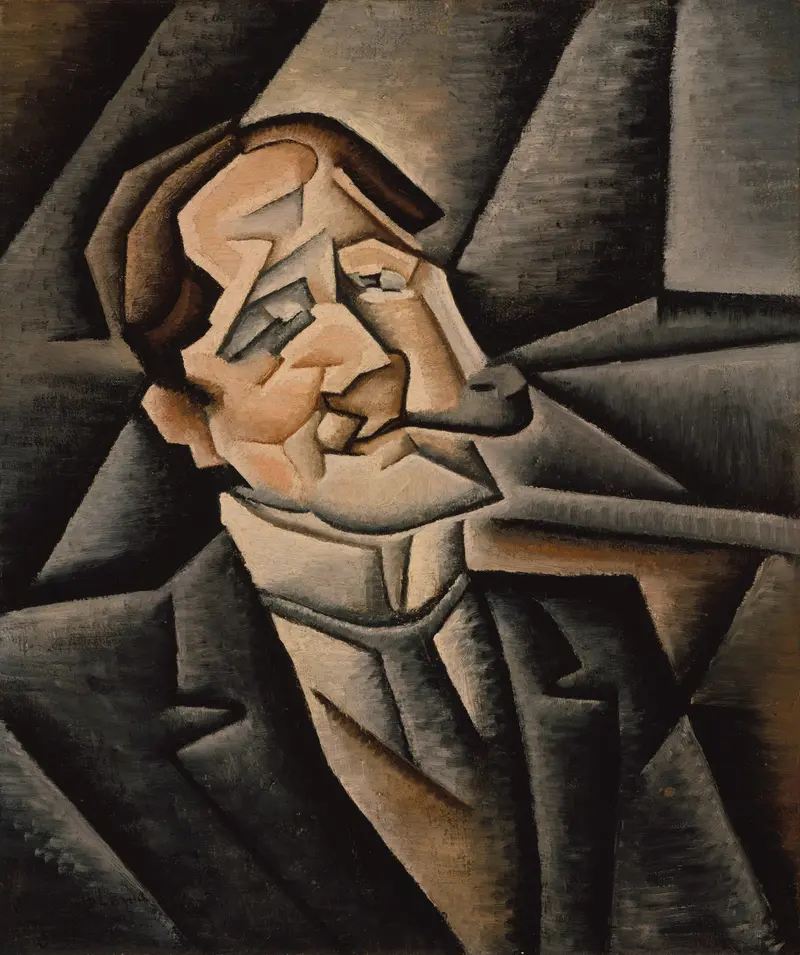 Juan LeguaJuan Gris
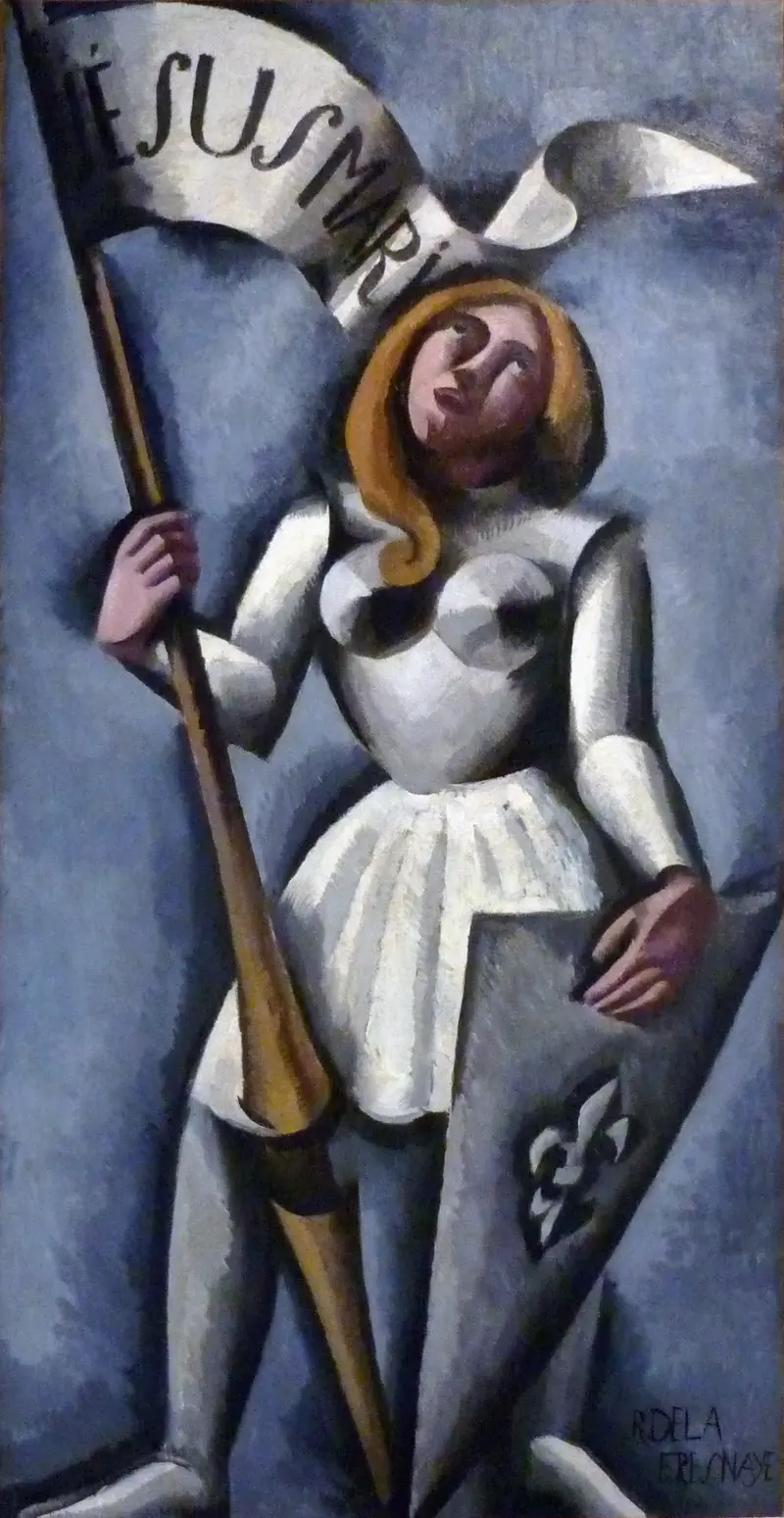 Joan of ArcRoger de La Fresnaye
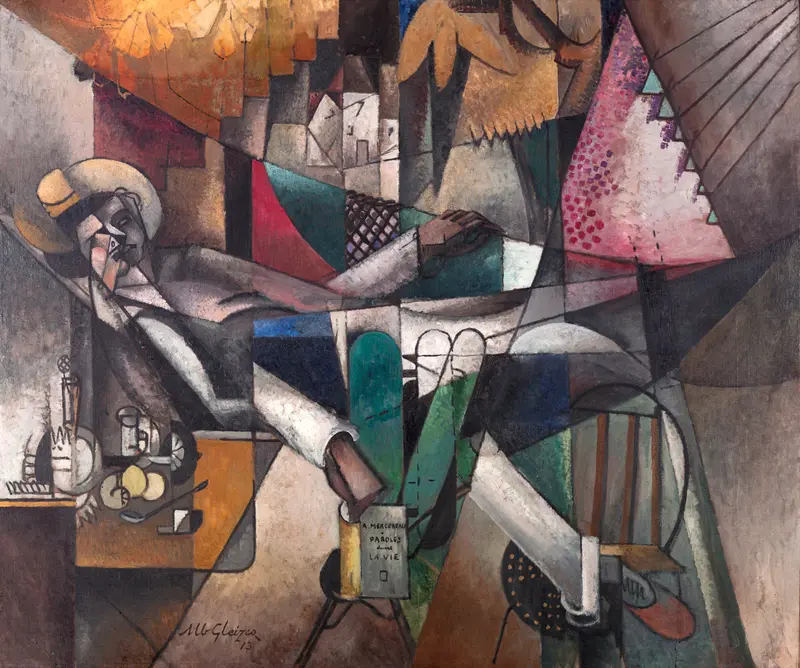 Man in a Hammock (L'Homme au hamac)Albert Gleizes
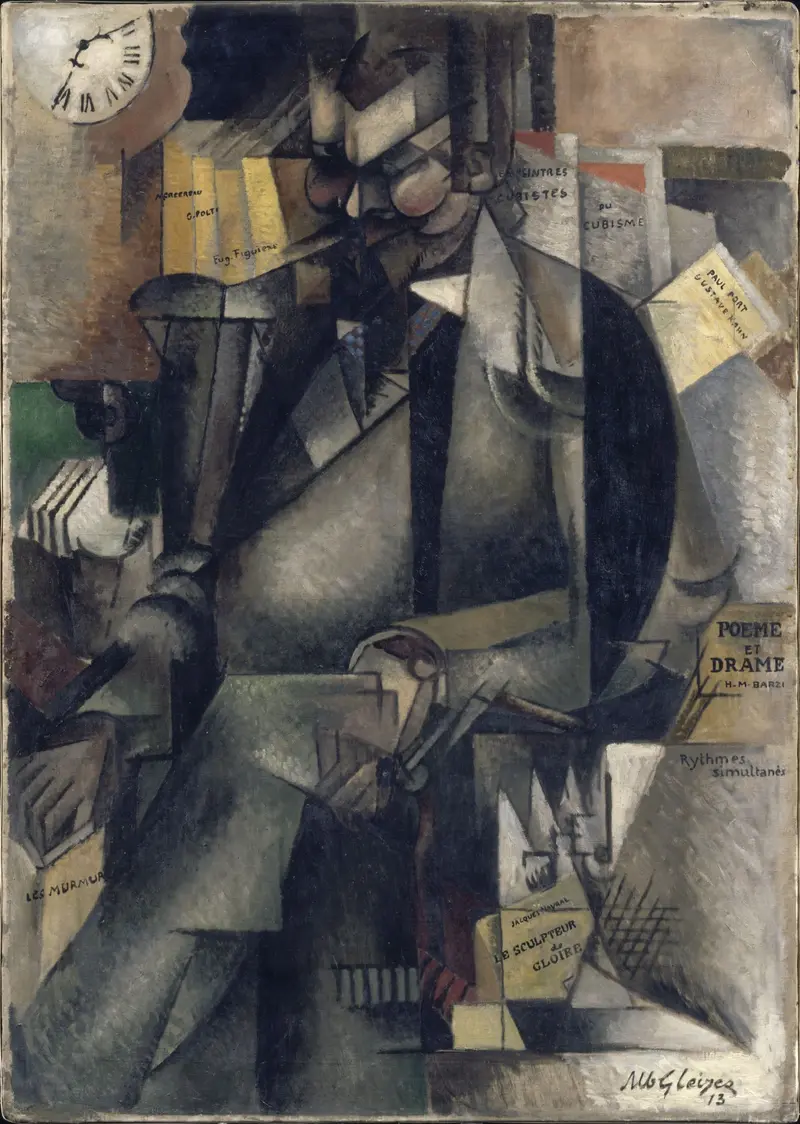 The Publisher Eugène FiguièreAlbert Gleizes
Famous Cubism artists
Ten painters who took up Cubism after Picasso and Braque, from Juan Gris and Fernand Léger in Paris to Kazimir Malevich and Lyubov Popova in Russia. Picasso and Braque themselves are not shown, because their work is still in copyright in Europe. Each link opens all their paintings.
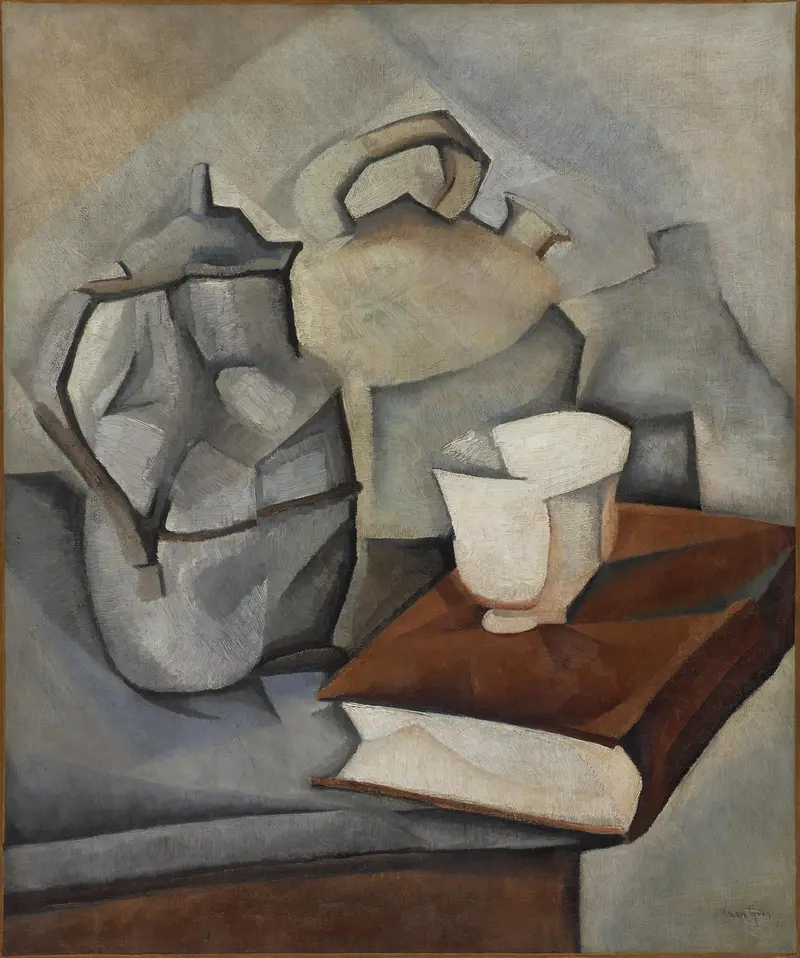 Juan Gris1887–1927. Born José Victoriano González-Pérez in Madrid, he moved to Paris in 1906; by 1912 he had a personal Cubist style and showed at the Salon des Indépendants and the Section d'Or, the Peggy Guggenheim Collection says.
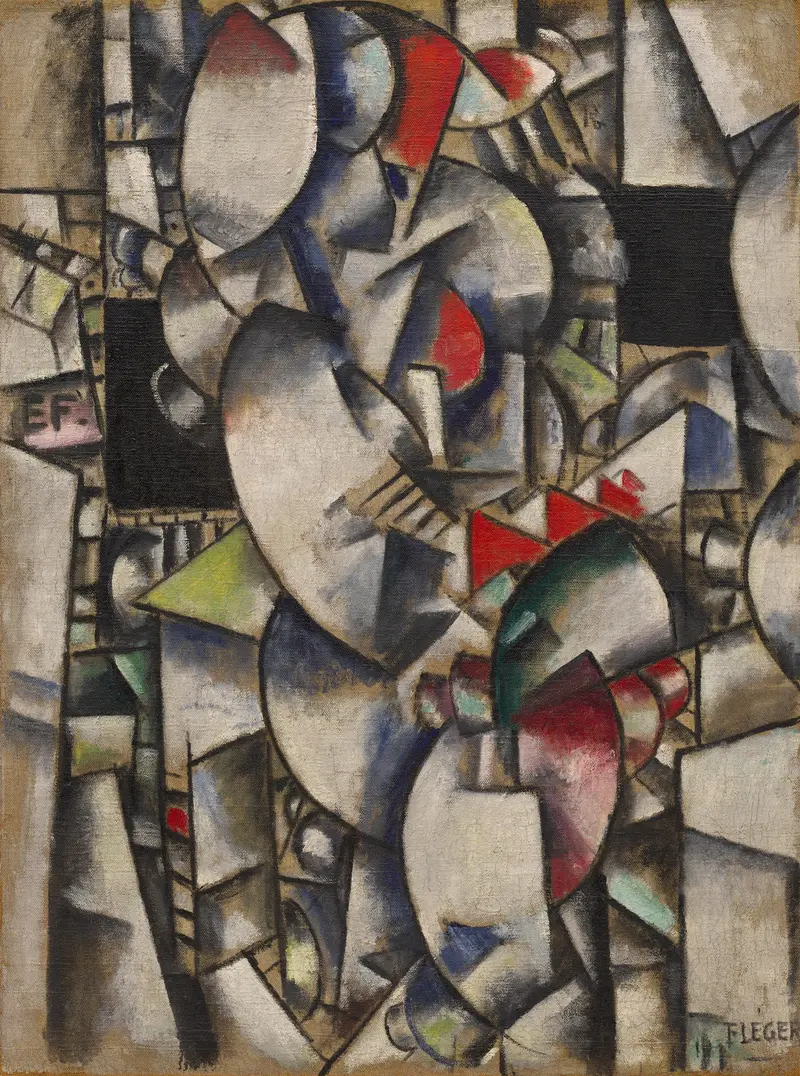 Fernand Léger1881–1955. Trained with an architect and settled in Paris in 1900; the 1907 Cézanne retrospective and the Cubism of Picasso and Braque shaped his style, and his tube-like forms led a critic to call it Tubism, Tate says.
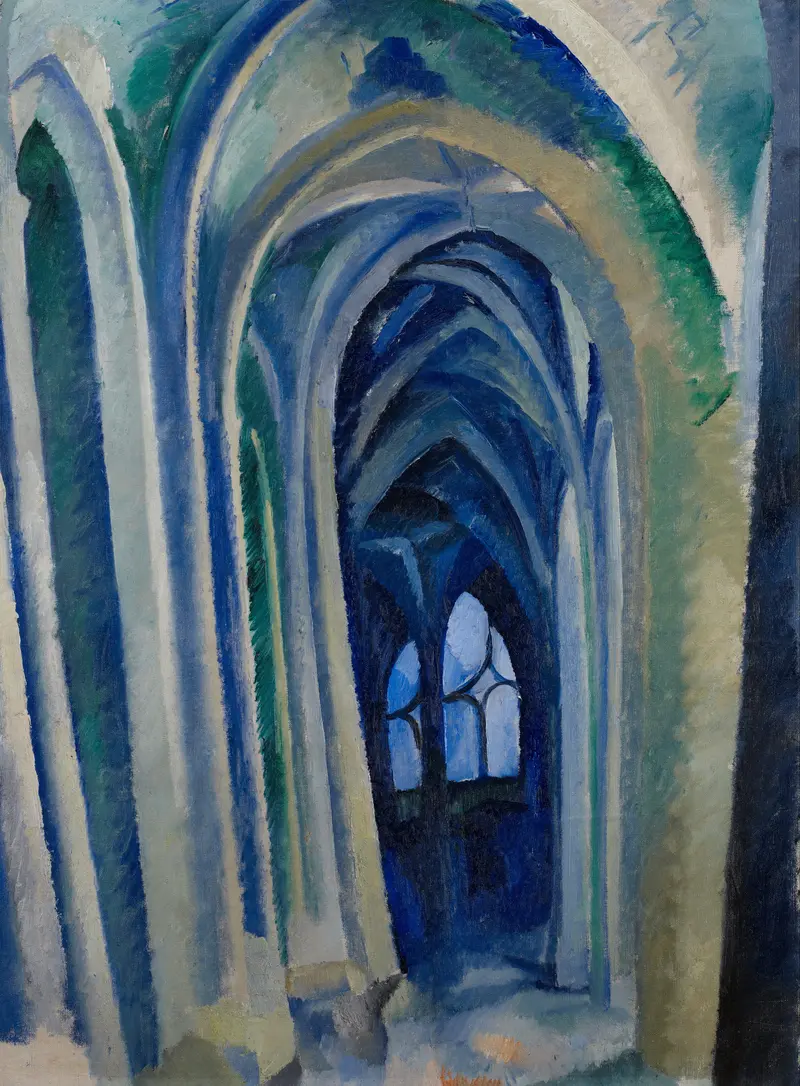 Robert Delaunay1885–1941. Born in Paris; after his military service in 1907–08 he came into contact with the Cubists, painted his first Eiffel Tower in 1909 and showed at the first Blaue Reiter exhibition in Munich in 1911, the Peggy Guggenheim Collection says. Tate credits him and Sonia Delaunay with Orphism.
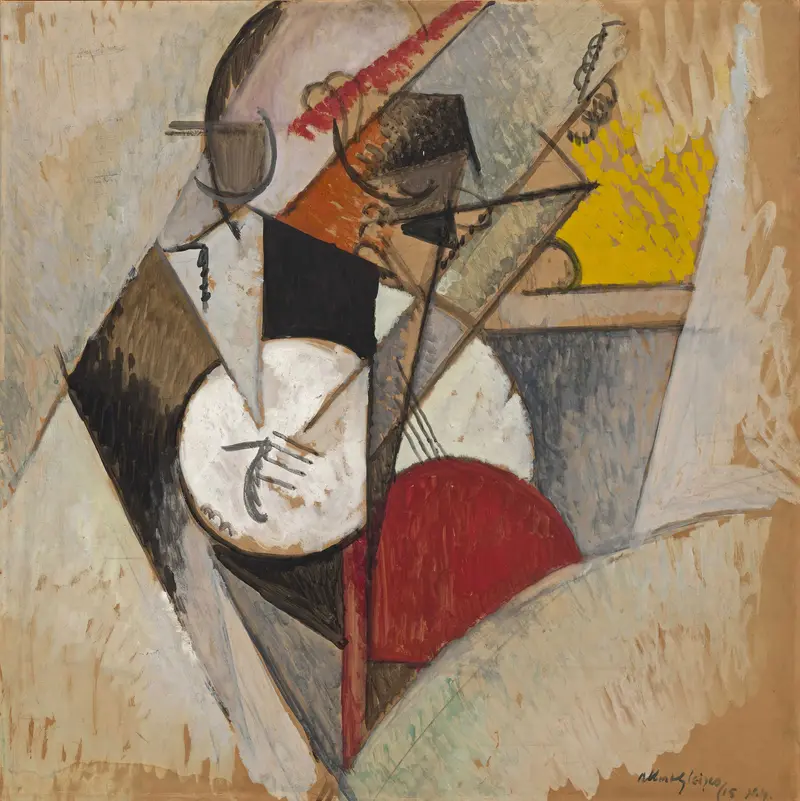 Albert Gleizes1881–1953. Helped found the Section d'Or in 1912 and wrote Du “Cubisme” with Jean Metzinger the same year; by 1915 his paintings had become abstract, the Peggy Guggenheim Collection notes.
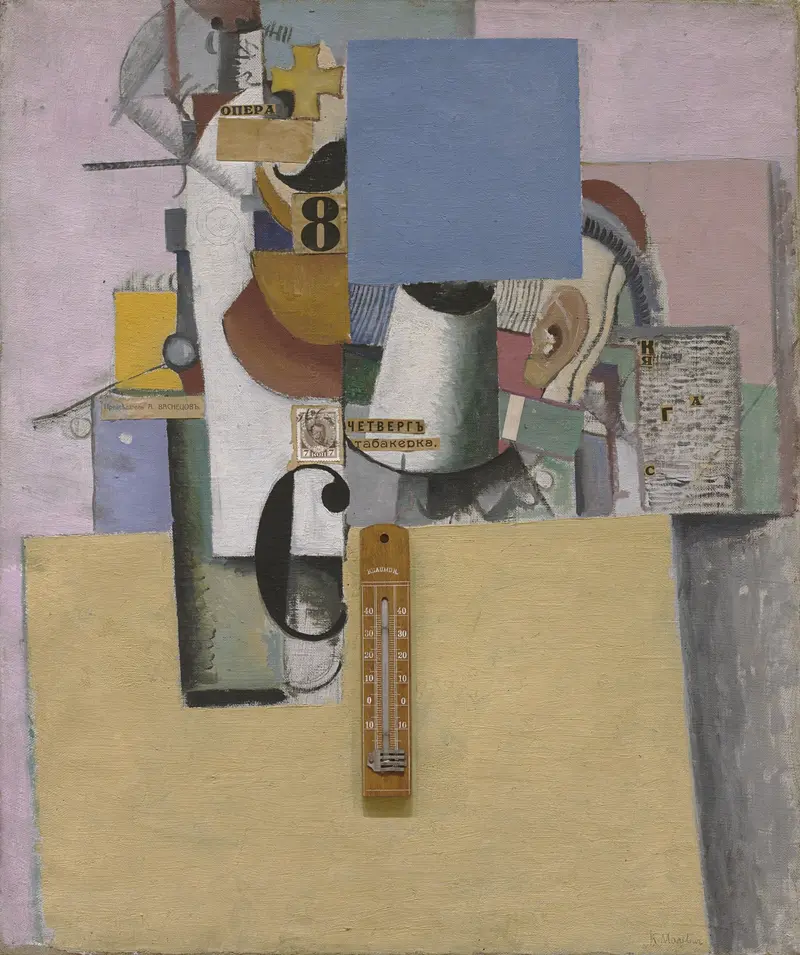 Kazimir Malevich1878–1935. Combined Cubism with Futurism in Russia around 1912–13, as in The Knife Grinder, then showed his first non-objective Suprematist paintings in Petrograd in 1915, the Peggy Guggenheim Collection says.
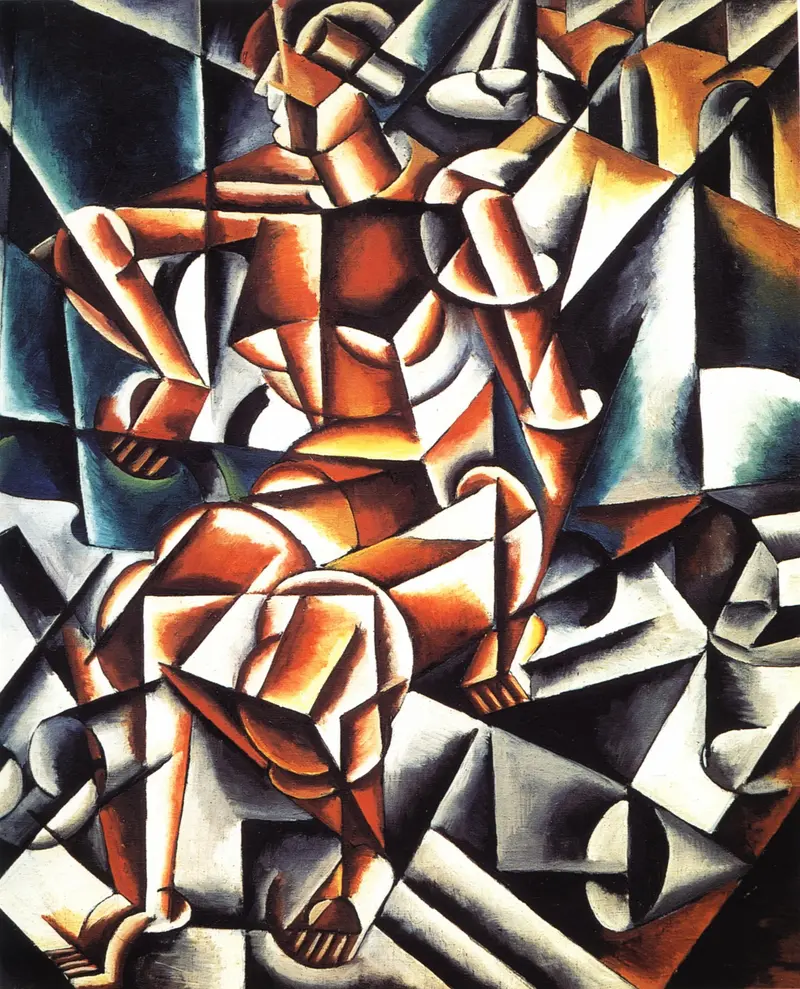 Lyubov Popova1889–1924. Studied with the Cubists Jean Metzinger and Henri Le Fauconnier at La Palette in Paris, then took in Futurism; in 1916, under the influence of Malevich's Suprematism, she began a series of non-objective paintings, the Museo Thyssen-Bornemisza says.
- Roger de La Fresnaye1885–1925. Born in Le Mans, he trained at the Académie Julian and the Académie Ranson; his gentle, colorful Cubism was popular for a while, and he moved back toward realism after the war (Modernist Journals Project).
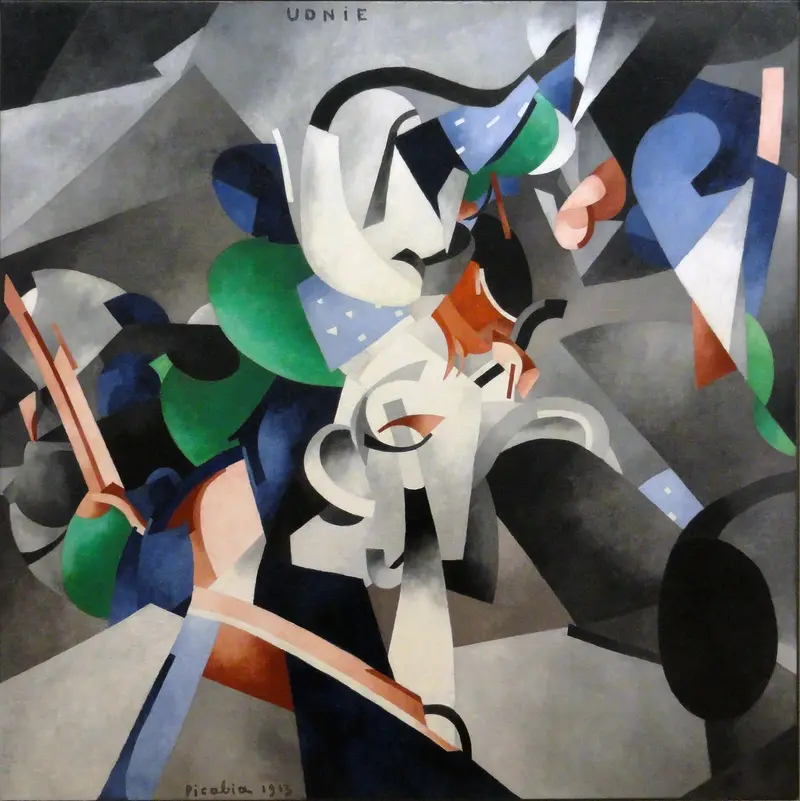 Francis Picabia1879–1953. Began as an Impressionist; by 1912 he had his own mix of Cubism and Fauvism, and in 1913 he went to New York for the Armory Show. He later turned to Dada, the Peggy Guggenheim Collection notes.
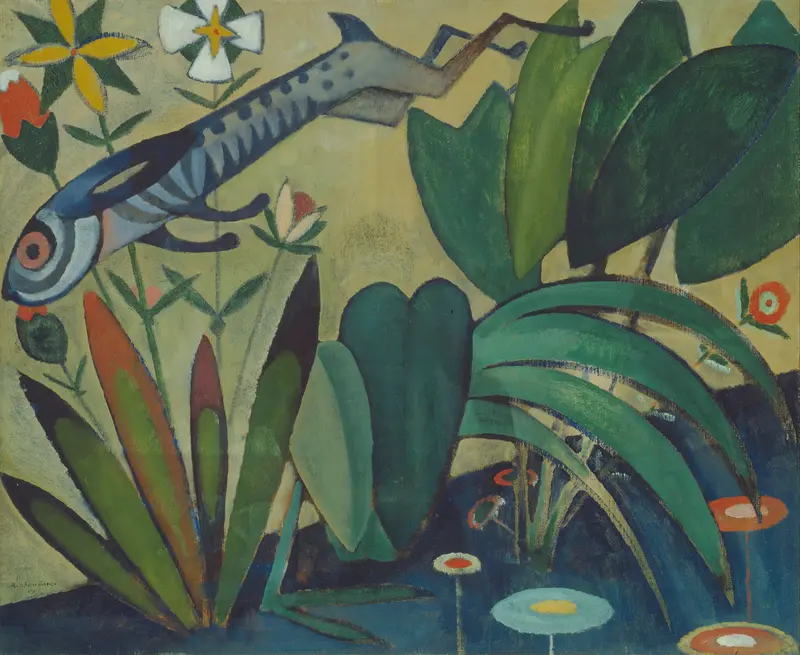 Amadeo de Souza-Cardoso1887–1918. Portuguese painter who showed at the Salon des Indépendants in Paris in 1911, the year of the Cubist scandal, and worked closely with Modigliani, the Gulbenkian's modern art center says.
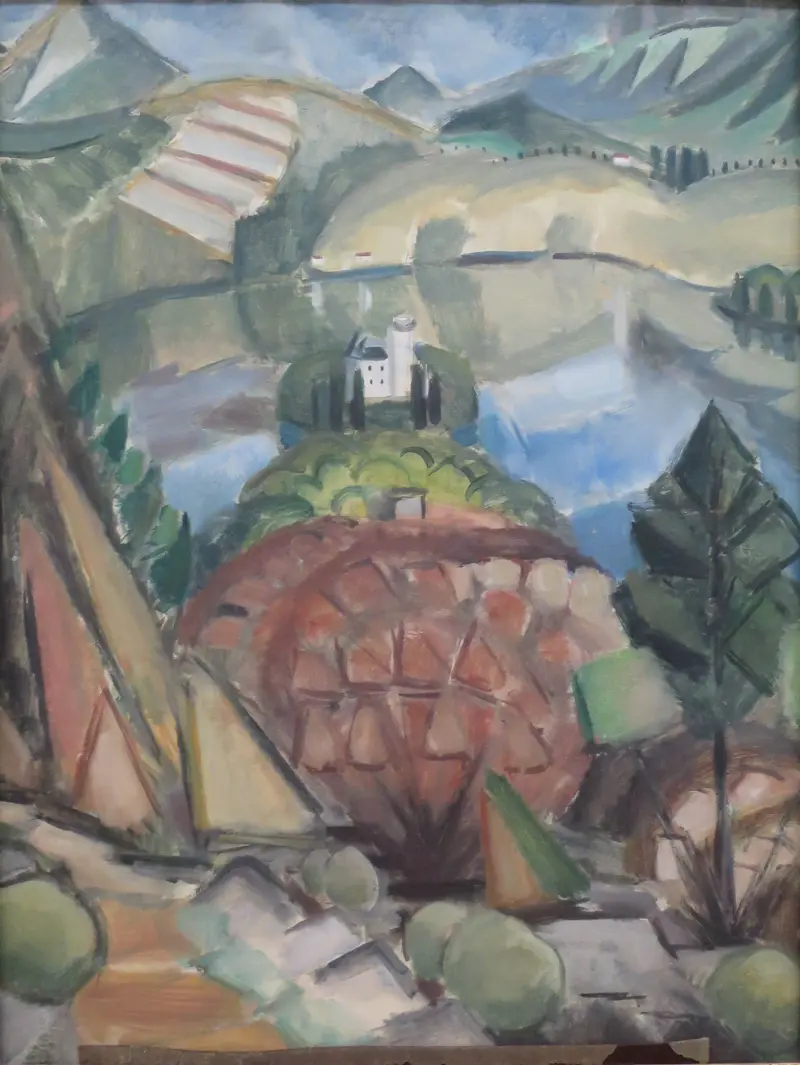 Henri Le Fauconnier1881–1946. Born in Hesdin in northern France, he became a Cubist around 1909 (Modernist Journals Project); Gleizes met him in 1909–10, together with Metzinger, Delaunay and Léger.
Cubist portraits and figures
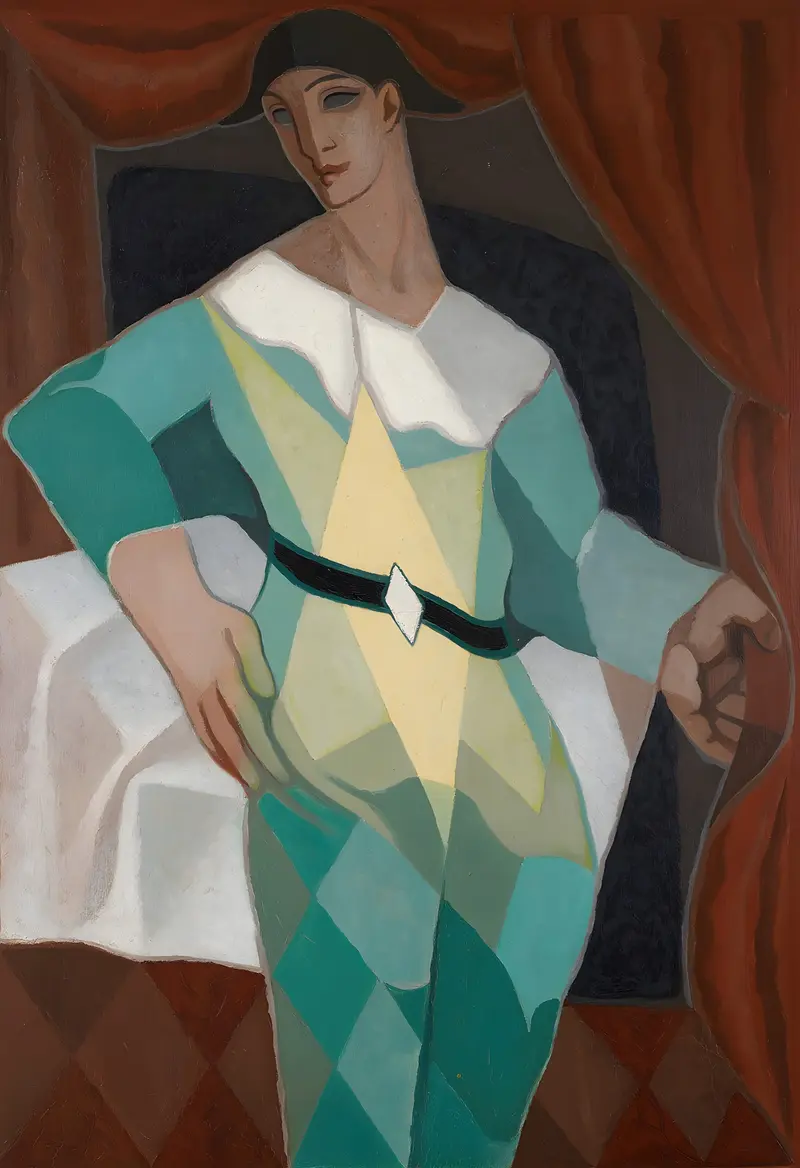
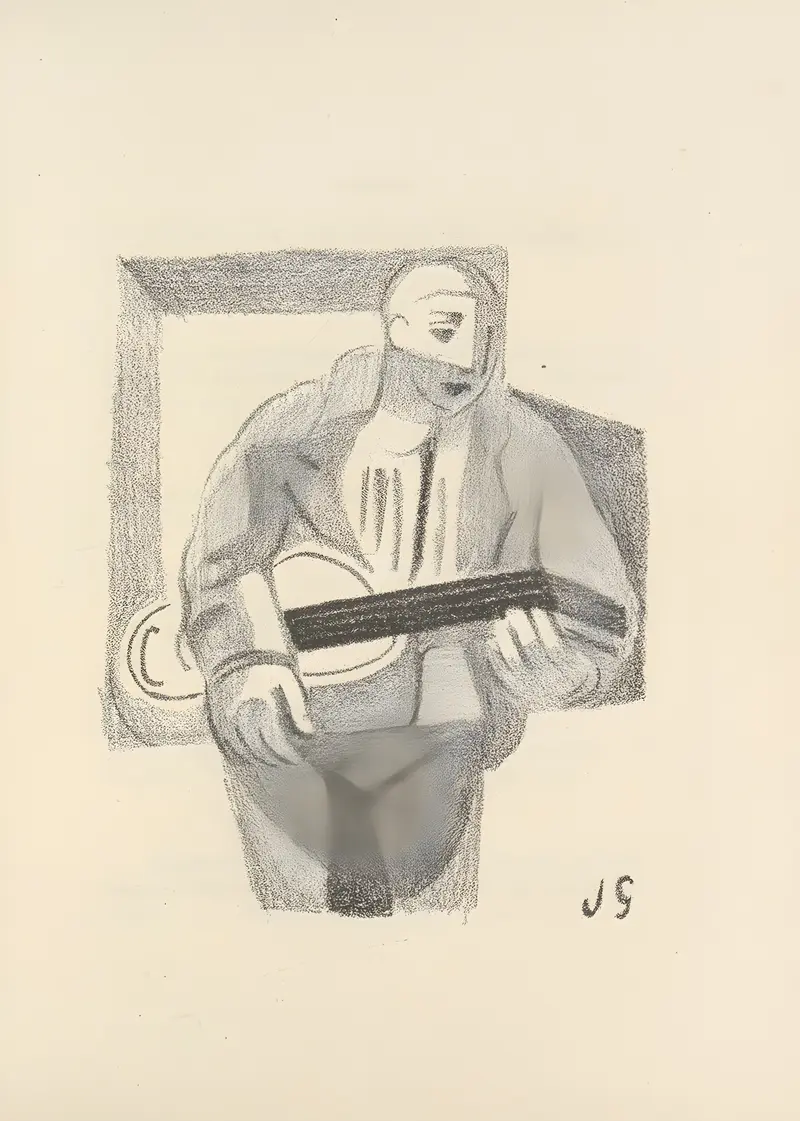
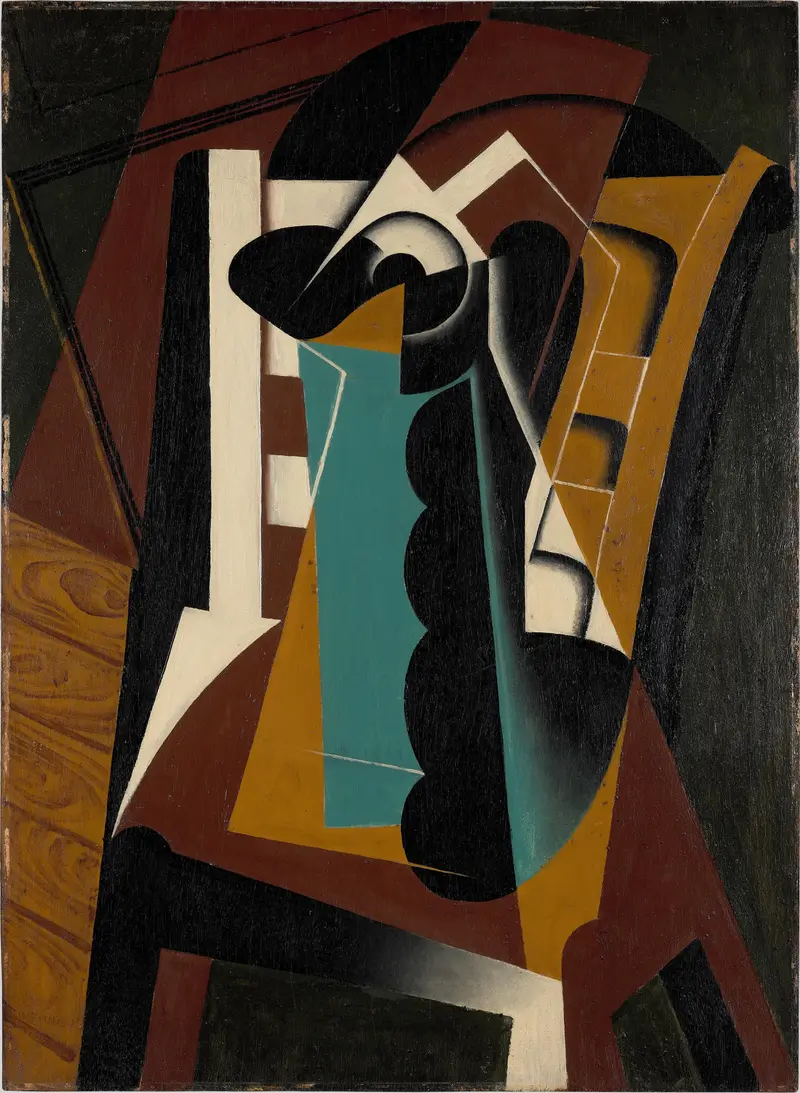
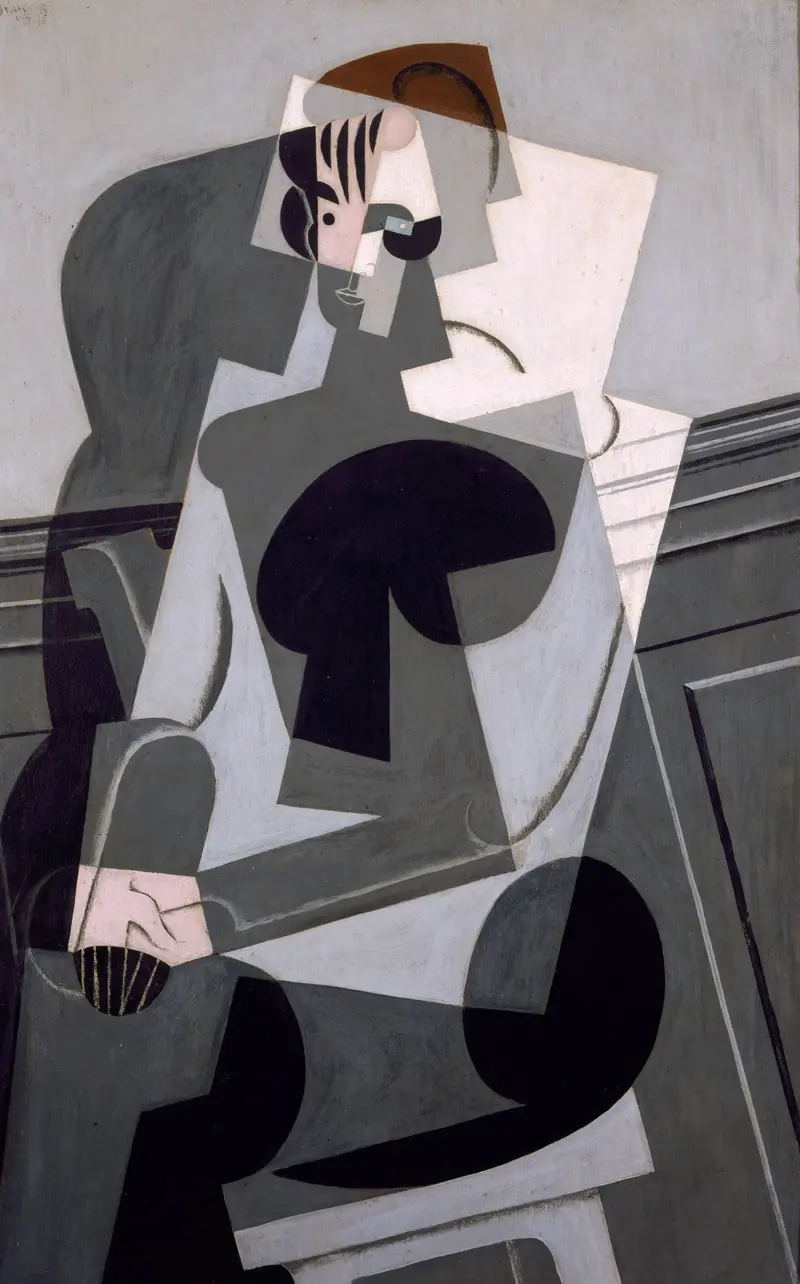
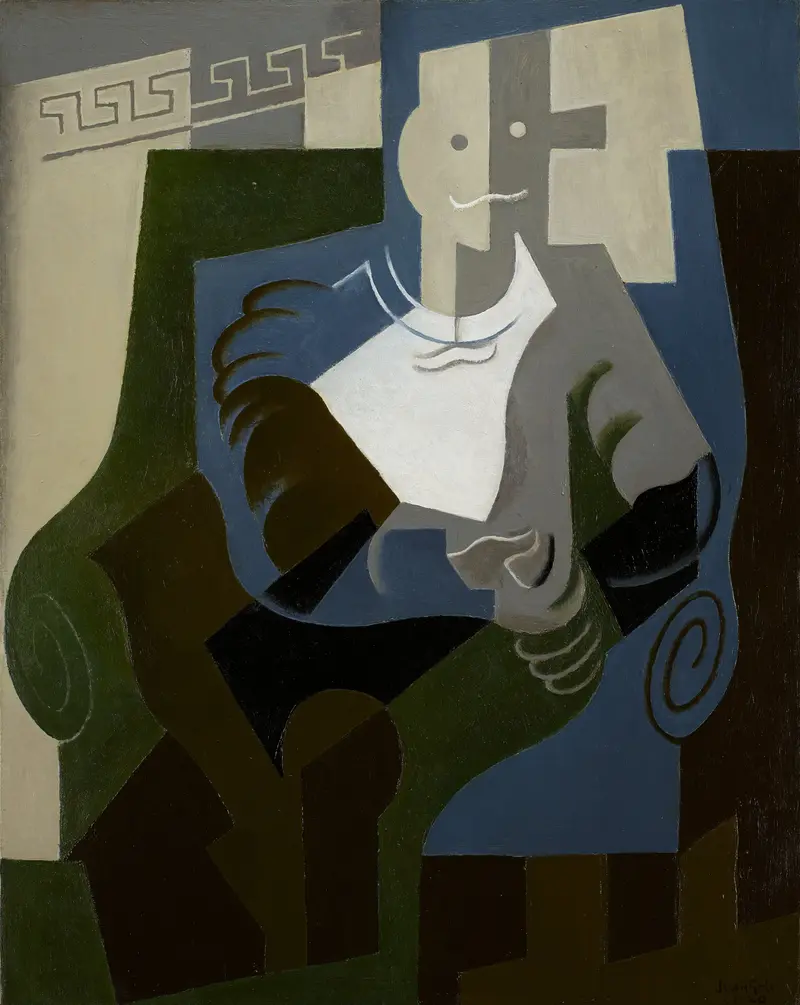
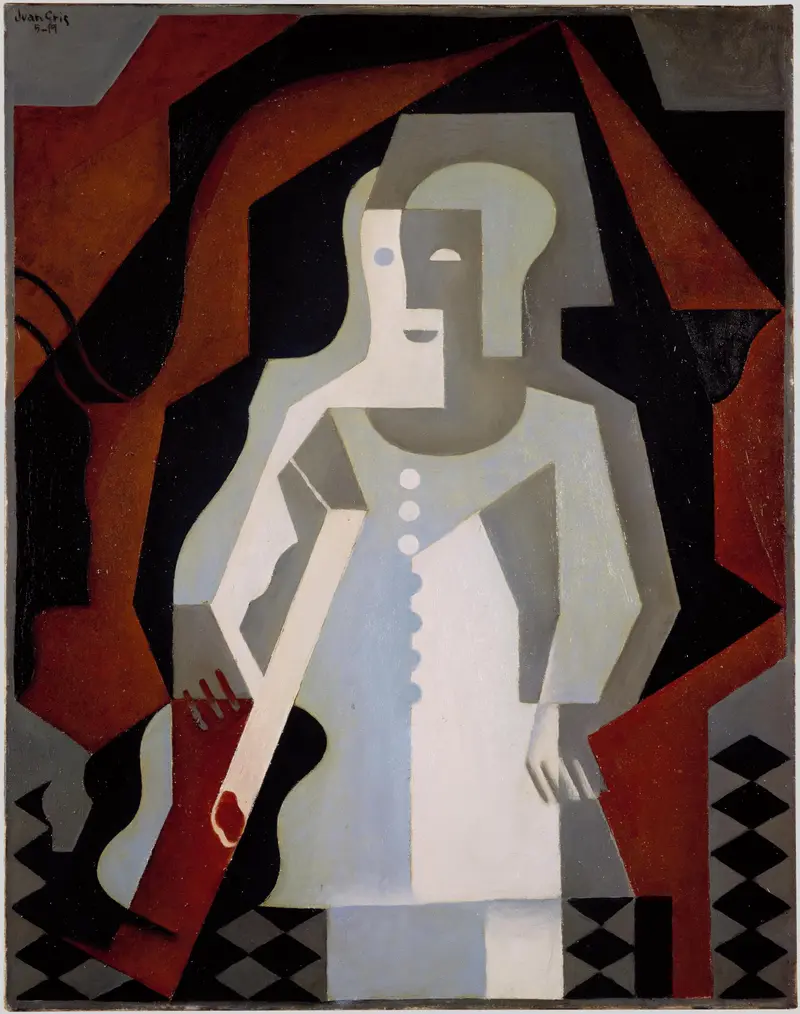
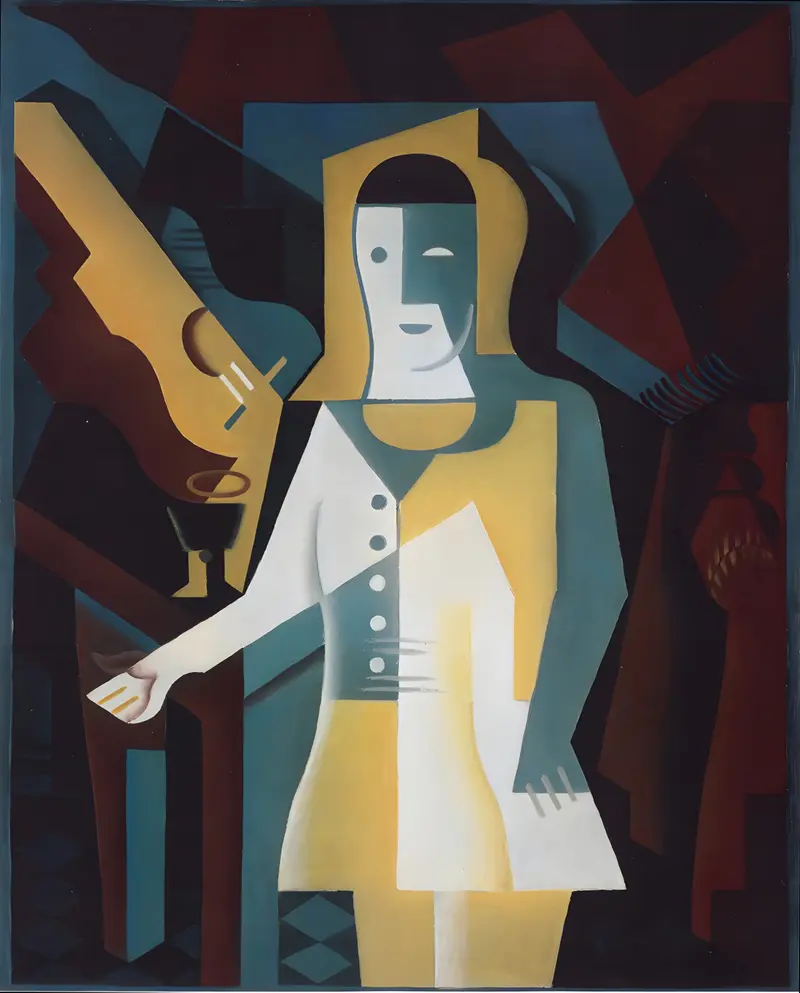
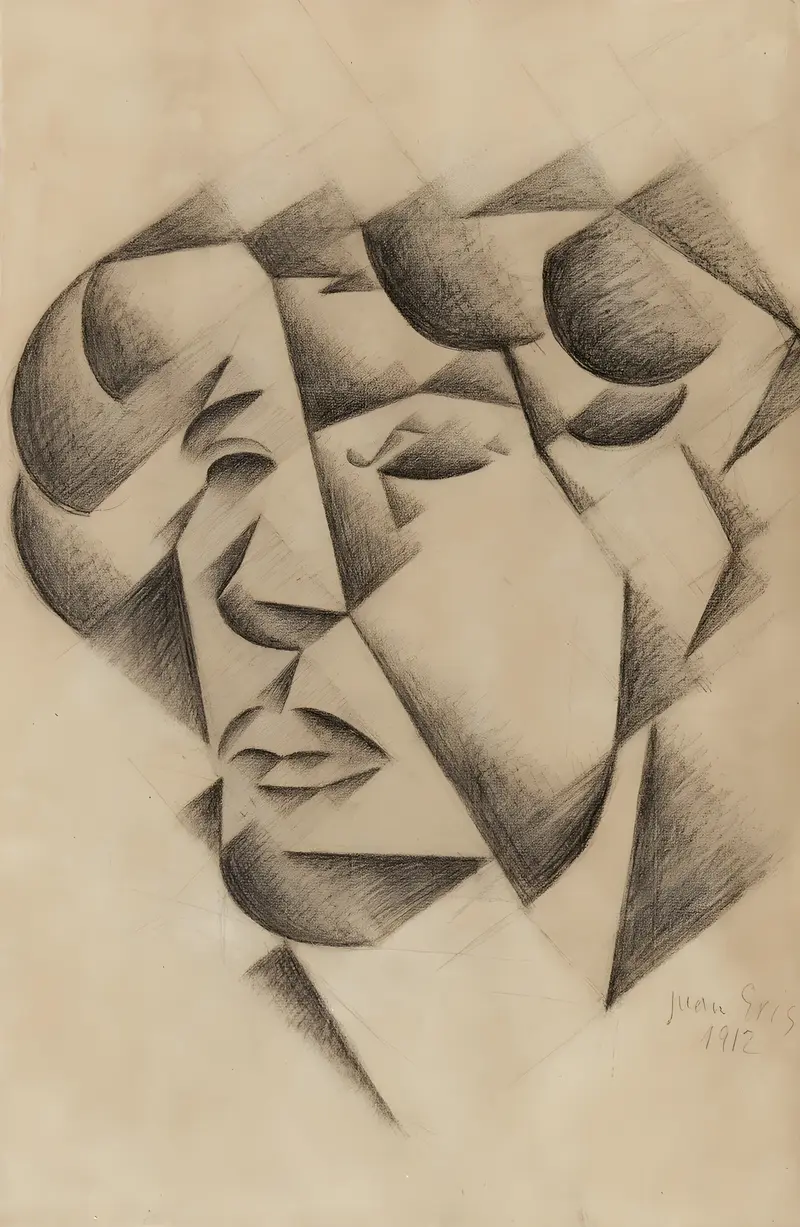
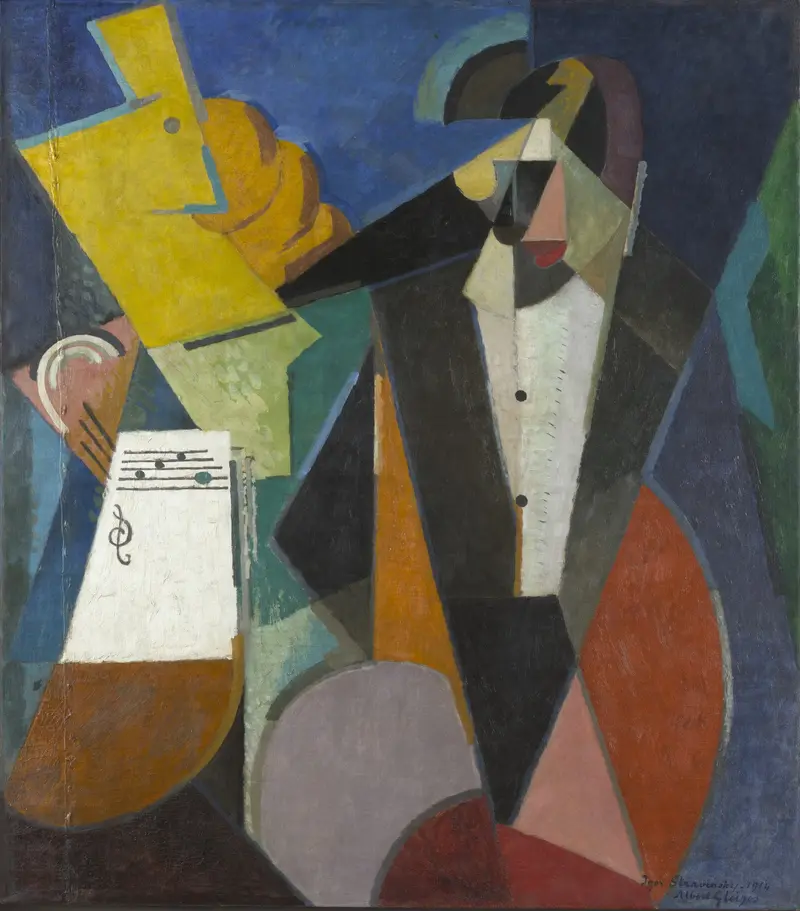
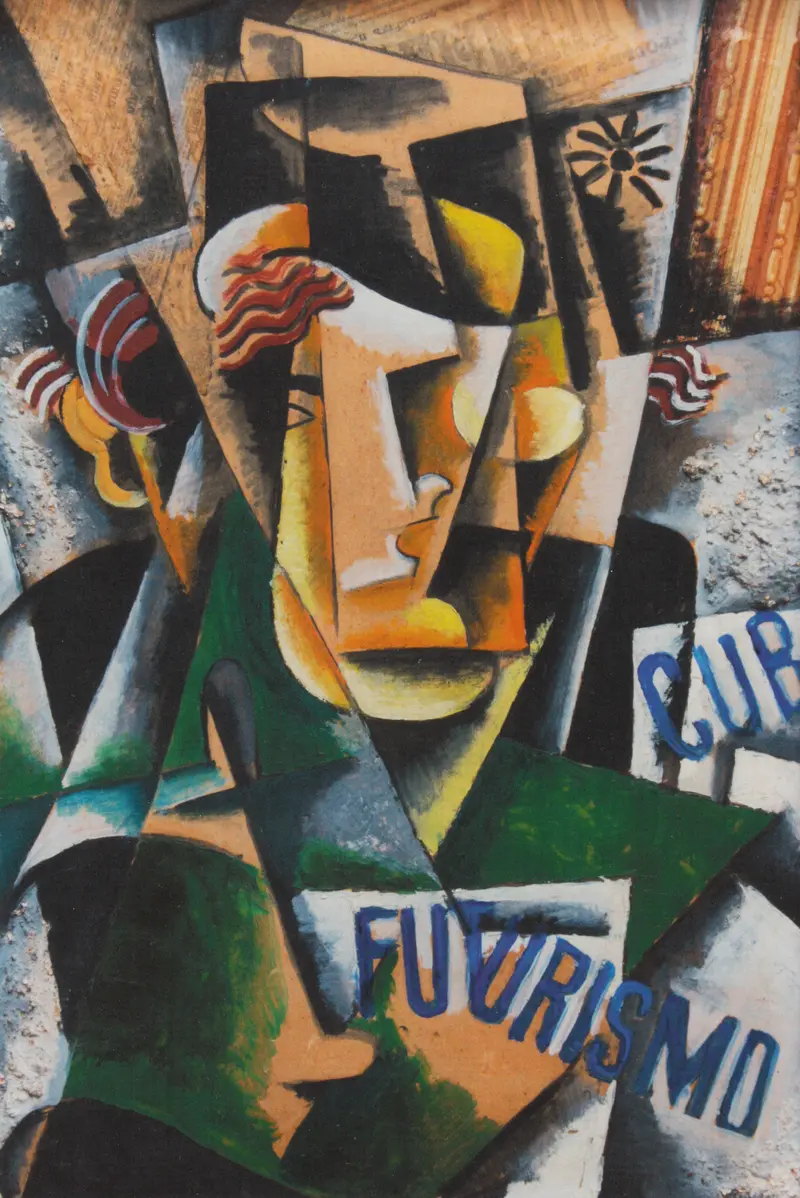
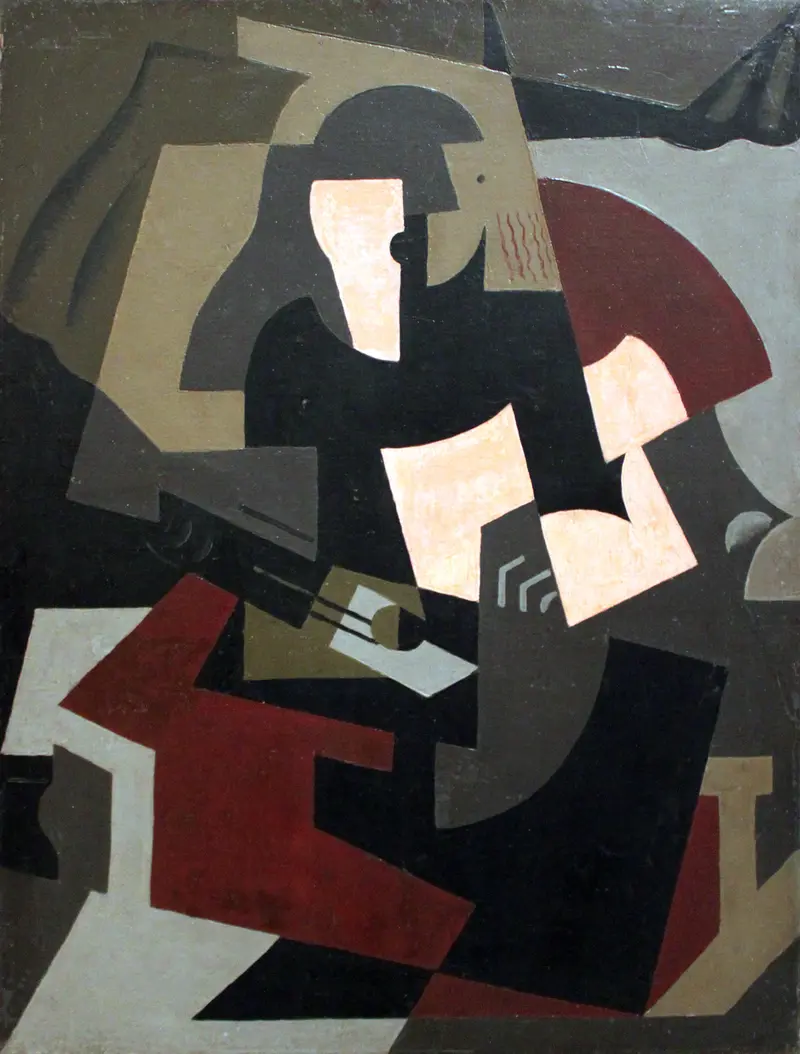
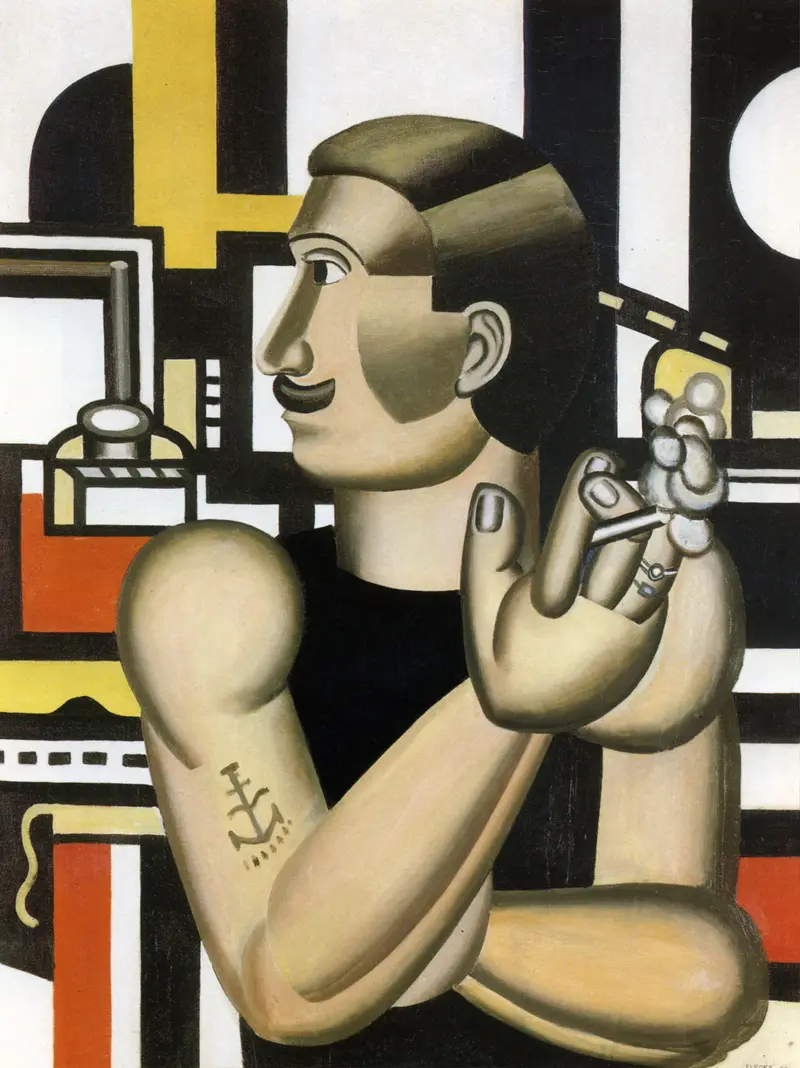
Tate says the Cubists brought different views of a figure together in the same picture, so faces and bodies turn into planes. Here are portraits and figures by Gleizes, Popova, María Blanchard, Malevich, Juan Gris and Léger.
Cubist still life paintings
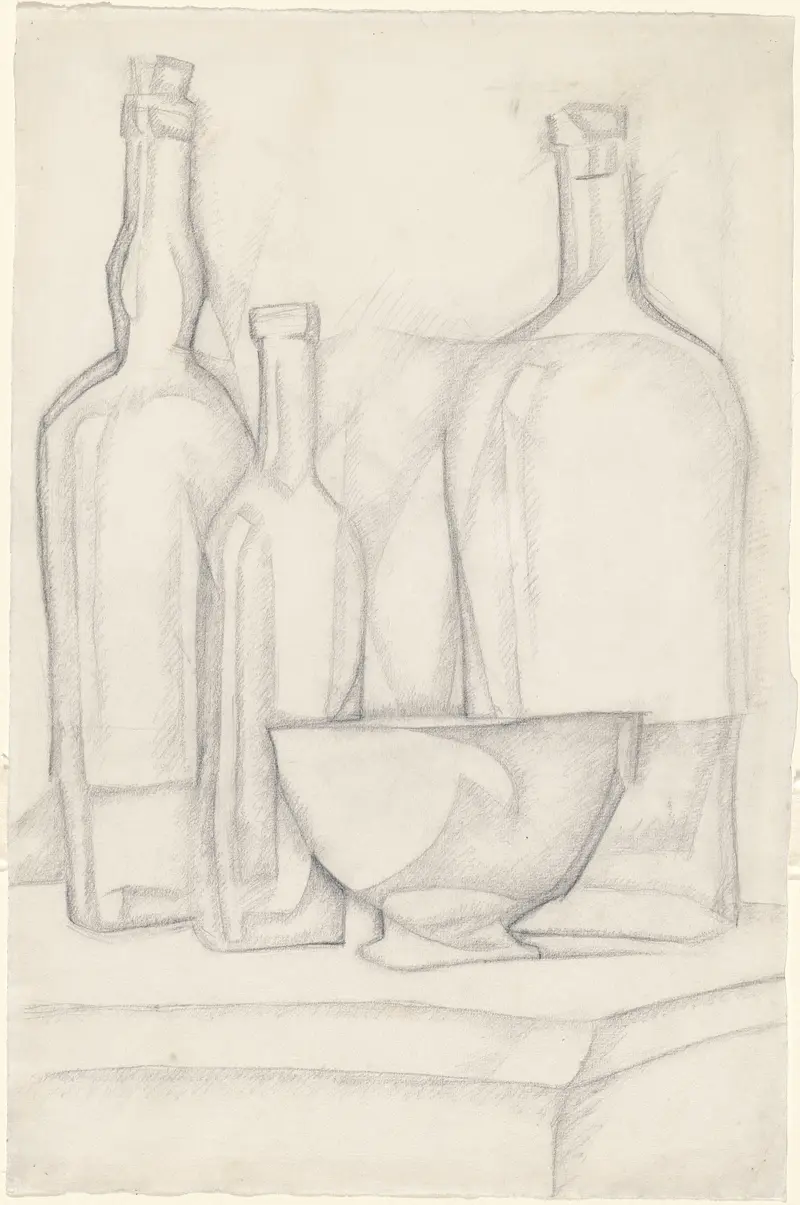
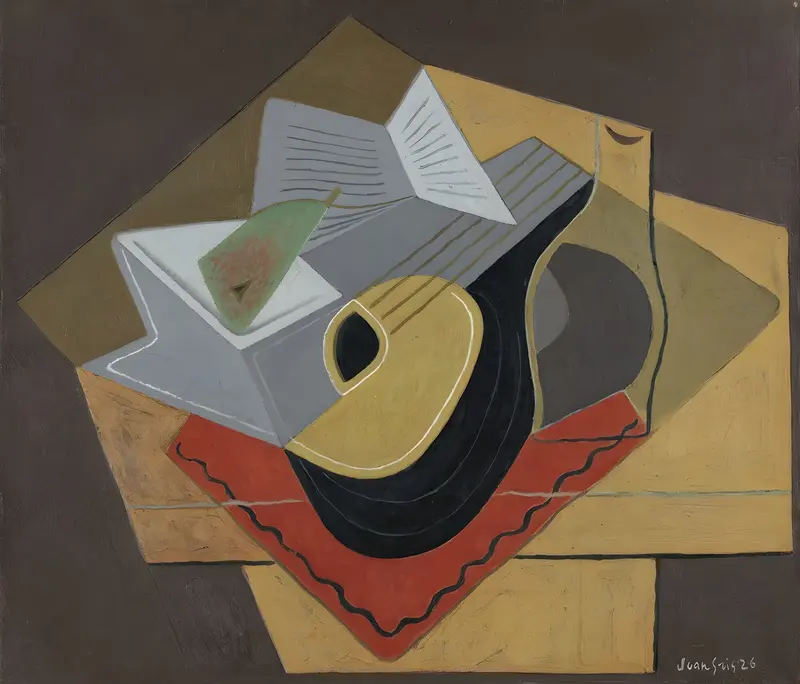
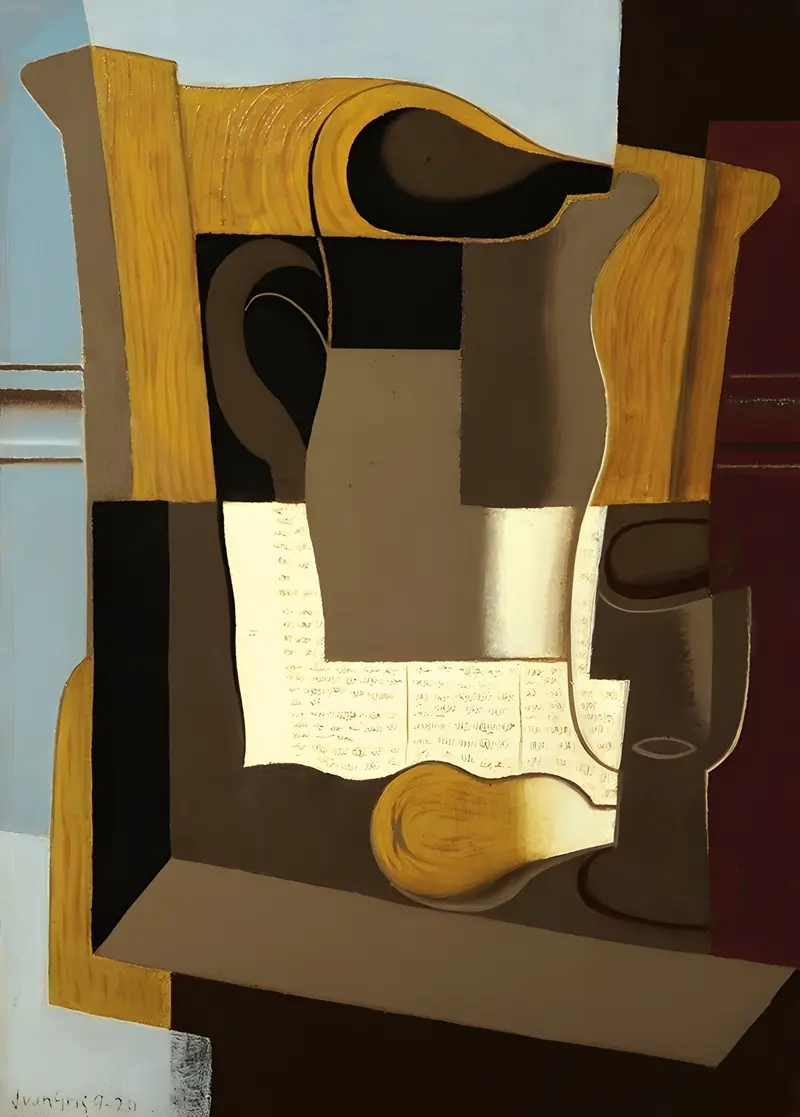
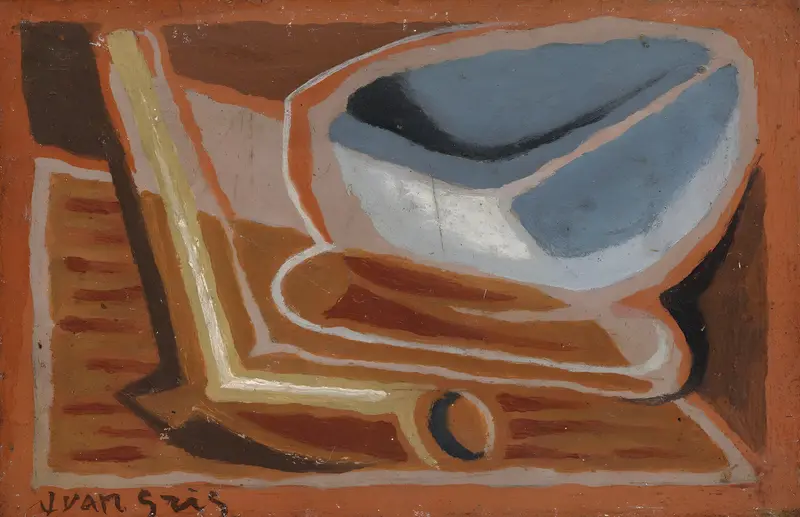
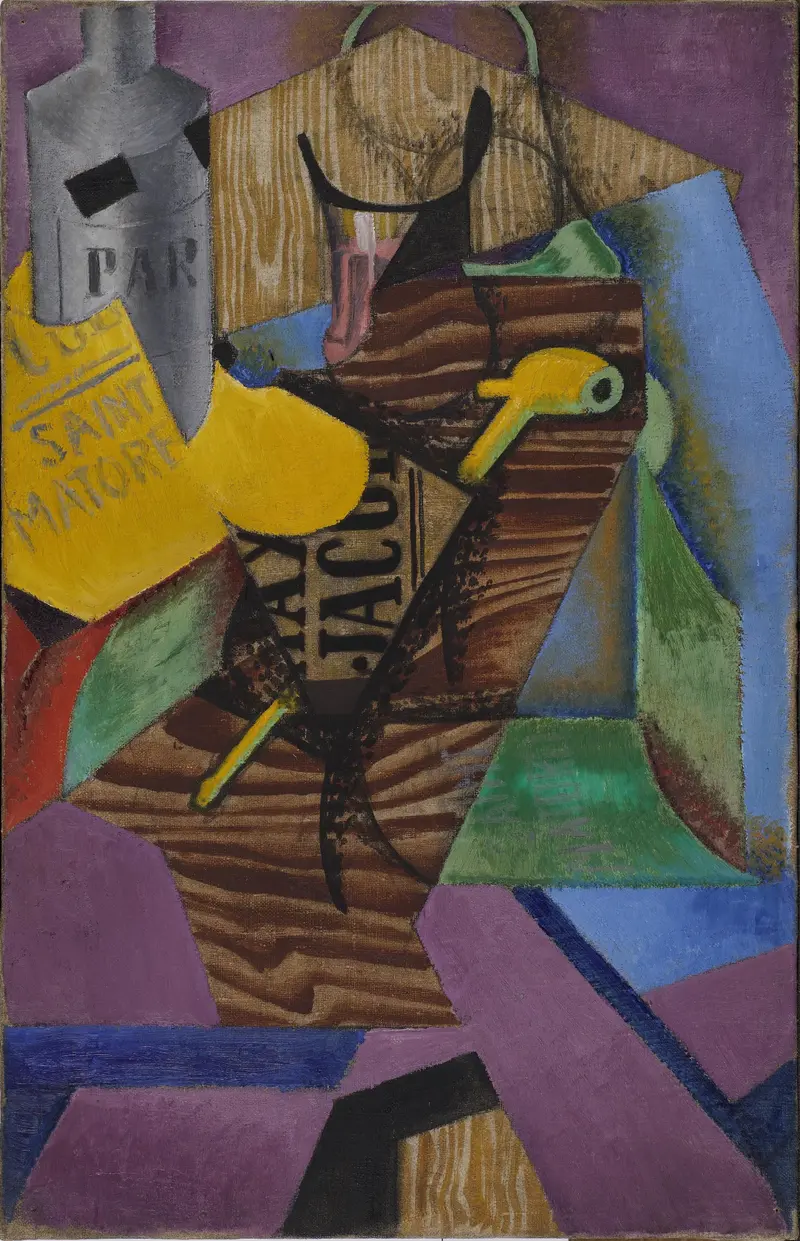
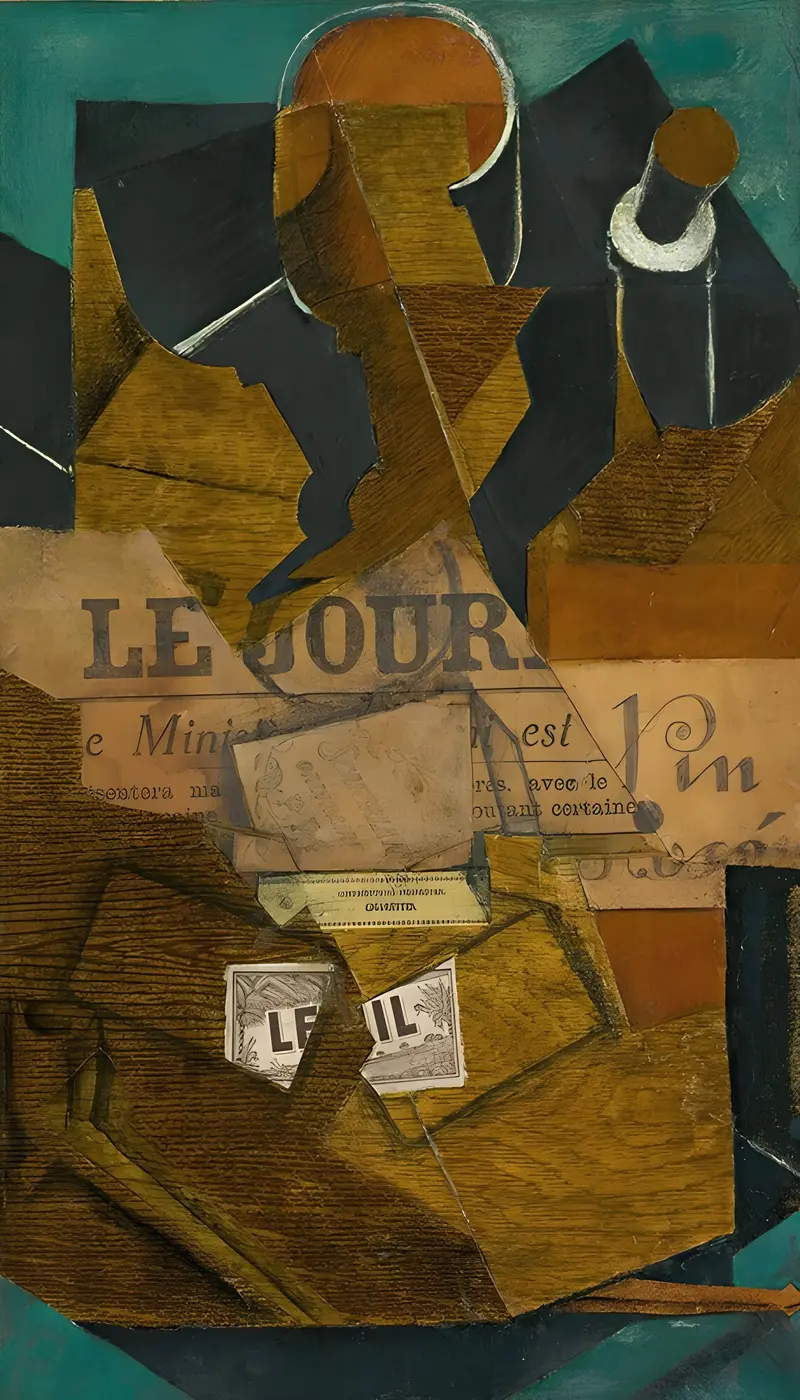
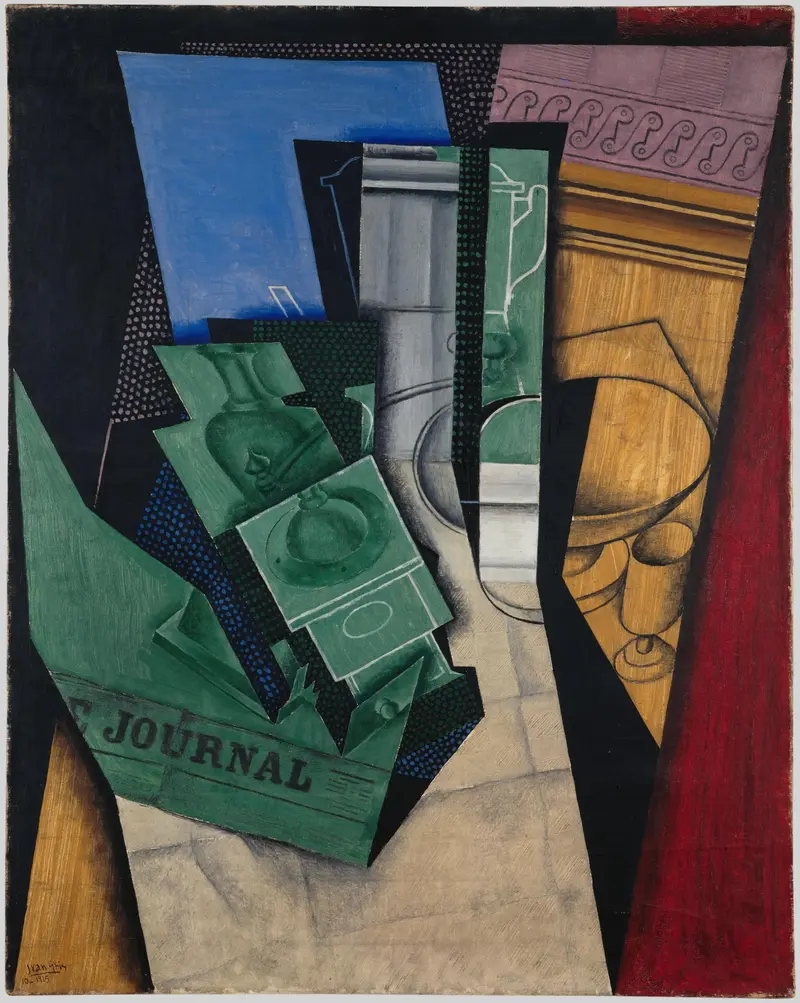
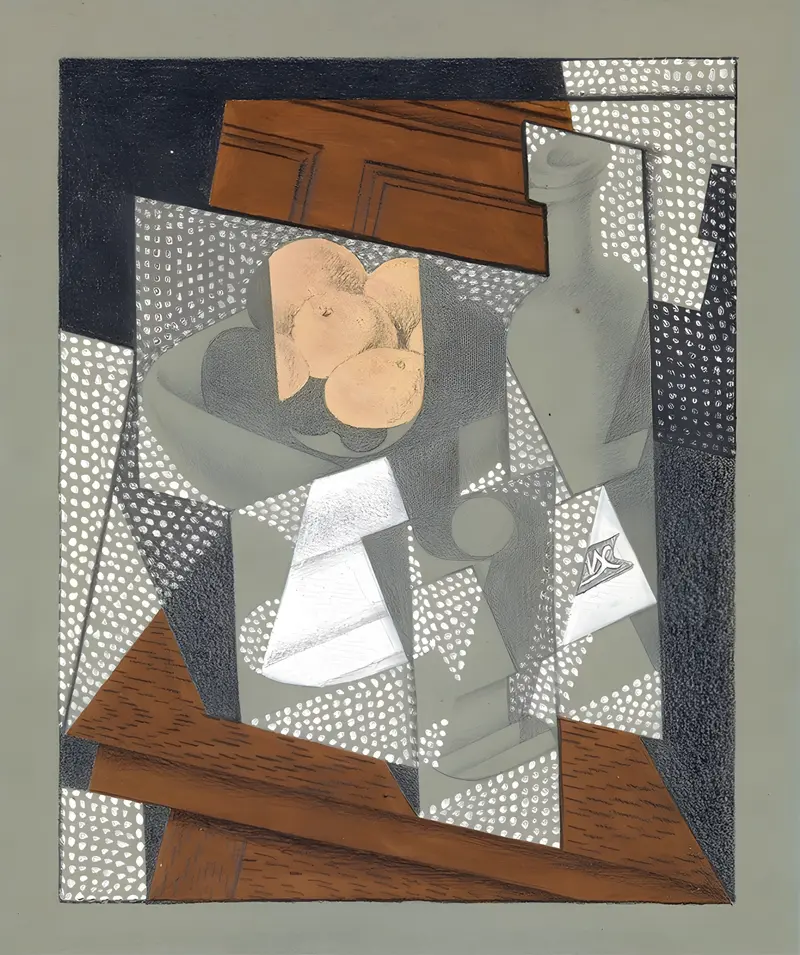
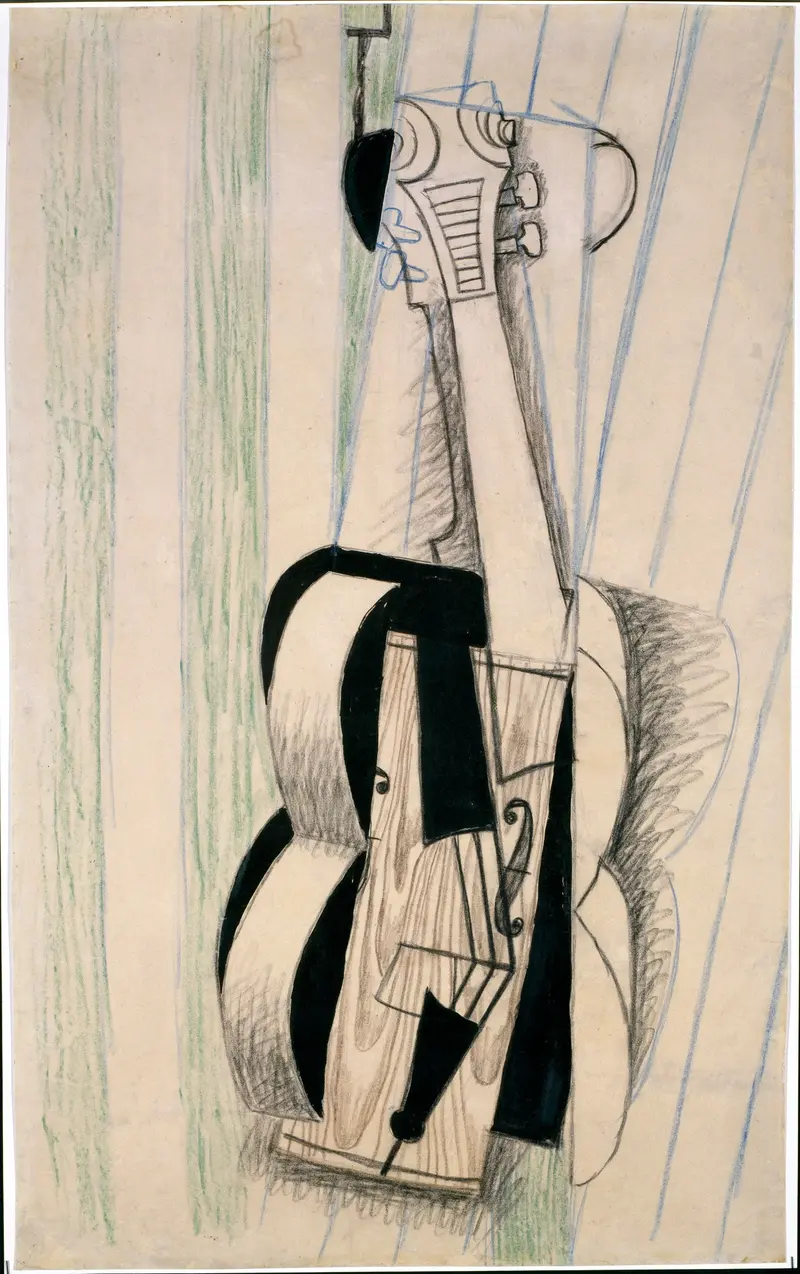
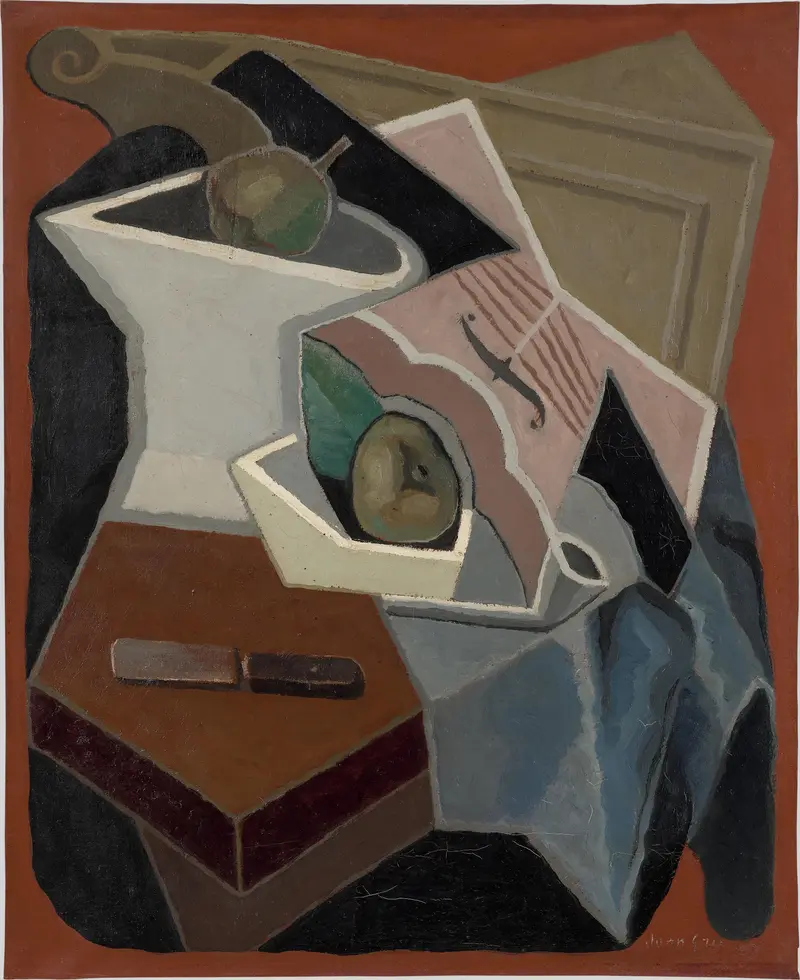
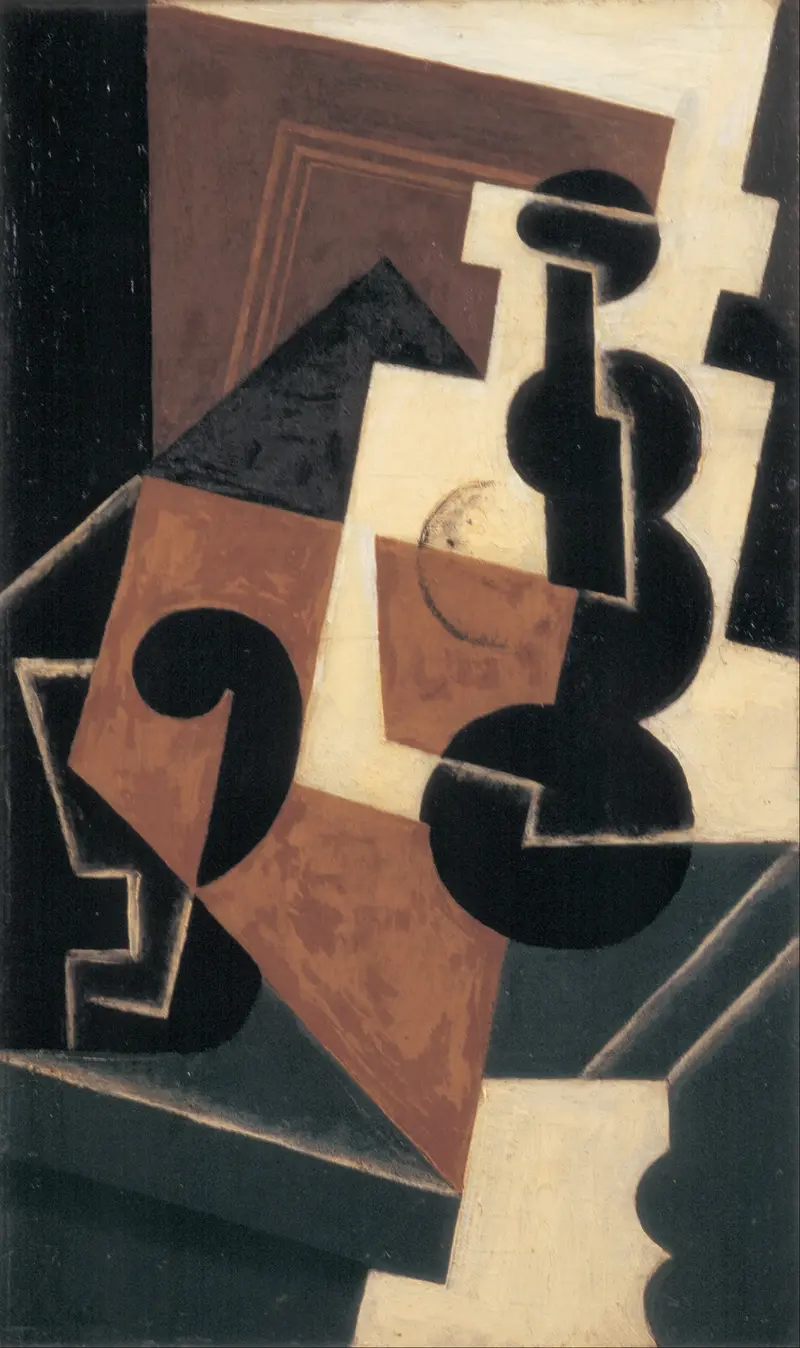
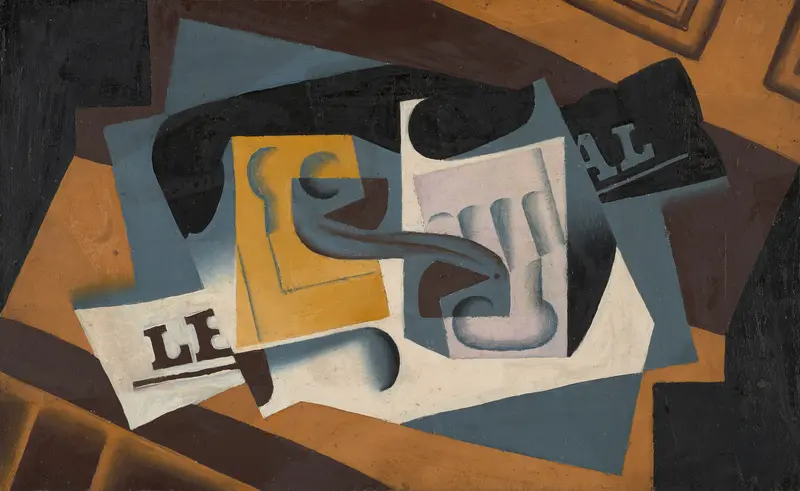
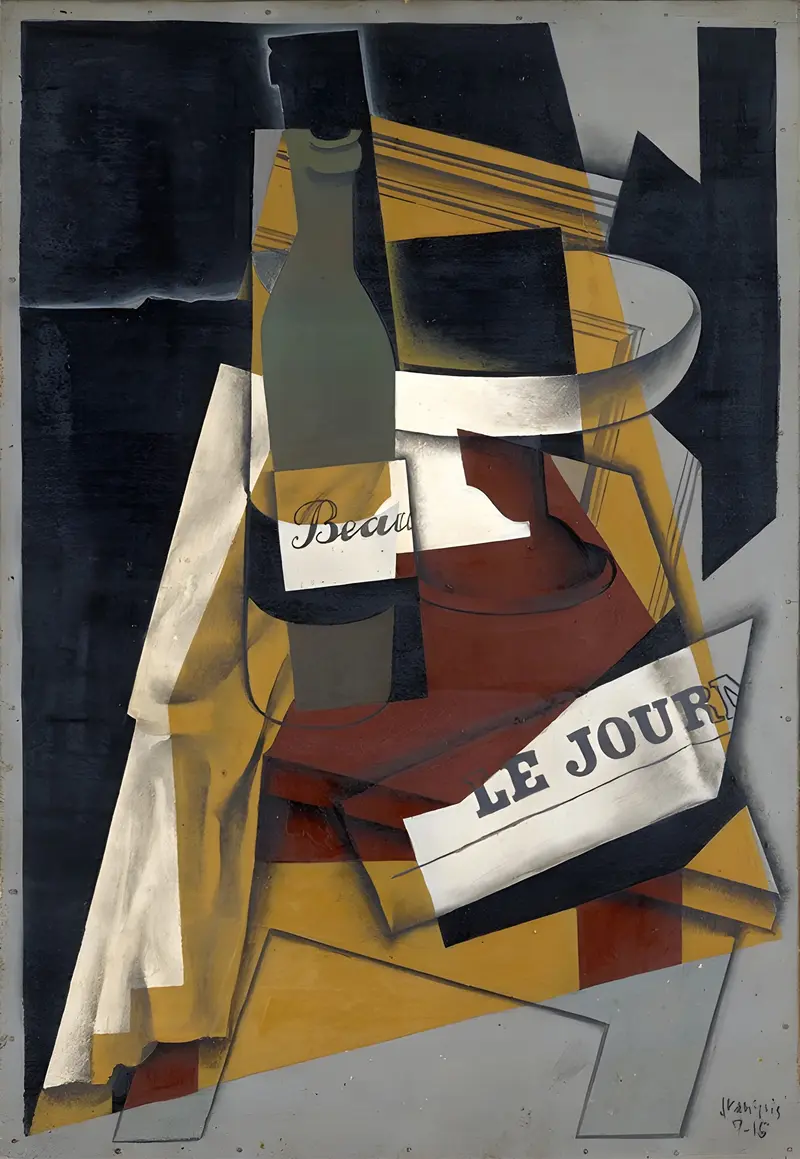
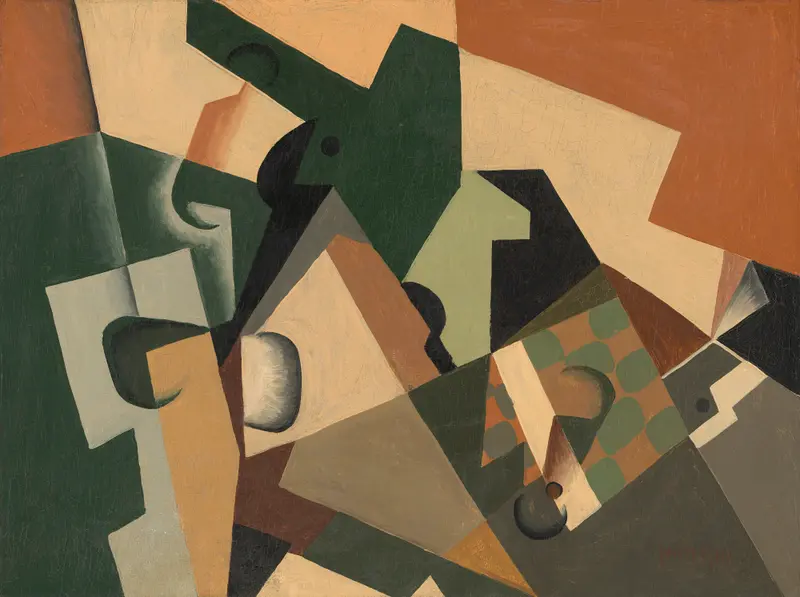
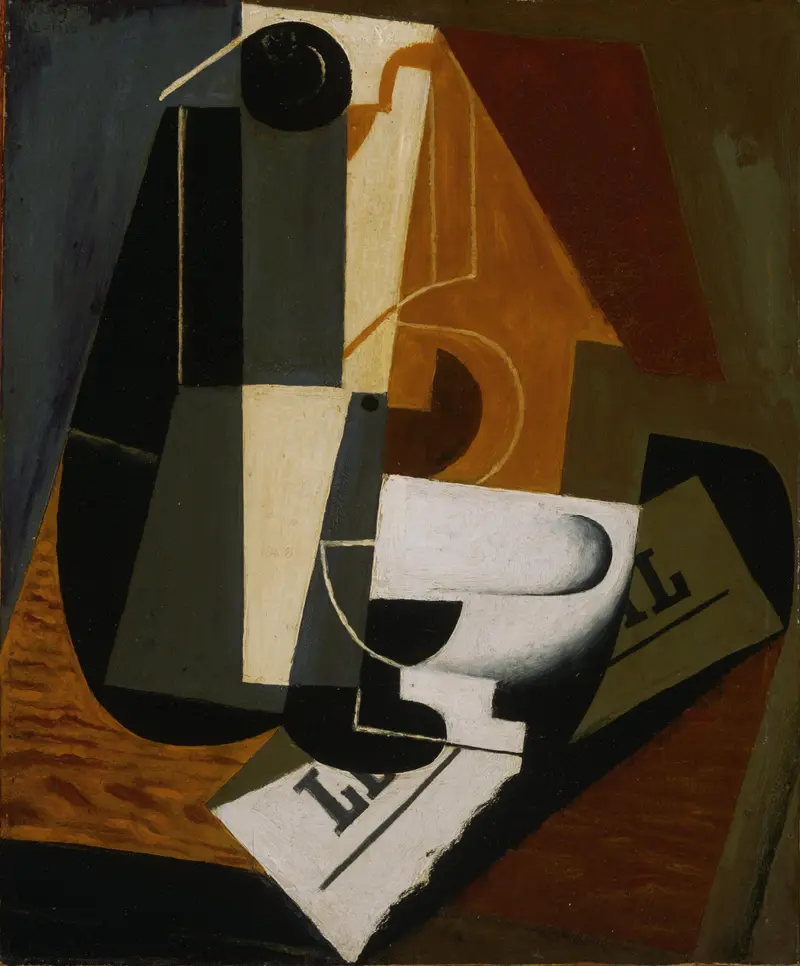
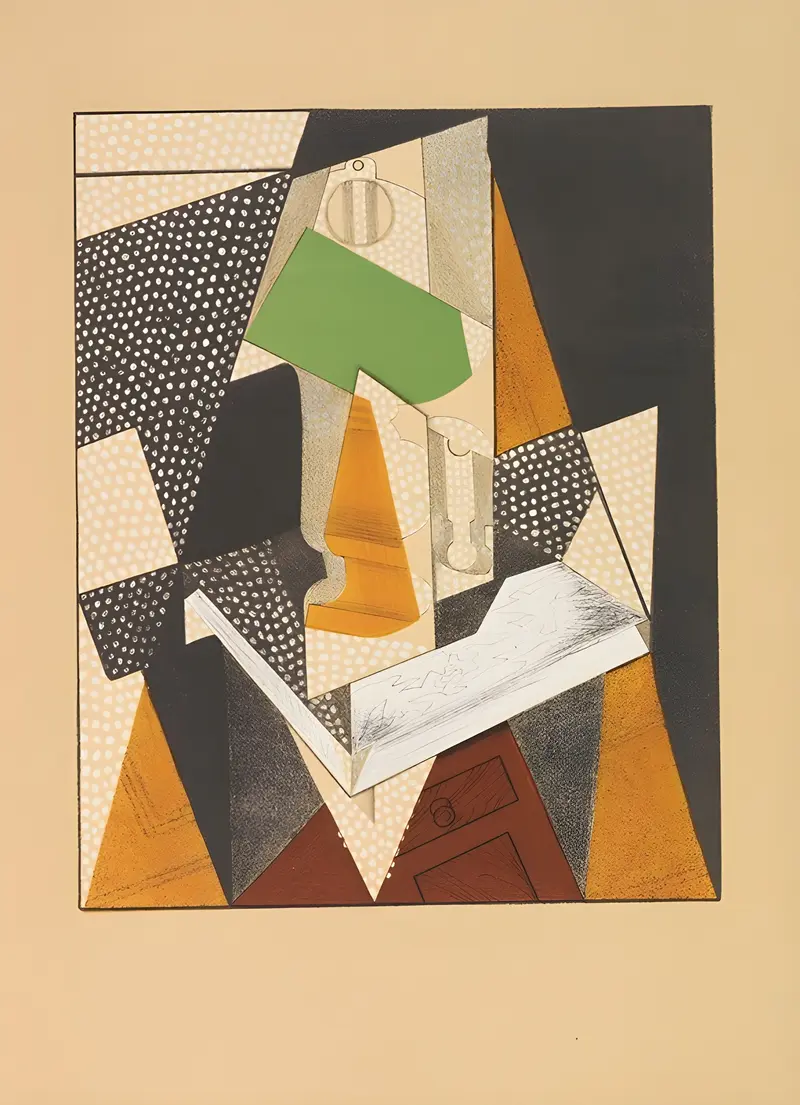
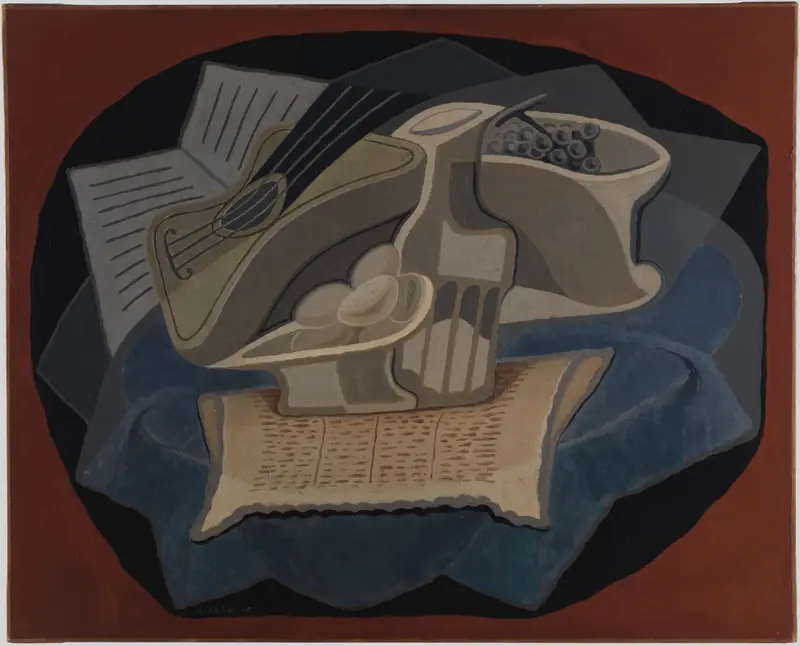
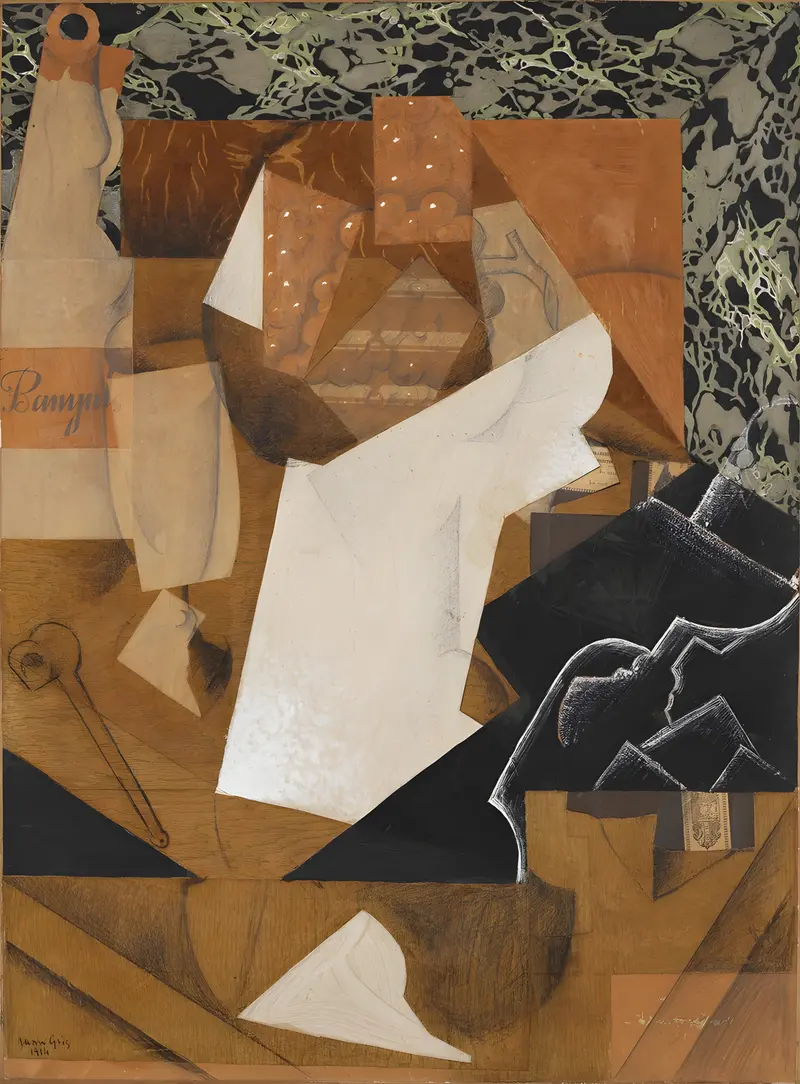
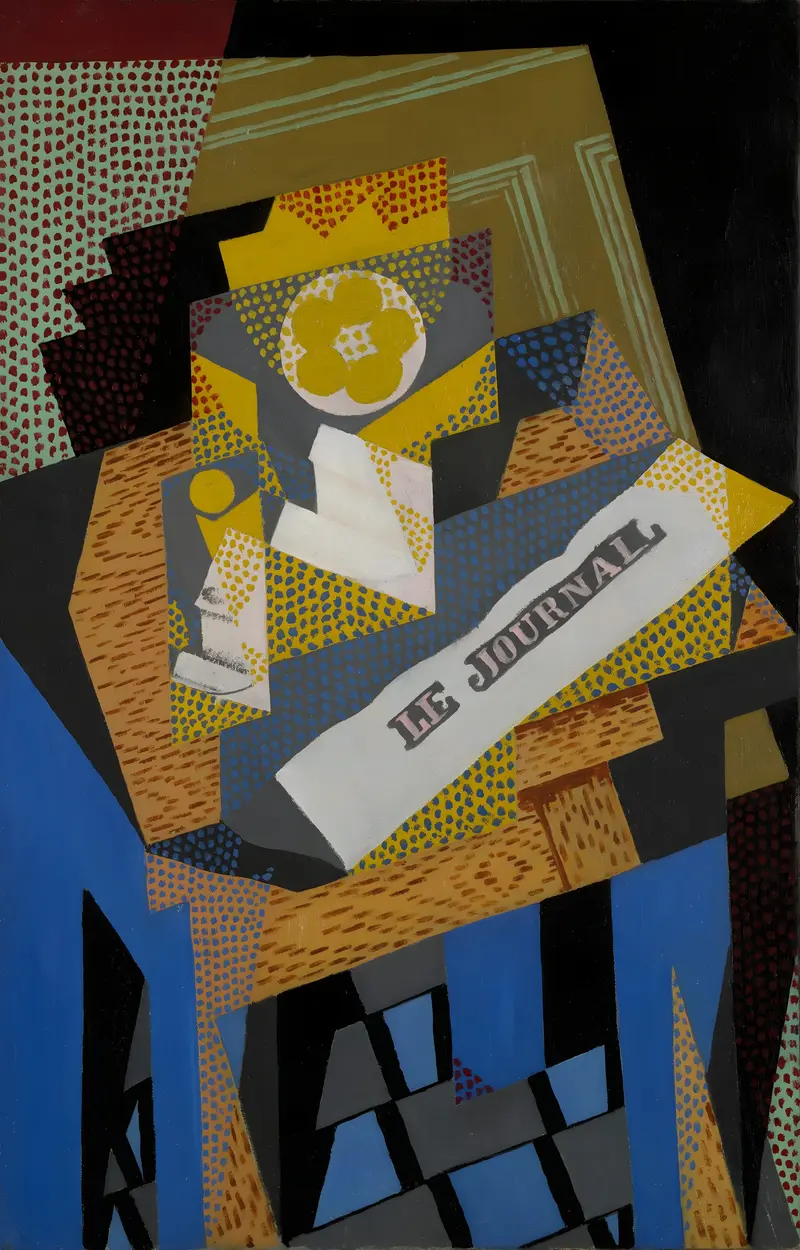
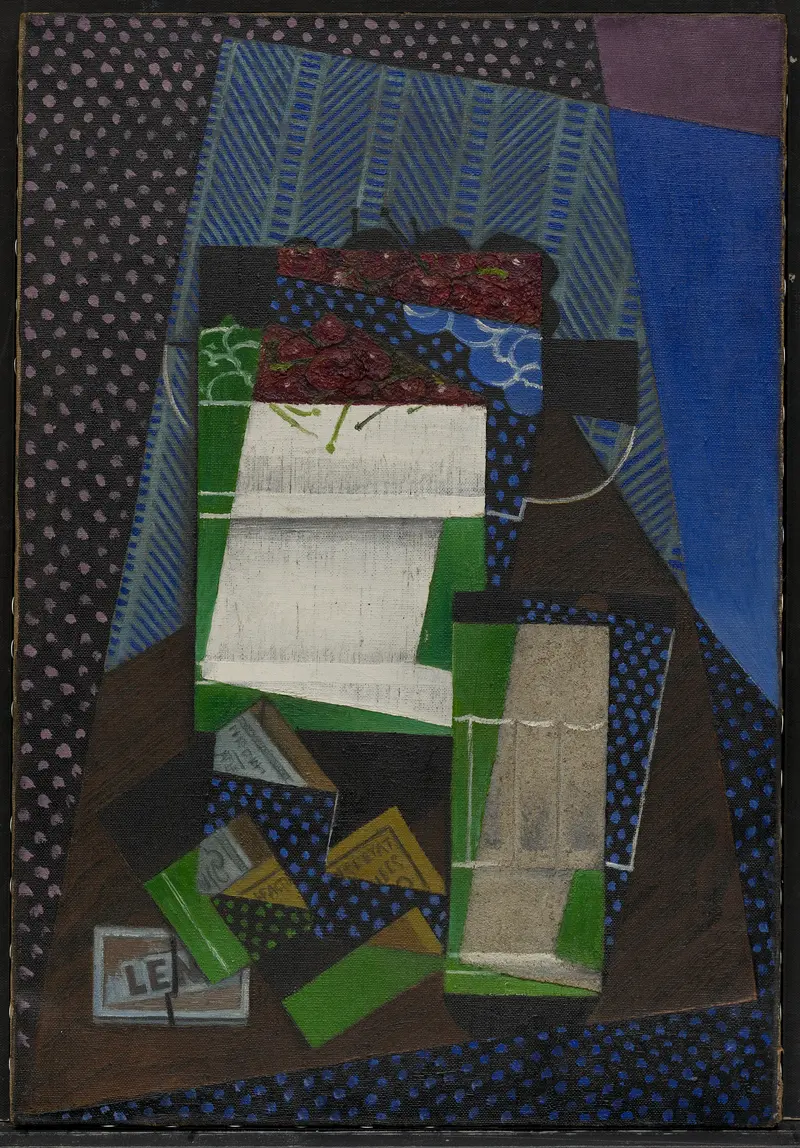
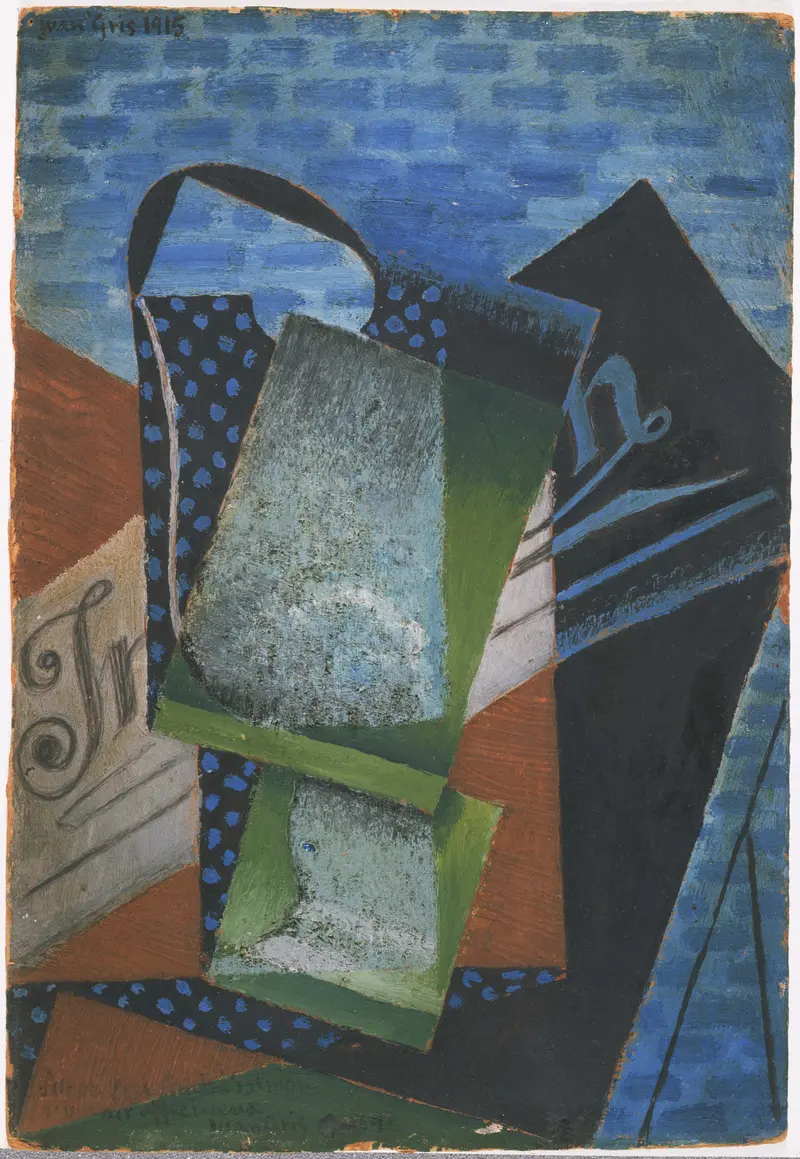
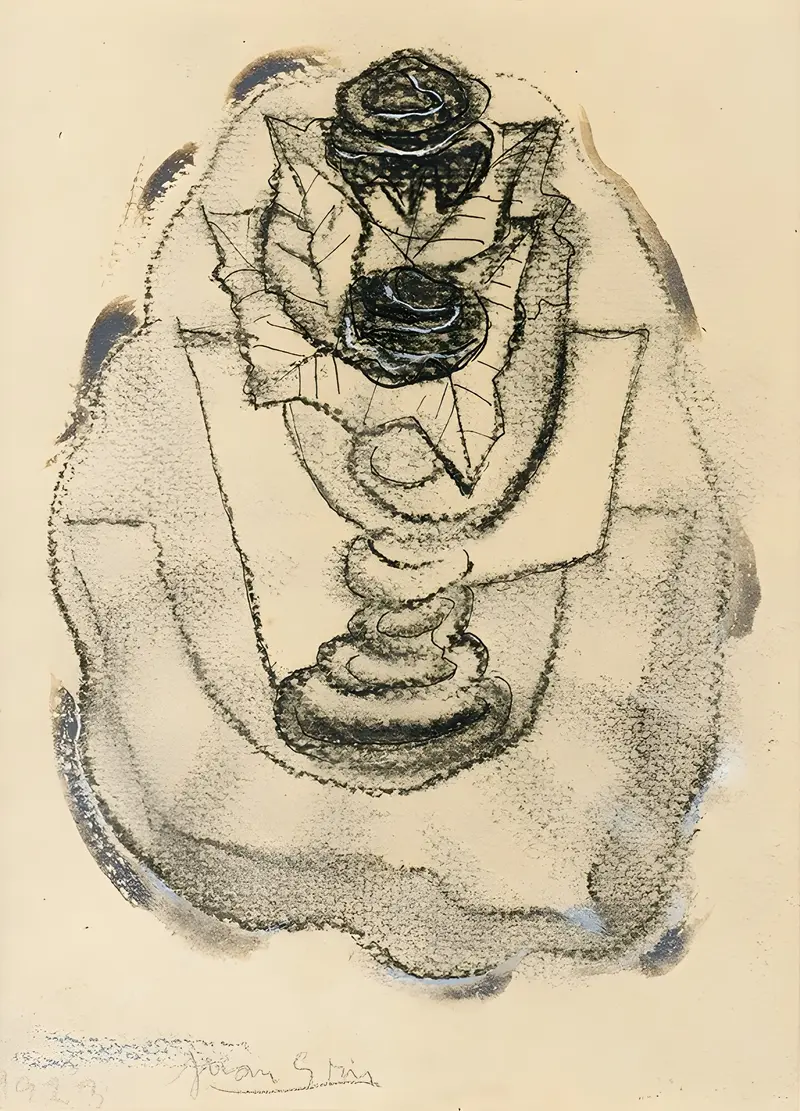
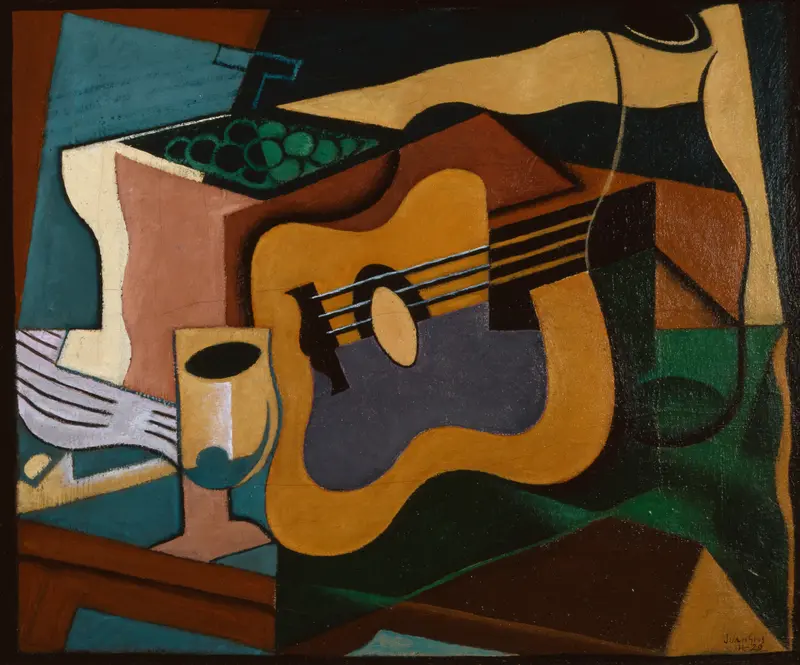
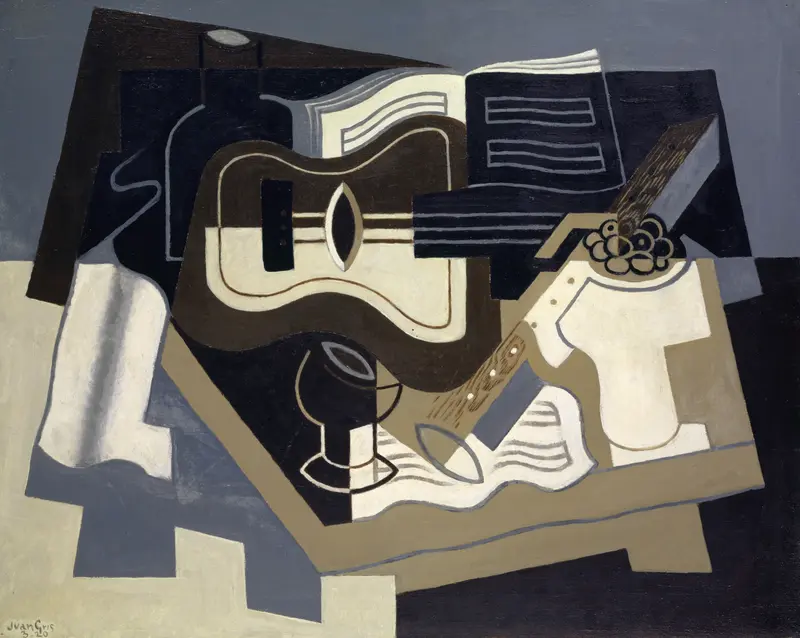
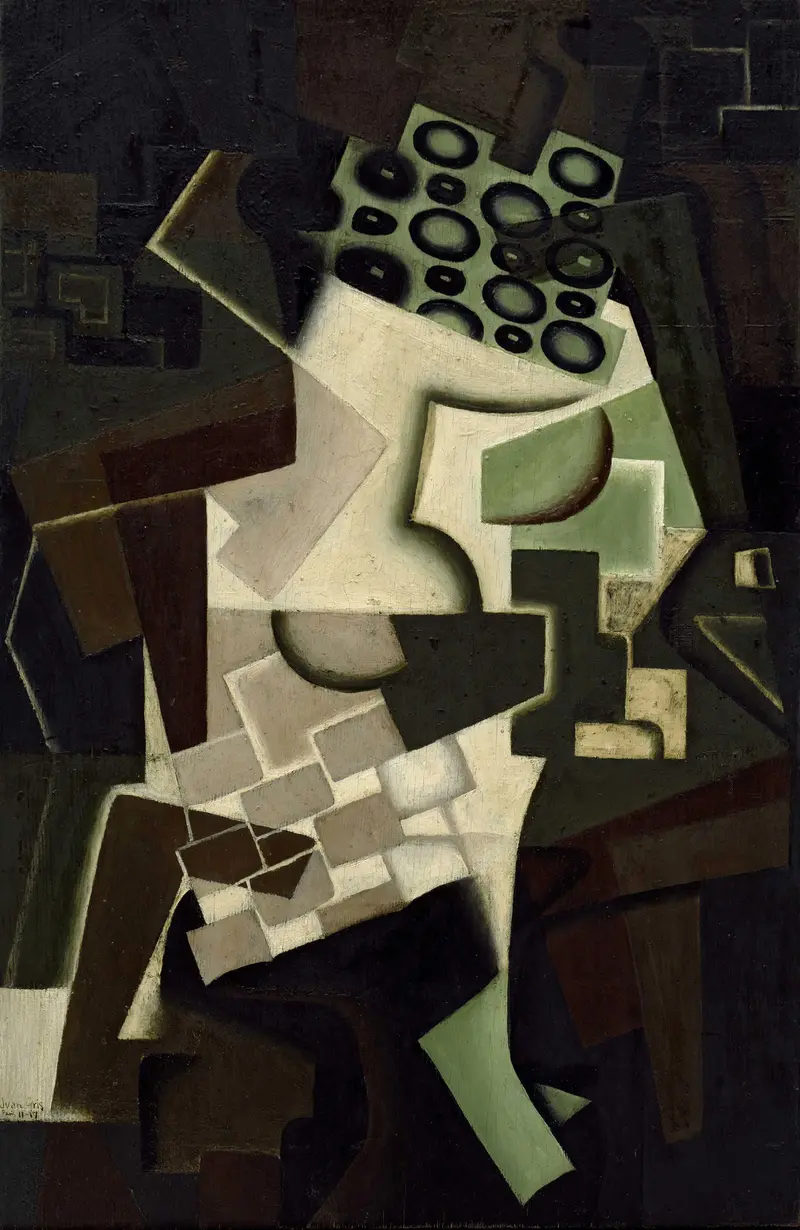
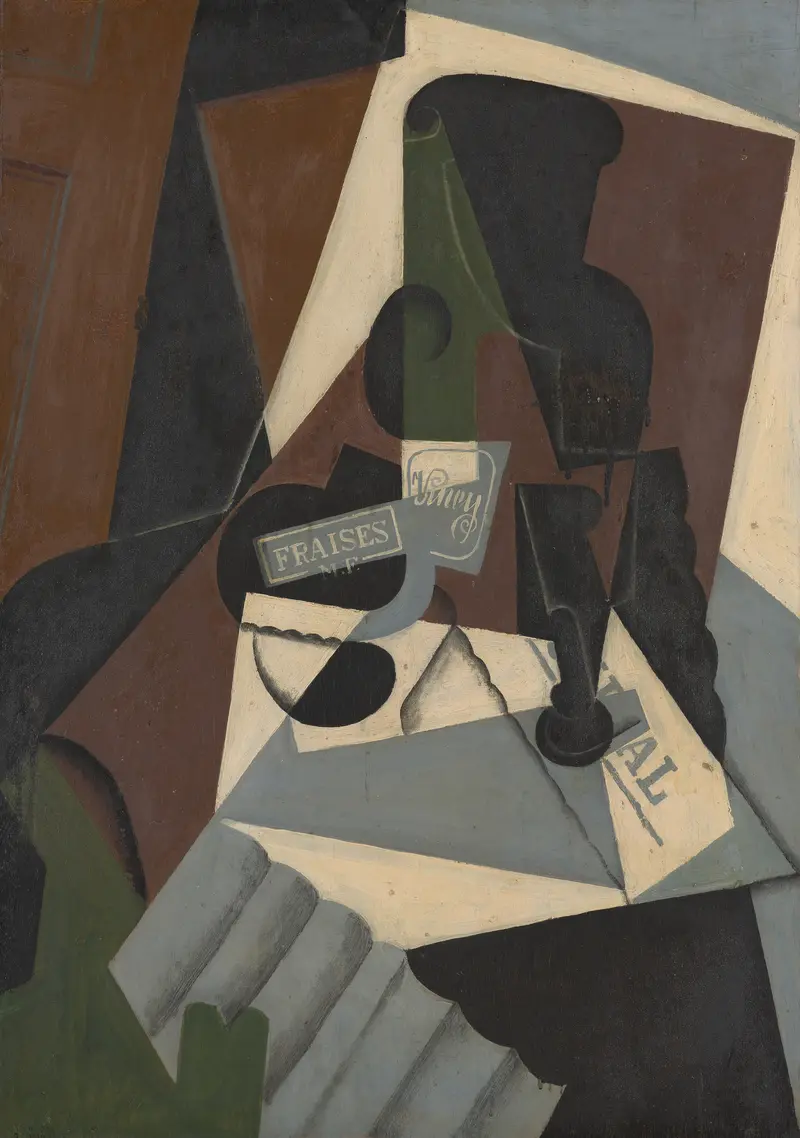
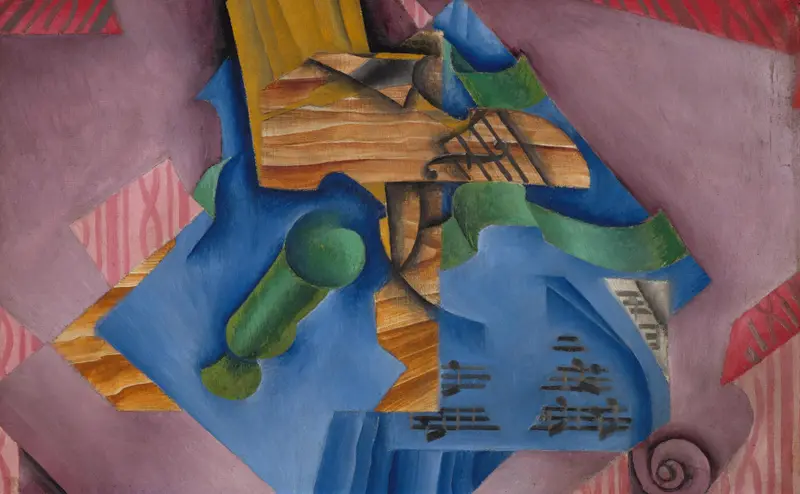
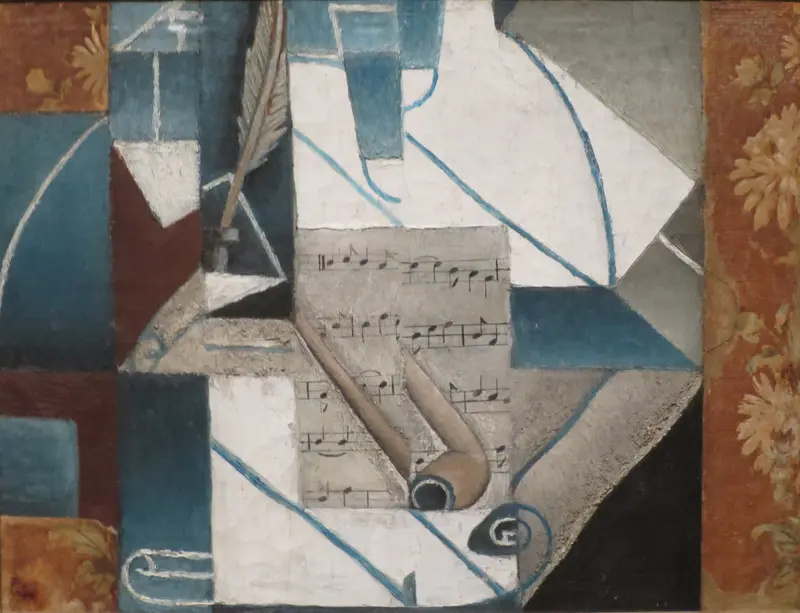
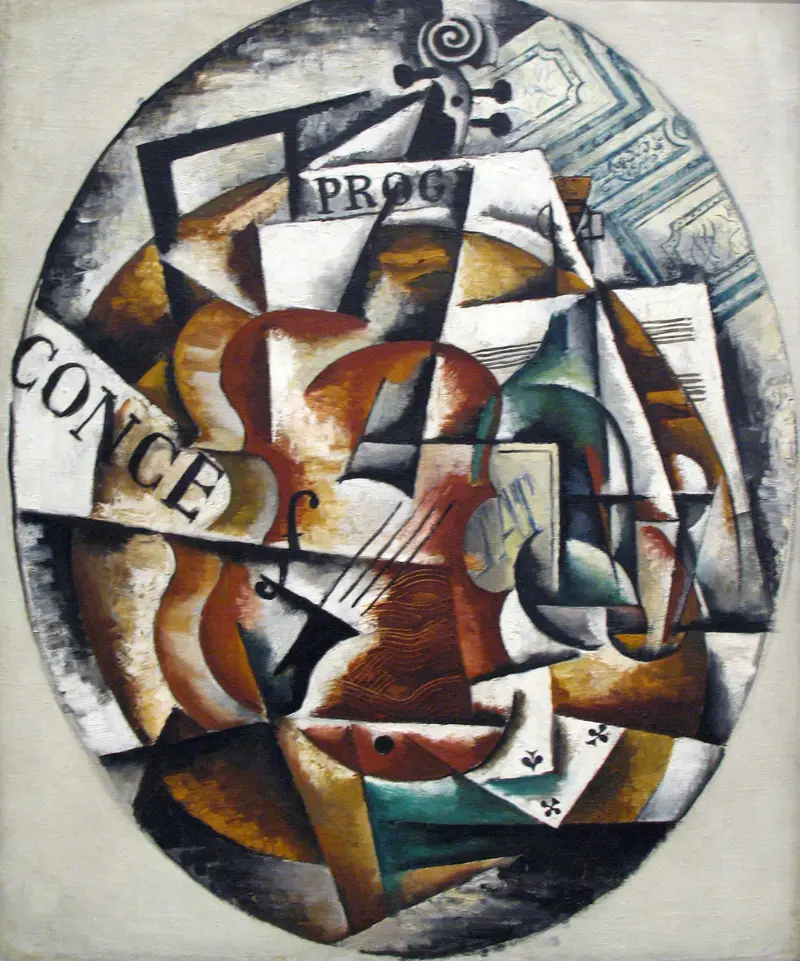
Guitars, bottles, fruit bowls and newspapers on a table: most of Juan Gris's works in our collection are still lifes. Tate counts Gris with Picasso and Braque as a painter of Synthetic Cubism, with its simpler shapes and brighter colors, and Lyubov Popova's The Violin of 1915 takes up the same subject.
Cubist landscapes
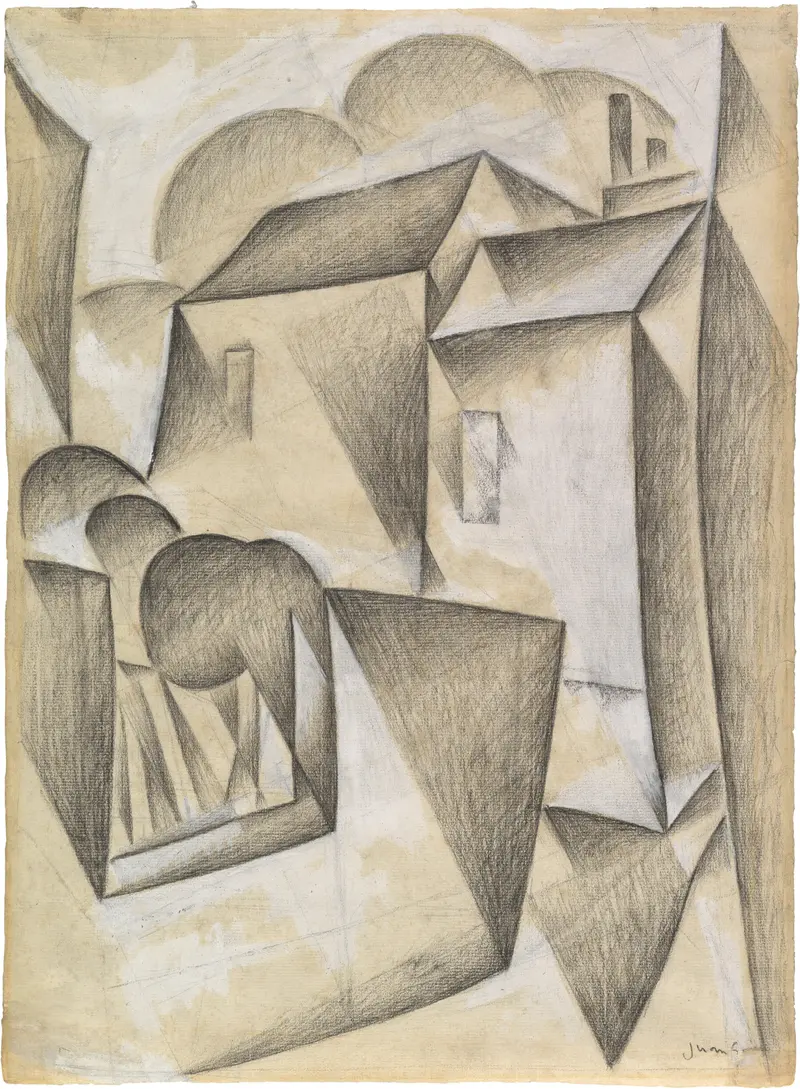
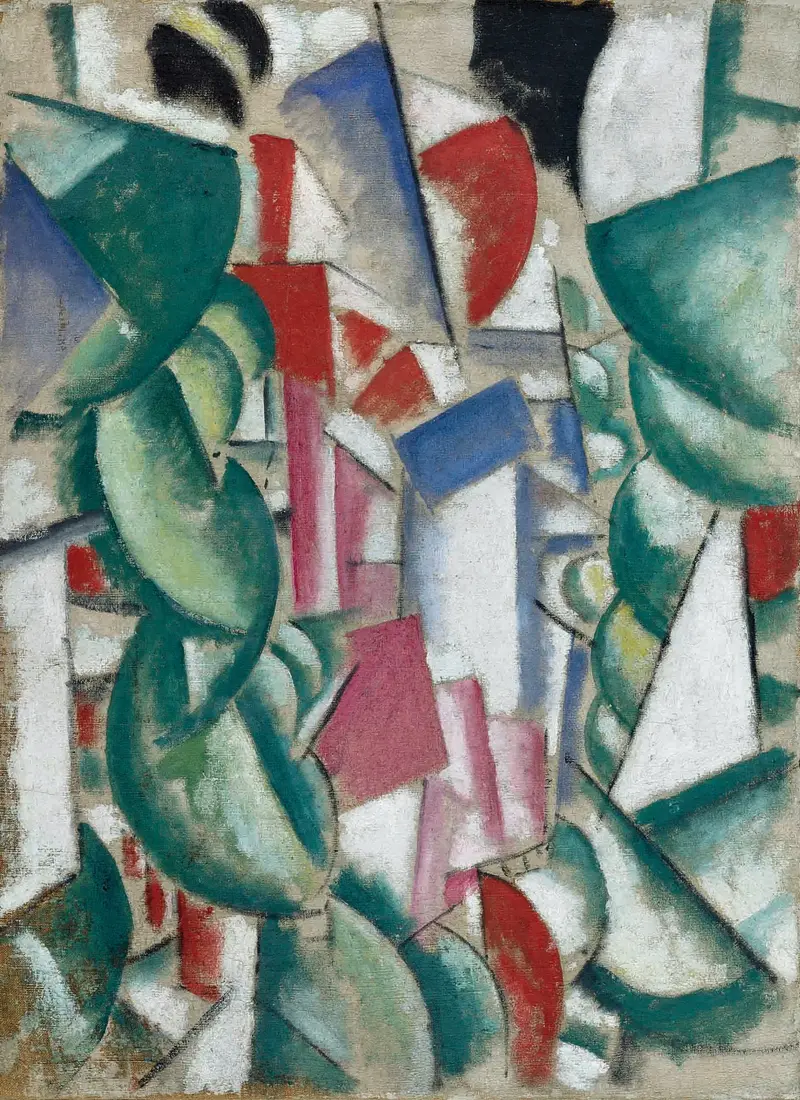
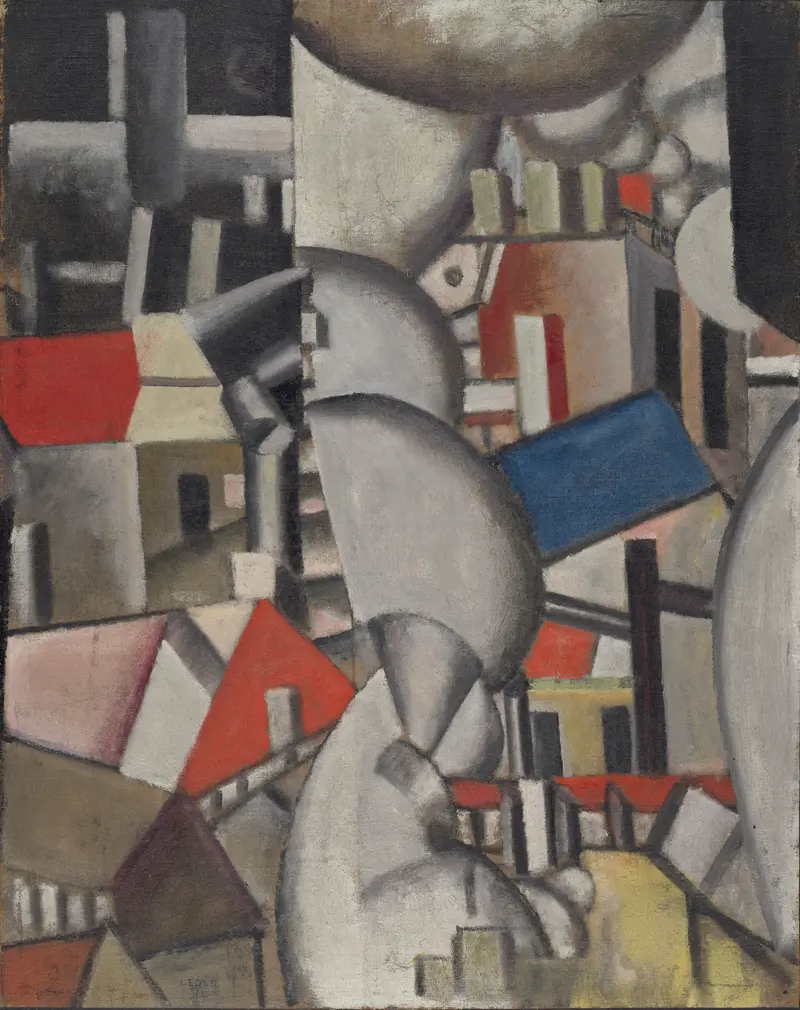
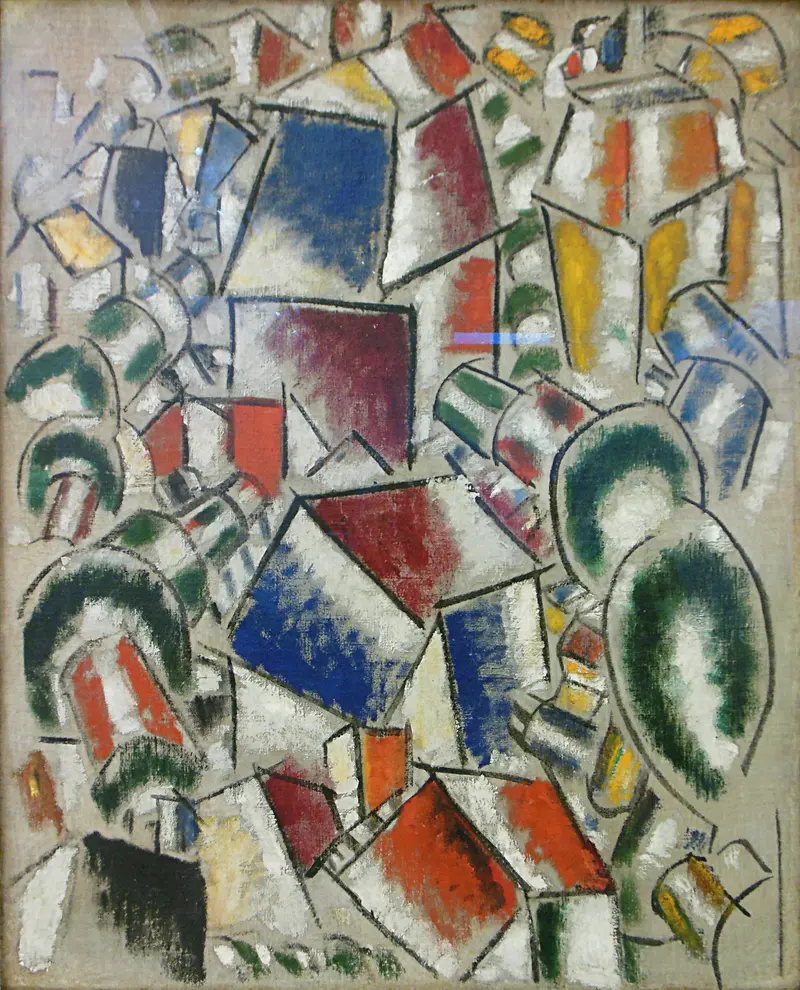
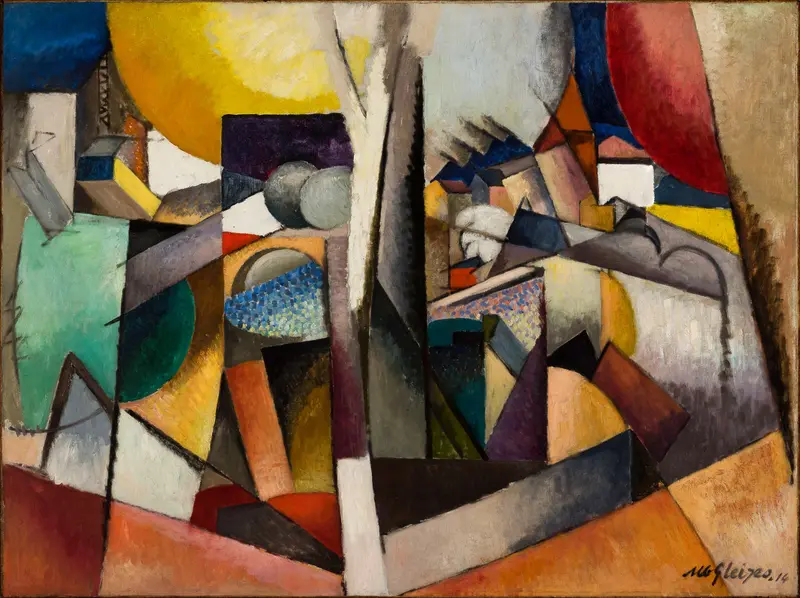
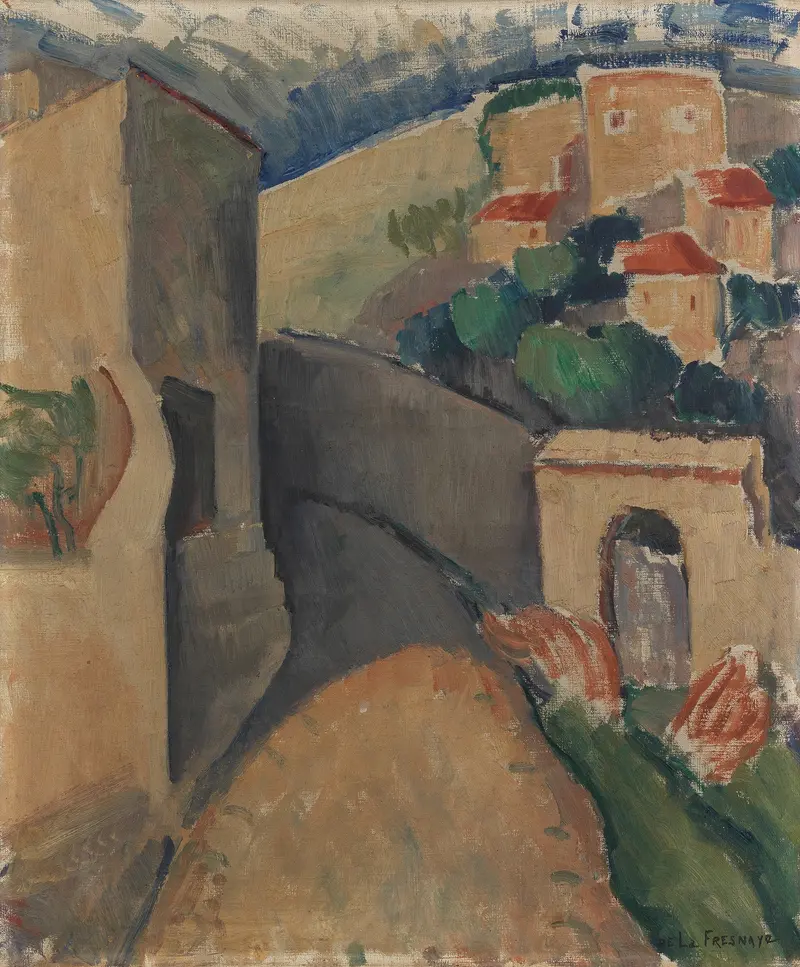
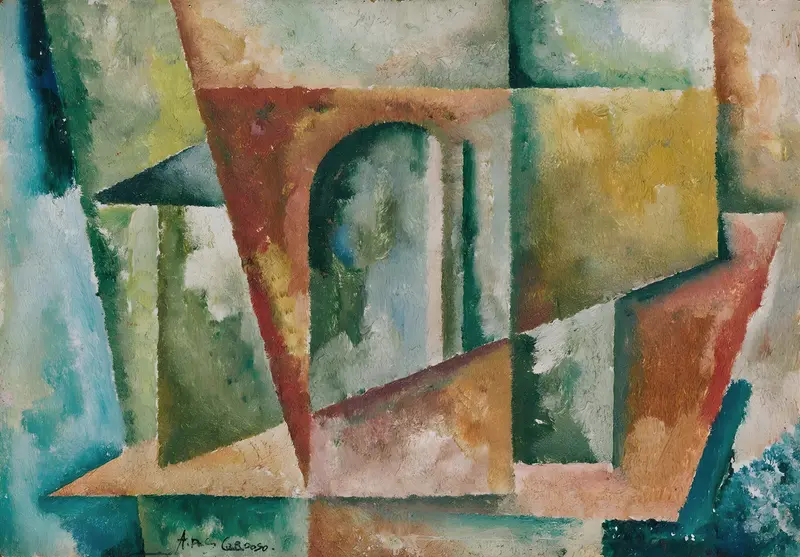
Cézanne's landscapes, built of small flat planes, pointed the way, Tate says, and Léger's style was shaped by the Cézanne retrospective in Paris in 1907. Léger, Gleizes, La Fresnaye and Souza-Cardoso turned trees, roofs and smoke into cylinders and facets.
Characteristics of Cubism: how to recognize it
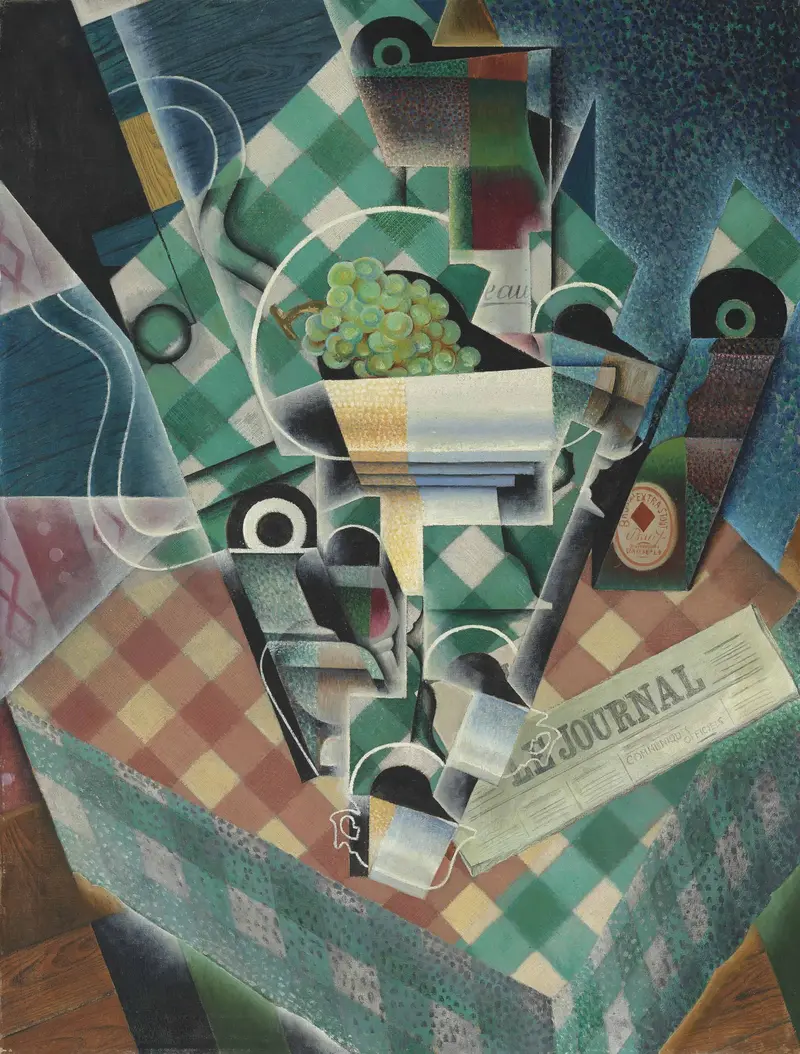
Several viewpoints at once
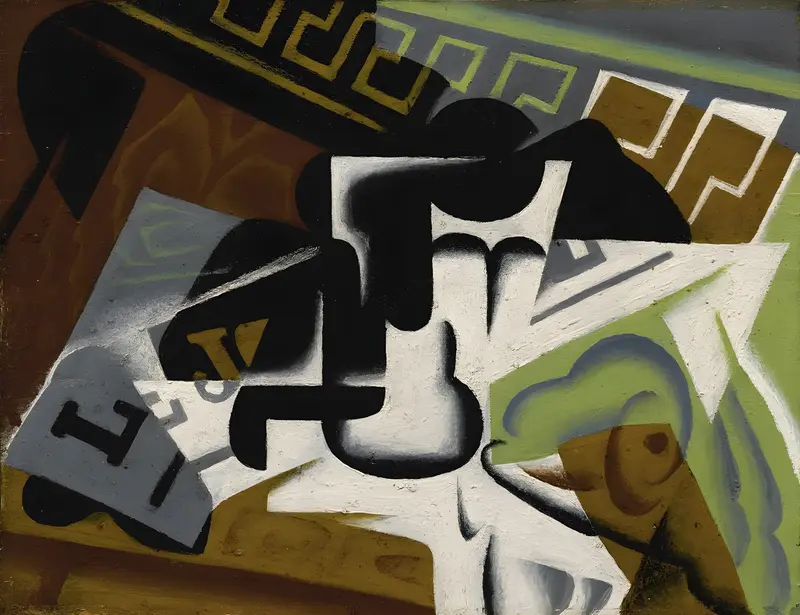
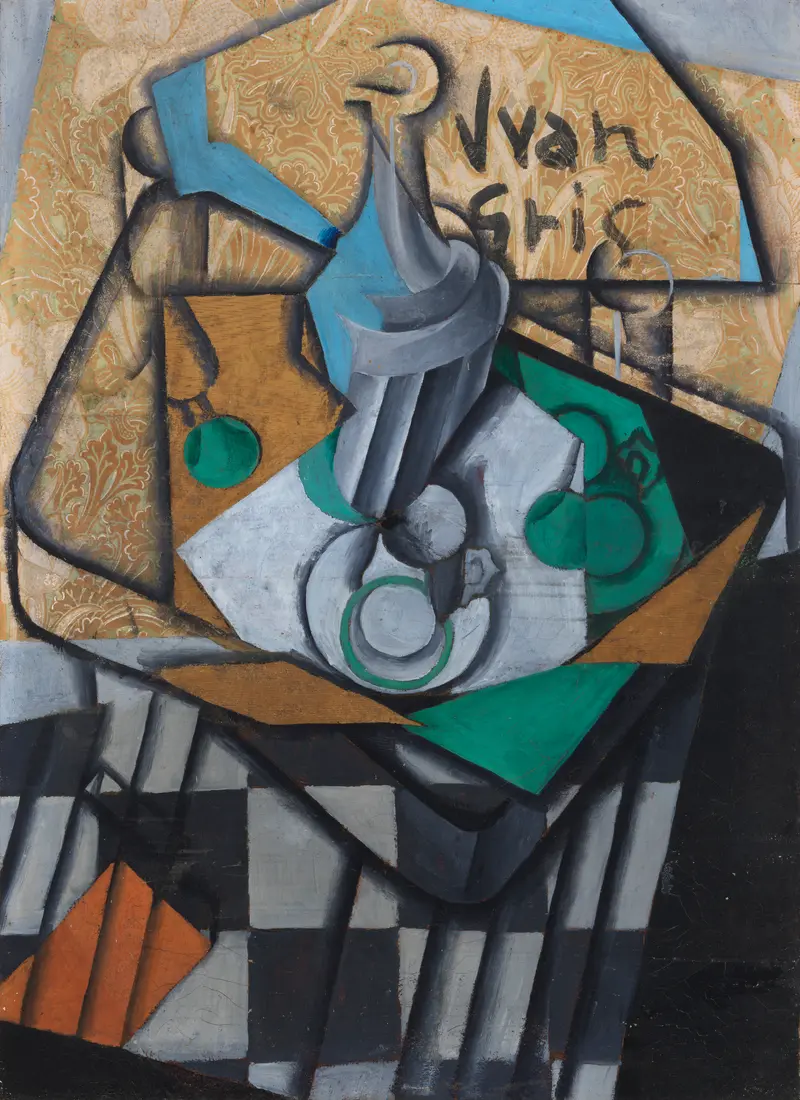
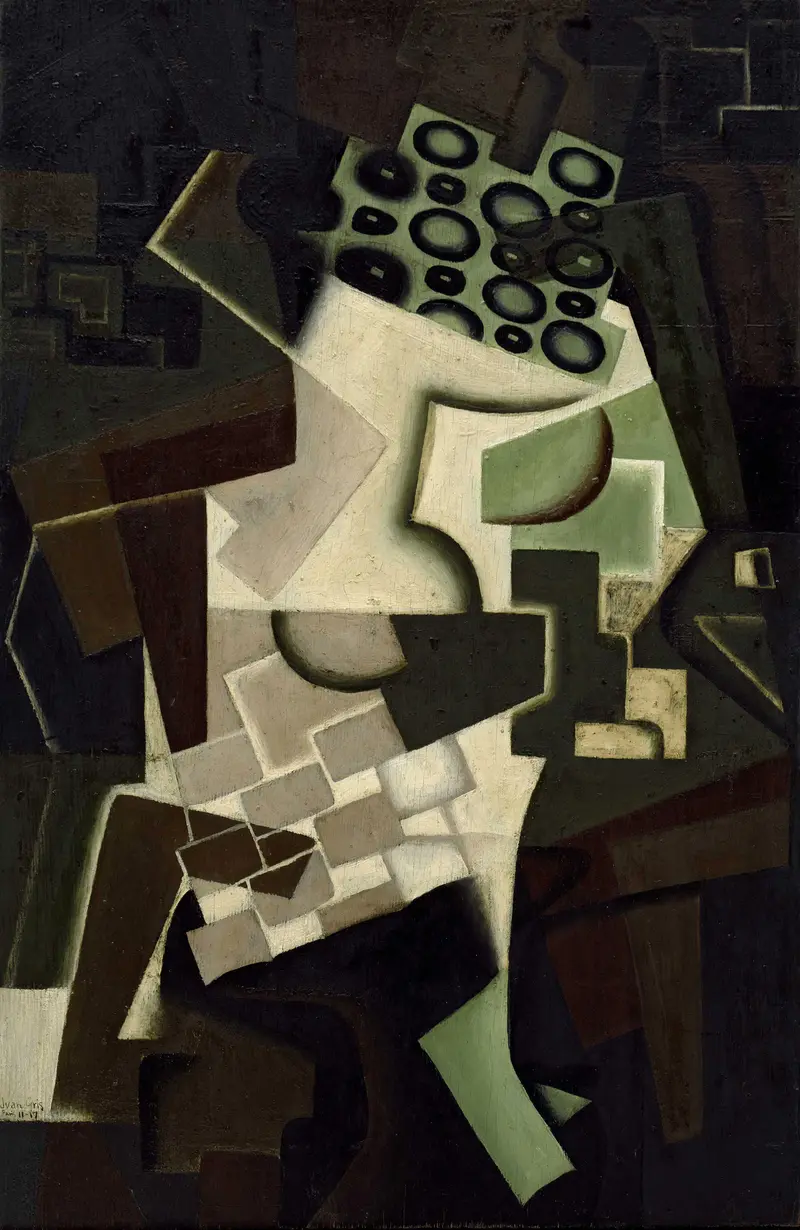
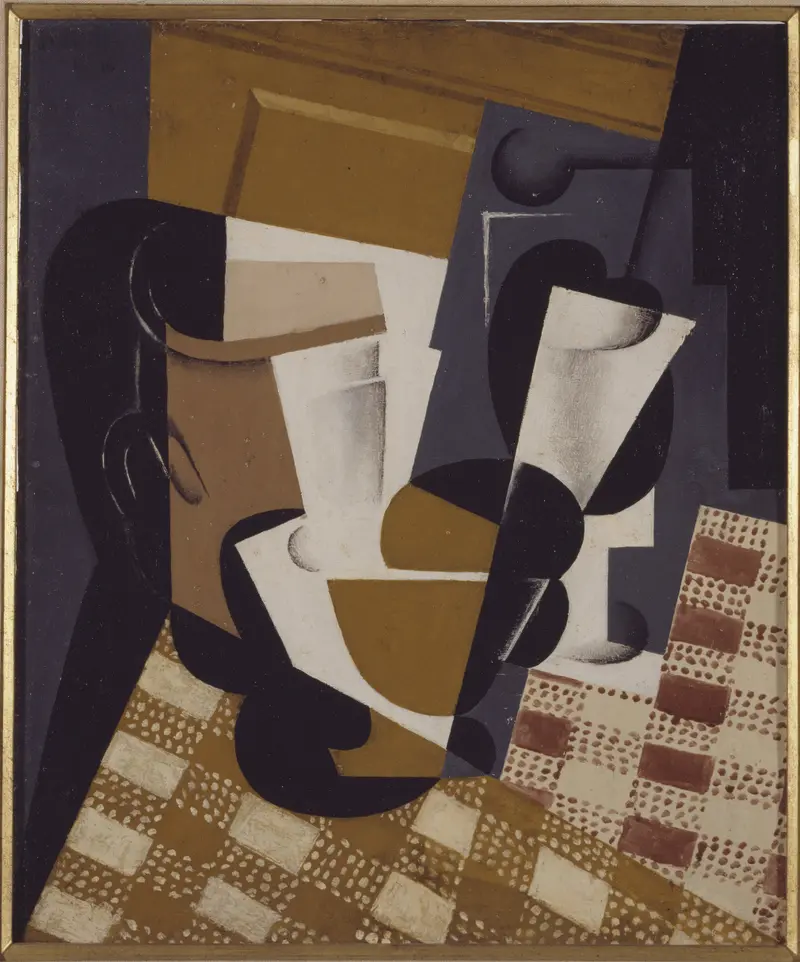
The tabletop tilts up toward us while the bottle and glasses stand upright, as if seen from two places at once. Tate describes Cubism as bringing different views of a subject together in the same picture.
Still Life with Checked Tablecloth, Juan Gris
Flat planes instead of deep space
Gleizes cuts the man, the trees and a still life into planes laid along a linear grid, the Buffalo AKG Art Museum notes. Tate says the Cubists stressed the flatness of the canvas instead of creating an illusion of depth.
L'Homme au hamac (Man in a Hammock), Albert Gleizes
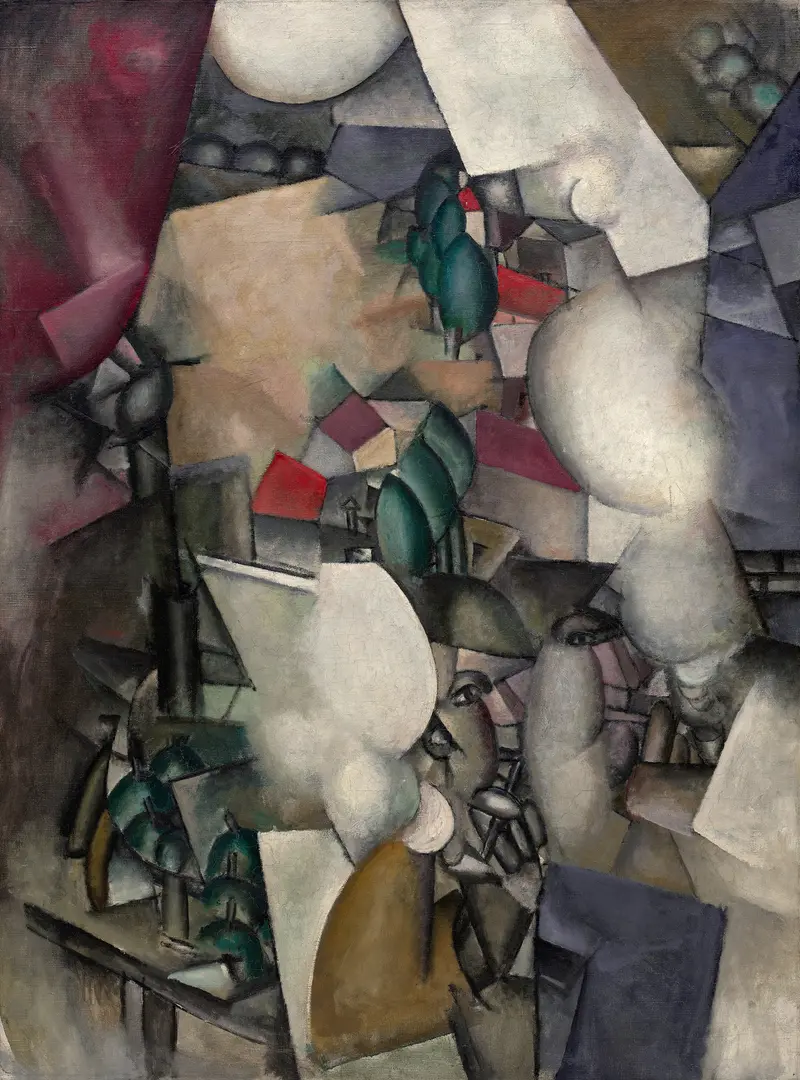
Muted grays and browns
Léger builds his smokers and their clouds of smoke from grays, whites and dull greens. Tate dates this early, more austere phase, Analytical Cubism, to 1908–12, with interwoven planes in muted blacks, grays and ochres.
Les Fumeurs, Fernand Léger
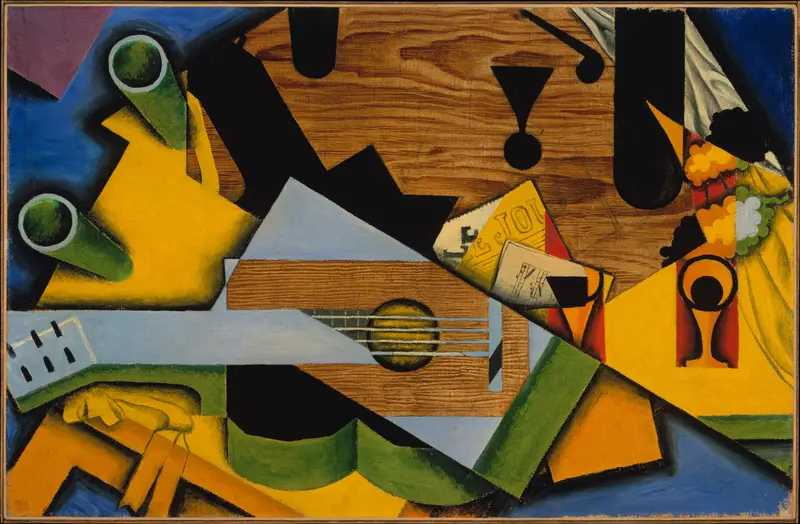
Brighter color, simpler shapes
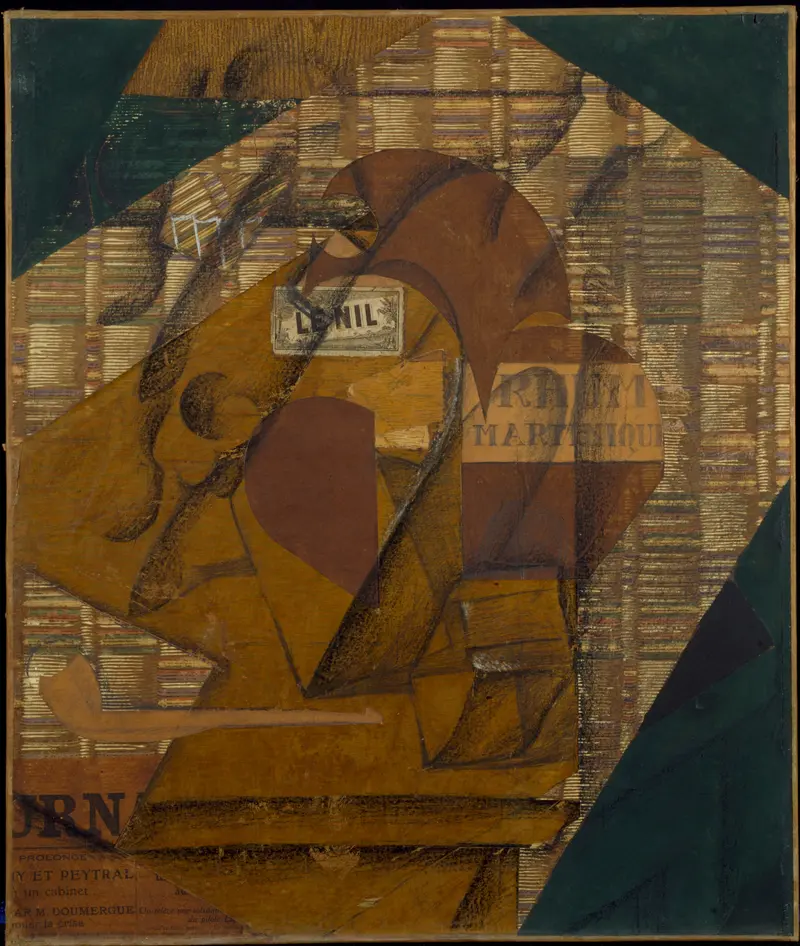
By 1913 Gris was painting flat yellow, blue and green shapes and imitation wood grain. Tate calls this later phase, from about 1912 to 1914, Synthetic Cubism: simpler shapes, brighter colors and often pasted newspaper.
Still Life with a Guitar, Juan Gris
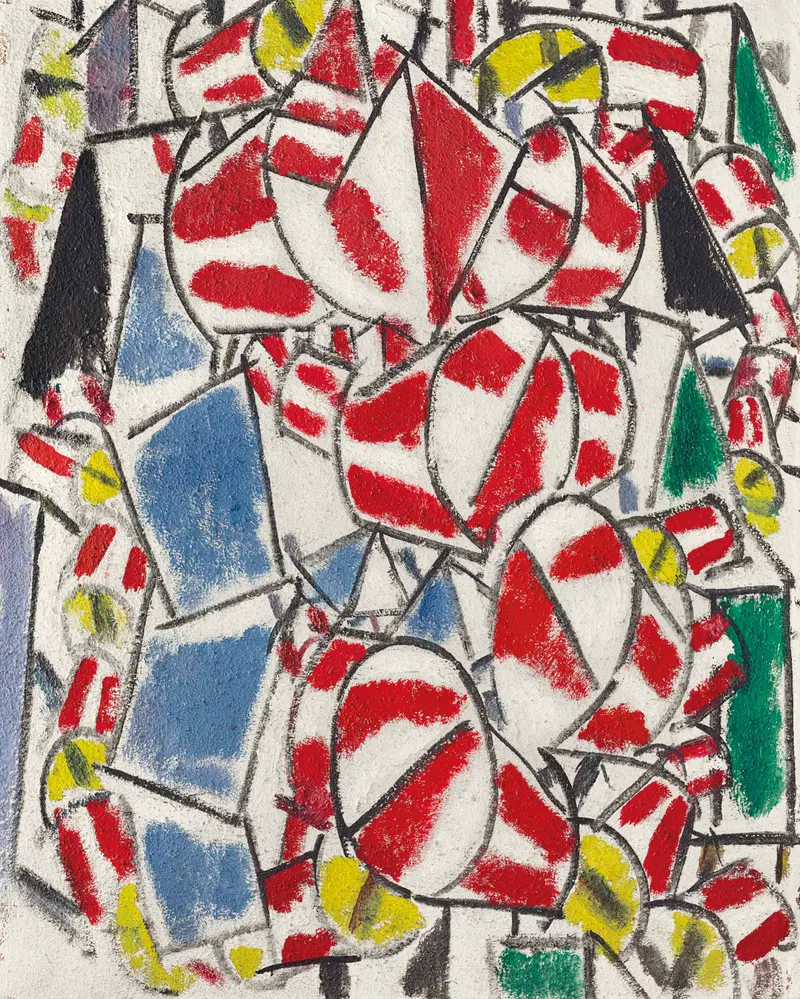
Tubes and cylinders
Léger builds the whole picture from cylinders and curved blocks outlined in black, with patches of red and blue. Because of such forms, Tate says, the critic Louis Vauxcelles called his style Tubism.
Contrast of Forms, Fernand Léger
Movement: Cubo-Futurism
The grinder's hands and feet repeat as they move. Yale University Art Gallery says the painting combines the pictorial vocabulary of Cubism with the dynamism of Futurism, a mix known in Russia as Cubo-Futurism.
The Knife Grinder, Kazimir Malevich
Before and after Cubism
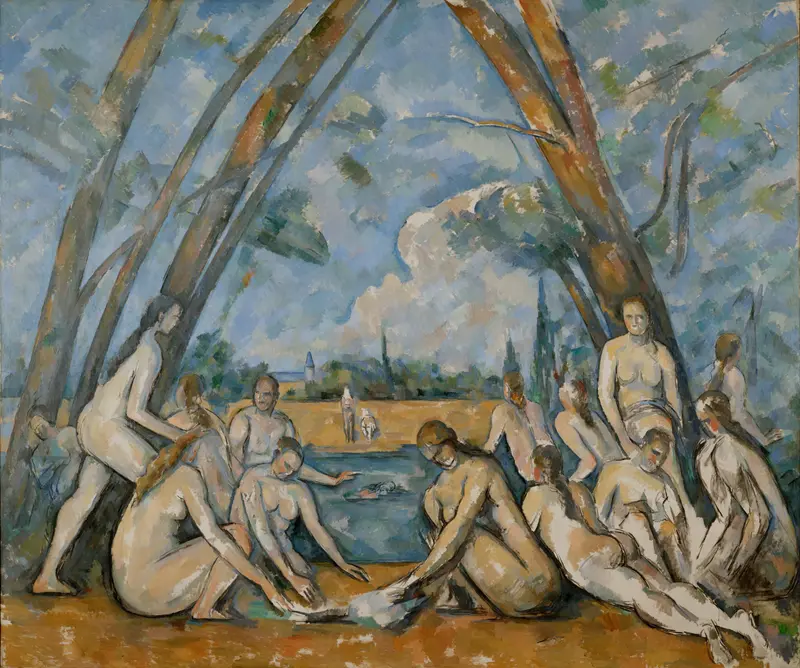 Post-Impressionismc. 1886–1905
- Cubismc. 1907–1914
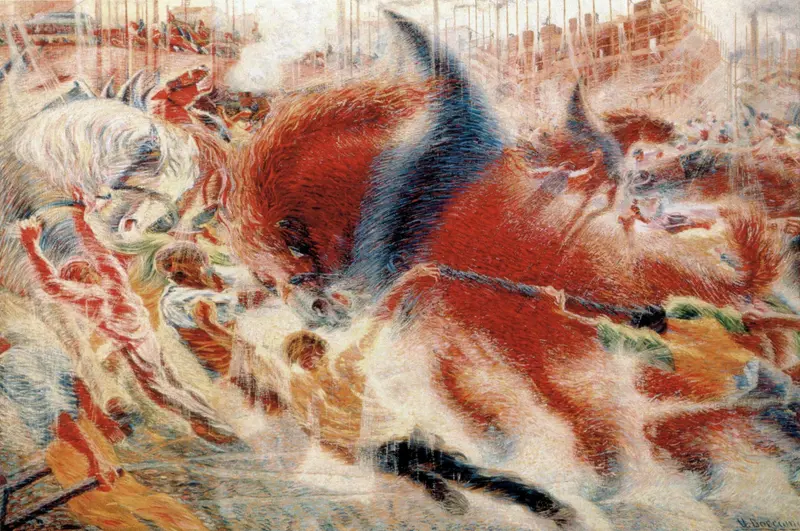 Futurism1909–c. 1916
 Suprematismc. 1913–1919
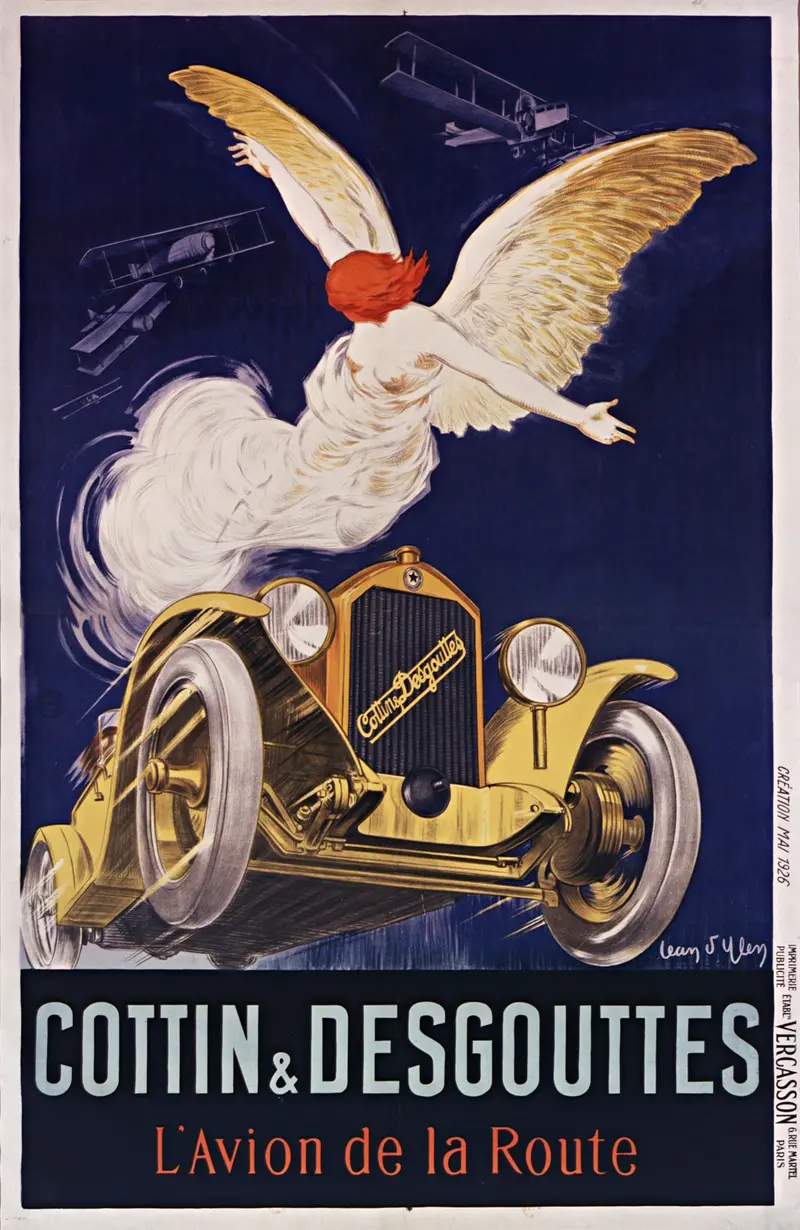 Art Deco1920s–1930s
Cubism vs Futurism and Orphism
| Compared | Cubism | Futurism | Orphism |
|---|---|---|---|
| When | c. 1907–1914 | 1909–c. 1916 | From about 1912 |
| Where | Paris | Italy (Milan) | Paris |
| Subject | Objects and figures: still lifes of guitars, bottles and newspapers, portraits | Speed, machines, crowds and the modern city | Color itself: circles, windows and light |
| Aim | Show a subject from several viewpoints on a flat surface | Convey the energy and movement of modern life | Make painting like music, built from color |
| Famous example | Gris, Still Life with Checked Tablecloth | Boccioni, The City Rises | Delaunay, Homage to Blériot |
| Key artists | Picasso, Braque, Gris, Léger, Gleizes | Boccioni, Balla, Severini | Robert and Sonia Delaunay |
List of famous Cubism paintings and their artists
The famous Cubism paintings: who painted them, when, and where each one is today.
Show the listHide the list
| Painting | Painted by | Year | Medium | Size | Located in | City |
|---|---|---|---|---|---|---|
| The Knife Grinder (Principle of Glittering) | Kazimir Malevich | 1912–13 | Oil on canvas | 79.5 × 79.5 cm (31.3 × 31.3 in) | Yale University Art Gallery | New Haven |
| Saint Sebastian | Bohumil Kubišta | 1912 | Oil on canvas | 98 × 74.5 cm (38.6 × 29.3 in) | National Gallery Prague | Prague |
| The Woodcutter | Kazimir Malevich | 1912 | Oil on canvas | 94 × 71.5 cm (37 × 28.1 in) | Stedelijk Museum | Amsterdam |
| The Bells | Ilmari Aalto | 1914 | Oil on canvas | 50 × 40 cm (19.7 × 15.7 in) | Finnish National Gallery | Helsinki |
| Woman with Pails: Dynamic Arrangement | Kazimir Malevich | 1912–13 | Oil on canvas | 80.3 × 80.3 cm (31.6 × 31.6 in) | MoMA | New York |
| The Cardiff Team (L'Équipe de Cardiff) | Robert Delaunay | 1912–13 | Oil on canvas | 326 × 208 cm (128.3 × 81.9 in) | Musée d'Art Moderne de la Ville de Paris | Paris |
| Violin and Playing Cards on a Table | Juan Gris | 1913 | Oil on canvas | 100 × 65.4 cm (39.4 × 25.7 in) | Metropolitan Museum of Art | New York |
| Le Canigou | Juan Gris | 1921 | Oil on canvas | 64.8 × 100.3 cm (25.5 × 39.5 in) | Buffalo AKG Art Museum | Buffalo |
| Juan Legua | Juan Gris | 1911 | Oil on canvas | 55.2 × 46.2 cm (21.7 × 18.2 in) | Metropolitan Museum of Art | New York |
| Joan of Arc | Roger de La Fresnaye | 1912 | Oil on canvas | 200 × 100 cm (78.7 × 39.4 in) | Musée d'Art Moderne de Troyes | Troyes |
| Man in a Hammock (L'Homme au hamac) | Albert Gleizes | 1913 | Oil on canvas | 130.2 × 155.6 cm (51.3 × 61.3 in) | Buffalo AKG Art Museum | Buffalo |
| The Publisher Eugène Figuière | Albert Gleizes | 1913 | Oil on canvas | 143.5 × 101.5 cm (56.5 × 40 in) | Musée des Beaux-Arts de Lyon | Lyon |
| Udnie (Young American Girl, The Dance) | Francis Picabia | 1913 | Oil on canvas | 290 × 300 cm (114.2 × 118.1 in) | Musée National d'Art Moderne | Paris |
Cubism: questions and answers
What is Cubism in art, and what does it mean?
In art, Cubism means showing objects and figures as flat, geometric planes seen from several viewpoints at once, instead of creating the illusion of depth. Tate calls it a revolutionary new approach to representing reality, invented around 1907–08 by Pablo Picasso and Georges Braque, in which artists broke their subjects into distinct planes to show different viewpoints at the same time. The Getty's art vocabulary describes an international movement that developed in phases until the early 1920s.
Sources: Tate: Cubism · Getty AAT: Cubist
Who invented Cubism?
Pablo Picasso and Georges Braque invented Cubism in Paris around 1907–08. Tate says it is generally agreed to have begun with Picasso's Les Demoiselles d'Avignon of 1907, which included elements of the Cubist style. Juan Gris, Albert Gleizes, Jean Metzinger and Robert Delaunay soon worked in a Cubist style too, and Fernand Léger turned to it after seeing the early Cubism of Picasso and Braque.
Sources: Tate: Cubism · Tate: All about cubism · Peggy Guggenheim Collection: Fernand Léger
Is Cubist art in the public domain, and can I download it free?
Partly. Where copyright lasts 70 years after the artist's death, as in the European Union and the UK, Cubists who died in 1955 or earlier are public domain, among them Juan Gris (died 1927), Kazimir Malevich (1935), Robert Delaunay (1941) and Fernand Léger (1955). Pablo Picasso died in 1973 and Georges Braque in 1963, so their paintings stay protected there until the end of 2043 and 2033; Tate and the Met still show them with a copyright line. Jean Metzinger (died 1956) follows on January 1, 2027. In the United States, works published before 1931 are public domain.
Sources: Your Europe (European Union): Copyright · GOV.UK: How long copyright lasts · Cornell University Library: Copyright Term and the Public Domain · Tate: Pablo Picasso, 1881–1973 · Tate: Georges Braque, 1882–1963 · Tate: Cubism · Metropolitan Museum of Art: Pablo Picasso, Woman in an Armchair · Metropolitan Museum of Art: Georges Braque, Candlestick and Playing Cards on a Table · Tate: Juan Gris, 1887–1927 · Peggy Guggenheim Collection: Kazimir Malevich · Peggy Guggenheim Collection: Robert Delaunay · Peggy Guggenheim Collection: Fernand Léger · Peggy Guggenheim Collection: Jean Metzinger
Why is it called Cubism?
The name seems to come from the critic Louis Vauxcelles, who saw Georges Braque's paintings in Paris in 1908 and described them as reducing everything to “geometric outlines, to cubes,” Tate says. Vauxcelles also coined Tubism for Fernand Léger's cylinder-like forms. Orphism, the colorful offshoot of Robert and Sonia Delaunay, was named by the poet Guillaume Apollinaire around 1912–13.
Sources: Tate: Cubism · Tate: Five things to know about Fernand Léger · Tate: Orphism
What are the characteristics of Cubism?
Cubist paintings break objects and figures into flat geometric planes, show several viewpoints at once and stress the flatness of the canvas instead of an illusion of depth. Tate says the subjects were usually objects or figures; the early phase used muted blacks, grays and ochres, and the later phase brought simpler shapes, brighter colors and pasted newspaper. Léger's tube-like forms and Malevich's repeated, moving figures show how other painters bent the style.
Sources: Tate: Cubism · Tate: Five things to know about Fernand Léger · Yale University Art Gallery
What is Analytical Cubism?
Analytical Cubism is the early phase of Cubism, from about 1908 to 1912, when subjects were broken into a fragmentary pattern of overlapping planes and multiple viewpoints. Tate says these works look more severe, with interwoven planes and lines in muted blacks, grays and ochres, a simplified palette so that color does not distract from the structure of the form. Léger's The Smokers of 1911–12 and Gris's portrait Juan Legua of 1911 keep to this restrained palette.
Sources: Tate: Analytical cubism · Tate: Cubism
What is Synthetic Cubism?
Synthetic Cubism is the later phase of Cubism, from about 1912 to 1914, with simpler, flatter shapes, brighter colors and real materials such as newspaper and patterned paper pasted onto the picture. Tate names Georges Braque, Pablo Picasso and Juan Gris as its painters and calls the inclusion of real objects in art the start of one of the most important ideas in modern art. Gris's Still Life with a Guitar and Violin and Playing Cards on a Table, both of 1913, show the brighter colors.
Sources: Tate: Synthetic cubism · Tate: Cubism
What is Orphism (Orphic Cubism)?
Orphism, also called Orphic Cubism, is a colorful, abstract style influenced by Cubism that Robert and Sonia Delaunay developed around 1912. Tate says the poet and critic Guillaume Apollinaire coined the term in 1912–13, after the legendary Greek musician Orpheus, to set their work apart from Cubism in general, and that it reflects the idea that painting should be like music; Robert Delaunay called his own work simultanism. The Centre Pompidou also links Picabia's Udnie of 1913 to Apollinaire's Orphism.
Sources: Tate: Orphism · Centre Pompidou
Who are the famous Cubist artists?
The best-known Cubist artists are Pablo Picasso and Georges Braque, who invented the style, followed in Paris by Juan Gris, Fernand Léger, Albert Gleizes, Jean Metzinger and Robert Delaunay. Tate names Gris, Gleizes, Metzinger and Delaunay among the artists who worked in a Cubist style, and Gleizes and Metzinger wrote the book Du “Cubisme” in 1912. In Russia, Kazimir Malevich combined Cubism with Futurism in paintings such as The Knife Grinder, and Lyubov Popova, who had studied with Metzinger and Le Fauconnier in Paris, took the same road.
Sources: Tate: All about cubism · Peggy Guggenheim Collection: Albert Gleizes · Yale University Art Gallery · Museo Thyssen-Bornemisza: Liubov Popova
How did Cézanne influence Cubism?
Cubism grew partly out of the late work of Paul Cézanne, who painted things from slightly different points of view, Tate says, and whose figures and landscapes are built of small flat planes and repeated brushstrokes. Fernand Léger's style was shaped by the Cézanne retrospective at the Salon d'Automne in Paris in 1907, according to the Peggy Guggenheim Collection. Cézanne died in 1906, before Cubism began, and Tate counts him among the four major Post-Impressionists.
Sources: Tate: Cubism · Tate: All about cubism · Peggy Guggenheim Collection: Fernand Léger · Tate: Post-impressionism
How did African art influence Cubism?
Picasso was inspired by African masks, which are highly stylized yet present a vivid human image, Tate says; he remarked that a head “is a matter of eyes, nose, mouth, which can be distributed in any way you like.” He also called sculptures from French Polynesia and Africa among “the most powerful and most beautiful things the human imagination has ever produced.”
Sources: Tate: Cubism · Tate: All about cubism
What is the difference between Cubism and Futurism?
Cubism, invented in Paris around 1907–08, broke still objects and figures into planes seen from several viewpoints; Futurism, launched in Italy by Filippo Tommaso Marinetti's manifesto of 1909, set out to show the energy and movement of modern life. Tate says Futurist painting used elements of Neo-Impressionism and Cubism to build its compositions. In Russia the two met in Cubo-Futurism: Yale University Art Gallery says Malevich's The Knife Grinder combines the pictorial vocabulary of Cubism with the dynamism of Futurism.
Sources: Tate: Cubism · Tate: Futurism · Yale University Art Gallery
When did Cubism end?
Cubism's main phase ended around 1914: Tate dates Synthetic Cubism to about 1912–14, and Fernand Léger served in the French army from 1914 to 1917. Some painters, Juan Gris among them, kept working in a Cubist manner, and the Getty's art vocabulary says the movement developed in phases until the early 1920s. Tate calls Cubism the starting point for many later abstract styles, including Constructivism and Neo-Plasticism.
Sources: Tate: Synthetic cubism · Peggy Guggenheim Collection: Fernand Léger · Getty AAT: Cubist · Tate: Cubism
How we chose the famous paintings
The famous paintings on this page are the Cubist paintings known most widely around the world among those that are public domain, measured by the number of languages that have an encyclopedia entry about each one, checked in November 2026. We counted only paintings with entries in at least two languages that are in our catalog, and no painter has more than three, which is why Gris's Still Life with a Guitar and Still Life with Checked Tablecloth appear with the characteristics instead.
The best-known Cubist works of all are by Pablo Picasso and Georges Braque, who died in 1973 and 1963. Their paintings are still in copyright in Europe, so we name them but do not show them, and the same goes for other Cubists who died after 1955, such as Jean Metzinger, František Kupka, Jacques Villon, Auguste Herbin, André Lhote, Alexander Archipenko, Max Weber and Diego Rivera. We include only painters who died by 1955 and works made before 1931, and only paintings that our catalog, the holding museum or Wikidata classes as Cubist, Cubo-Futurist or Orphist. Gris's Portrait of Pablo Picasso and The Bottle of Anís del Mono, and three Cubist paintings by Gleizes, are on our Modernism page.
Dates, sizes and locations come from the museums' own records and from Wikidata.
Spotted a mistake? Tell us and we will correct it.