Vénus Médicis — History & Facts
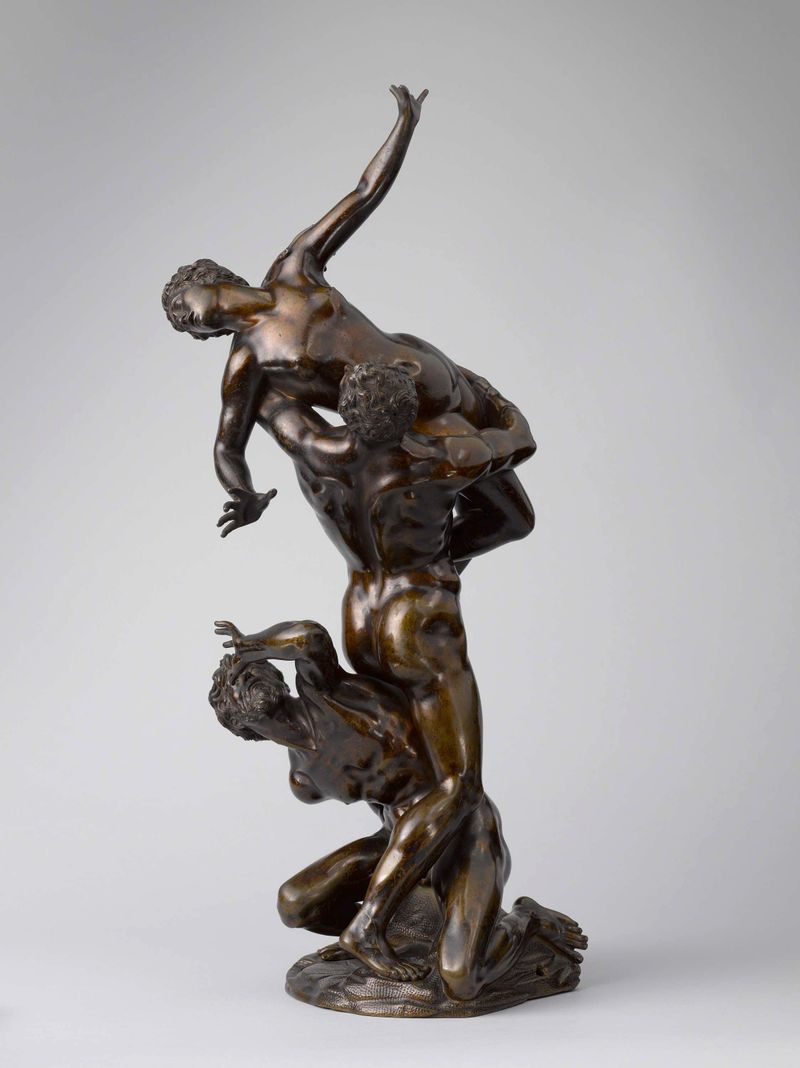
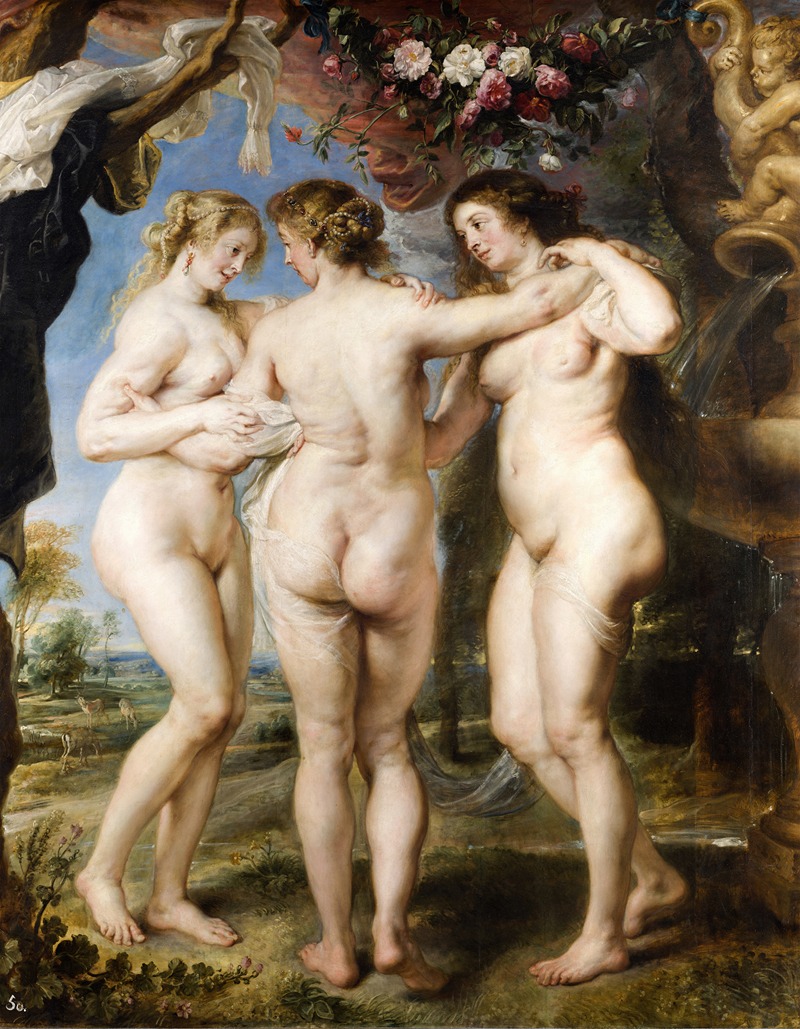
Did the painter know this moment would outlive them? In Vénus Médicis, a serene yet powerful transformation unfolds, inviting viewers to contemplate the fleeting nature of beauty and legacy. Focus first on the poised figure of Venus, her body draped in soft, flowing fabric that seems to meld with the surrounding marble. Notice how the light caresses her contours, casting delicate shadows that breathe life into stone. The lush greenery in the backdrop contrasts with the cool stone of her form, creating a harmony that speaks to the idealized beauty of classical art.
Every brushstroke resonates with an elegance that transcends time, as if Robert sought to capture not just a figure, but an entire era’s reverence for beauty. As you explore the composition, consider the subtle tension between the natural and the artificial. The juxtaposition of the deity's serene grace against the crumbling architectural fragments hints at the inevitable decay of beauty and civilization. Here, Venus is not merely a symbol of love and desire; she embodies the transient nature of all things.
The thoughtful inclusion of flora intertwined with classical elements evokes a dialogue about rebirth and regeneration, suggesting that from decay springs new life and inspiration. In 1790, during a period of artistic transition in France, Hubert Robert painted Vénus Médicis. Having witnessed revolutionary changes in society and art, he embraced a neoclassical style infused with romantic sensibilities. This painting reflects not only his personal explorations but also the era's deep appreciation for classical ideals, solidifying his legacy as a master of transformation and beauty.
More Artworks by Hubert Robert
Browse all →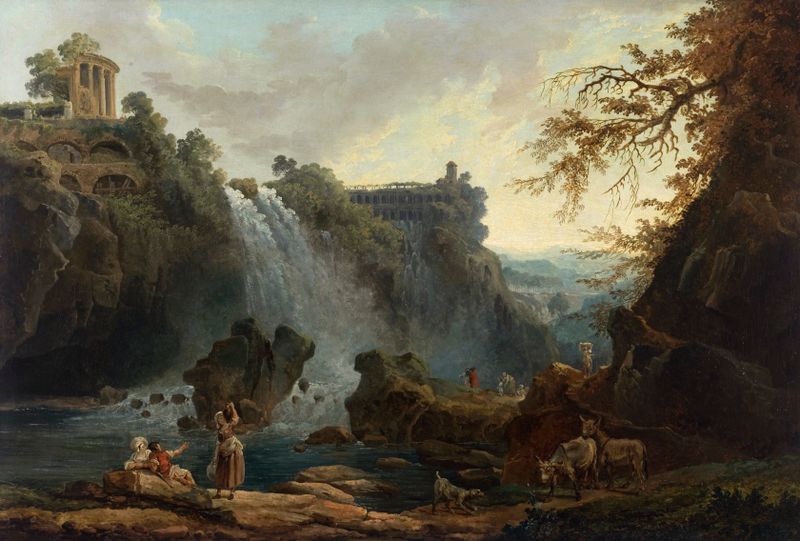
Les Cascatelles de Tivoli
Hubert Robert
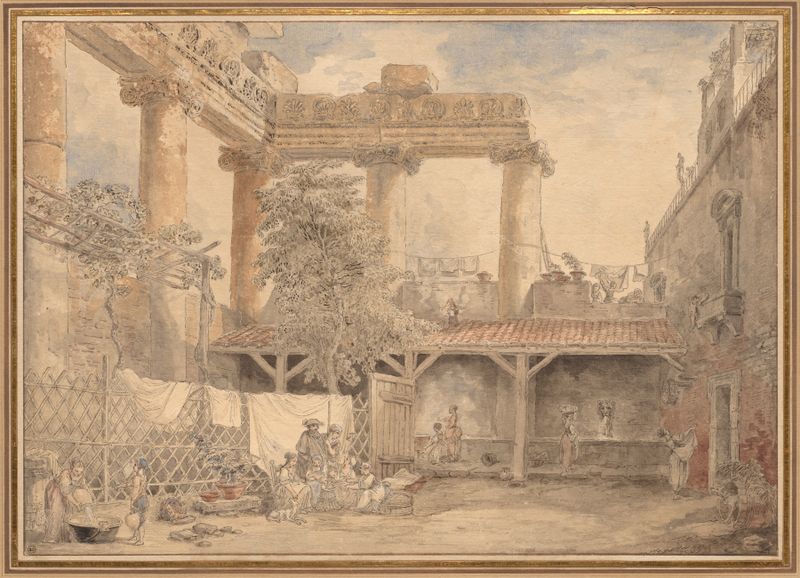
Roman Ruins, Villa Pamfili
Hubert Robert

The Rustic Bridge, Château de Méréville, France
Hubert Robert

The Portico of a Country Mansion
Hubert Robert

Architectural Capriccio
Hubert Robert

The Obelisk
Hubert Robert
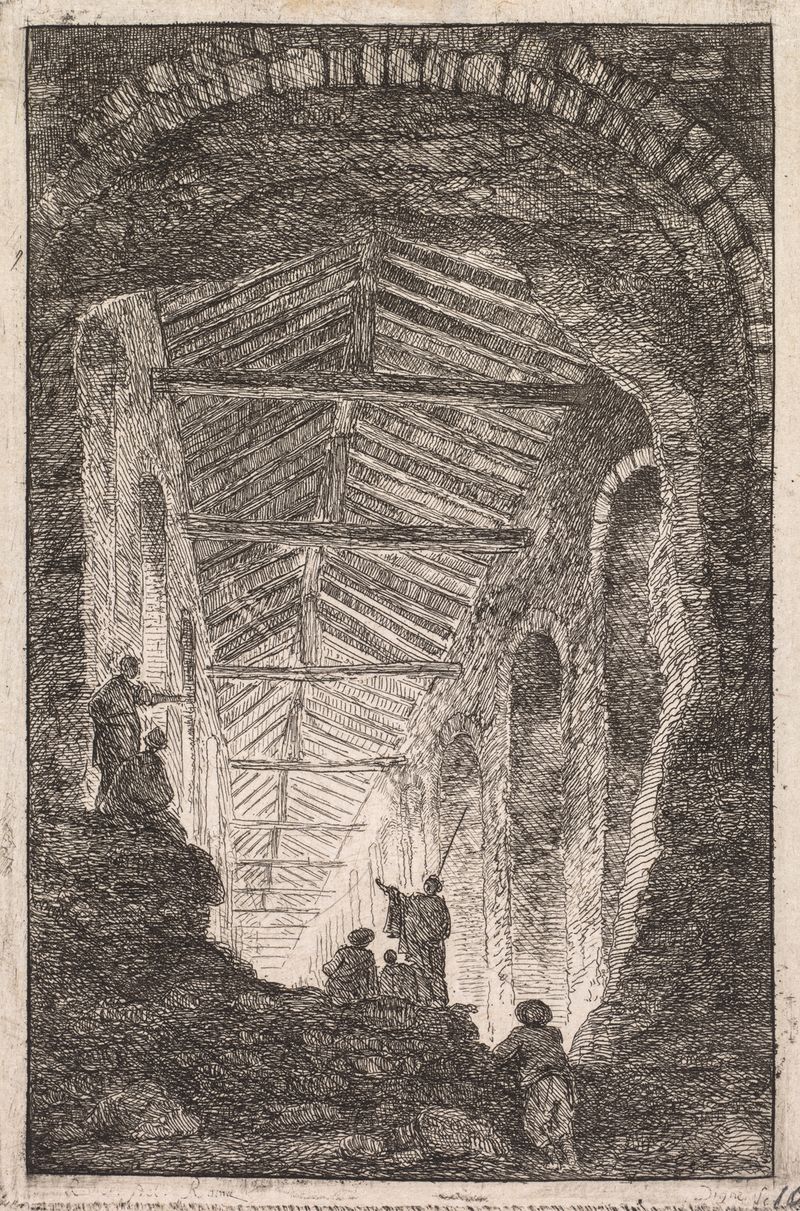
The Antique Gallery
Hubert Robert

L’incendie de l’Opéra, vu des jardins du Palais-Royal, le 8 juin 1781
Hubert Robert
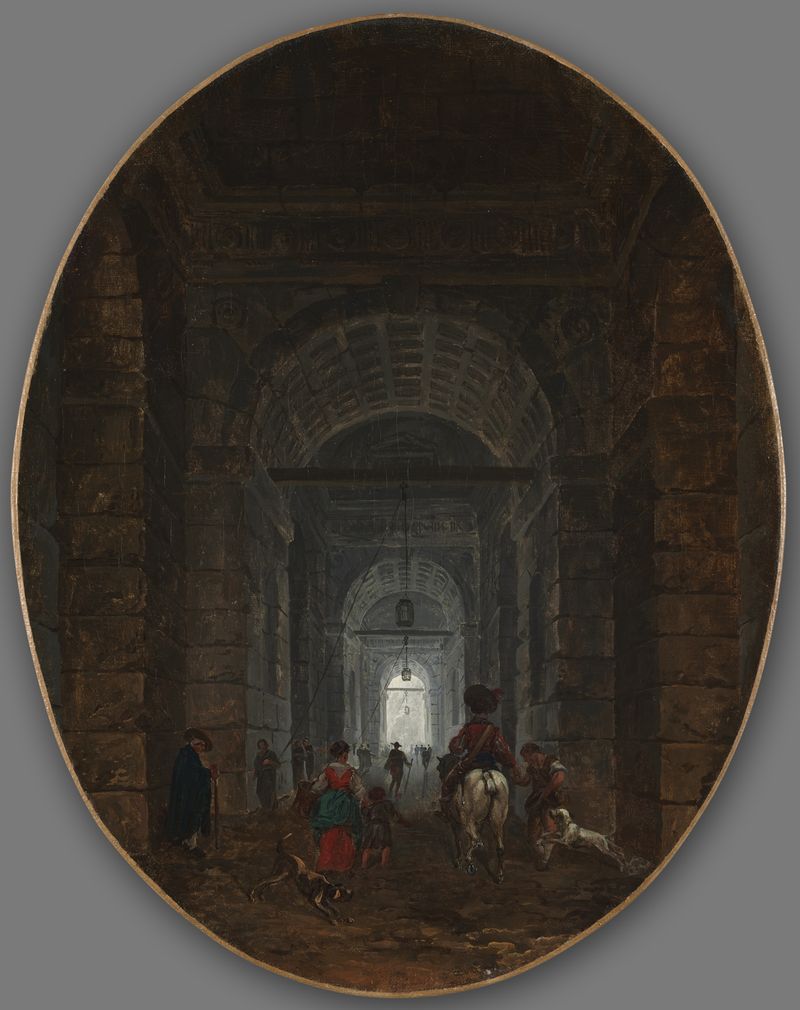
The Grotto of Posillipo
Hubert Robert

Architectural Capriccio with ruins of the Temple of Saturn and the Colosseum in the background
Hubert Robert