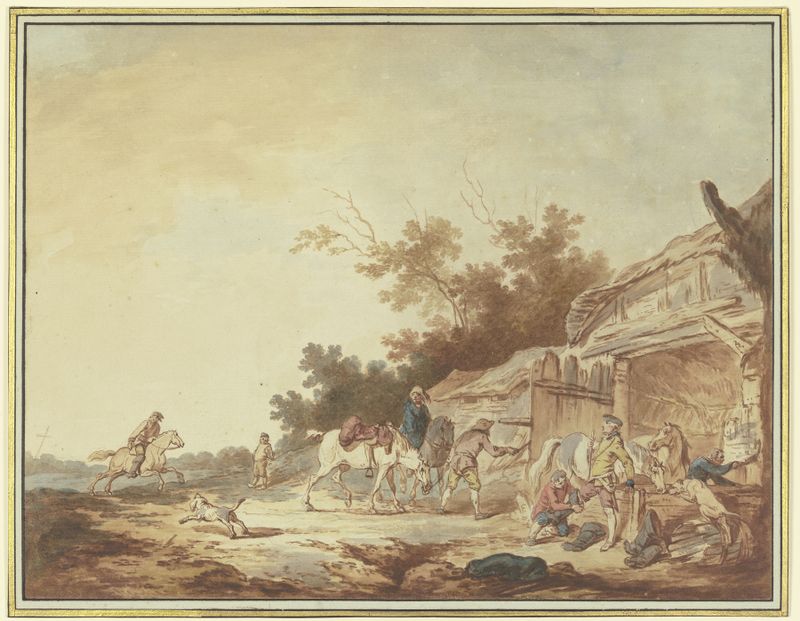
Vor dem Tor einer Festung wird das Gepäck eines Reisenden, der dort mit seiner Kutsche hält, durchsucht, rechts eine Bettlerfamilie mit einem Hund — History & Facts
Can paint confess what words never could? In the silent dialogue of brush and canvas, the weight of existence hangs suspended, inviting us to ponder our shared humanity. Look to the right at the figures of the beggar family, their worn clothes and forlorn expressions echoing a timeless struggle. Notice how the light falls upon the soft fur of their dog, casting a gentle glow that sharply contrasts the harshness of their circumstances. The travelers on the left, oblivious to the plight beside them, become a poignant reflection of societal indifference.
The delicate interplay of shadows and highlights serves to amplify the tension, creating a narrative that speaks to both the transient and the enduring. Within this composition, the juxtaposition of wealth and destitution unveils deeper themes of vulnerability and resilience. The searching of the traveler’s belongings, while a mundane act, carries an air of foreboding—what treasures and burdens lie within? As the family observes, their silent yearning and the dog's watchful gaze reveal a longing for connection in a world often callous. In this moment, intimacy and separation coexist, inviting contemplation on the relationships between the fortunate and the forsaken. Francesco Giuseppe Casanova painted this scene in 1760, during a period marked by the Enlightenment and an increasing interest in realism within art.
At this time, Casanova was establishing his reputation as a skilled painter, engaging with both historical themes and the emerging sensibilities of his contemporary audience. The contrast of social classes depicted in this work reflects the broader societal tensions of the era, making it not just a portrayal of a moment, but a commentary on the human condition itself.