Vorfrühling — History & Facts
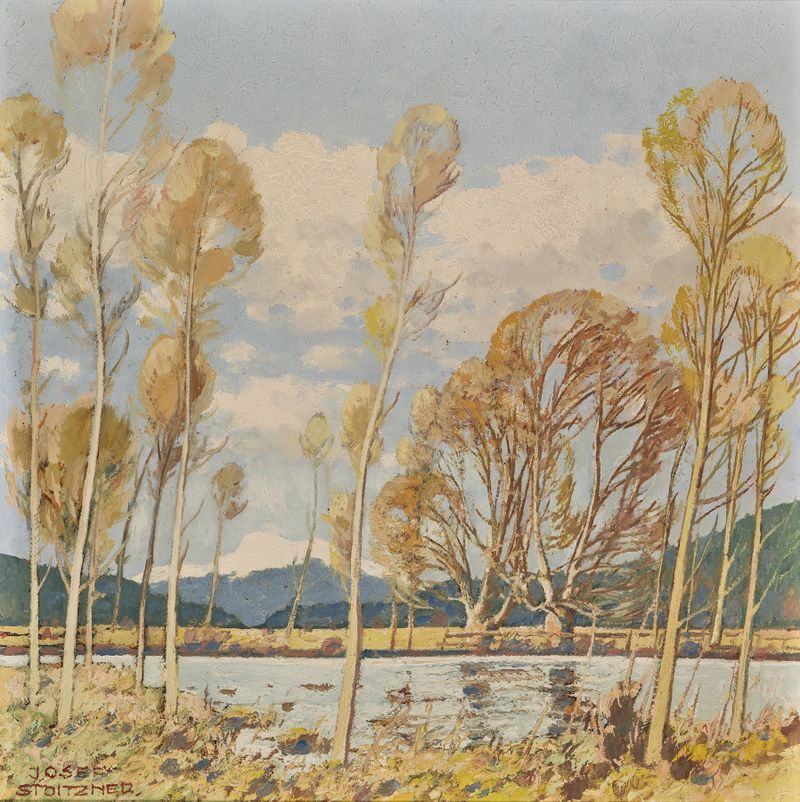
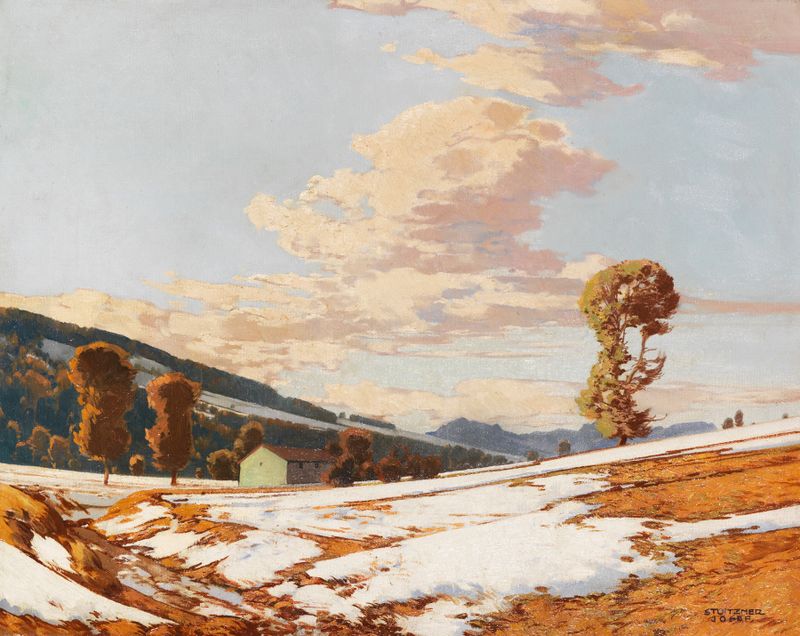
What if silence could speak through light? In the delicate interplay of colors and forms, grief finds a voice, whispering through the canvas, urging us to pause and reflect on our own losses. Look to the left at the soft hues of dawn creeping across the horizon, a gentle reminder of renewal despite the weight of sorrow. The artist employs muted greens and blues, evoking a tranquil yet melancholic atmosphere, while the brushstrokes blend seamlessly, creating a sense of unity in the composition. Notice how the light filters through the branches, casting soft shadows that dance with the promise of spring, even as it shrouds the underlying tension of unseen heartache. The juxtaposition of life awakening and the aching void of absence resonates deeply, suggesting that hope and grief can coexist.
The tender blooms peeking through the frost symbolize resilience, yet they remain fragile, hinting at the delicate balance between joy and sorrow. Each petal seems to tremble in quiet acknowledgment of the past, reminding viewers that every new beginning comes tinged with remembrance. In 1917, during a tumultuous period marked by World War I, the artist found solace in nature while grappling with personal and collective grief. Stoitzner painted Vorfrühling in his native Austria, reflecting the emotional landscape of a society yearning for peace and renewal.
This work embodies both the hope of spring's arrival and the shadows of loss that linger, a poignant exploration of the human condition in a world fraught with turmoil.