Landschaft im Oberpinzgau — History & Facts
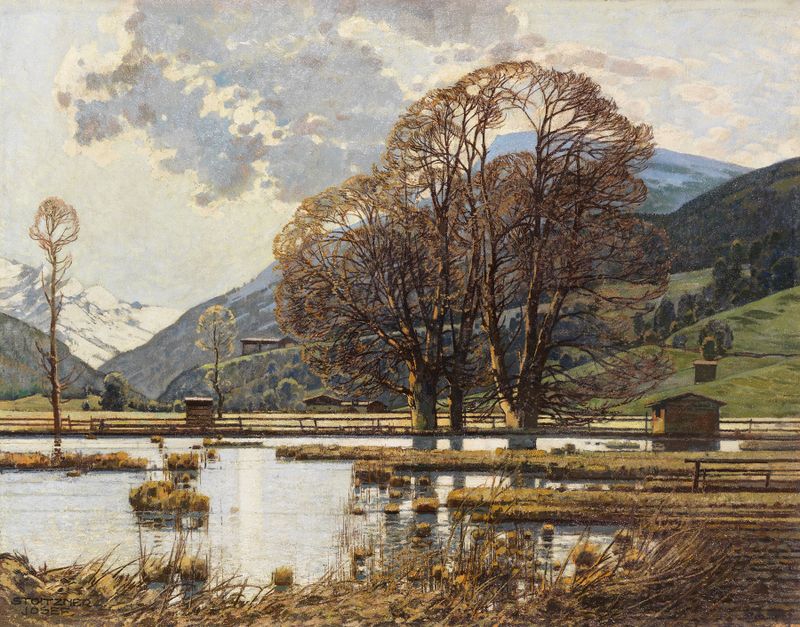
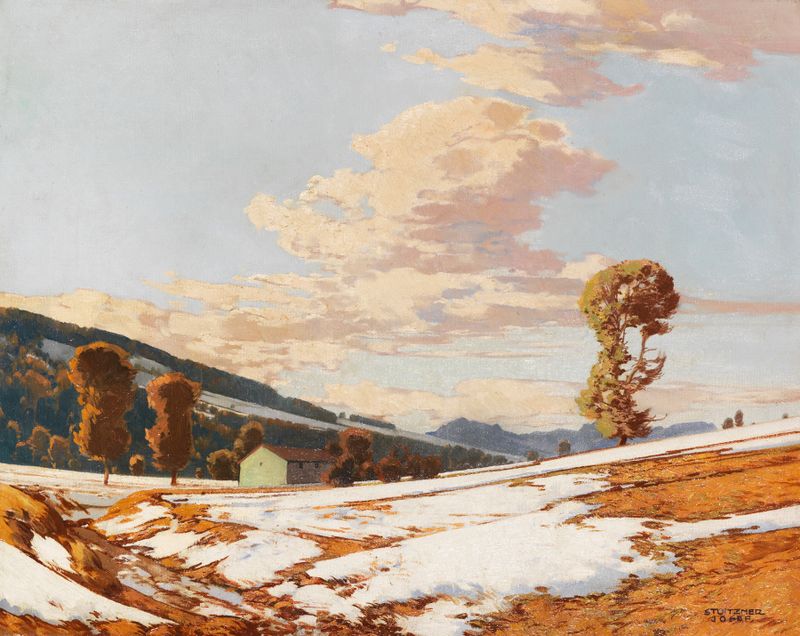
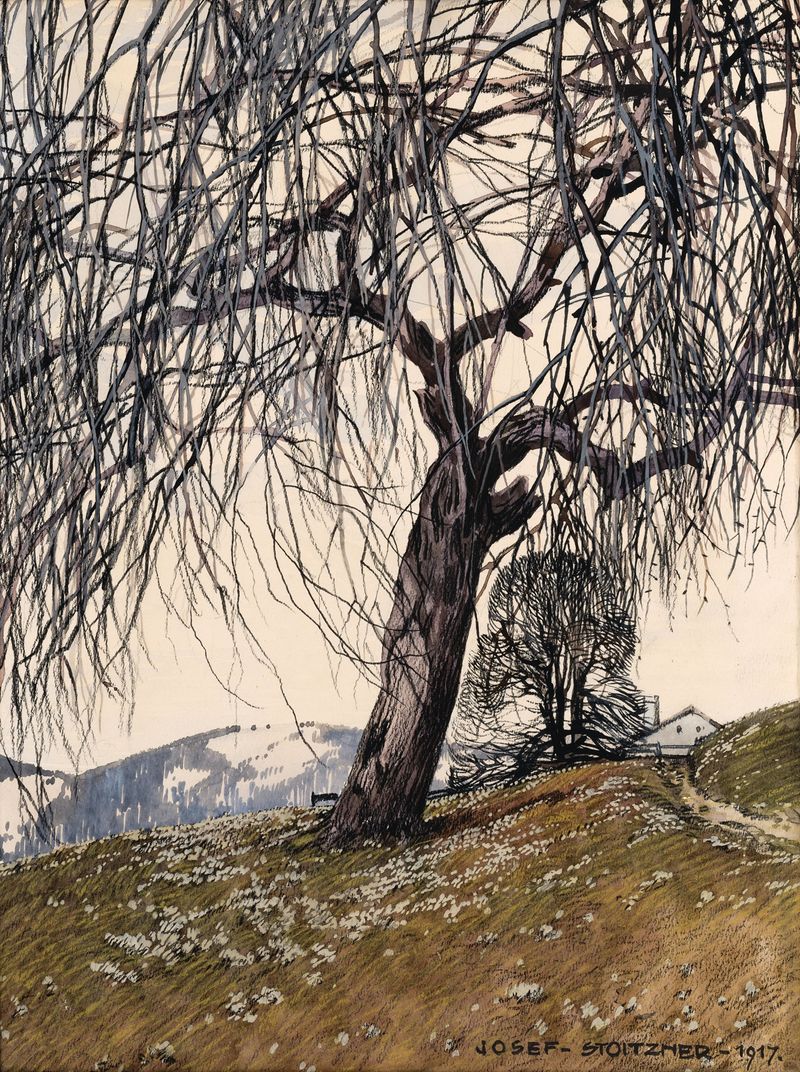
In the vast embrace of nature, one can feel the weight of solitude that often accompanies the human experience. A landscape can reflect longing and isolation, echoing the silent yearnings of the heart. Look to the foreground where rolling hills gently undulate, leading your gaze toward distant mountains that loom like silent sentinels. The painter's delicate brush strokes create a tapestry of textures, illustrating the grass swaying softly under an unseen breeze.
Cool greens and muted browns dominate the palette, while the soft, diffused light of the overcast sky blankets the scene, enhancing its somber ambience. The composition invites contemplation, as the expansive space around the hills evokes a profound sense of emptiness. Yet, within this tranquility lies a palpable tension. The viewer’s eye is drawn to the solitary tree, which stands defiantly against the vastness, suggesting resilience amidst isolation.
The interplay of light and shadow hints at the transient nature of time, evoking memories of moments lost and dreams yet unfulfilled. It is in these subtle contrasts that the work captures the essence of loneliness — a yearning for connection amidst an expansive wilderness. Josef Stoitzner painted this piece in 1928, during a period marked by the aftermath of World War I. Living in Austria, he grappled with the shifts in society and culture, mirroring the struggles of a generation seeking peace.
This artwork reflects not just the landscape of Oberpinzgau, but the artist’s own emotional landscape, where personal and universal themes intertwine seamlessly as he navigated a world shaped by both beauty and sorrow.