Vorfrühling — History & Facts
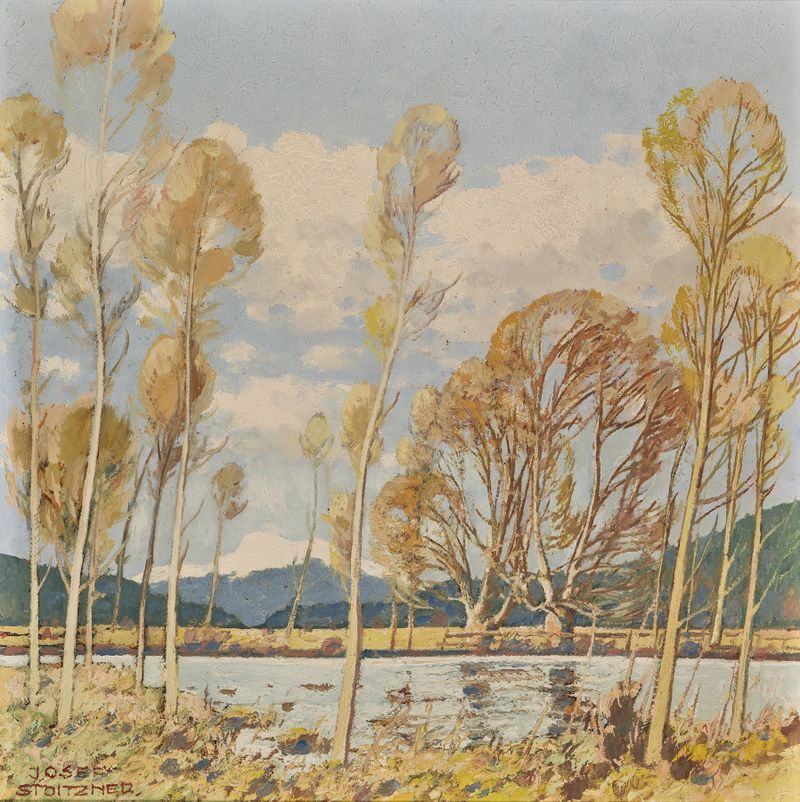
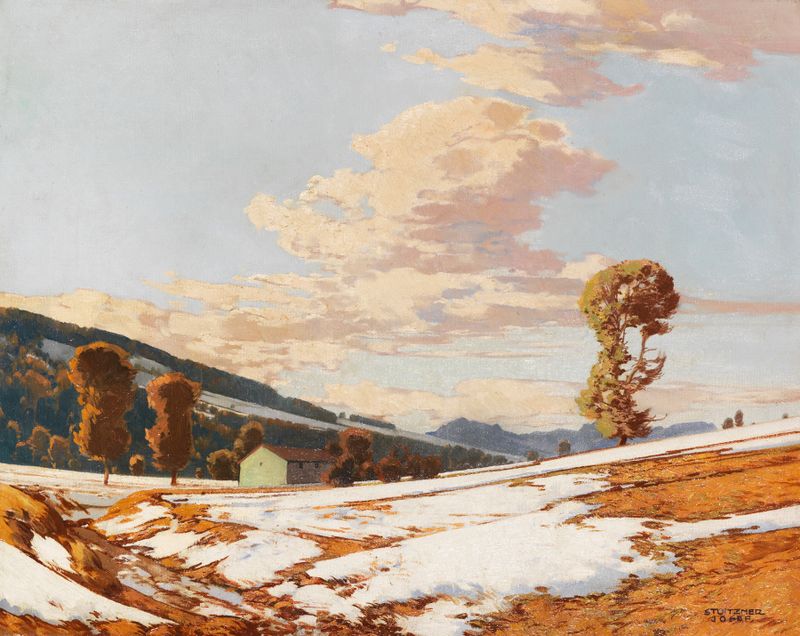
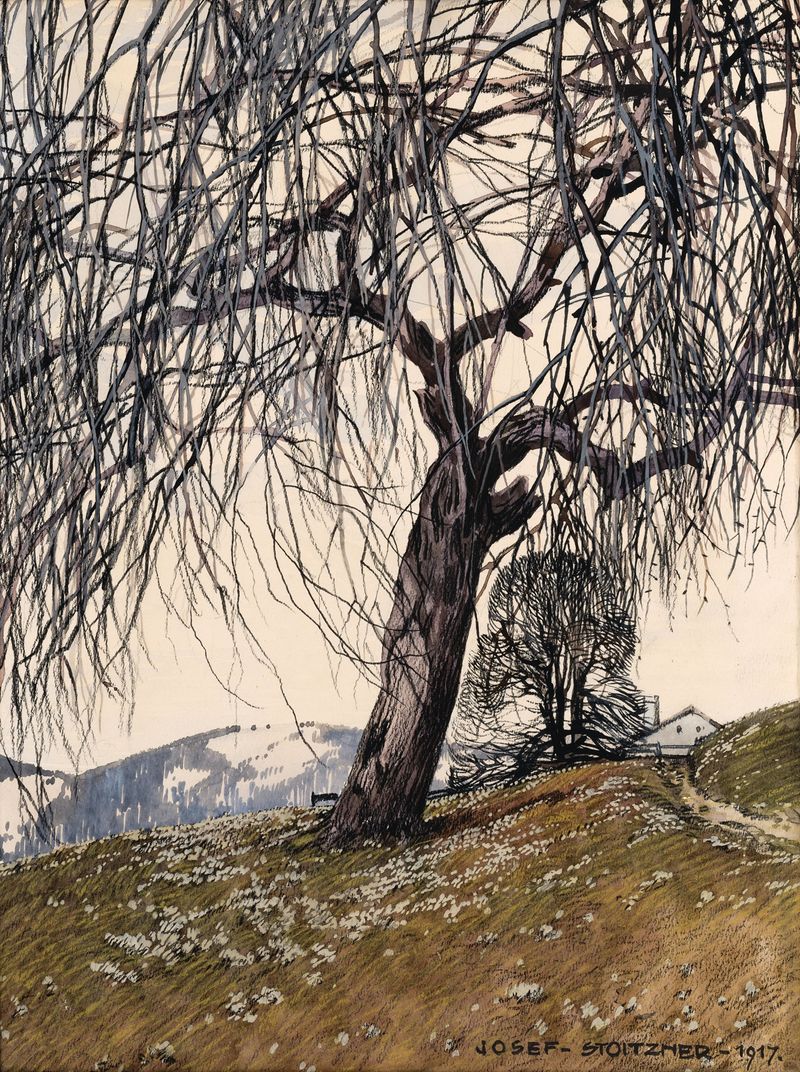
In a world of upheaval, art holds the power to transform turmoil into beauty. Look closely at the swirling colors that dance across the canvas; your eyes are immediately drawn to the vibrant greens and warm golds that suggest the promise of spring. Notice how the brushstrokes intertwine — bold and erratic yet harmonious in their rhythm, creating an illusion of movement and life. The layering of paint conjures texture, inviting you to explore the depths of each hue, while the softer undertones evoke a dreamlike quality, blurring the line between reality and imagination. As you delve deeper, the striking contrasts reveal an emotional landscape.
The juxtaposition of chaotic strokes with moments of serene calm suggests the struggle between the old and the new, the winter’s chill giving way to the warmth of rebirth. Each corner of the piece speaks of hope, yet the turbulence beneath hints at an unresolved tension — a reminder that change is rarely without its challenges. Josef Stoitzner created Vorfrühling in 1930 during a time of significant transition both in his life and the broader European context, marked by political uncertainty and the rise of new artistic movements. Living in Austria, he was influenced by the modernist wave yet sought to capture the essence of nature and emotion in his work.
This piece reflects his desire to convey the beauty that emerges from chaos, offering viewers a glimpse of optimism amidst the tumult.