Vétheuil — History & Facts
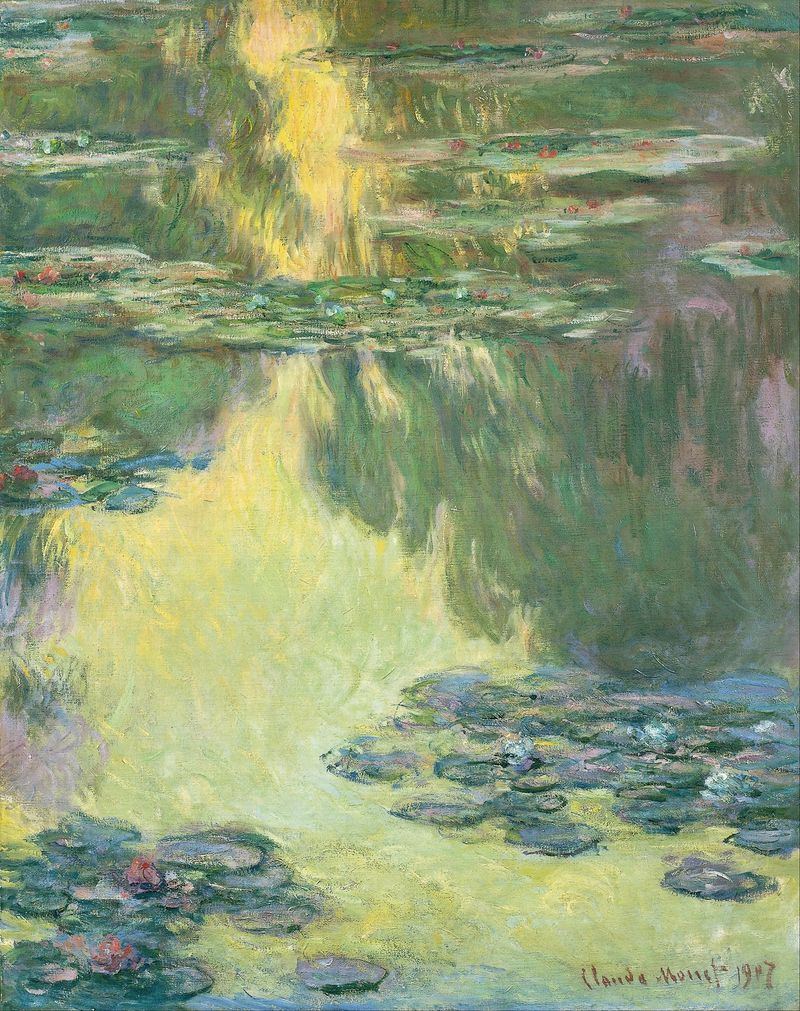
In the quiet murmur of time’s passage, decay and beauty intertwine, holding secrets of what was and what remains. Look to the left at the delicate strokes that shape the wavy surface of the river, where shimmering reflections dance like fleeting memories. The palette of soft blues and gentle greens envelops the canvas, while hints of peach and lavender peep through, hinting at the sun's waning embrace. Notice how the brushwork reveals an almost ethereal quality; the impressionistic style invites the eye to wander freely, allowing one to experience the tranquility of a summer day amidst ethereal shadows. Within this fleeting scene lies a poignant reminder of nature's transience.
The overgrown foliage, with its vibrant strokes, hints at both life and decay, as the cycle of nature unfolds. The structures peeking through the treetops evoke a sense of nostalgia, suggesting human presence slowly yielding to the encroachment of time and nature. This duality creates an emotional tension, as the viewer is left to ponder the beauty in impermanence, the interplay between the idyllic landscape and the inevitability of change. In 1901, Claude Monet found himself deeply engaged with the exploration of light and atmosphere in his work.
Living in Giverny, he painted Vétheuil during a period of experimentation with color and technique, reflecting his commitment to capturing the essence of a moment. This particular piece came at a time when impressionism was evolving, and Monet sought to express deeper emotional resonances through his brush, forever marking his place in the narrative of modern art.