Vétheuil — History & Facts
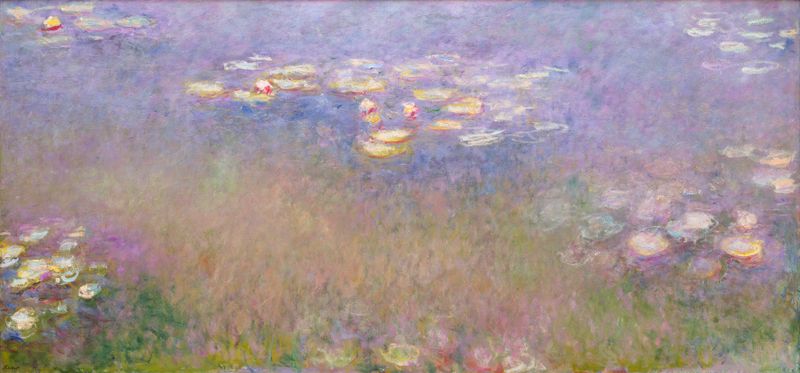
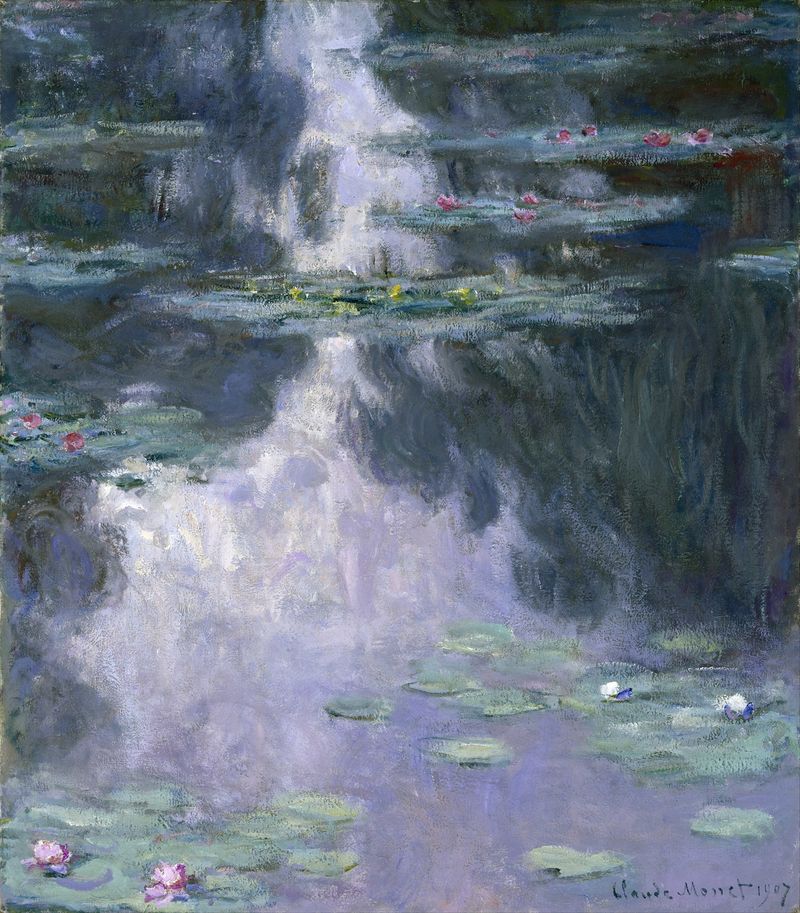
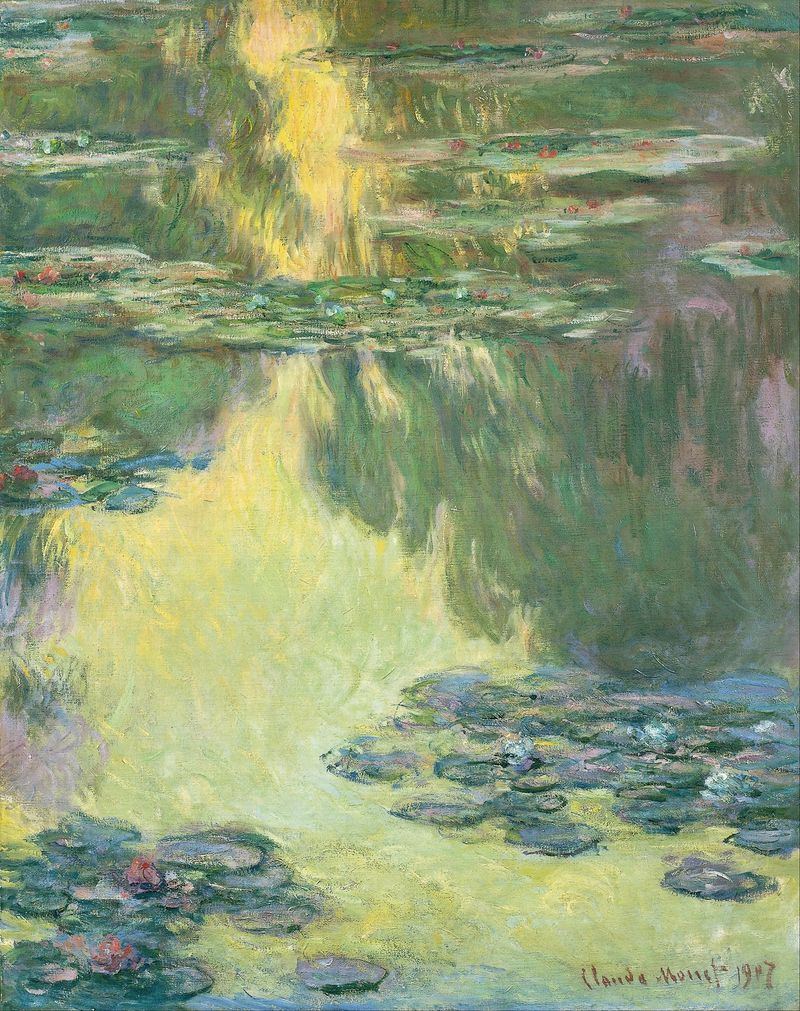
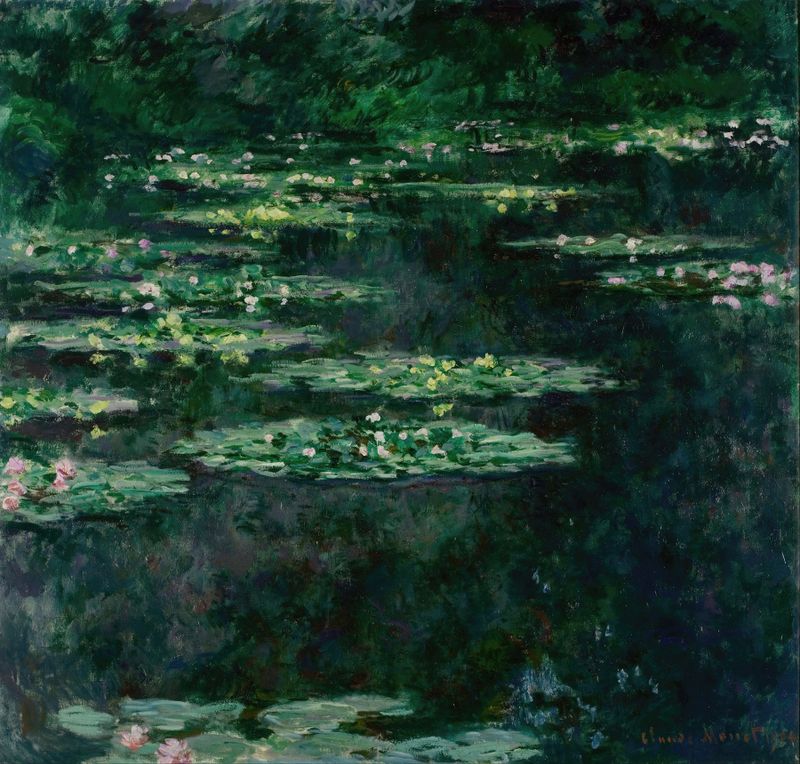
In the stillness of the scene, where light and shadow dance upon the water’s surface, creation unfolds quietly yet profoundly. It is a moment captured in time, holding the whispers of both nature and the artist’s hand. Look to the left at the gentle undulations of the river, where the soft brushstrokes evoke the shimmering reflections of trees bending toward the water. The palette, a tender blend of blues and greens, draws your gaze across the canvas, guiding you through the serene landscape.
Notice how light falls upon the rippling surface, creating a harmonious interplay that suggests movement, yet invites contemplation, drawing one deeper into the tranquil embrace of this world. Within this peaceful setting lies an emotional tension between the calmness of nature and the artist’s inner turmoil. The vibrant greens pay homage to life and growth, while the muted hues of the sky hint at the impermanence of day. The intricate details, from the delicate ripples to the foliage, symbolize the balance between creation and decay — a reminder of the fleeting beauty found in every moment and a reflection on the act of capturing it through art. During the years 1901-1902, Monet was entrenched in his work at Vétheuil, a village in France that deeply inspired him.
He faced significant personal challenges, including the death of his beloved wife, yet continued to paint with fervor. This period marked a significant evolution in his style, embracing the effects of light and atmosphere, which led to the blossoming of Impressionism.