
Vue de Moret-sur-Loing — History & Facts
In this fleeting moment captured by the brush, a sense of solitude lingers—an echo of a world that seems to exist just beyond reach. Look to the left at the gentle curve of the river, where soft hues of green and blue meld, creating an inviting pathway into the canvas. The trees, their leaves shimmering with delicate strokes of light, cradle the scene in a warm embrace, while the muted sky casts a tranquil glow over the quiet village. The composition draws the eye toward the horizon, where a cluster of houses sits in serene isolation, hinting at the intimacy and separation that coexist in this picturesque landscape. Beyond the surface beauty, the painting evokes a poignant sense of loneliness.
The solitary figures walking along the riverbank seem almost lost in their own thoughts, dwarfed by the vastness of nature surrounding them. Each brushstroke reveals an interplay between light and shadow, suggesting that while the landscape is alive, the human presence feels transient and ephemeral. This tension highlights the artist's exploration of human vulnerability in the face of nature's grandeur. Created during a time of both personal and artistic evolution, this work emerged in the midst of Corot’s profound engagement with the Barbizon School in the mid-19th century.
Living in France, he was experiencing a shift towards realism, seeking beauty in everyday life while reflecting on human emotions against the backdrop of nature. The world was changing, and his canvases became a refuge, capturing both the allure and the solitude of the landscape.
More Artworks by Jean-Baptiste-Camille Corot
Browse all →
View of Genoa
Jean-Baptiste-Camille Corot
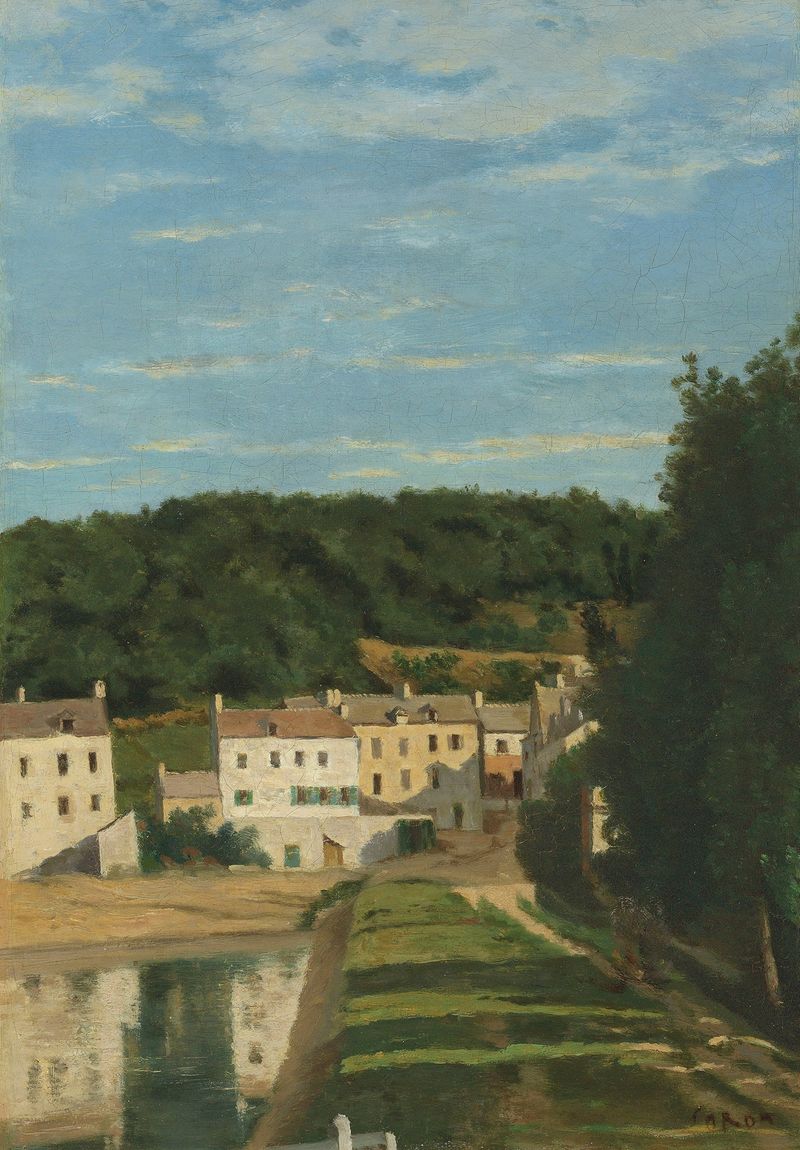
Les Maisons Cabassud À Ville D’avray
Jean-Baptiste-Camille Corot

La solitude. Souvenir de Vigen (Limousin)
Jean-Baptiste-Camille Corot
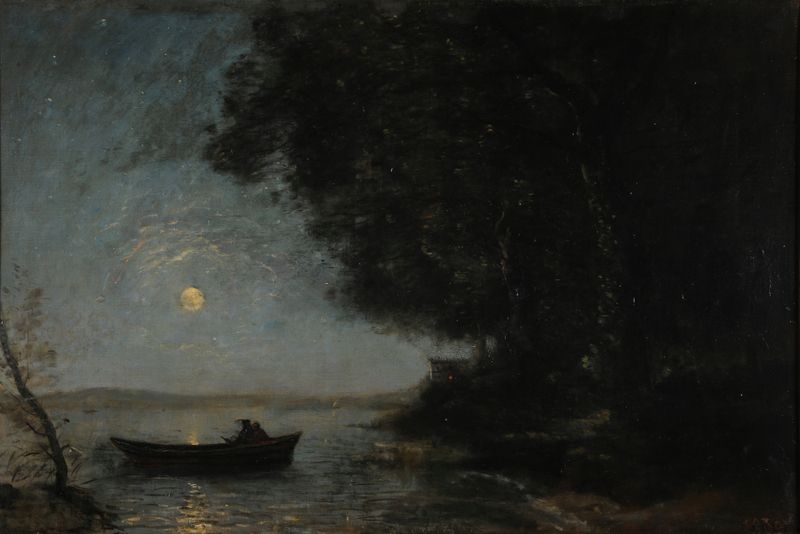
Le lac ; effet de nuit
Jean-Baptiste-Camille Corot
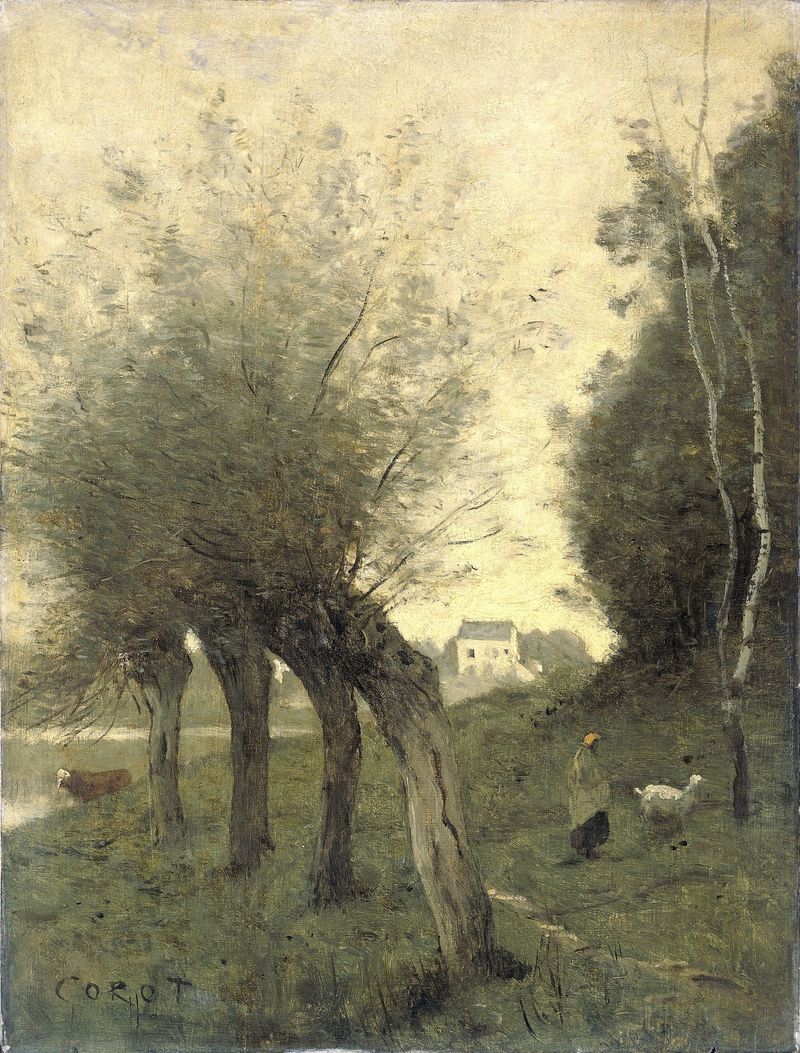
Landscape with Pollard Willows
Jean-Baptiste-Camille Corot
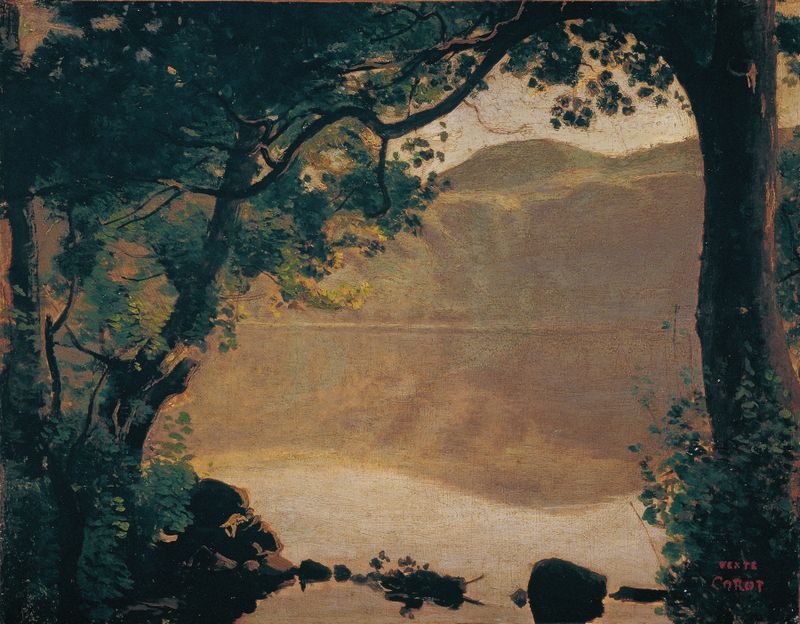
Der Nemisee
Jean-Baptiste-Camille Corot
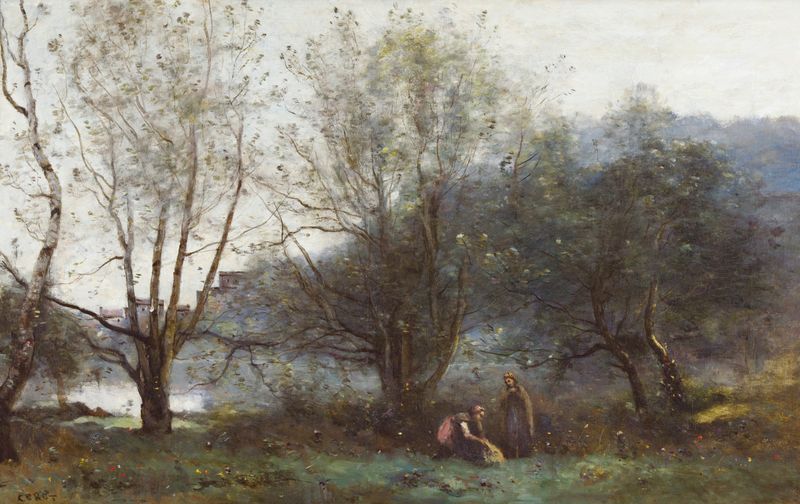
Les Étangs De Ville D’avray
Jean-Baptiste-Camille Corot
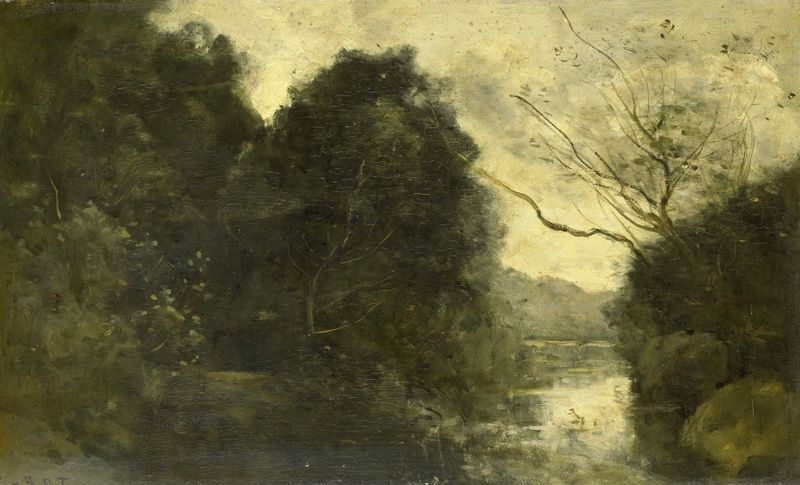
Pond in the Woods
Jean-Baptiste-Camille Corot
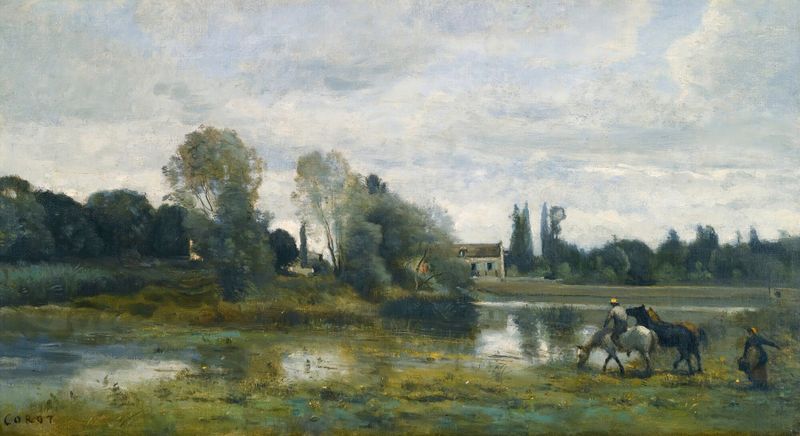
Ville D’avray; L’abreuvoir Des Chevaux
Jean-Baptiste-Camille Corot
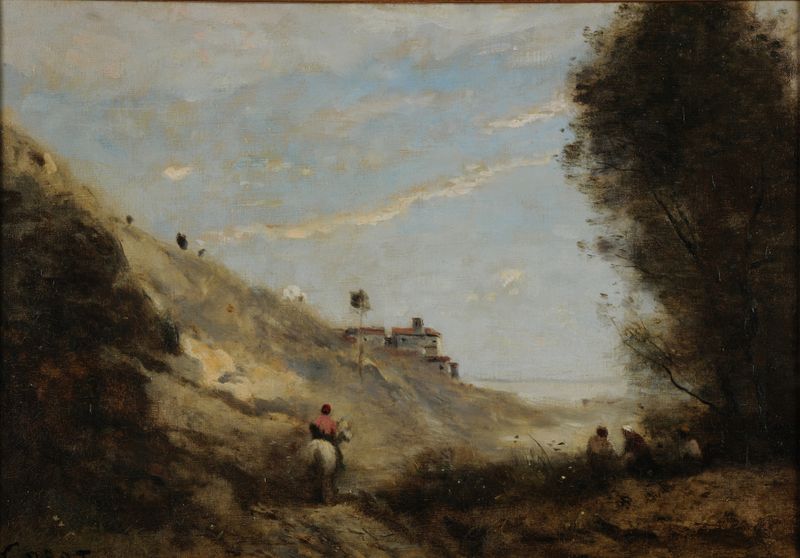
Le vallon au cavalier
Jean-Baptiste-Camille Corot





