
Vue Du Panthéon À Paris — History & Facts
Can paint confess what words never could? In Vue Du Panthéon À Paris, the stillness of the scene invites an unspoken revelation, echoing the profound beauty nestled in the heart of the city. Look to the left, where the Pantheon’s grand façade rises majestically against a soft, pastel sky. The light dances delicately upon the dome, casting gentle shadows that enhance the architectural splendor. Notice how the artist employs a muted palette, harmonizing the earthy tones of the foreground with the ethereal blues above, creating a serene balance that draws the viewer’s gaze in a fluid motion across the canvas.
The delicate brushwork captures the essence of a fleeting moment, as if the scene might dissolve into the air at any instant. Deeper meanings emerge in the interplay between light and shadow, reflecting the dualities of life. The imposing structure stands resilient, while the surrounding trees sway gently, hinting at the transient nature of existence. In this juxtaposition, Corot evokes a sense of contemplation—the Pantheon, a symbol of permanence, contrasts the whisper of life around it.
This dialogue between steadfastness and ephemerality encourages a reflection on the viewer's own experiences of time. Created in 1835 during a period of burgeoning Romanticism, this work showcases Corot's commitment to capturing the emotional resonance of landscapes. Living in Paris, he was surrounded by a vibrant art scene that emphasized the beauty of nature and the human experience. This painting not only marks a moment in his artistic evolution but also reflects the cultural shifts of an era enthralled by idealized beauty and nostalgia.
More Artworks by Jean-Baptiste-Camille Corot
Browse all →
View of Genoa
Jean-Baptiste-Camille Corot
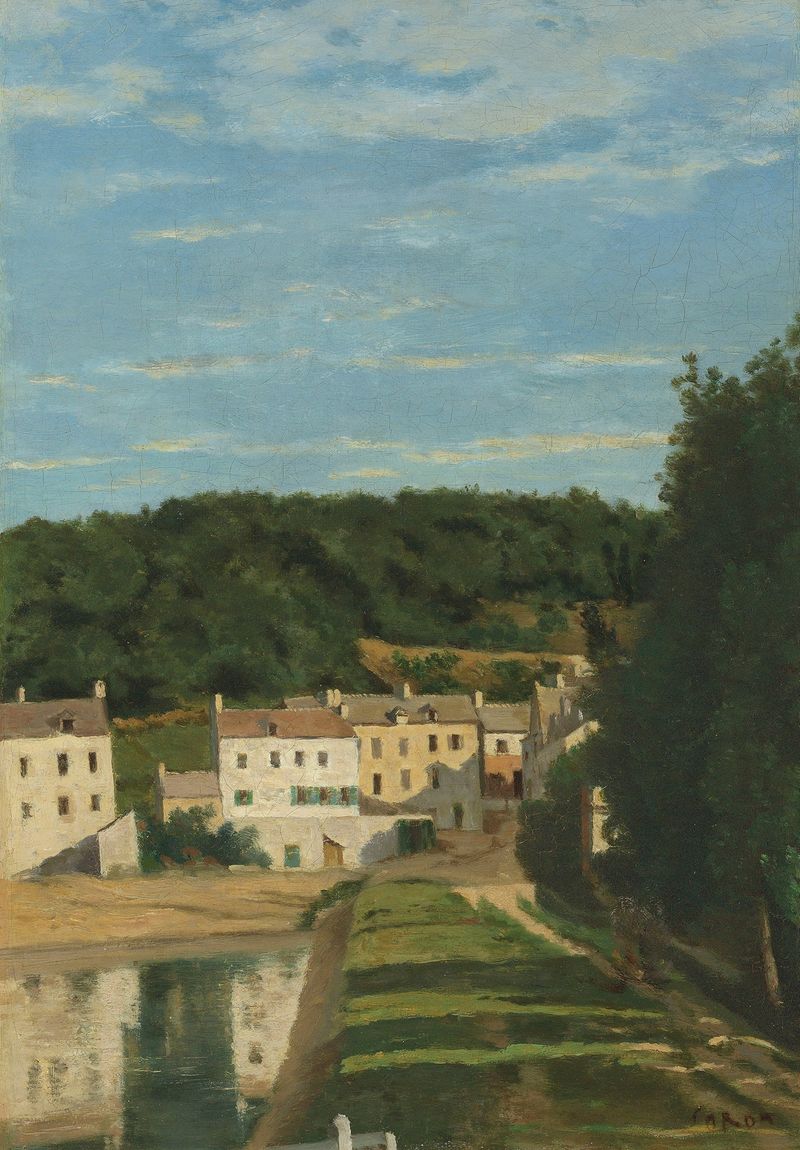
Les Maisons Cabassud À Ville D’avray
Jean-Baptiste-Camille Corot

La solitude. Souvenir de Vigen (Limousin)
Jean-Baptiste-Camille Corot
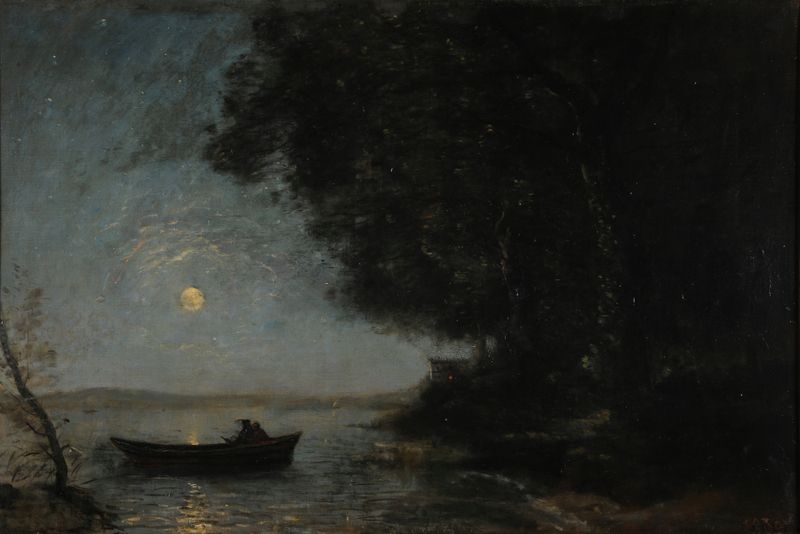
Le lac ; effet de nuit
Jean-Baptiste-Camille Corot
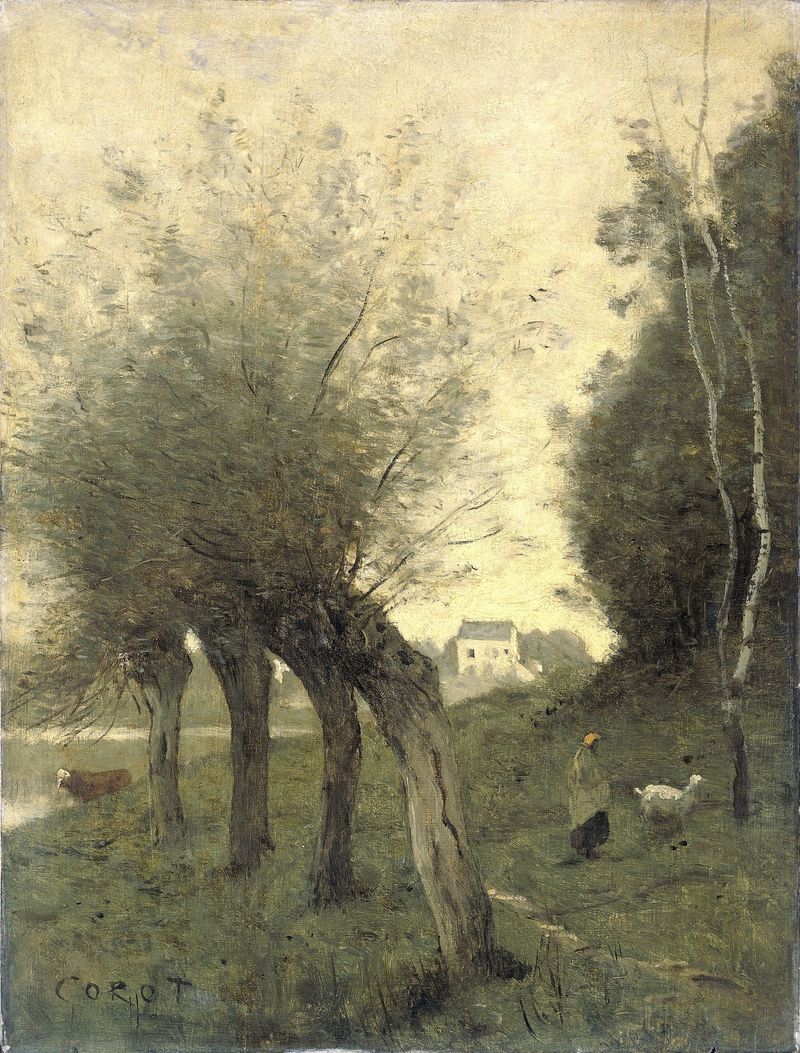
Landscape with Pollard Willows
Jean-Baptiste-Camille Corot
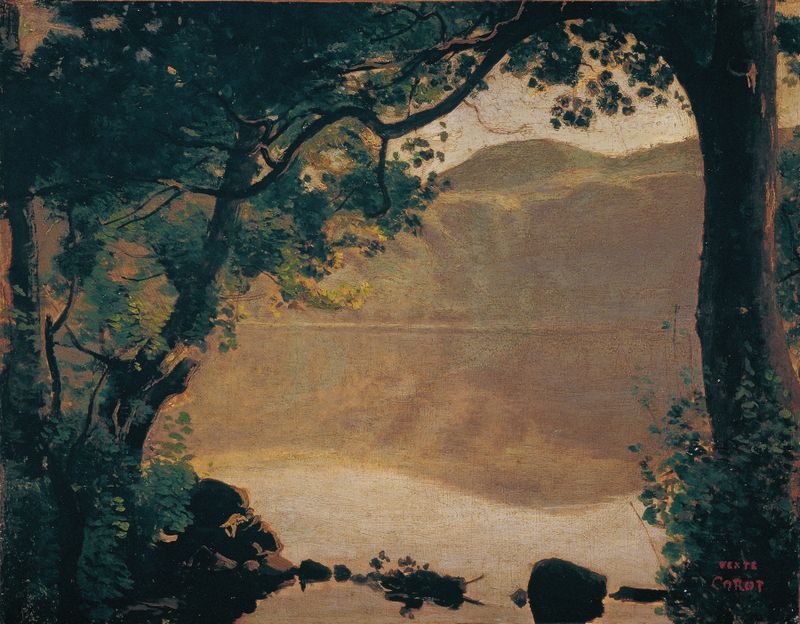
Der Nemisee
Jean-Baptiste-Camille Corot
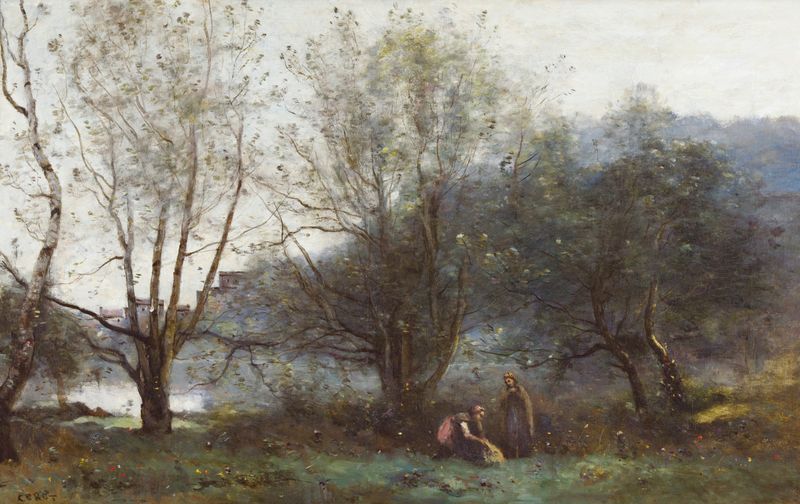
Les Étangs De Ville D’avray
Jean-Baptiste-Camille Corot
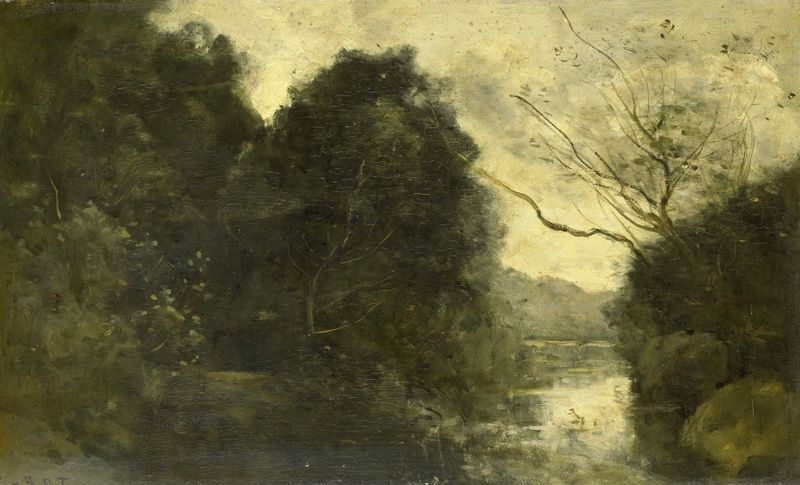
Pond in the Woods
Jean-Baptiste-Camille Corot
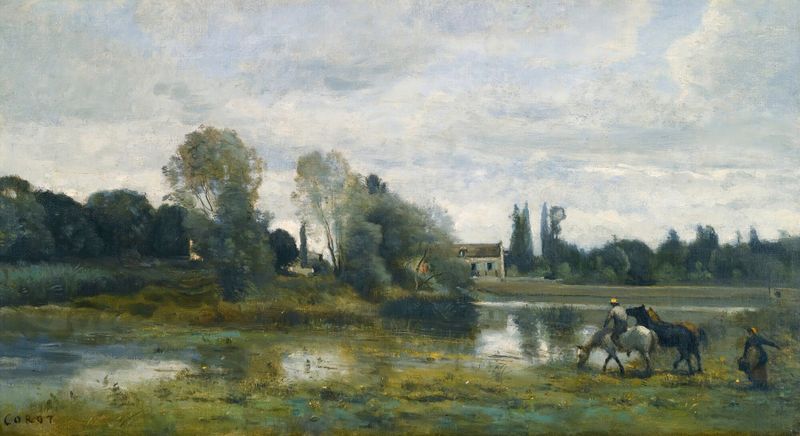
Ville D’avray; L’abreuvoir Des Chevaux
Jean-Baptiste-Camille Corot
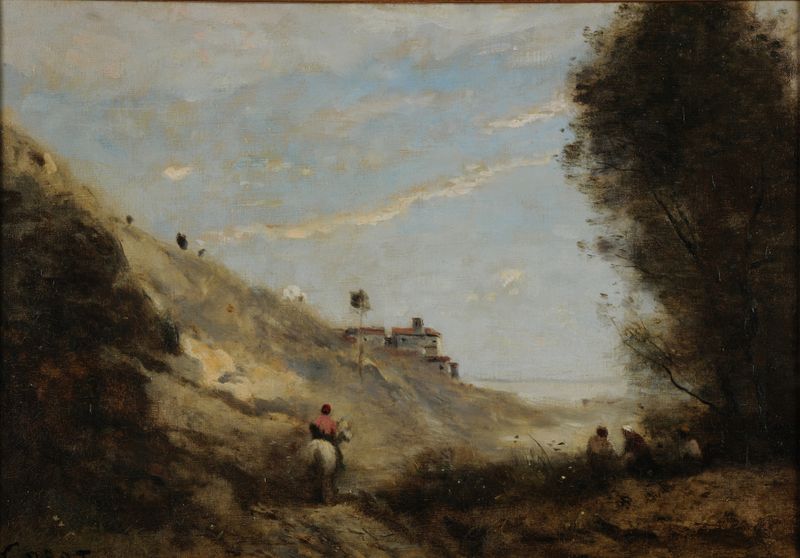
Le vallon au cavalier
Jean-Baptiste-Camille Corot
More Architecture Art
Browse all →
The statue of Liberty
Frédéric Auguste Bartholdi

View of Houses in Delft, Known as ‘The Little Street’
Johannes Vermeer

View of Houses in Delft, Known as ‘The Little Street’
Johannes Vermeer

The Cathedral in Rouen. The portal, Grey Weather
Claude Monet

The yellow house
Vincent van Gogh

The Church in Auvers-sur-Oise, View from the Chevet
Vincent van Gogh