
Waldlandschaft im Herbst — History & Facts
In the world of art, color wields transformative power, turning mere pigments into vibrant emotions and landscapes alive with spirit. Look closely at the center of the canvas, where warm golds and fiery reds intermingle, evoking the essence of autumn. The trees, rendered with a flurry of brushstrokes, sway gently as if caught in a soft breeze, their leaves a cacophony of color. Notice how Bolze captures the dappled light filtering through the foliage, painting shadows that echo the fleeting moments of a season on the cusp of change, inviting the viewer into a dialogue between nature’s decay and its breathtaking beauty. Yet, beyond the surface, Waldlandschaft im Herbst speaks to deeper contrasts.
The vibrant hues of fall symbolize a bittersweet farewell, reminding us of the transient nature of life. While the chaos of color could easily overwhelm, Bolze masterfully orchestrates harmony through balance and rhythm, evoking feelings of nostalgia and longing. Each brushstroke holds a secret — a whisper of the inevitable cycle of life, death, and rebirth that defines the natural world. In 1878, Carl Bolze painted this work during a time when the artistic community was grappling with the emergence of Impressionism, yet he remained committed to capturing the essence of realism infused with emotional depth.
Working in Germany, he sought to reflect the beauty of his surroundings, aligning with the Romantic ideals that celebrated nature’s profound impact on the human spirit.
More Artworks by Carl Bolze
Browse all →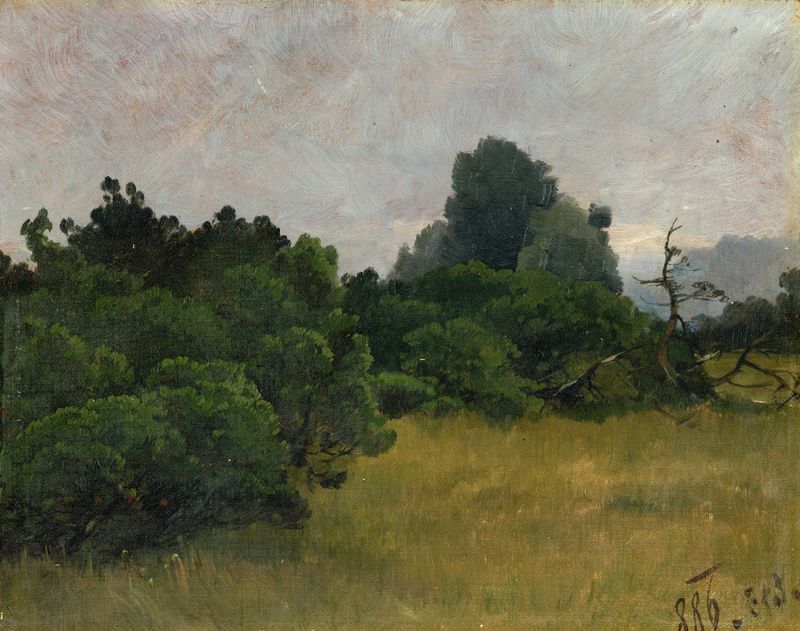
Baumgruppe (Skizze)
Carl Bolze

Prozession
Carl Bolze

Der Inn mit Blick zum Kaisergebirge
Carl Bolze

Allee am Fluß mit Postkutsche
Carl Bolze

Gasse in Burghausen
Carl Bolze

Hochmoor
Carl Bolze

Abend am Traunsee
Carl Bolze
Hoher Göll im Alpenglühen
Carl Bolze
Holzlagerplatz
Carl Bolze
Badehütte am Starnberger See bei Ambach
Carl Bolze





