
Hoher Göll im Alpenglühen — History & Facts
Can beauty exist without sorrow? In Hoher Göll im Alpenglühen, the viewer is invited to ponder this question as they behold the stunning interplay of light and shadow across a vast mountain landscape, where the magnificent peaks rise high against a twilight sky. Look to the left, where the sun dips beneath the horizon, casting a golden hue that bathes the snow-capped summits in a surreal glow. Notice how the delicate brushstrokes create a soft texture in the clouds, as if they are whispering secrets to the mountains below. The vibrant warmth of the colors contrasts with the cool, shadowy valleys, drawing the eye toward the heart of the composition, where tumultuous beauty reigns. The emotional tension in this artwork lies in its duality; the serene beauty of the mountains is tempered by an underlying sense of isolation.
The glowing peaks, while awe-inspiring, imply a distance that can neither be bridged nor touched. Bolze captures the obsession with nature’s grandeur, yet imbues it with a hint of melancholy, suggesting that such breathtaking beauty is often accompanied by an unattainable longing. Created in 1878, this piece reflects Carl Bolze's deep engagement with the Romantic movement, which emphasized the sublime aspects of nature. At this time, he was living in Germany, where the interplay between human emotion and the landscape was a central theme in art.
Bolze's meticulous attention to detail and color reflects the broader artistic currents of his era, as artists sought to evoke profound emotional responses through their depictions of the natural world.
More Artworks by Carl Bolze
Browse all →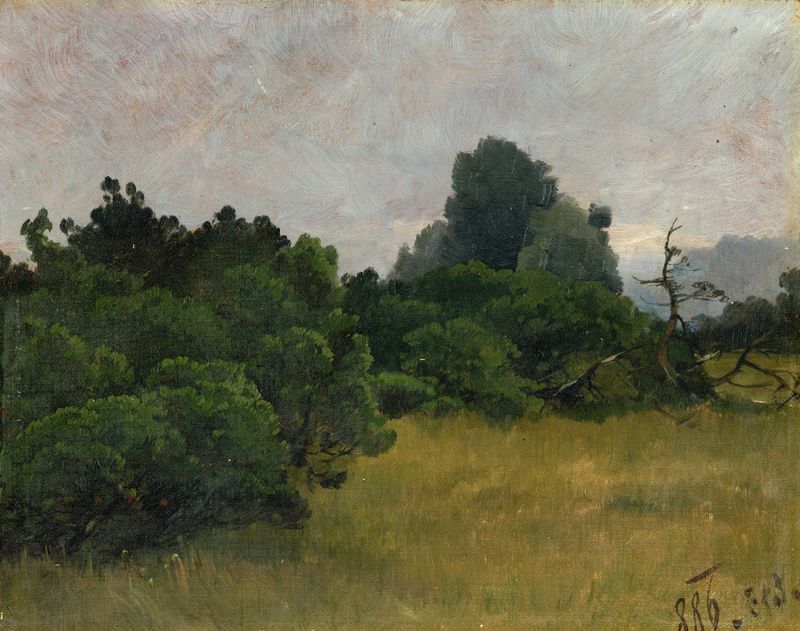
Baumgruppe (Skizze)
Carl Bolze

Prozession
Carl Bolze

Der Inn mit Blick zum Kaisergebirge
Carl Bolze

Allee am Fluß mit Postkutsche
Carl Bolze

Gasse in Burghausen
Carl Bolze

Waldlandschaft im Herbst
Carl Bolze

Hochmoor
Carl Bolze

Abend am Traunsee
Carl Bolze
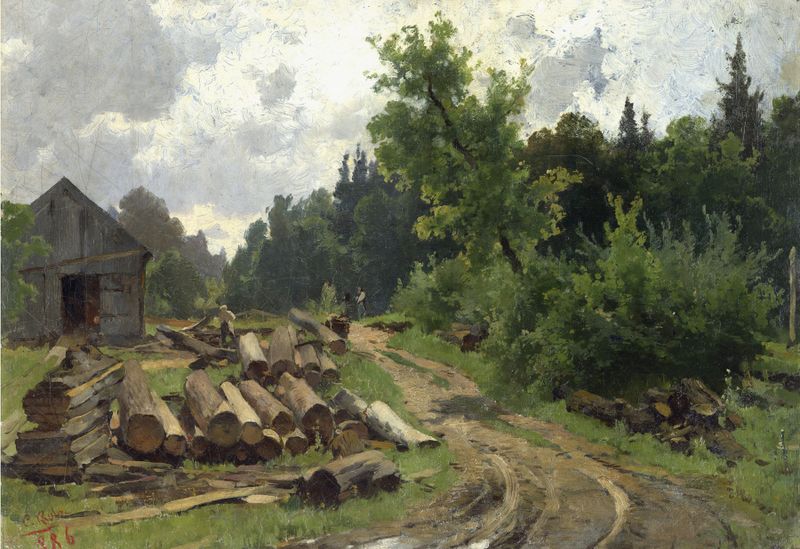
Holzlagerplatz
Carl Bolze
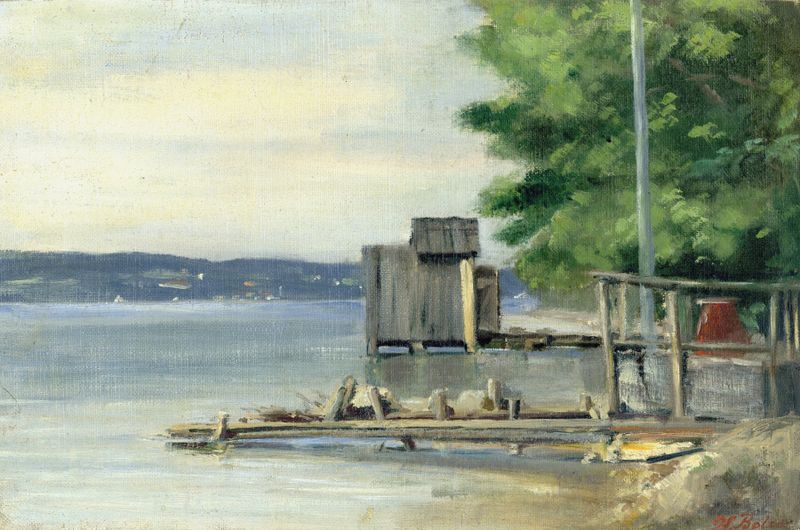
Badehütte am Starnberger See bei Ambach
Carl Bolze





