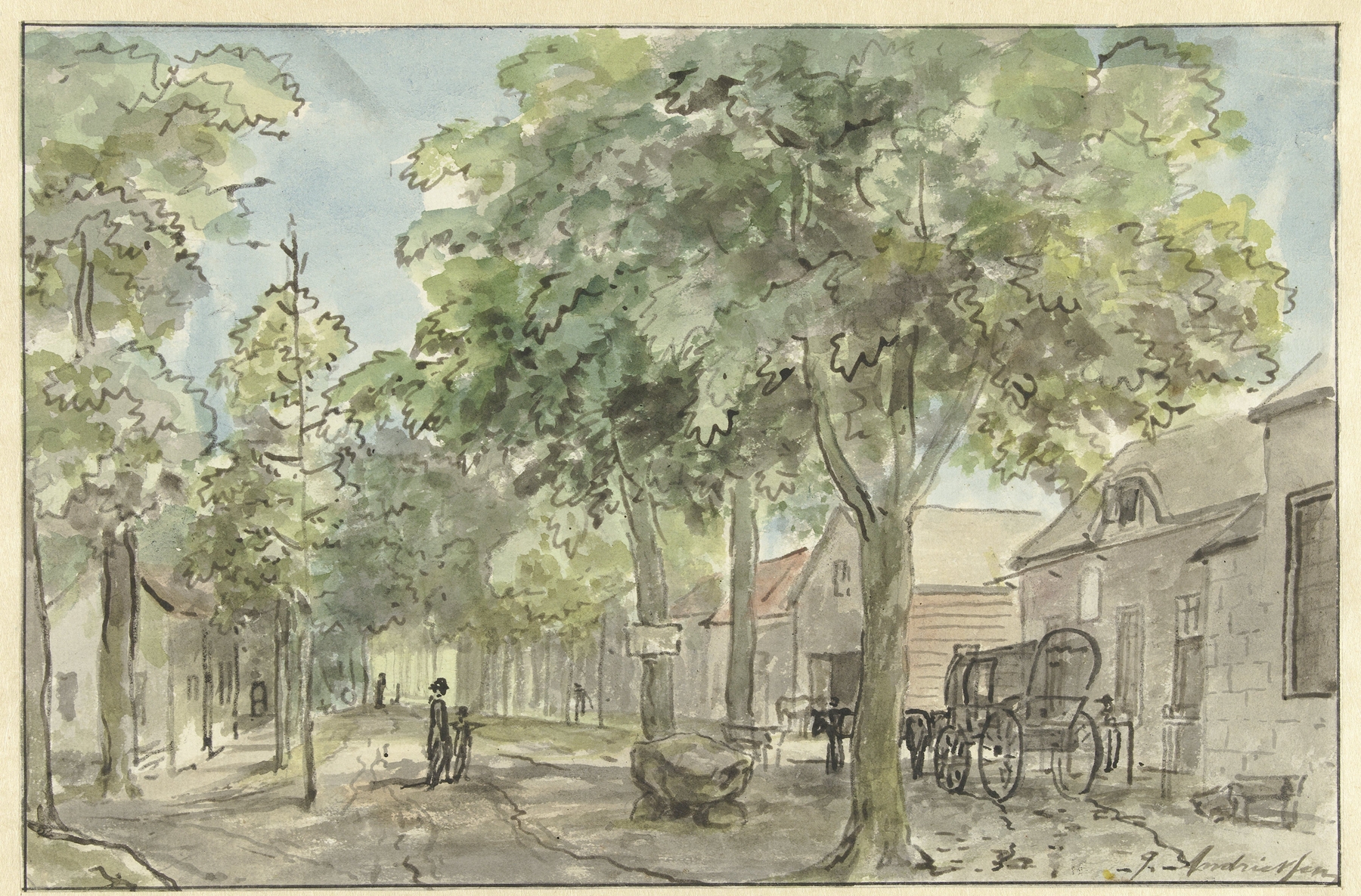
Wandelaars op een bosweg bij Heemstede — History & Analysis
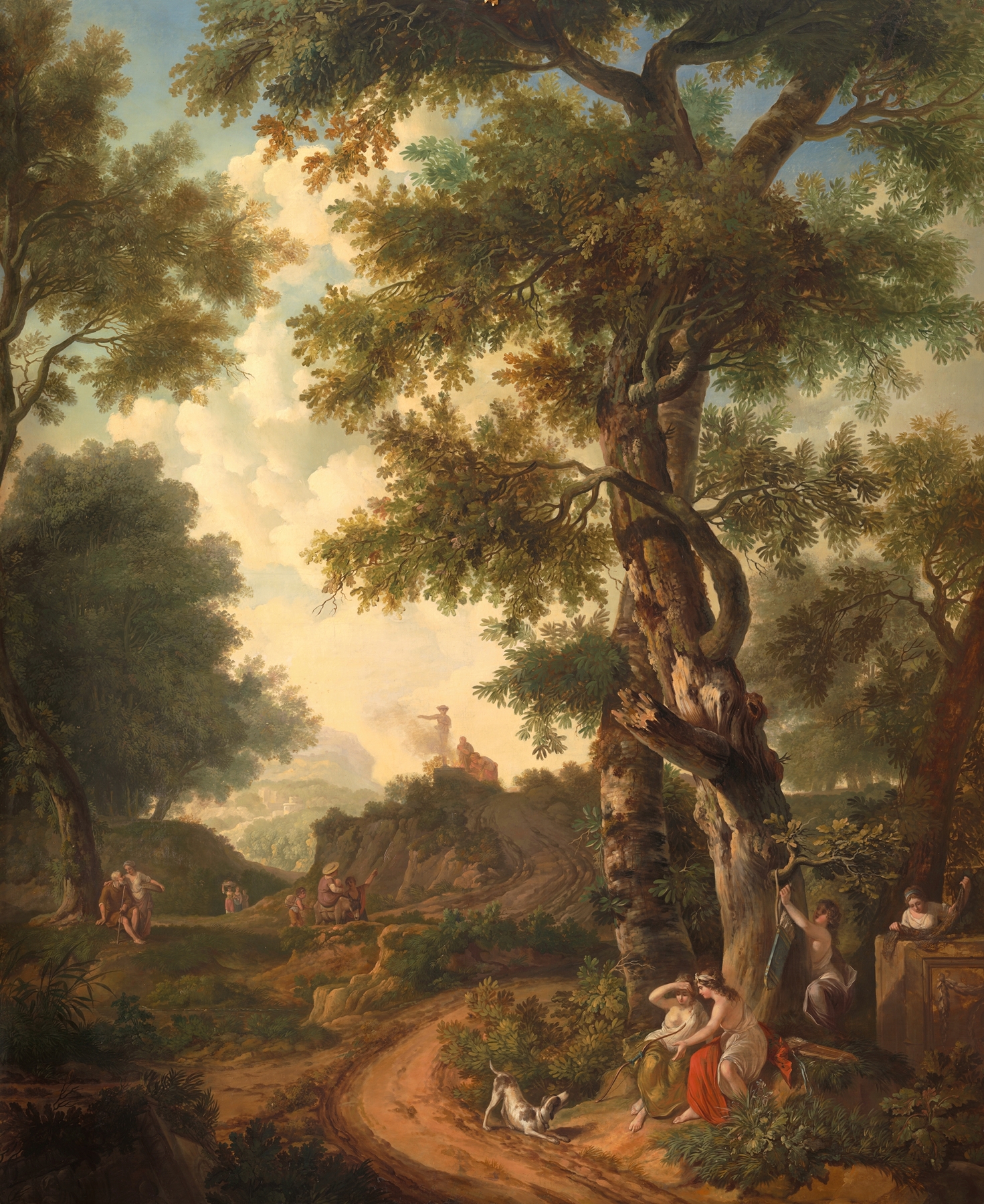
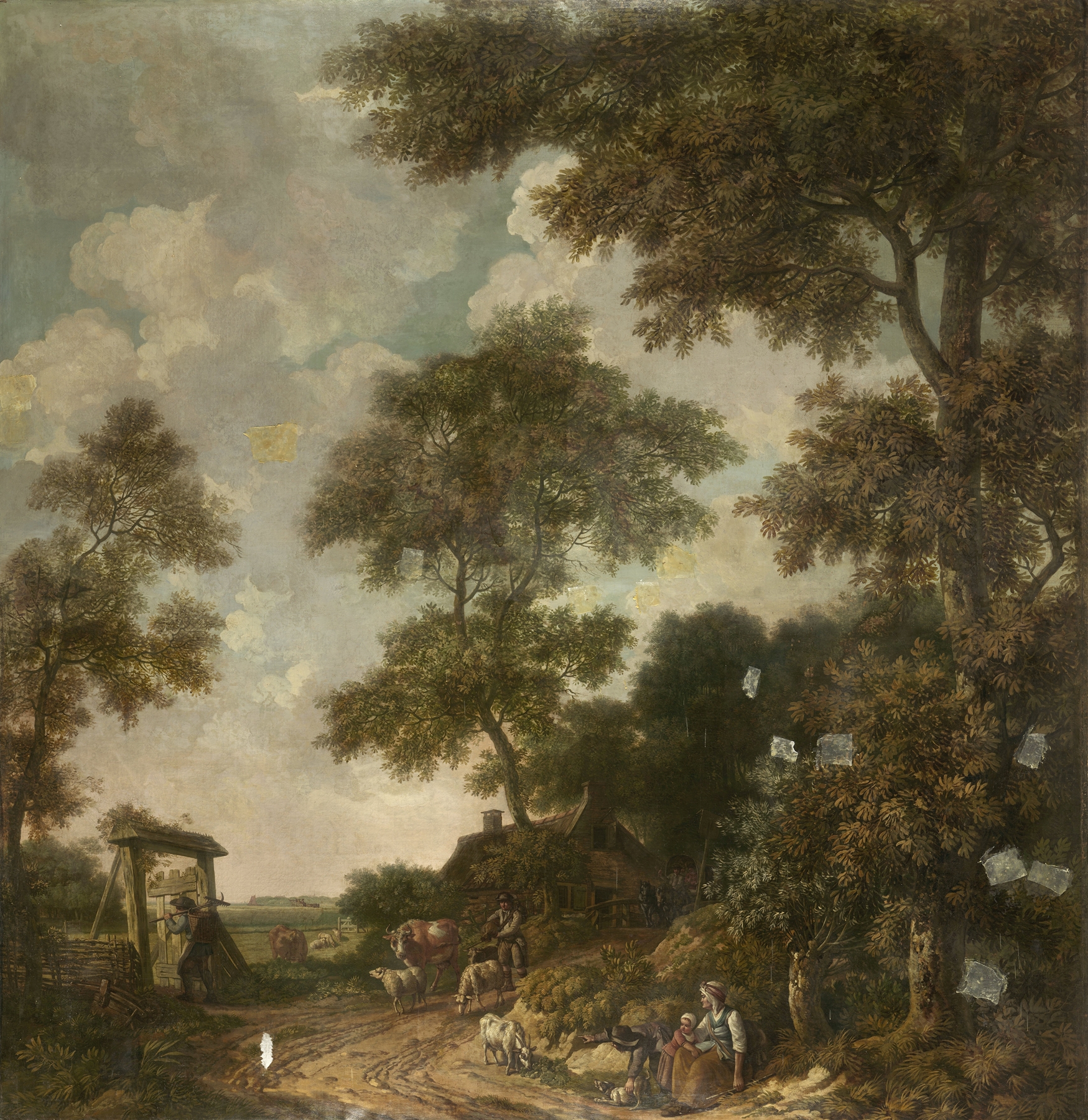
Can beauty exist without sorrow? The colors of the forest whisper of joy while casting shadows that hint at the fleeting nature of bliss itself. Focus on the blend of greens and earthy tones that envelop the scene. Notice how the dappled sunlight filters through the leaves, illuminating the figures of the walkers as they traverse the winding path.
Jurriaan Andriessen carefully balances light and dark, creating a tapestry of tranquility punctuated by the gentle play of shadow, drawing the viewer into a moment of serene contemplation. The contrast between the vibrancy of nature and the subdued expressions of the figures offers a glimpse into deeper emotional landscapes. Each walker, though surrounded by beauty, appears isolated in their own thoughts, evoking a sense of introspection. The choice to depict a forest path suggests both a journey and a choice, inviting reflections on life's complexities and the bittersweet nature of existence.
In the late 18th century, Andriessen was immersed in the Dutch Golden Age, a time when landscape painting flourished. He created Wandelaars op een bosweg bij Heemstede during a period marked by a burgeoning appreciation for nature and the human connection to it. This painting exemplifies his ability to capture both the idyllic and the contemplative, a hallmark of his work that mirrored the evolving artistic sentiments of his time.