
Wannsee — History & Facts
When did color learn to lie? In the tranquil waters of a summer afternoon, an unsettling emptiness lurks beneath a veneer of vibrant hues. What appears idyllic upon first glance reveals a deeper isolation, challenging us to confront the silence that often accompanies beauty. Focus on the serene surface of the lake, where gentle ripples distort the lush reflections of trees and sky, merging the boundaries between reality and illusion. The artist employs a soft palette, rich in greens and blues, inviting the viewer's gaze to linger, yet the absence of human presence evokes a profound sense of solitude.
Notice how the sun filters through the leaves, dappling the ground with light and shadow, creating a haunting interplay that hints at both serenity and the lurking void. Amidst this apparent tranquility, the contrast between vitality and absence becomes palpable. The trees, though full of life, stand sentinel-like, echoing a silence that amplifies the surrounding emptiness. This duality resonates with the viewer: the beauty of nature juxtaposed against an emotional landscape that speaks of longing and disconnection, forcing us to confront the isolation that often lies hidden behind the façade of vibrant color. In 1925, the artist was entrenched in the vibrant intellectual and cultural milieu of Weimar Germany, yet he grappled with the growing tensions in society.
This period of significant change influenced his work, as he sought to explore themes of isolation and the complex interplay between beauty and despair. Wannsee reflects both the allure and the emptiness of the era, marking a pivotal moment in his artistic evolution.
More Artworks by Max Liebermann
Browse all →
Die Blumenterrasse in Wannsee mit Blick auf den Fischotterbrunnen
Max Liebermann
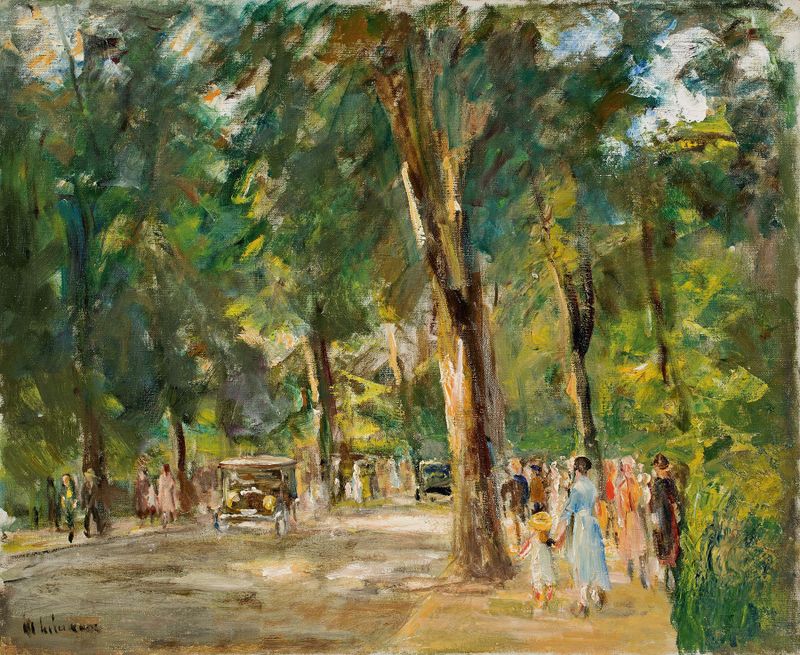
Die Große Seestraße in Wannsee mit Spaziergängern
Max Liebermann

Seitlicher Blick in den Wannseegarten
Max Liebermann

Der Rosengarten in Wannsee
Max Liebermann

Allee mit Spaziergängern und Automobilen
Max Liebermann

Blick in meinen Garten
Max Liebermann
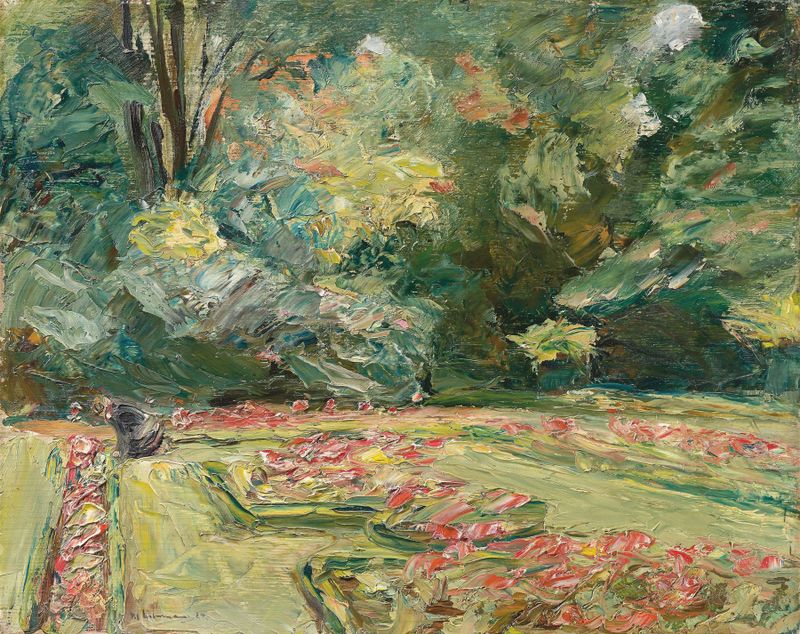
Die Blumenterrasse im Wannseegarten nach Norden
Max Liebermann

Spielende Kinder am Strand
Max Liebermann
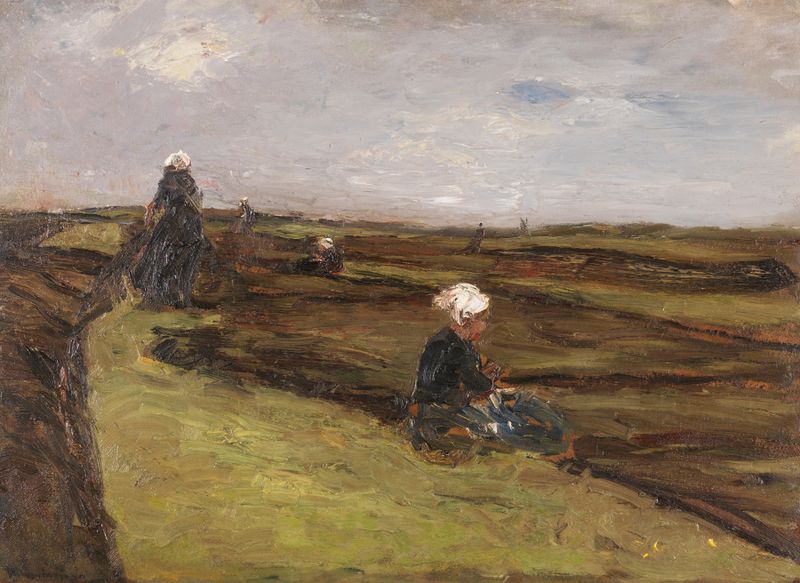
Die Netzflickerinnen
Max Liebermann

Am Strand von Noordwijk
Max Liebermann





