Water Lily Pond — History & Facts
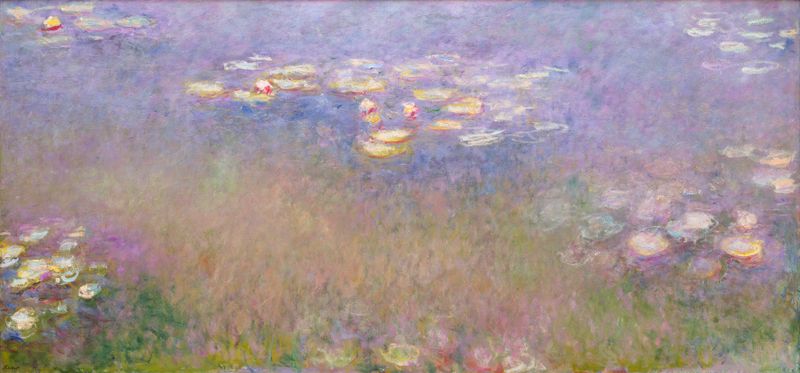
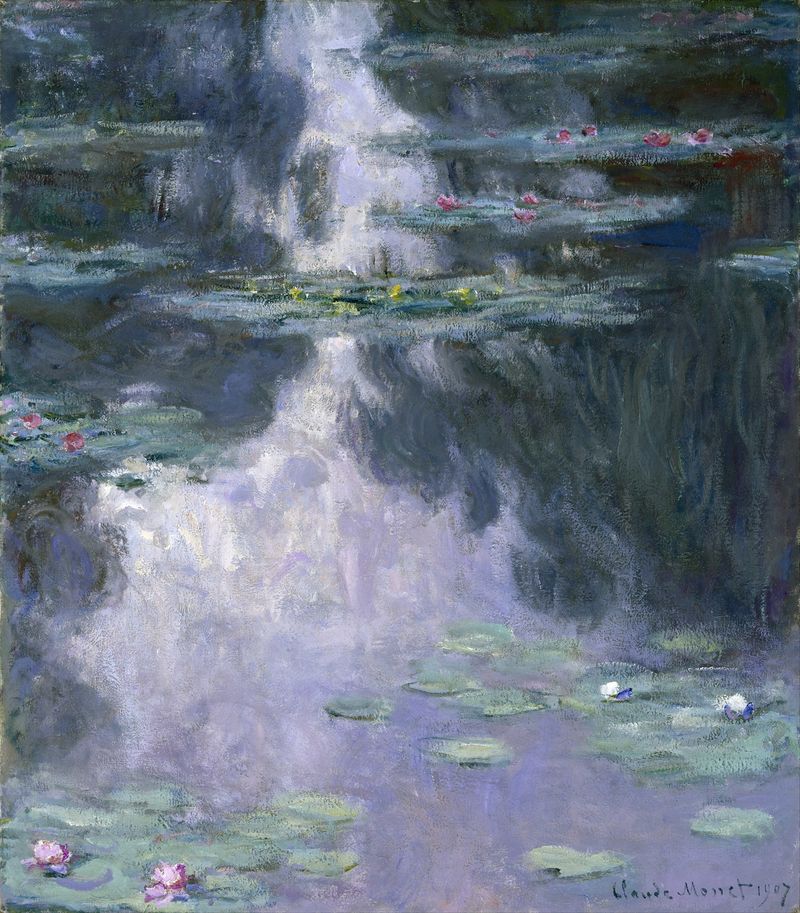
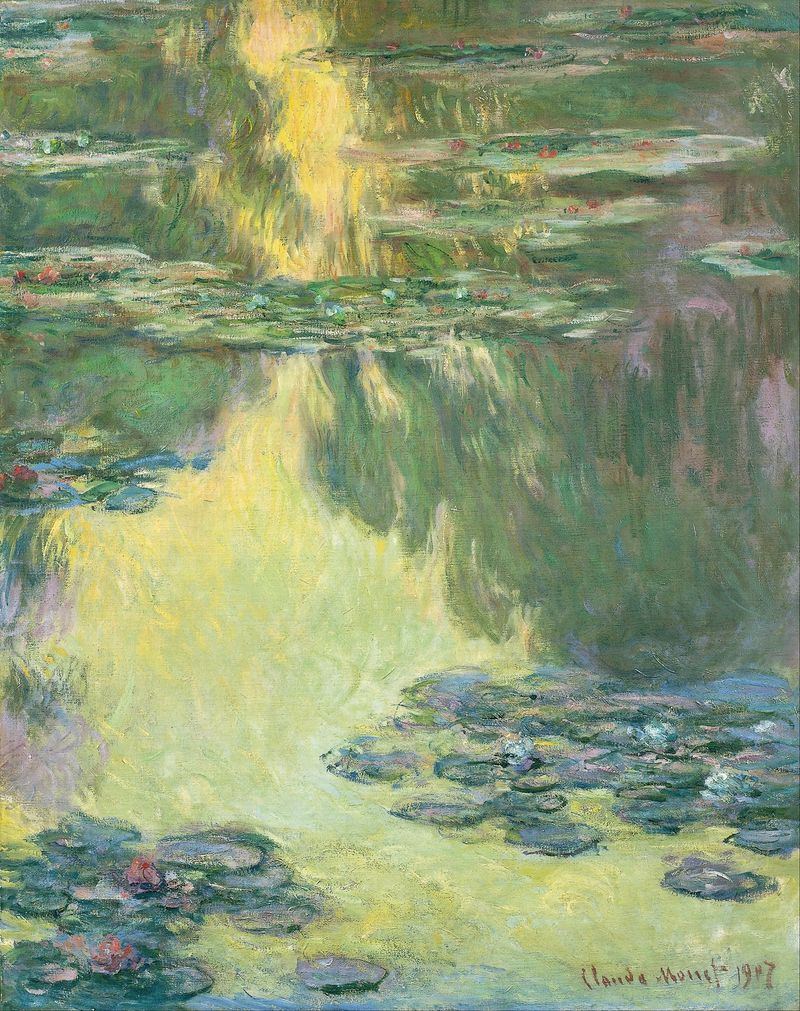
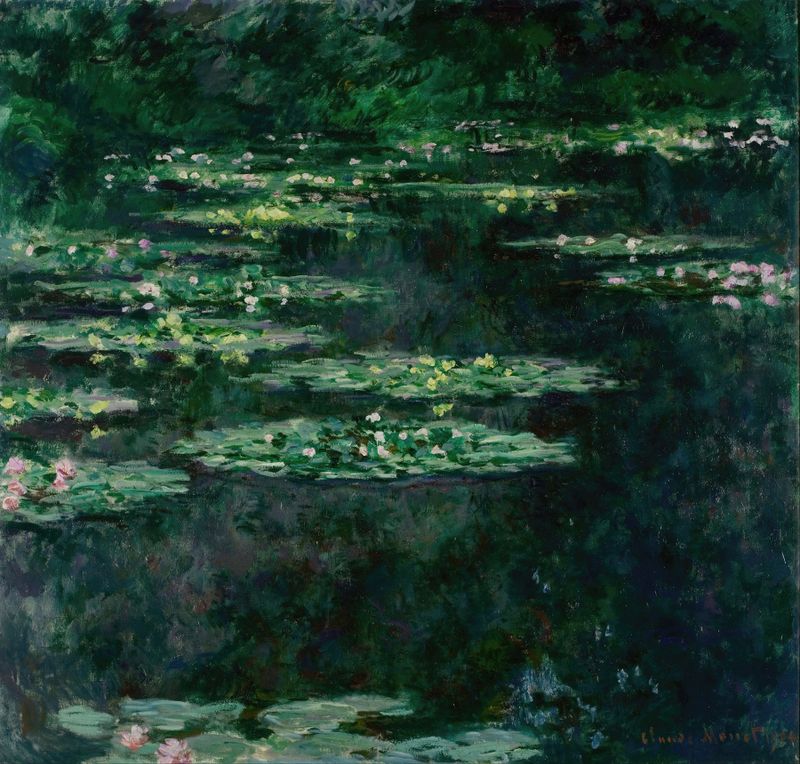
In Water Lily Pond, destiny unfolds in layers, as soft hues merge and dance across the canvas, inviting us to lose ourselves in nature's embrace. It evokes a profound sense of connection, urging us to reflect on the fleeting moments that shape our lives. Look to the center, where delicate water lilies cluster like scattered dreams upon the pond's surface. Notice how the light glimmers off the water, creating an ethereal quality that blurs the line between reality and illusion.
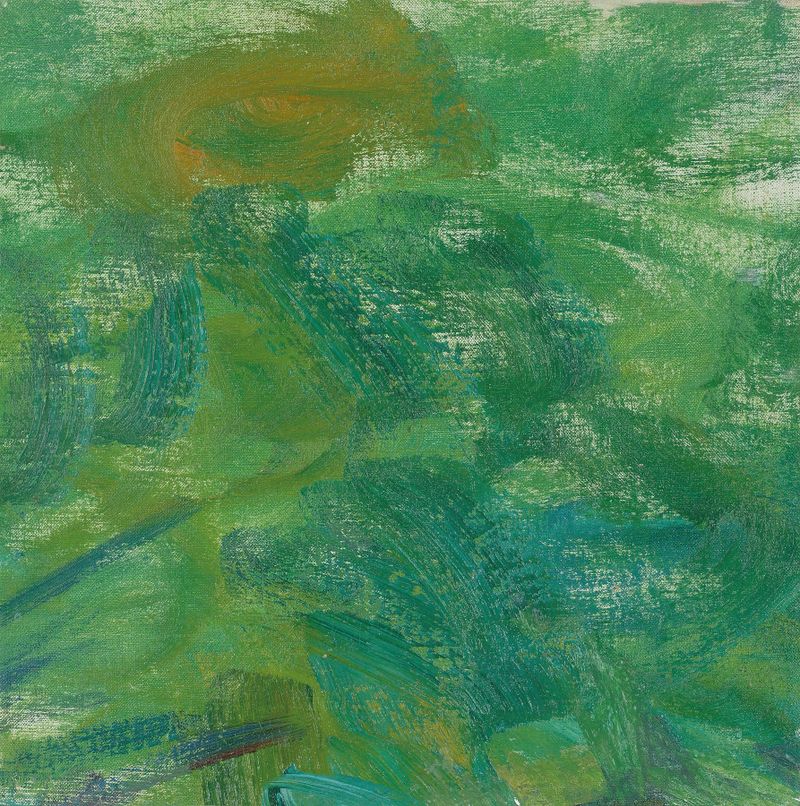
The vibrant greens and soft blues convey a tranquil rhythm, while the swirling brushstrokes suggest a gentle breeze, infusing the scene with life and movement. Monet's masterful technique allows us to almost hear the whispers of nature echoing through the stillness. Beneath the serene beauty lies a poignant tension between permanence and transience. The lapping water, seemingly eternal, also reminds us of the ephemeral nature of existence.
Each lily reflects a moment captured in time, yet destined to fade. The play of light across the pond symbolizes hope and renewal, suggesting that even in fleeting moments, there is profound beauty and meaning to be found. Painted between 1917 and 1919, Monet created Water Lily Pond during a period of personal struggle and loss, yet it radiates a sense of peace. Living in Giverny, he was deeply engaged in his famed water lily series, which had become a hallmark of Impressionism.
This work stands as a testament to his resilience and unwavering dedication to capturing the essence of nature, even as the world outside shifted toward turmoil.