
Weg im Wald — History & Facts
Could a single brushstroke hold eternity? In Weg im Wald, Max Liebermann captures a moment suspended in time, where the woodland path invites contemplation and connection with nature's essence. Look to the left, where dappled sunlight filters through the leaves, casting intricate shadows on the winding trail. The vibrant greens of the foliage contrast with the earthy browns of the path, creating a harmonious balance that draws the viewer’s eye deeper into the scene. The brushwork is loose yet deliberate, emphasizing texture and the fluidity of the natural world, while hints of lighter hues suggest the gentle caress of a breeze, whispering secrets of the forest. The emotional tension in this work lies in the interplay between the path and the surrounding trees.
As the eye travels along the way, one is reminded of life's journeys and the choices we face. The serene stillness of the forest juxtaposed with the invitation of the path evokes a sense of both solitude and possibility, suggesting a reflective pause in our busy lives. The lack of figures in the scene emphasizes a profound sense of absence, as though the viewer is meant to fill the void with their own thoughts and dreams. Created in 1907, this piece emerged from Liebermann's time spent in the vibrant artistic circles of Berlin and the burgeoning Impressionist movement.
The artist’s exploration of light and nature reflected the broader shift in art towards capturing the ephemeral beauty of the world, a departure from rigid academic traditions. As he stood before the landscape, the painter sought to convey not just what he saw, but what he felt — a moment of pure connection with the wilderness.
More Artworks by Max Liebermann
Browse all →
Die Blumenterrasse in Wannsee mit Blick auf den Fischotterbrunnen
Max Liebermann
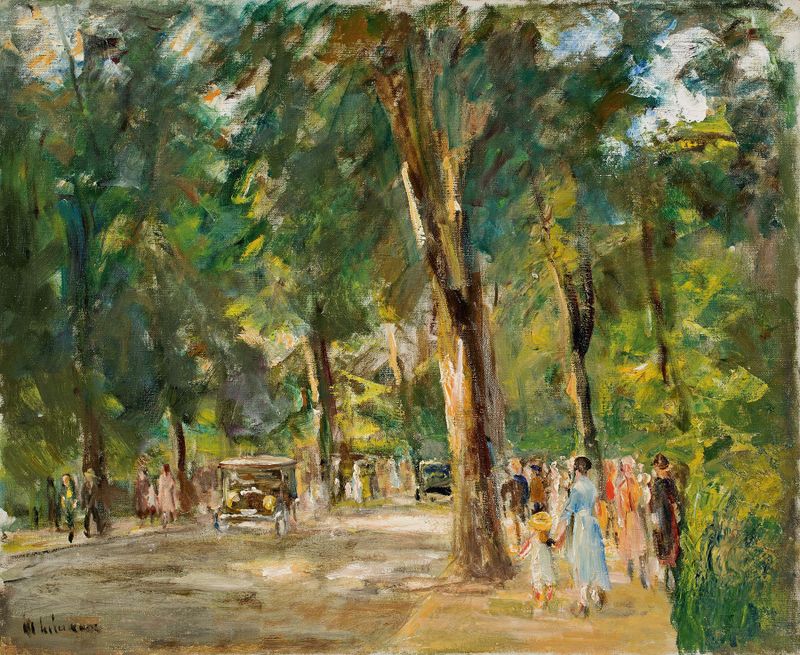
Die Große Seestraße in Wannsee mit Spaziergängern
Max Liebermann

Seitlicher Blick in den Wannseegarten
Max Liebermann

Der Rosengarten in Wannsee
Max Liebermann

Allee mit Spaziergängern und Automobilen
Max Liebermann

Blick in meinen Garten
Max Liebermann
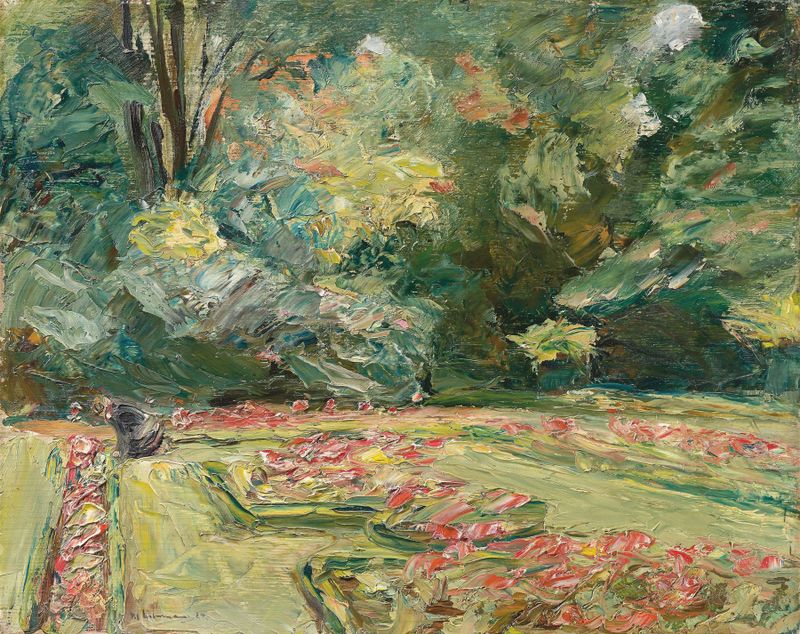
Die Blumenterrasse im Wannseegarten nach Norden
Max Liebermann

Spielende Kinder am Strand
Max Liebermann
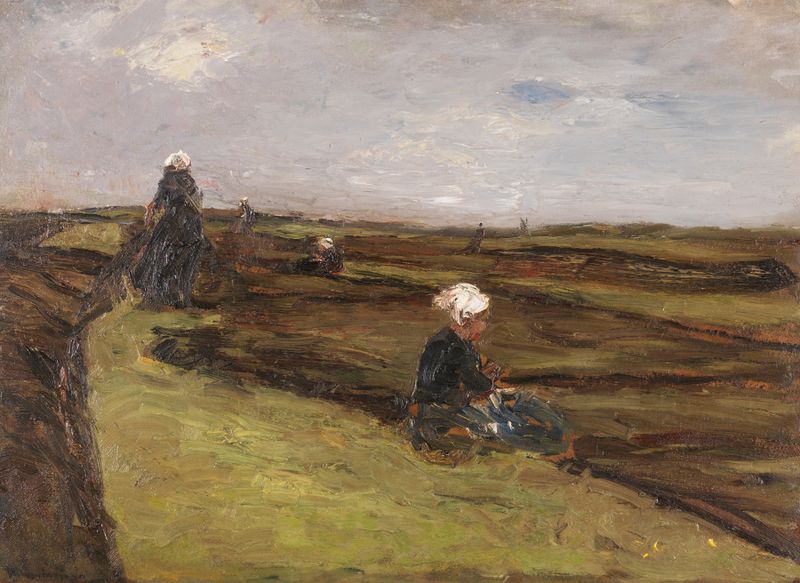
Die Netzflickerinnen
Max Liebermann

Am Strand von Noordwijk
Max Liebermann





