
Weidelandschaft — History & Facts
Is this a mirror — or a memory? In Weidelandschaft, a landscape unfolds, inviting the viewer to reflect on the essence of longing and the ephemeral beauty of nature. Focus on the lush greens and muted golds that dominate the canvas, capturing the viewer's gaze at a serene meadow stretching toward the horizon. The delicate brushstrokes create a soft texture, where the grasses sway gently, revealing a dance of light and shadow. The sky, a swirl of pastels, hints at dusk, casting a warm glow that envelops the scene, while thin wisps of clouds drift lazily, adding to the atmosphere of tranquility. Hidden beneath the surface of this idyllic landscape lies a deeper yearning.
The juxtaposition of vibrant life against the encroaching twilight evokes a sense of nostalgia for moments that slip away like grains of sand. The slight bend of the path leads the eye deeper into the scene, inviting contemplation of the journey ahead, while the absent figures suggest an emotional distance — perhaps an echo of loved ones left behind or dreams yet to be fulfilled. Eugen Jettel painted Weidelandschaft in 1894, during a period of personal exploration and artistic maturity. Living in Vienna, he was influenced by the changing art world, where the Impressionists were gaining prominence, challenging traditional representations of nature.
This landscape, emblematic of his devotion to capturing the fleeting nuances of light and atmosphere, stands as a testament to both his technical skill and the emotional resonance of his subject matter.
More Artworks by Eugen Jettel
Browse all →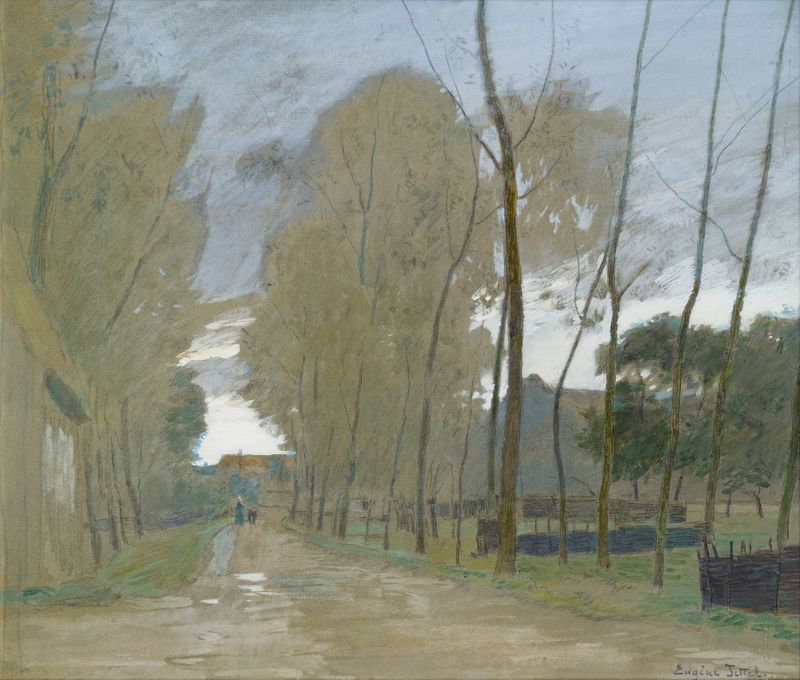
Motiv aus der Bretagne
Eugen Jettel
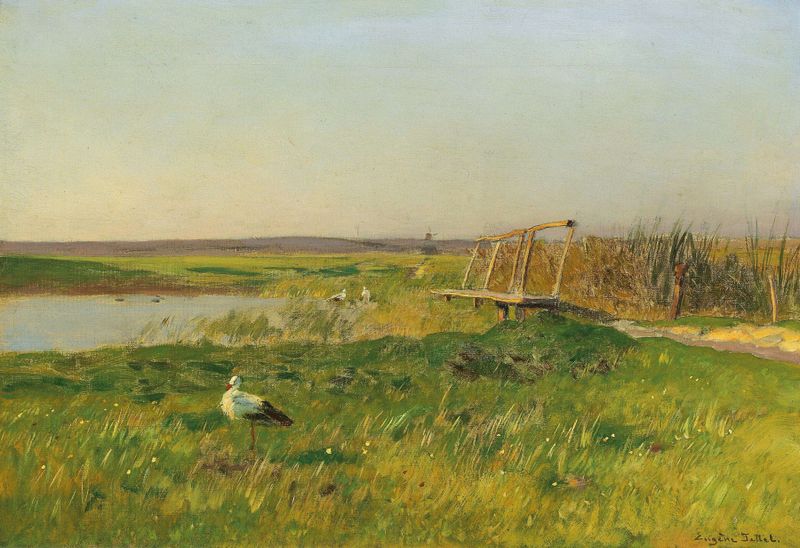
Frühlingslandschaft mit Störchen an einem Weiher
Eugen Jettel

Rinder auf Sommerwiese
Eugen Jettel
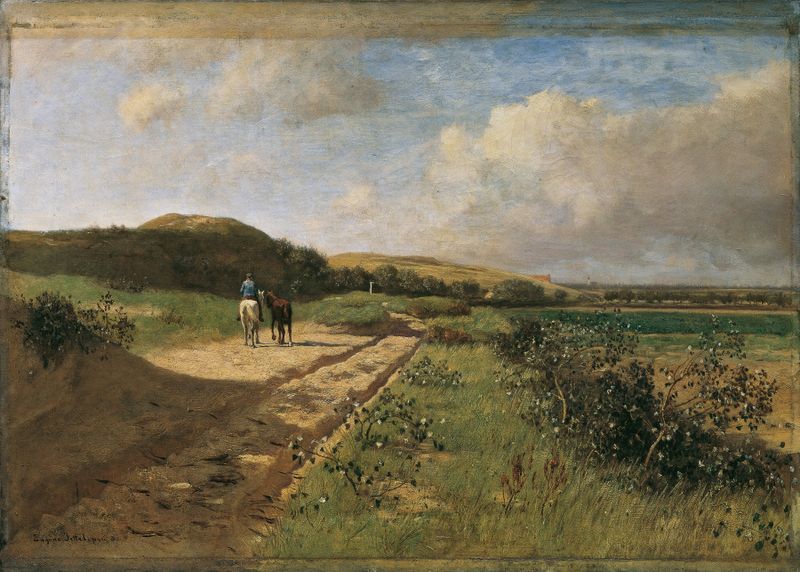
Dünen bei Katwijk
Eugen Jettel
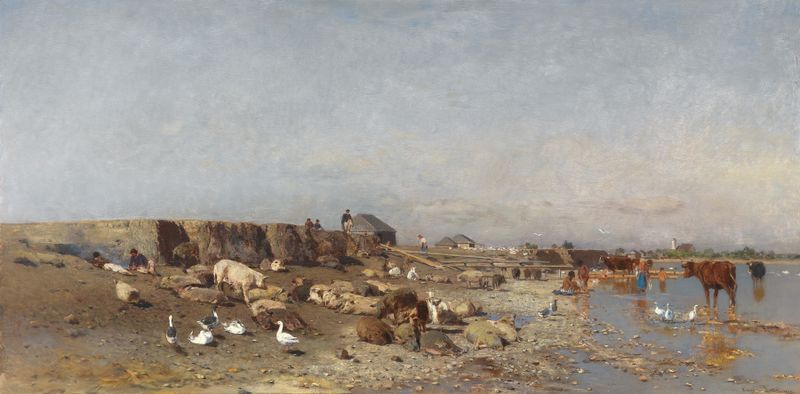
Motiv aus Szered an der Waag
Eugen Jettel
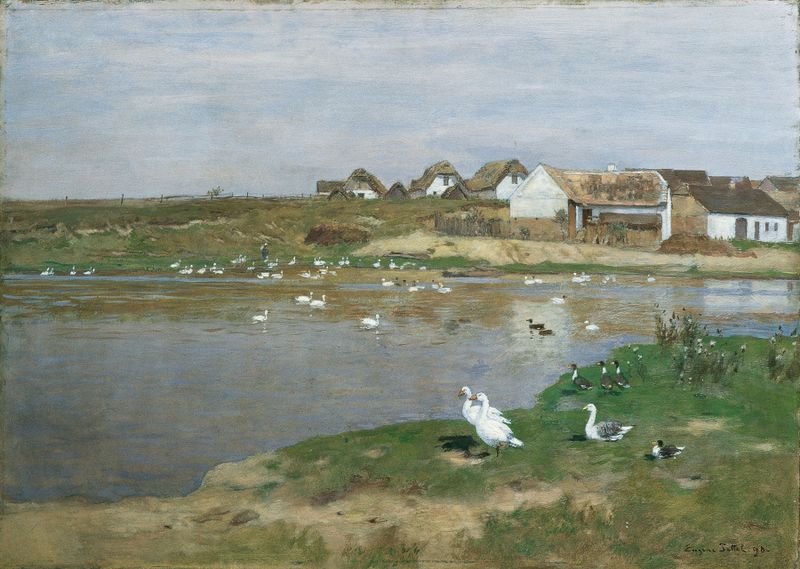
Der Gänseteich in Kotting-Neusiedl
Eugen Jettel

Flusslandschaft Mit Boot
Eugen Jettel

Flusslandschaft mit Kühen
Eugen Jettel

Dorfpartie Strohhütten aus Staatz
Eugen Jettel

Abendlandschaft
Eugen Jettel





