
Weidende Kühe — History & Facts
Can beauty exist without sorrow? A question that lingers in the air like the soft mist over a serene landscape, inviting contemplation and quietude. Look to the center of the composition, where a cluster of cows grazes peacefully against a backdrop of rolling hills and dusky sky. The light washes over the scene in gentle hues, illuminating the rich greens and golden browns of the farmland. Notice how Jettel’s delicate brushwork captures the texture of the cows’ coats, formulating a palpable warmth that coexists with the coolness of twilight gathering.
The arrangement of forms leads the eye around the tableau, creating a rhythm that mirrors the tranquility of rural life. Yet, beneath this idyllic surface, one can sense a deeper tension at play. The cows, symbols of pastoral life, dwell in a moment that is fleeting, evoking themes of transience and faith in the natural order. The horizon, tinged with twilight, suggests the inevitable passage of time, while the stillness of the cows reveals a steadfastness that contrasts the impermanence fading into night.
Here, beauty is intertwined with a whisper of melancholy, an acknowledgment that every moment of peace may carry a shadow of what lies beyond. Jettel painted this piece during a period of profound change in the art world, when naturalism and realism were paving the way for modern expression. Working in the late 19th century, he found inspiration in the Austrian countryside, capturing not just the visual splendor but the spiritual essence of the rural landscape. Amidst the emerging avant-garde movements, his focus on pastoral themes served as both a celebration and a meditative reflection on the simplicity and depth of rural life.
More Artworks by Eugen Jettel
Browse all →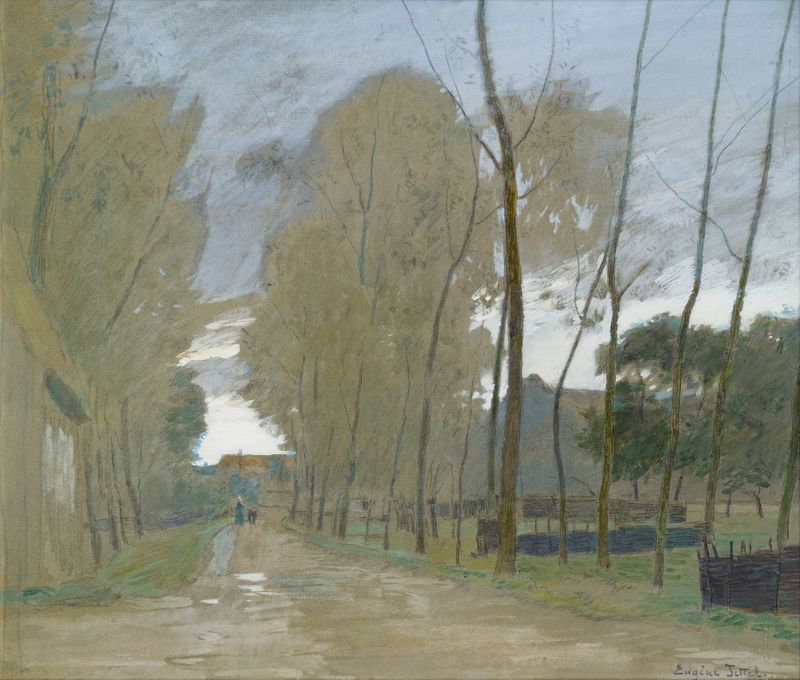
Motiv aus der Bretagne
Eugen Jettel
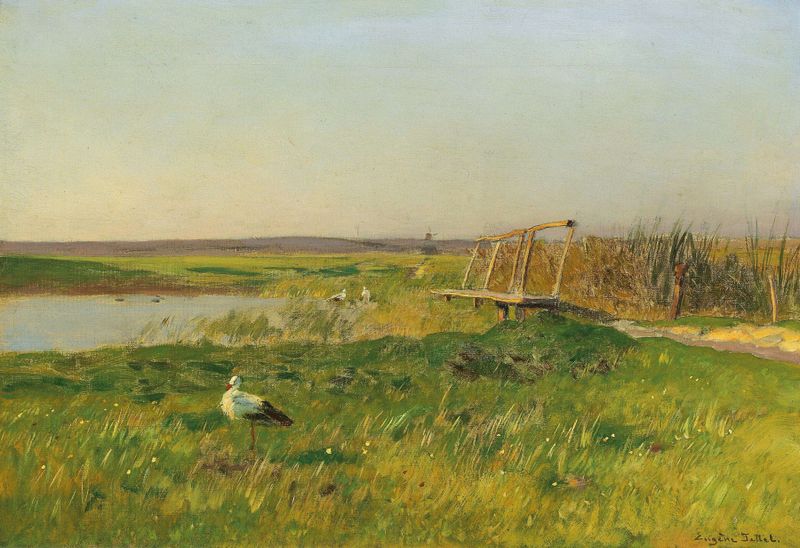
Frühlingslandschaft mit Störchen an einem Weiher
Eugen Jettel

Rinder auf Sommerwiese
Eugen Jettel
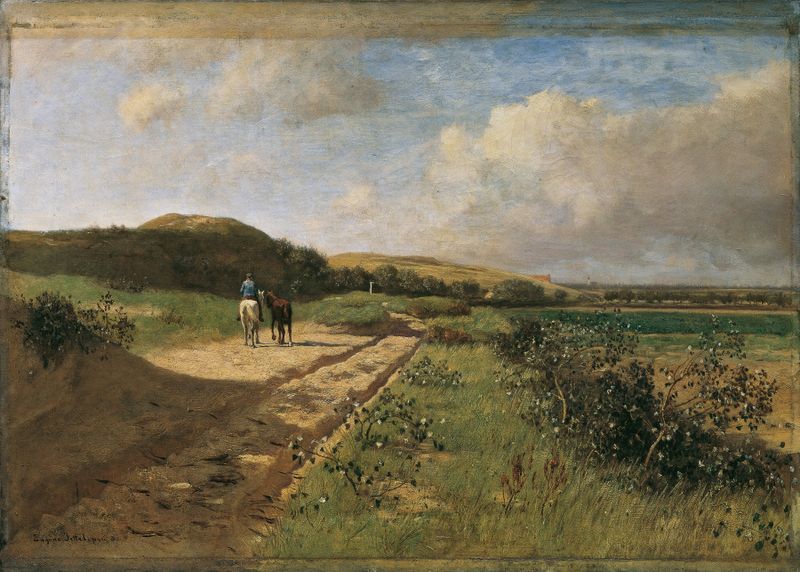
Dünen bei Katwijk
Eugen Jettel
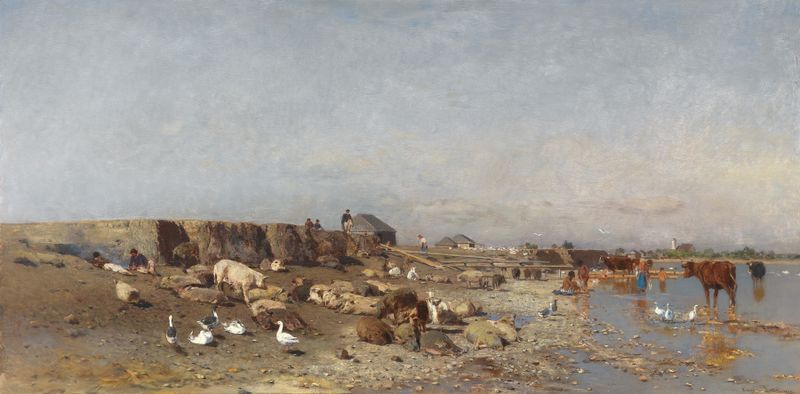
Motiv aus Szered an der Waag
Eugen Jettel
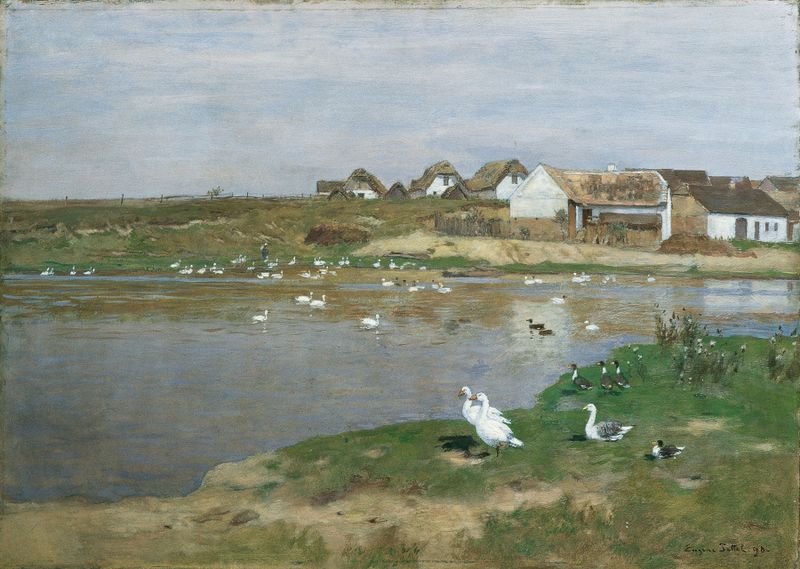
Der Gänseteich in Kotting-Neusiedl
Eugen Jettel

Flusslandschaft Mit Boot
Eugen Jettel

Flusslandschaft mit Kühen
Eugen Jettel

Dorfpartie Strohhütten aus Staatz
Eugen Jettel

Abendlandschaft
Eugen Jettel





