Wet Little Italy — History & Facts
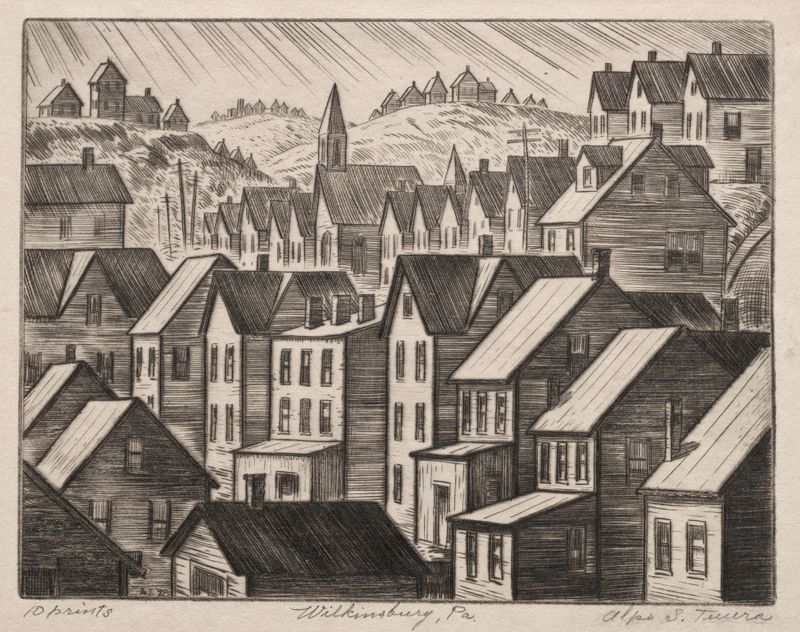
In the vibrant dance of hues, there lies a pulse that echoes the ecstasy of life itself. Look to the foreground, where the cobblestones glisten under a gentle rain, each droplet reflecting the warmth of street lamps. The color palette is a blend of rich ochres and deep blues, capturing a moment that feels both intimate and expansive. Notice how the arches of the buildings create a frame that invites you into this lively narrative, drawing your gaze upward to the swath of sky that holds a promise of both rain and respite. Yet beyond the surface beauty, a deeper tension brews in this urban landscape.
The juxtaposition of wetness and light evokes a sense of renewal, while the shadows cast by the buildings whisper of stories untold—of inhabitants who walk these streets, their lives interwoven within the bustling alleys. Each element, from the glistening surfaces to the soft silhouettes, hints at the ecstatic pulse of a community that thrives even in the rain. During the vibrant years of 1927, Alpo S. Tuura was exploring the intersection of modernity and tradition in the bustling quarters of Little Italy.
Amidst a backdrop of cultural revival and artistic experimentation in Europe, he focused on capturing the essence of urban life. His works reflect not only the aesthetic shifts of the time but also a personal journey through the rhythm and vitality of community, making this piece a testament to both his artistic vision and the era’s spirit.