
White Slave Trade — History & Facts
Five women, wrapped in shawls and heavy clothing, sit huddled together in a cramped wooden compartment. The figures are arranged in a diagonal line from the lower left to the upper right, with their bodies pressed close to the walls and each other. At the front, a young woman in a voluminous pale pink skirt leans forward, her head resting on her hand, her eyes closed in exhaustion or sleep.
Beside her, another figure slumps forward, her face hidden by a patterned scarf, her arm draped over the wooden railing. Behind them, three women sit upright against the back wall: one gazes out with a somber, distant expression, while the others keep their eyes lowered or closed, their faces partly obscured by shawls. The interior is bare and wooden, with narrow windows on the right casting a muted light across the scene, illuminating the pale faces and the folds of fabric.
Bundles, a wicker basket, and a battered suitcase are piled on the floor and bench, suggesting hurried travel or displacement. The paint is applied with visible, fluid brushstrokes, especially in the rendering of the garments and the wooden planks, giving the scene a sense of immediacy and texture. Sorolla uses a restrained palette of browns, greys, and muted reds, with the brightest notes in the crumpled skirt and headscarves, drawing attention to the figures’ vulnerability.
The composition is tightly enclosed, with little space between the figures and the compartment walls, heightening the sense of confinement. Small details, such as the frayed edges of clothing and the worn handles of luggage, reinforce the hardship of the journey. The artist’s signature and the date 1894 appear in the lower left corner, anchoring the work in time. White Slave Trade was painted by Joaquín Sorolla in 1894.
Sources: Wikidata Q5683910
More Artworks by Joaquín Sorolla

Sad Inheritance
Joaquín Sorolla
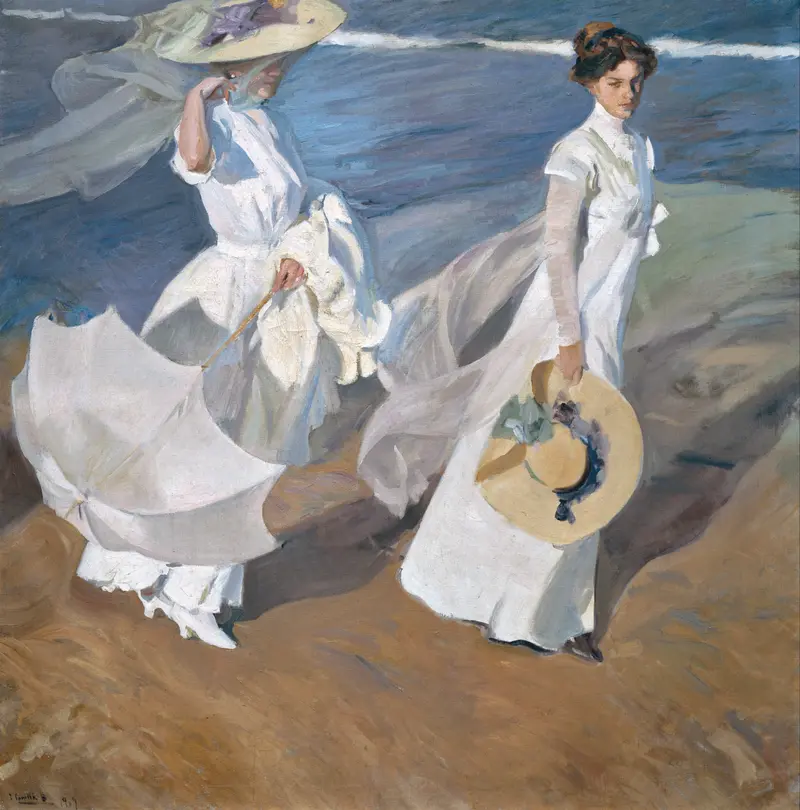
Walk on the Beach
Joaquín Sorolla

Mother
Joaquín Sorolla
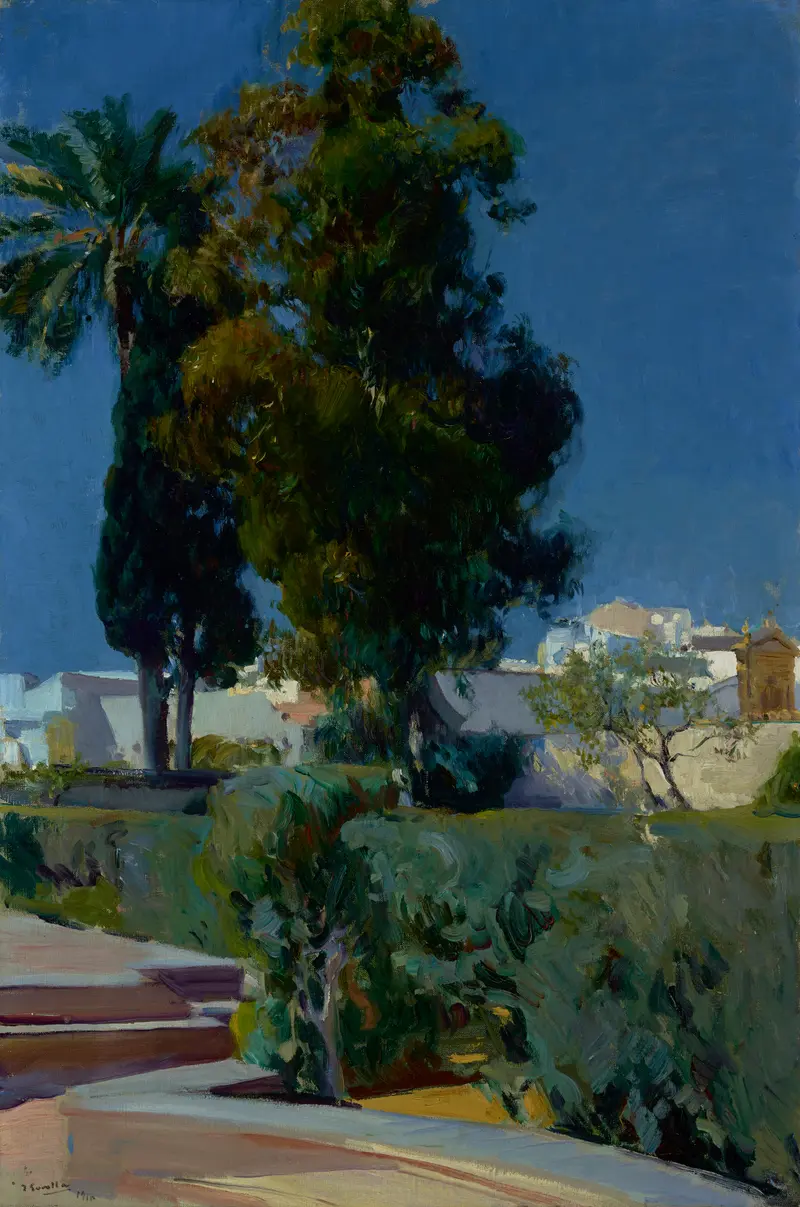
Corner of the Garden, Alcazar, Sevilla
Joaquín Sorolla

Fishing Boats On The Beach, Valencia
Joaquín Sorolla
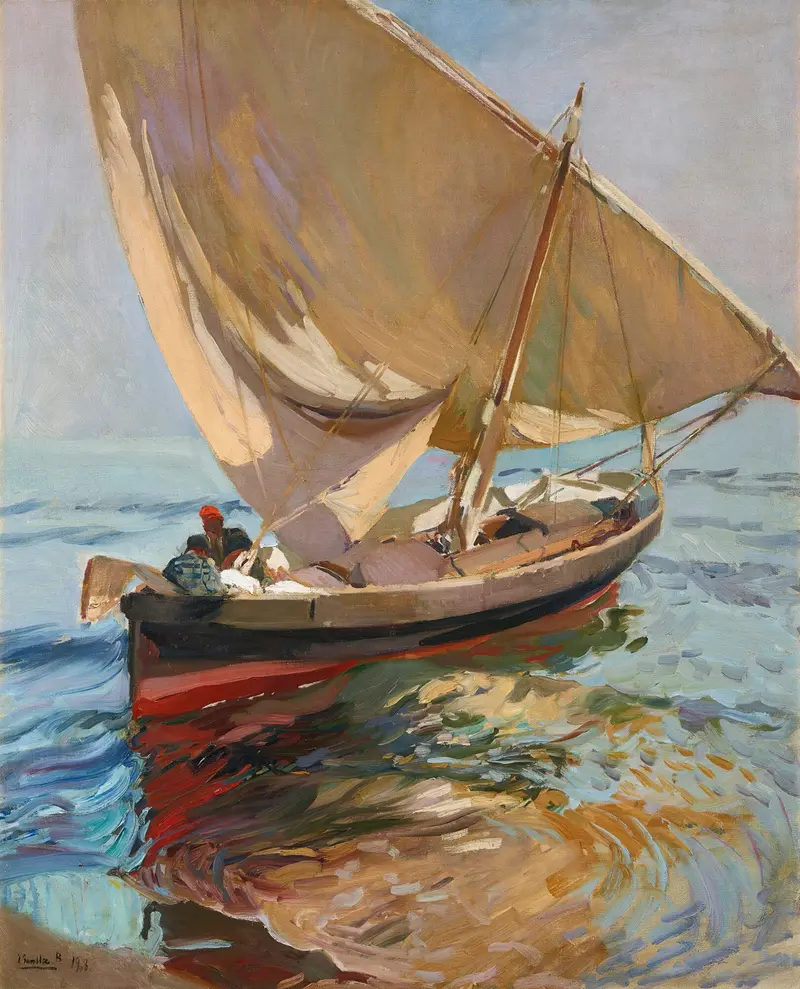
Camino De La Pesca. Valencia (Setting Out To Sea. Valencia)
Joaquín Sorolla
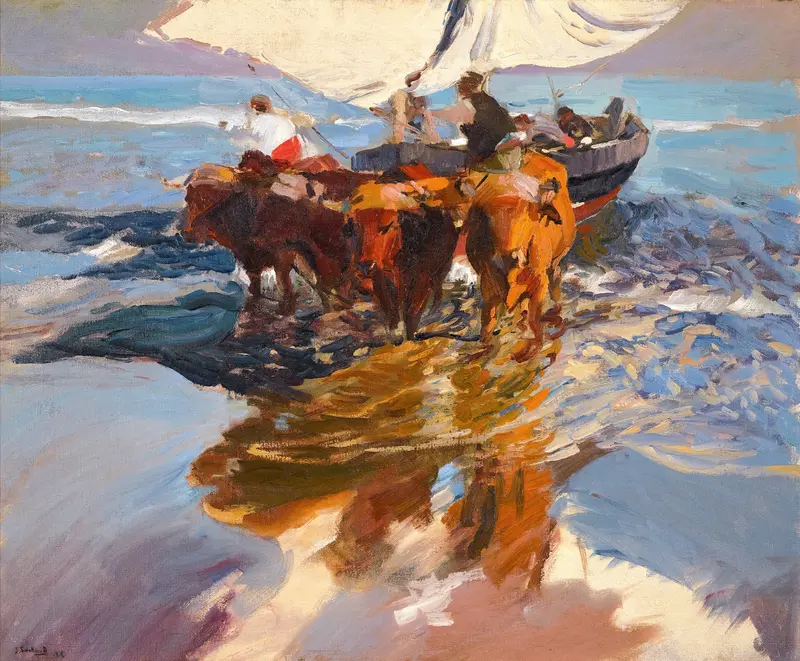
Vuelta De La Pesca. Playa De Valencia (The Return From Fishing, Valencia Beach)
Joaquín Sorolla
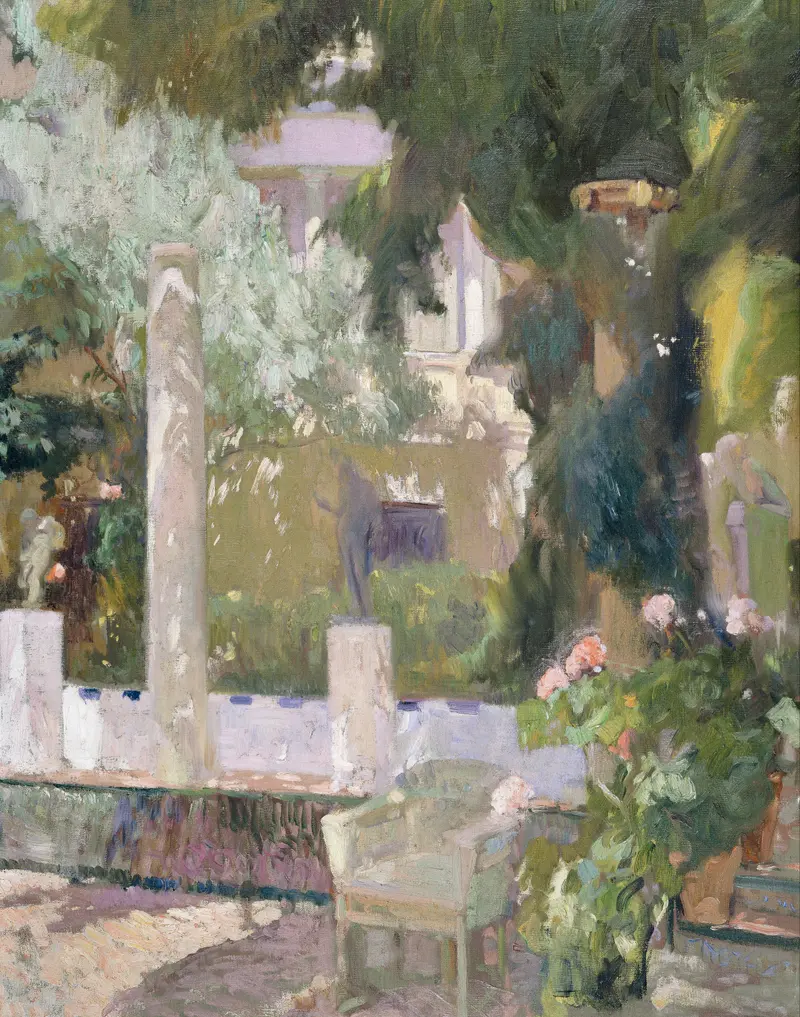
The Gardens at the Sorolla Family House
Joaquín Sorolla
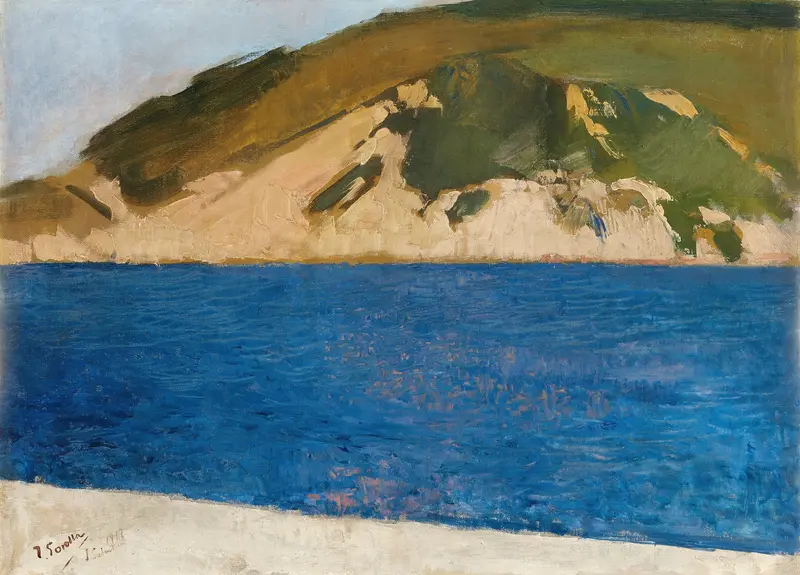
Monte Ulía, San Sebastián
Joaquín Sorolla

Barcas En La Playa
Joaquín Sorolla





