
Wildbad Gastein — History & Facts
In a world where moments slip through our fingers, art stands as a delicate balance between memory and oblivion, echoing the essence of life itself. Look closely at the vibrant interplay of colors that grace the canvas; the lush greens of the mountains meld seamlessly into the serene blues of the sky. Notice how the gentle slopes lead the eye toward the horizon, drawing you into the tranquil valley of Wildbad Gastein. Each brushstroke reveals the meticulous care taken to capture the ethereal quality of light, creating a sense of harmony that envelops the viewer, as if inviting them to step into this serene landscape. Yet, beneath the surface tranquility lies an intricate tension between nature's grandeur and human vulnerability.
The juxtaposition of the towering mountains against the small, humble structures hints at mankind’s brief existence against the backdrop of nature’s eternal presence. The soft brushwork evokes both nostalgia and longing, prompting contemplation on the passage of time and the fleeting nature of beauty. In 1843, Löhr painted this idyllic scene while Europe was steeped in the Romantic movement, a time that celebrated the sublime aspects of nature. Living in Germany, he was deeply influenced by the era’s emphasis on emotion and individual perception, seeking to capture both the beauty and the ever-looming change within landscapes.
The work not only reflects his artistic journey but also the cultural currents that swept through Europe, marking a pivotal moment in the evolution of Romantic art.
More Artworks by Emil Ludwig Löhr
Browse all →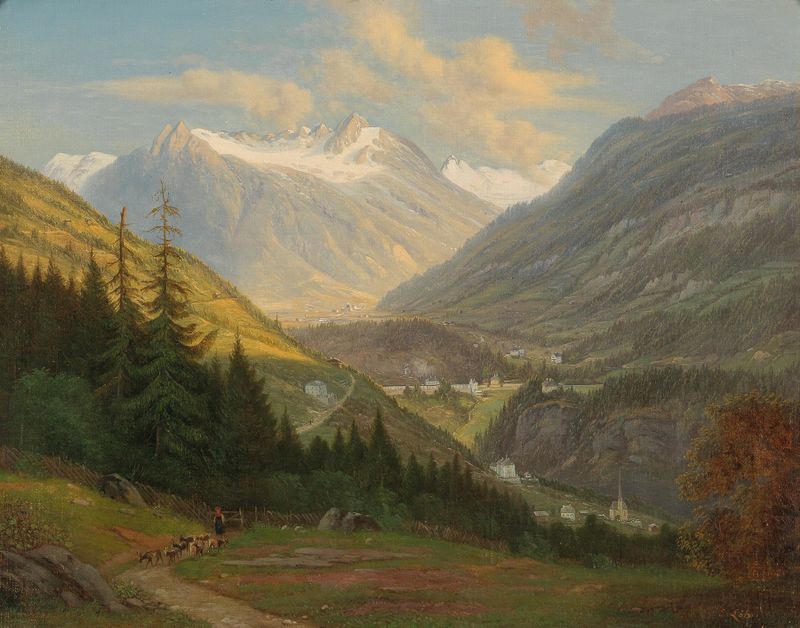
View of Bad Gastein
Emil Ludwig Löhr
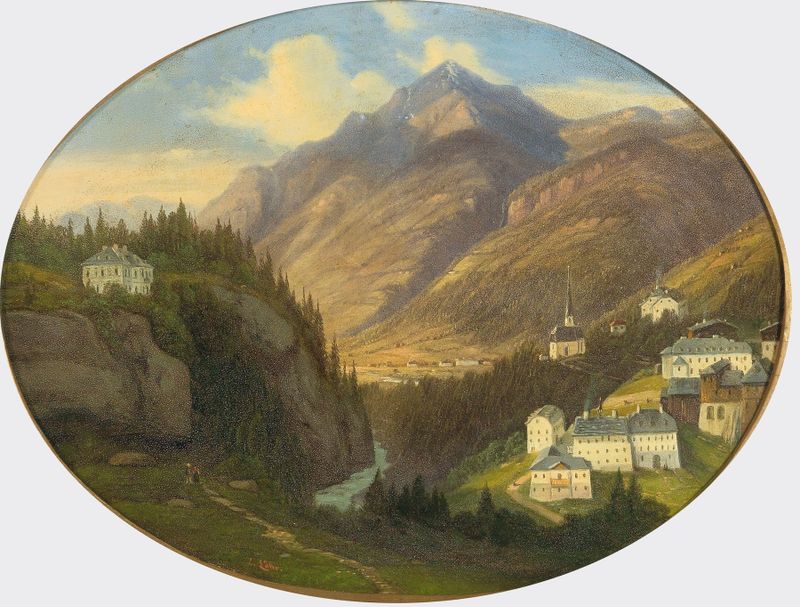
Gastein, Gamskogel mit Nikolauskirche
Emil Ludwig Löhr
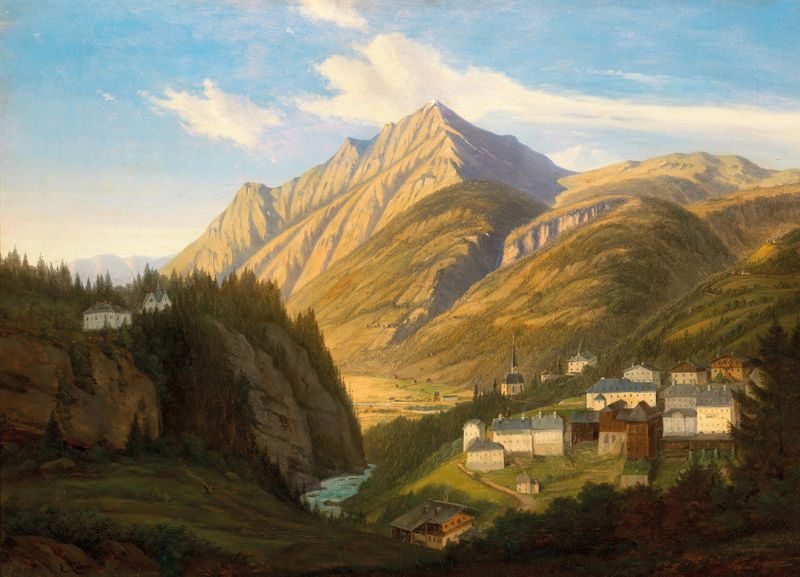
A View of Bad Gastein
Emil Ludwig Löhr
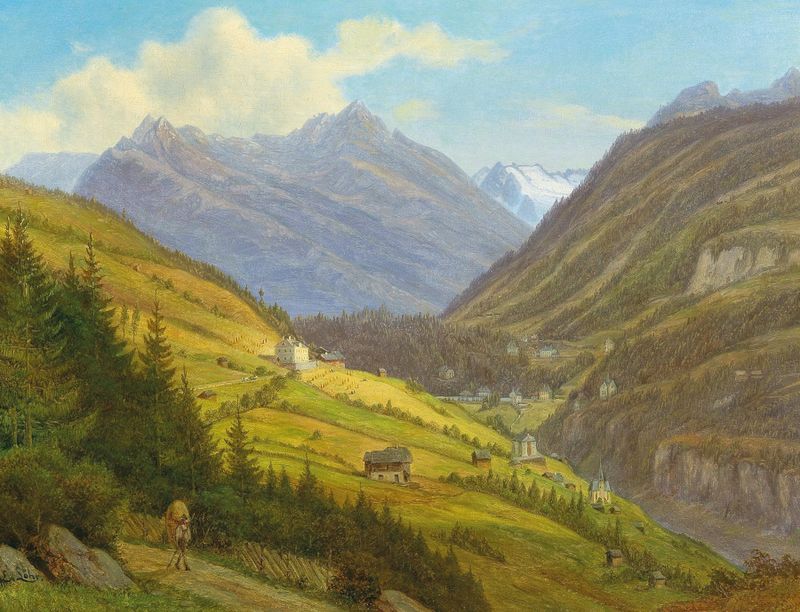
Motiv aus dem Gasteinertal
Emil Ludwig Löhr
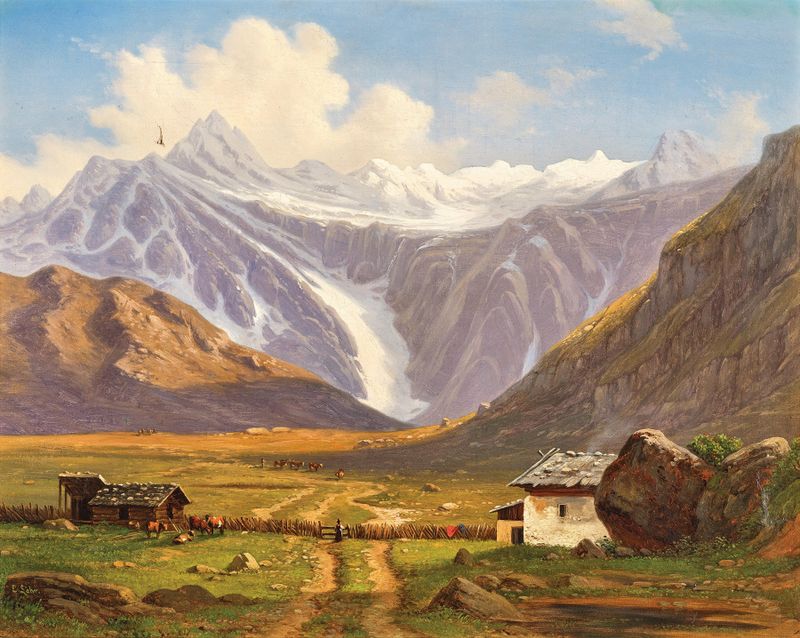
A Mountain Pasture with an Alpine Hut
Emil Ludwig Löhr
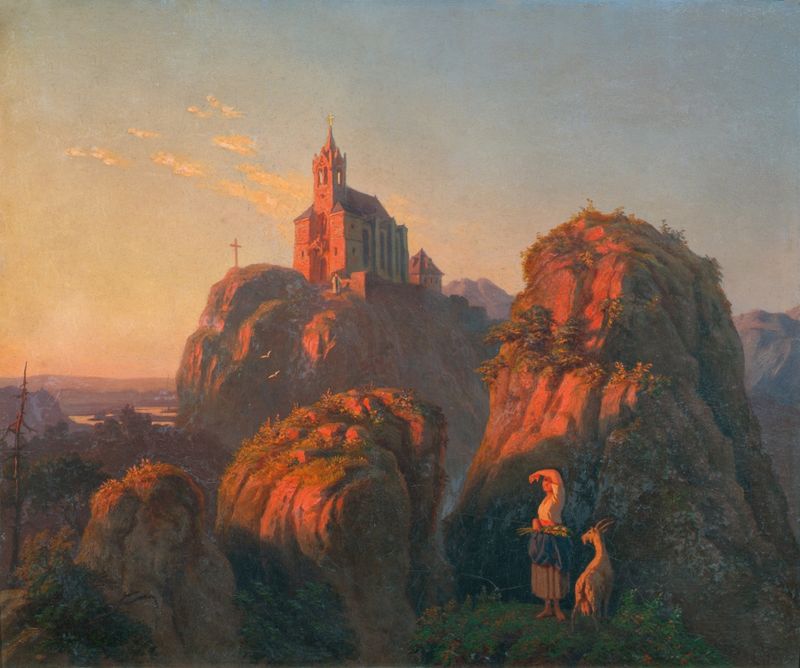
Landschaft mit Kirche am Abend
Emil Ludwig Löhr

Bad Gastein
Emil Ludwig Löhr
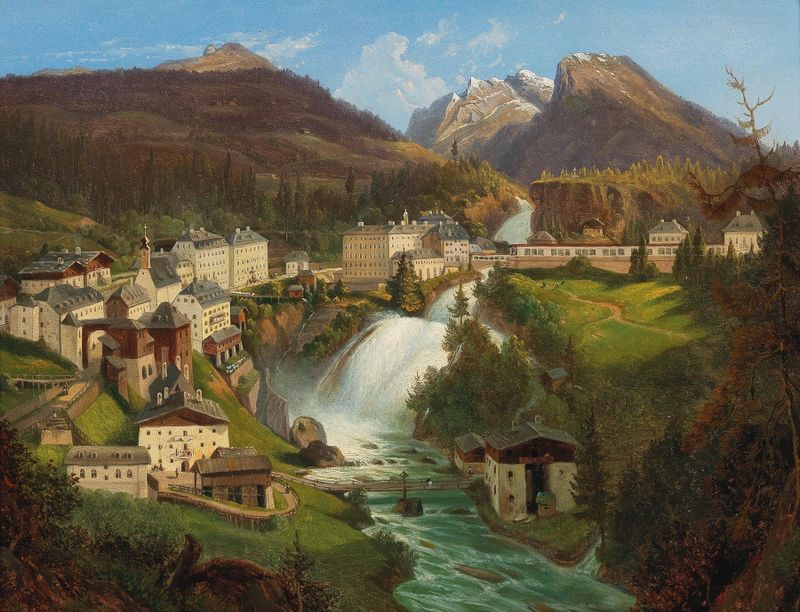
View of Bad Gastein
Emil Ludwig Löhr
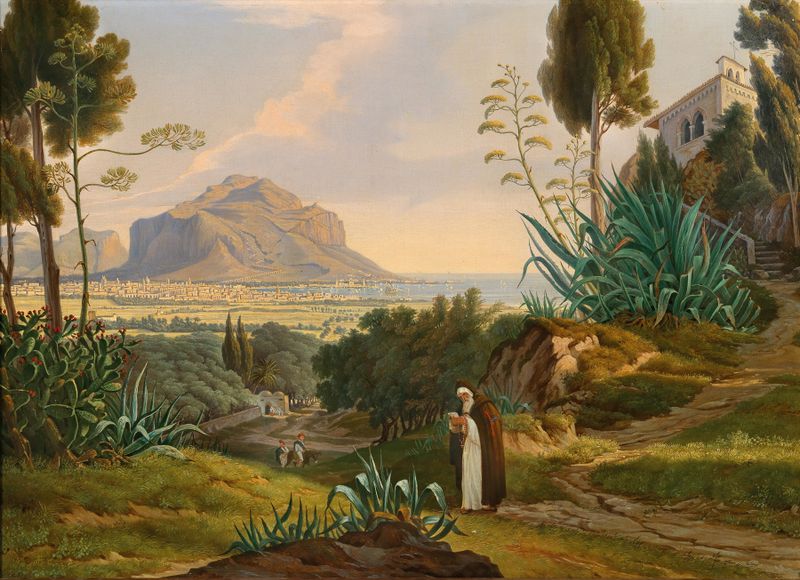
A View of the Bay of Palermo with Monte Pellegrino
Emil Ludwig Löhr

Scene from the Gasteinertal
Emil Ludwig Löhr





