
View of Bad Gastein — History & Facts
In the stillness of the alpine landscape, silence envelops the viewer like a gentle embrace, inviting contemplation of the duality within. Look to the foreground, where a serene valley unfolds, its contours defined by lush greens and soft browns. The distant peaks, kissed by a faint haze, evoke a sense of grandeur and isolation. Notice how the light dances upon the snow-capped summits, illuminating the scene with a golden hue that contrasts sharply with the shadows lurking in the valleys.
The composition, with its sweeping lines and harmonious colors, creates a tranquil yet haunting atmosphere. Delve deeper into the painting's contrasts—the vibrant life of the valley juxtaposed against the imposing mountains that tower above, suggesting both refuge and confinement. The quietude of the landscape mirrors the human experience, hinting at the weight of unexpressed emotion, perhaps loss or longing, felt in moments of solitude. Each brushstroke speaks to the intricate relationship between beauty and melancholy, revealing that even in serene vistas, a quiet tension exists. Emil Ludwig Löhr painted this work during a period when Europe was grappling with social and political upheaval.
Active in the late 19th and early 20th centuries, Löhr found inspiration in the natural world, often reflecting his tumultuous environment through serene landscapes. This piece, though undated, embodies the artist's focus on capturing the sublime beauty of nature amidst a backdrop of uncertainty.
More Artworks by Emil Ludwig Löhr
Browse all →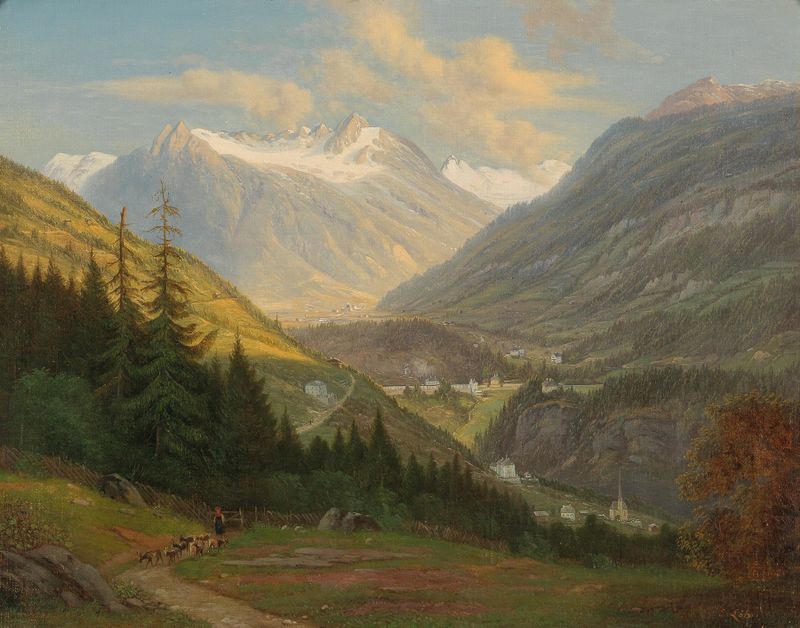
View of Bad Gastein
Emil Ludwig Löhr
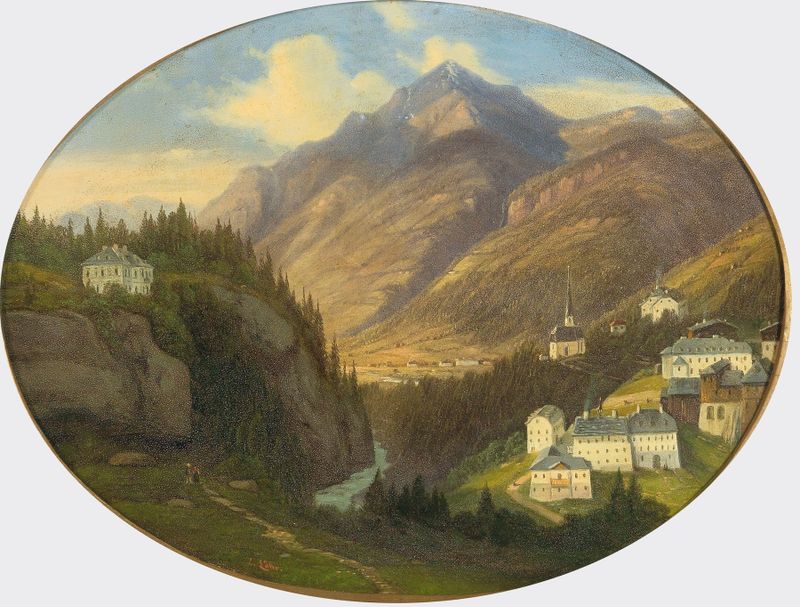
Gastein, Gamskogel mit Nikolauskirche
Emil Ludwig Löhr
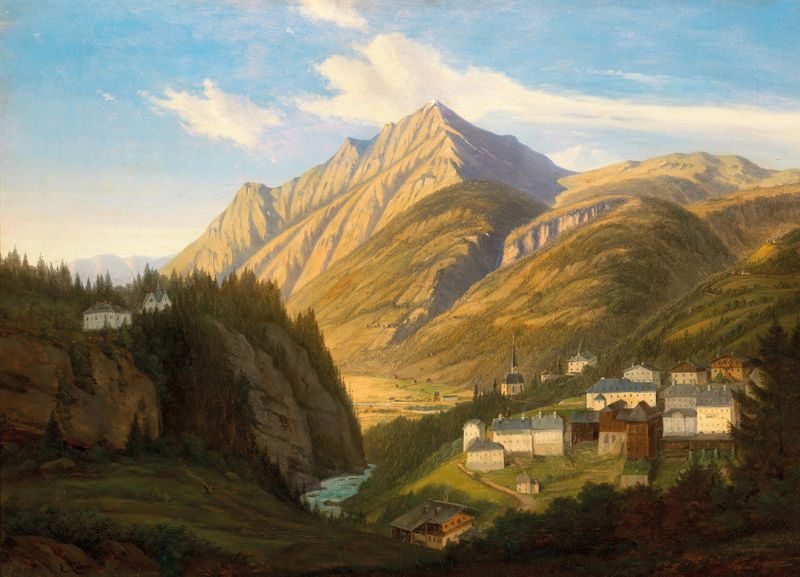
A View of Bad Gastein
Emil Ludwig Löhr
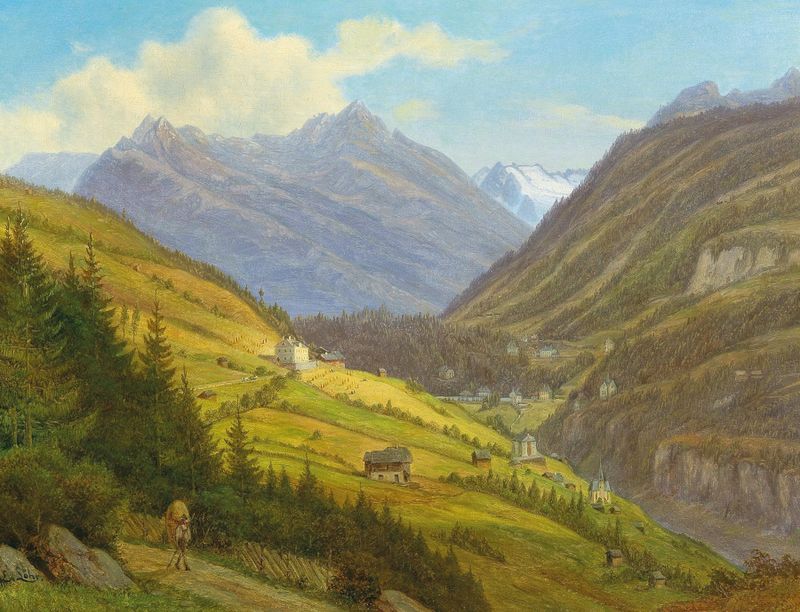
Motiv aus dem Gasteinertal
Emil Ludwig Löhr
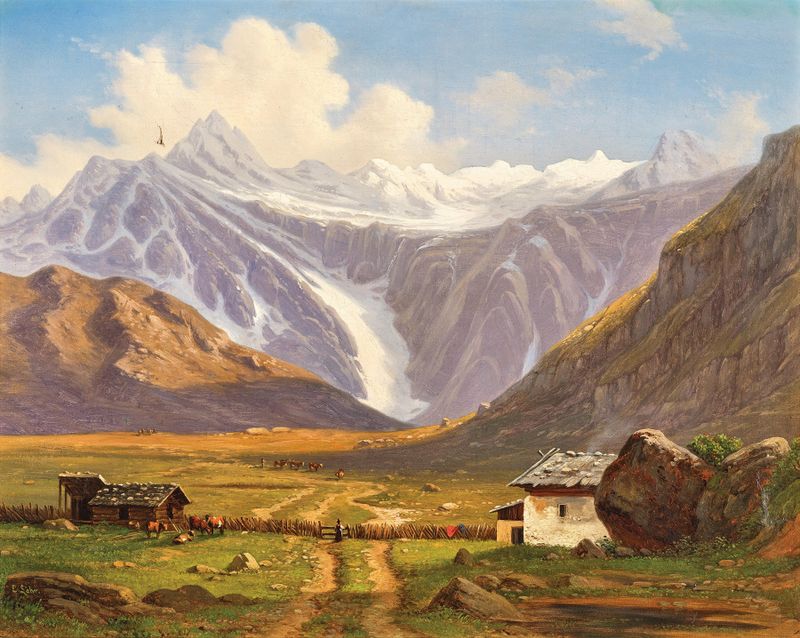
A Mountain Pasture with an Alpine Hut
Emil Ludwig Löhr
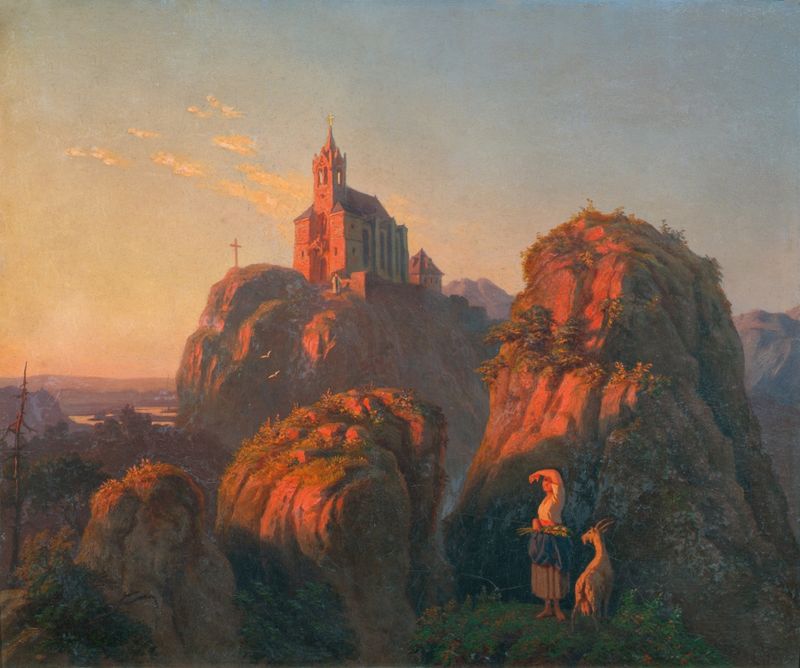
Landschaft mit Kirche am Abend
Emil Ludwig Löhr

Bad Gastein
Emil Ludwig Löhr
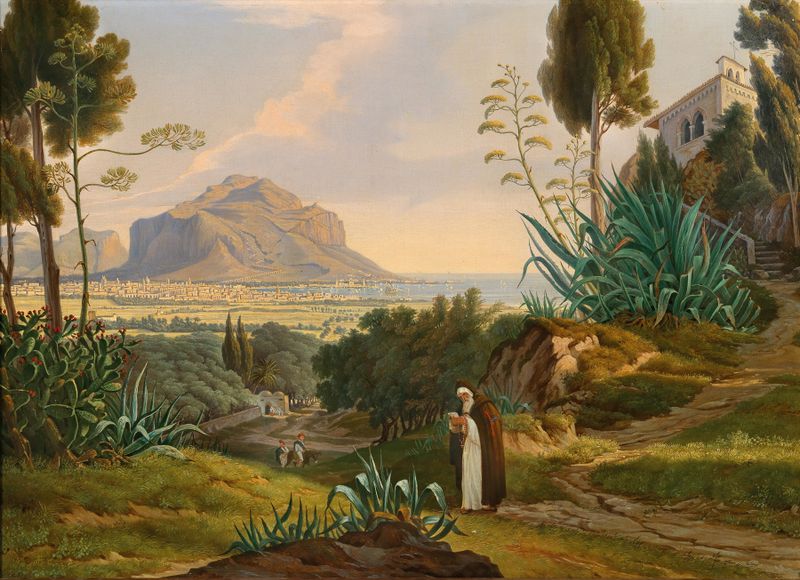
A View of the Bay of Palermo with Monte Pellegrino
Emil Ludwig Löhr
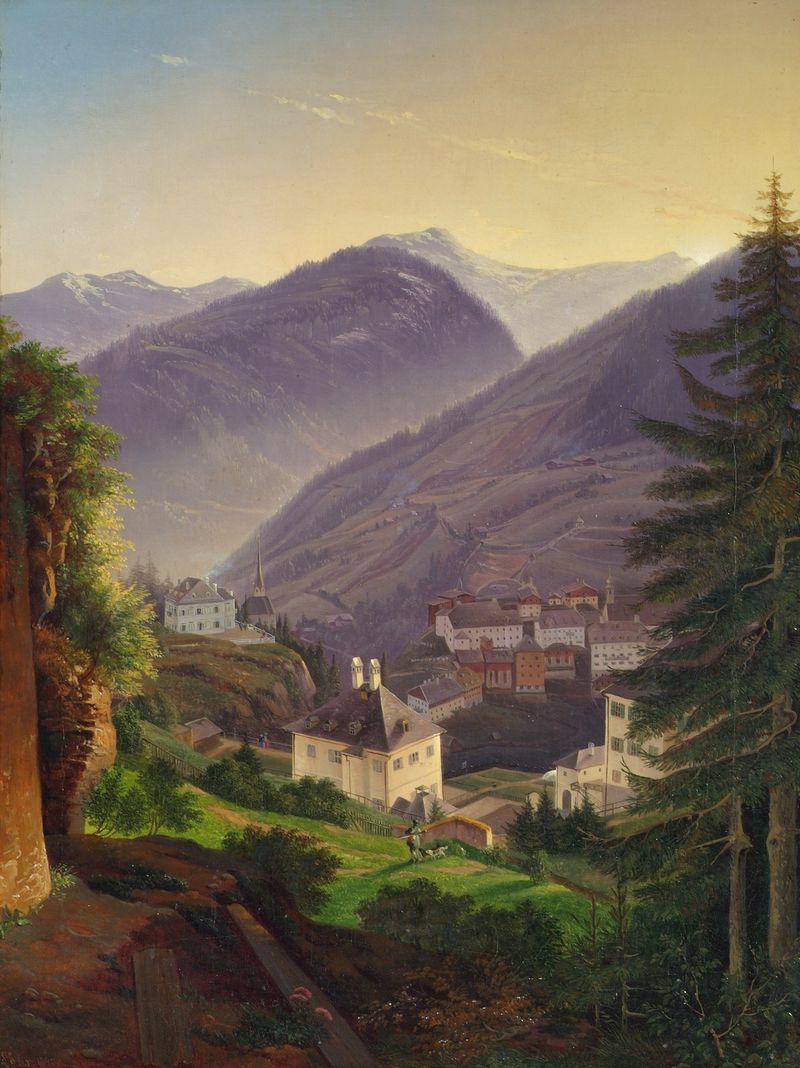
Wildbad Gastein
Emil Ludwig Löhr

Scene from the Gasteinertal
Emil Ludwig Löhr





