
Willows — History & Facts
What if beauty was never meant to be finished? In the delicate strokes of a rural landscape, the viewer is invited to linger in the whispers of nature, captivated by the promise of something eternal yet fleeting. Focus on the gentle sway of the willows on the left, their cascading branches painted with a masterful blend of greens and soft yellows. The dappled sunlight filters through the foliage, casting a warm glow that dances across the canvas. Notice how the texture of the brushwork varies, from the luscious strokes defining the trees to the smoothness of the water's surface reflecting the sky, inviting the eye to travel through the serene scene. Beneath the calm, there lies an obsession with impermanence.
The willows, bending and swaying, embody a fleeting beauty that speaks to the transitory nature of life. The juxtaposition of vibrant color against the tranquil water creates a tension between the vitality of nature and the stillness of the moment, hinting at a deeper longing for continuity in an ever-changing world. During the years from 1887 to 1893, the artist created this work while immersed in the American Impressionist movement, exploring the effects of light and color in natural settings. Weir was notably influenced by his surroundings in Connecticut, a region that offered both inspiration and solace amidst the challenges of his personal life and the evolving art world.
This period marked a significant transition in his artistic journey, as he sought to capture the ephemeral essence of the landscapes he cherished.
More Artworks by Julian Alden Weir
Browse all →
My Back Yard no. 1
Julian Alden Weir
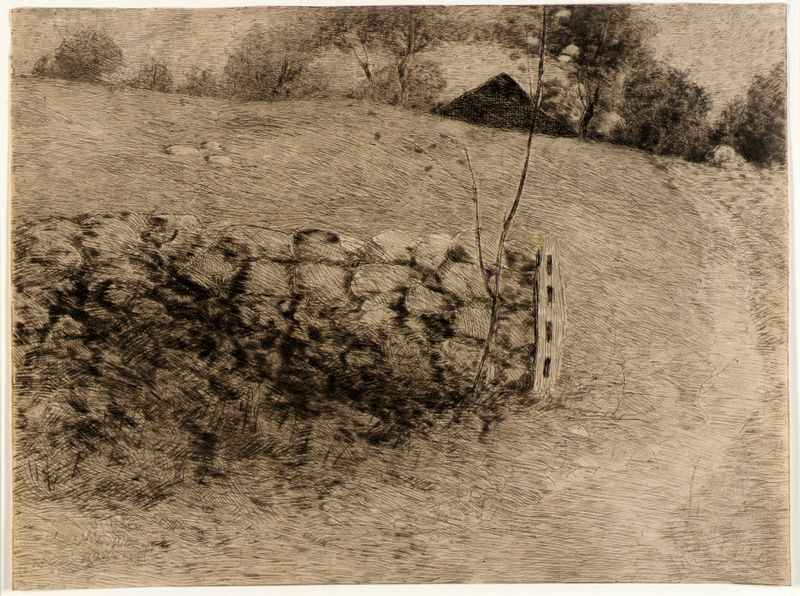
The Barn Lot
Julian Alden Weir

The Webb Farm
Julian Alden Weir
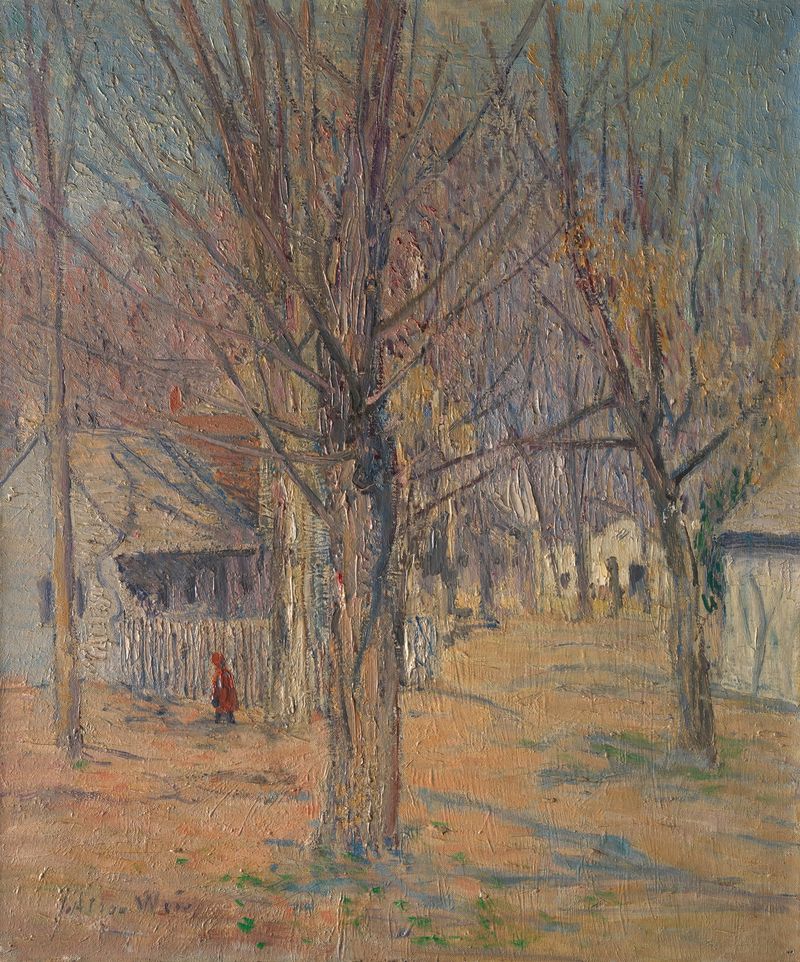
Connecticut Village (Going to School)
Julian Alden Weir

The Stone Bridge
Julian Alden Weir

The Webb Farm 2
Julian Alden Weir
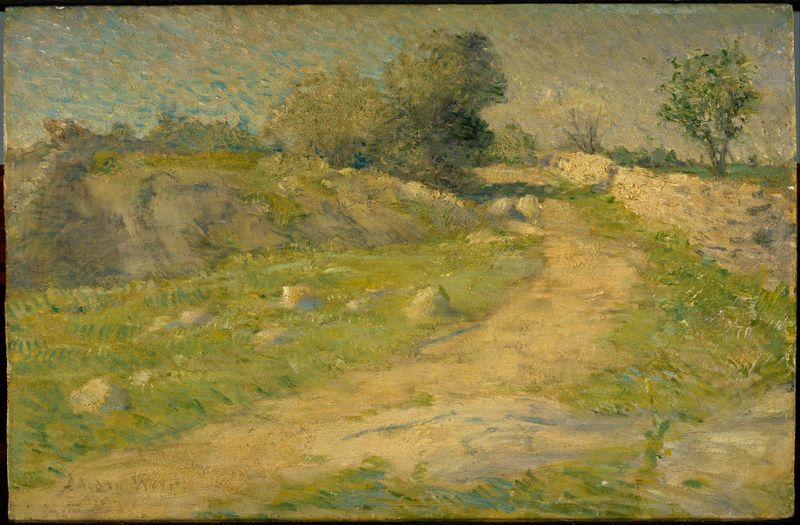
The Lane
Julian Alden Weir
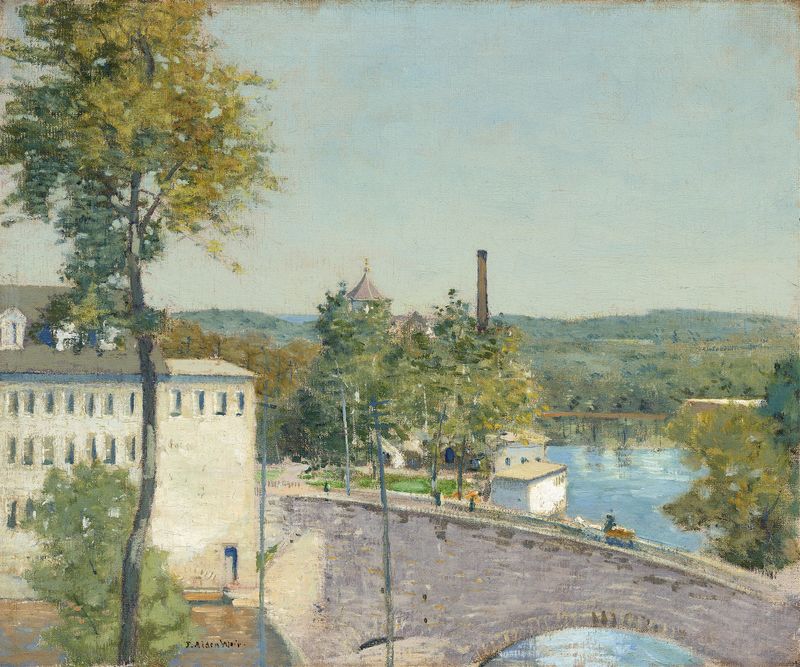
U.S. Thread Company Mills,Willimantic,Connecticut
Julian Alden Weir

Neighboring Farm
Julian Alden Weir

Coon Alley
Julian Alden Weir





