
Windmills near Rotterdam — History & Facts
In the expansive silence of a landscape, the echoes of windmills stretch across the canvas, inviting reflections on solitude and the passage of time. Look to the horizon, where soft blues merge with the pale greens of a fading day. The windmills stand sentinel against a vast, open sky, their towering forms contrasting beautifully with the delicate brushwork of the foreground. Notice how the light dances across the scene, casting gentle shadows that evoke a sense of nostalgia.
The use of muted colors enhances the atmosphere of emptiness, drawing the eye toward the sprawling landscape that feels both inviting and isolating. In this artwork, the windmills symbolize both industriousness and desolation, capturing the paradox of human endeavor against nature's vastness. The deliberate absence of figures lends an emotional weight, inviting contemplation about the ephemeral nature of existence. The texture of the brushstrokes adds a tactile quality, turning the scene into a memory rather than a mere depiction, holding space for the viewer's personal reflections. Created in 1857, this piece emerged during a period of transformation for its creator, who was establishing himself within the realms of landscape painting.
Jongkind was living in France at the time, grappling with the influences of Impressionism while rooted in the Dutch traditions of his upbringing. The world around him was shifting, much like the landscapes he painted, reflecting societal changes and the burgeoning modernity of the 19th century.
More Artworks by Johan Barthold Jongkind
Browse all →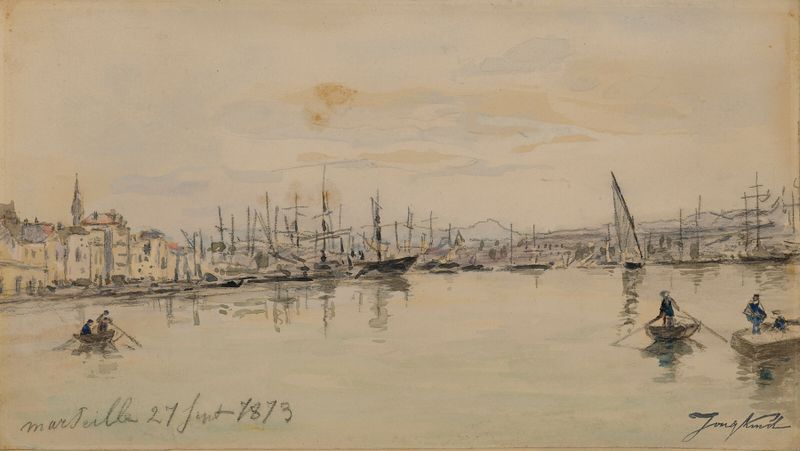
Le Port de Marseille
Johan Barthold Jongkind

Canal Saint-Martin
Johan Barthold Jongkind

Countryside near Brezins, between Grenoble and Vienne
Johan Barthold Jongkind

Notre-Dame vue du quai de la Tournelle
Johan Barthold Jongkind

Environs de Grenoble
Johan Barthold Jongkind

Clair de lune à Overschie (environs de Rotterdam)
Johan Barthold Jongkind

Port de Honfleur
Johan Barthold Jongkind
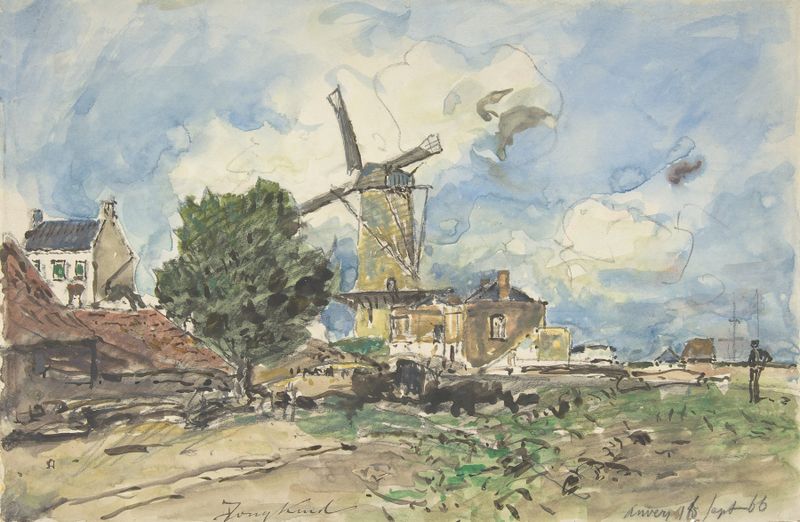
Wind Mill at Antwerp
Johan Barthold Jongkind

Le Havre
Johan Barthold Jongkind

The Church of Overschie
Johan Barthold Jongkind





