Winter — History & Facts
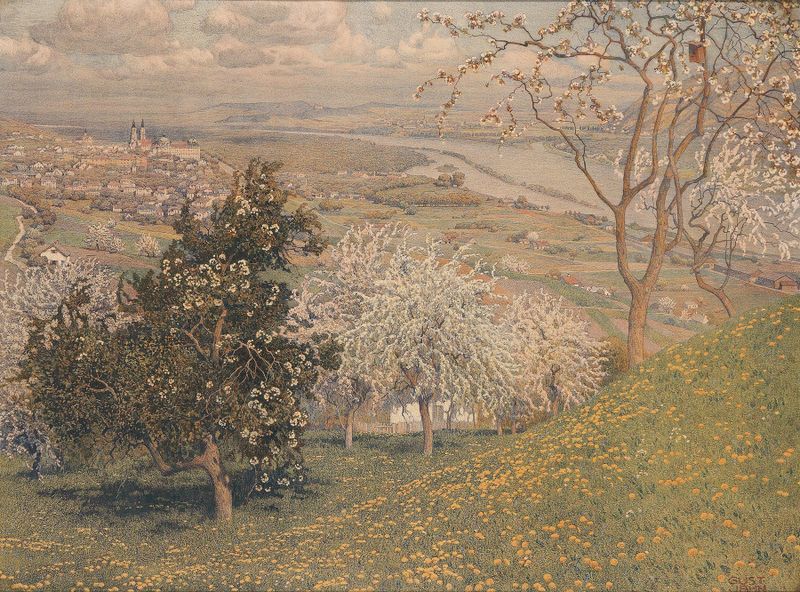
Did the painter know this moment would outlive them? In Winter, vivid echoes of mortality resonate within the tranquil yet haunting landscape, as if to remind us that each passing season carries the weight of time. Look to the left at the delicate branches, their skeletal forms stark against the cold blue sky, adorned with the subtle shimmer of frost. The muted palette of grays and whites creates a quiet harmony, inviting you to explore the nuances beneath the surface. Focus on the gentle gradient of light that diffuses over the snow-covered ground, revealing the quiet solitude of the scene and drawing your gaze to the horizon where the earth meets the heavens. Within the stillness, hidden tensions emerge.
The stark contrast between the dark trunks and the soft white snow suggests a struggle against the encroaching chill of winter, a metaphor for life's inevitable transitions. Each brushstroke encapsulates the fragility of existence, while the silence of the setting evokes a meditation on both the beauty and the transience of life itself. The serene landscape stands as a testament to the enduring nature of memory amid the passage of time. Gustav Jahn created this piece in 1905, during a period of introspection and transformation in the art world.
Living in the German artistic milieu, he was influenced by the emotional depth of expressionism even as he maintained a connection to realism. This work reflects his personal exploration of nature and mortality, capturing a moment that transcends the fleeting present and invites contemplation on the inevitable cycle of life.