
Winter in Rattenberg — History & Facts
What if silence could speak through light? In Winter in Rattenberg, shadow becomes a dialogue, whispering the tales of a quiet town blanketed in snow. Look to the foreground where the soft, white drifts cradle a cluster of quaint buildings. Notice how the muted colors of browns and grays in the architecture contrast with the blinding brightness of the snow. The delicate interplay of light and shadow frames the houses, accentuating their forms while suggesting the stillness of the moment.
The figures of townsfolk, mere silhouettes against the snow, evoke a sense of intimacy and tranquility as they navigate their world, leaving traces in the untouched expanse. As you delve deeper into this winter landscape, consider the juxtaposition of warmth and cold. The shadows cast by the buildings suggest shelter and comfort, yet the overarching white of the snow hints at isolation. The stillness of the scene invites contemplation, revealing how light can heighten the emotions of serenity and solitude.
Each figure carries a story, each shadow speaks of connection and the absence of sound, underscoring the quiet power of winter's embrace. Heinrich Bürkel created this piece during an era of romanticism, likely in the mid-19th century, a time when artists were increasingly drawn to the natural world and local landscapes. Living in Germany, he was part of a movement that sought to capture the beauty and emotional resonance of everyday scenes. This painting reflects not only his mastery of light and shadow but also the broader artistic exploration of man’s relationship with nature during that period.
More Artworks by Heinrich Bürkel
Browse all →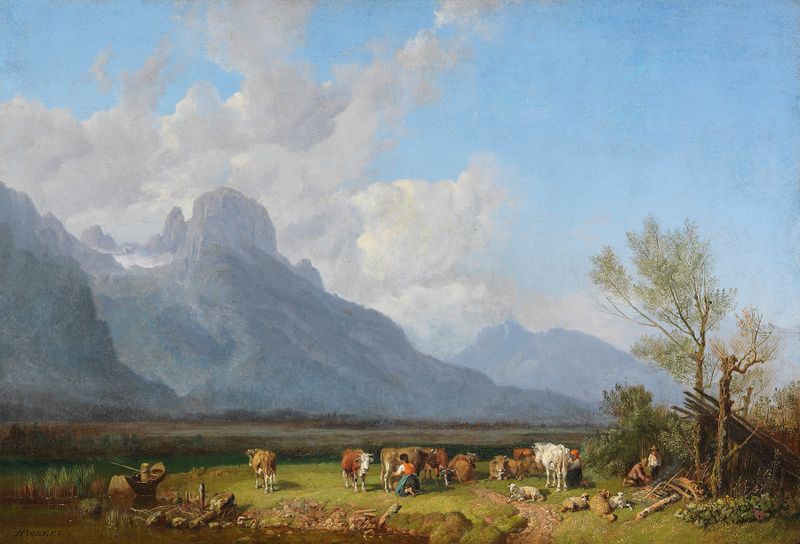
Viehhirten am Seeufer
Heinrich Bürkel
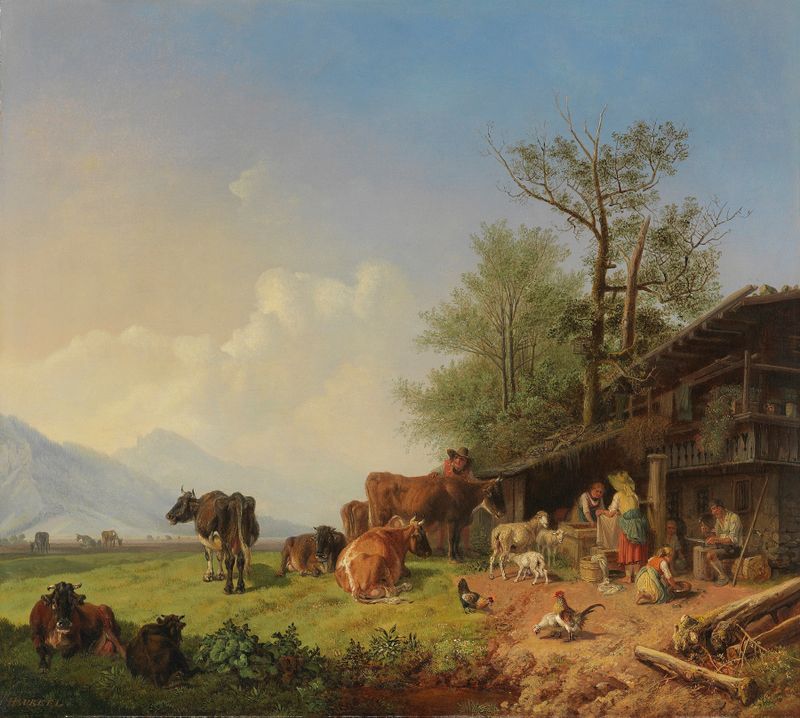
Bauernhof mit Brunnen
Heinrich Bürkel
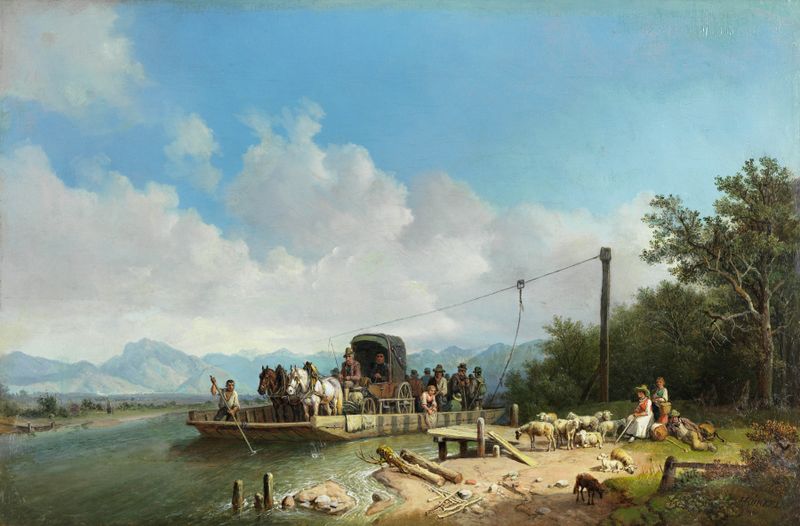
Fähre am Inn
Heinrich Bürkel

Am Dorfbrunnen in den italienischen Bergen
Heinrich Bürkel

Italienische Hirtenfamilie in der Felsenhöhle
Heinrich Bürkel
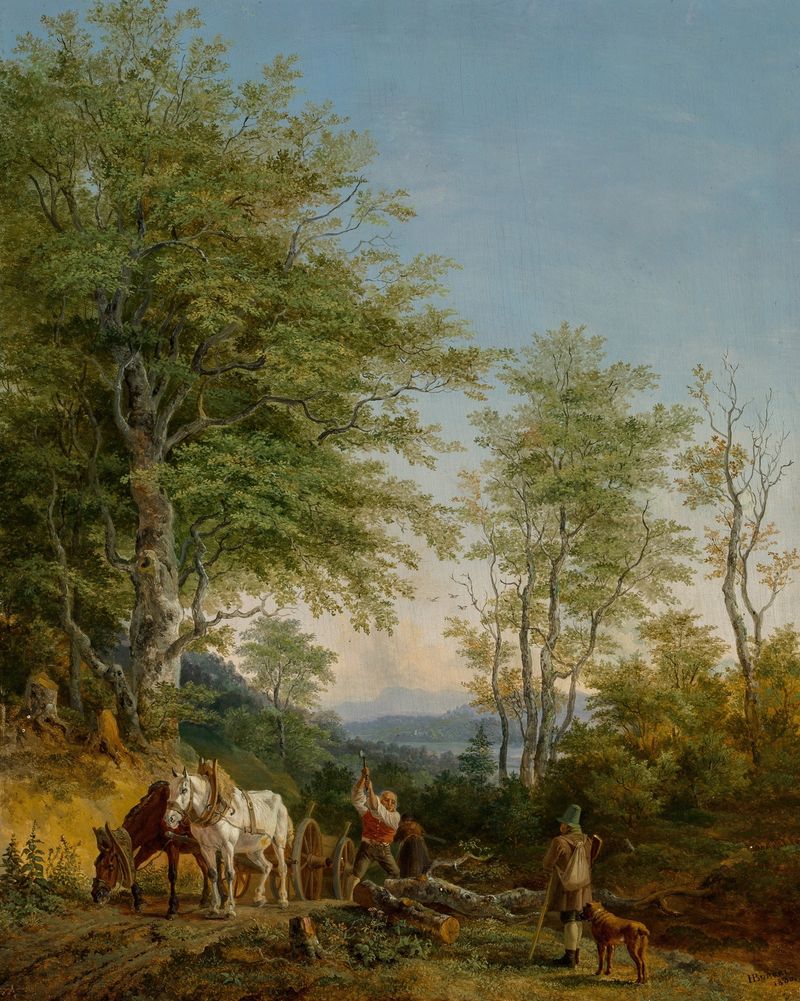
An Italianate wooded landscape with a woodcutter and his team of horses and a passerby with his dog
Heinrich Bürkel
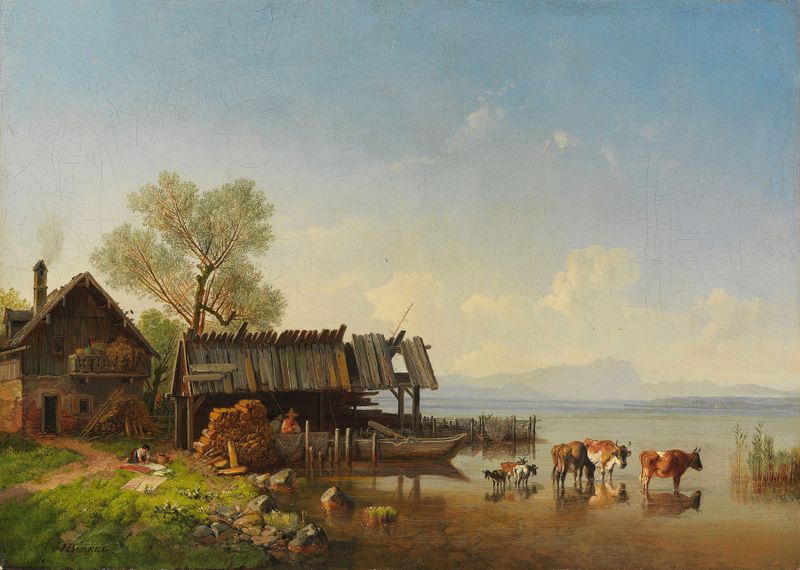
Der Starnberger See mit Blick auf das Wettersteingebirge
Heinrich Bürkel
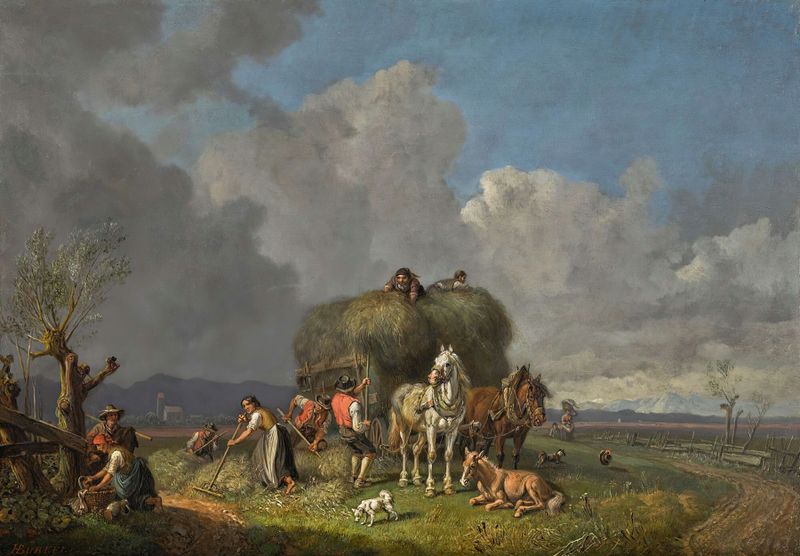
The Hay Harvest
Heinrich Bürkel
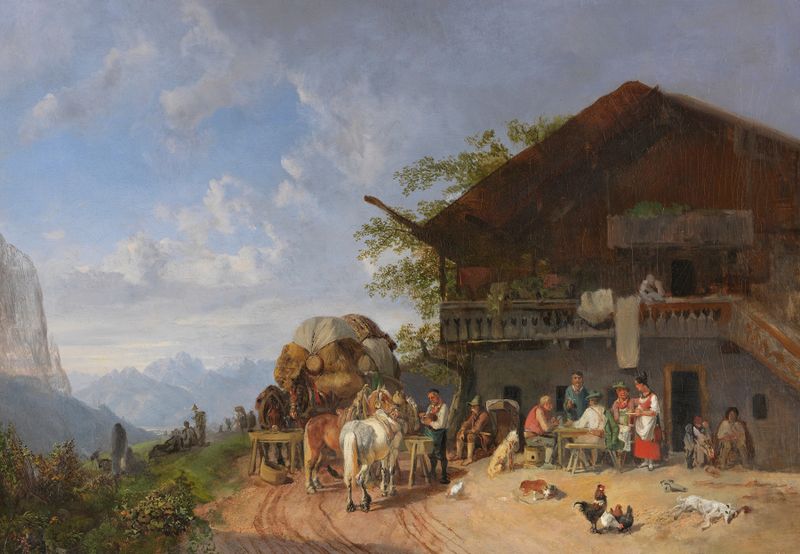
Rast vor einem Gasthof in den Bergen
Heinrich Bürkel

Blick auf den Monte Circeo
Heinrich Bürkel





