Wintergezicht — History & Facts
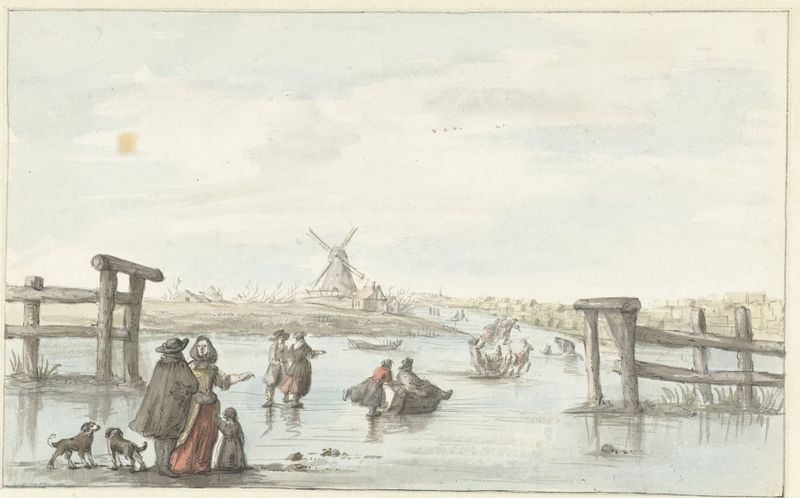
In the quiet embrace of nature, transformation unfolds as winter blankets the landscape, whispering stories of resilience and renewal beneath its icy grip. Look to the center of the canvas where the tranquil scene reveals a snow-laden village, roofs bowed under the weight of soft white. The pale blues and grays of the sky contrast starkly with the earthy browns of the cottages, showcasing Grasdorp’s masterful use of color and light. The delicate brushstrokes capture the fleeting moments of daybreak, casting a gentle glow upon the rooftops, illuminating the scene with a hopeful warmth.
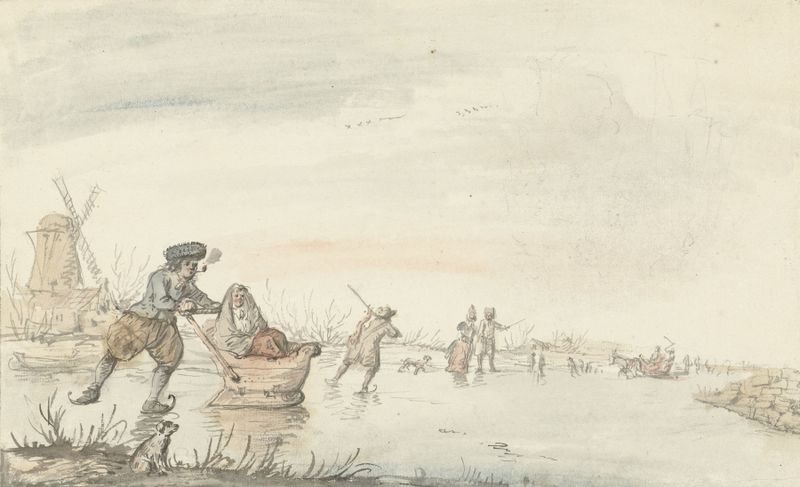
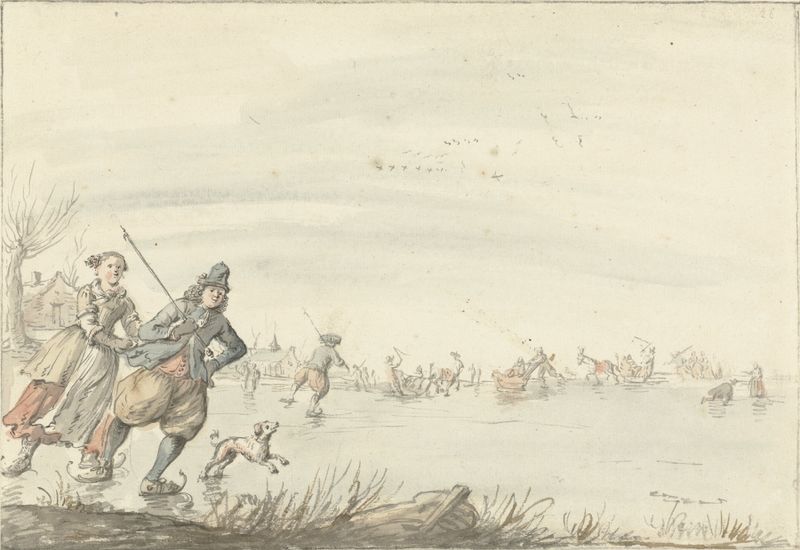
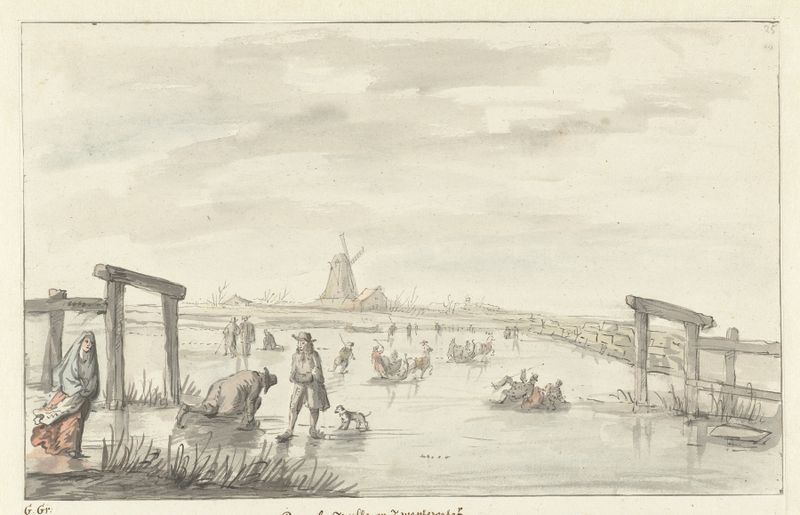
Notice how the figures, small and serene, seem to blend into the landscape, their presence both connected to and dwarfed by the vastness of winter. Hidden within this serene vista are deeper narratives of solitude and community. The distant figures, bundled against the cold, represent the human capacity to endure, while the starkness of the winter landscape speaks to isolation. Yet, amidst this chill, there is an underlying sense of transformation; winter, though harsh, lays the groundwork for the rebirth of spring, infusing the scene with a quiet optimism.
The interplay of shadow and light captures a moment suspended in time, evocative of hope’s persistence even in the coldest of seasons. Gerrit Grasdorp painted Wintergezicht between 1661 and 1693, a time when the Dutch Golden Age was flourishing, characterized by meticulous representations of daily life and nature. Residing in Holland, he explored the balance between human existence and the natural world, reflecting the societal shifts of a period marked by both artistic innovation and economic prosperity. As he dedicated himself to capturing the often-overlooked beauty of winter, he contributed to a legacy that celebrated the intricate relationship between man and nature.