Wintergezicht te Boom, van het Zwarte Water bij Zwolle — History & Facts
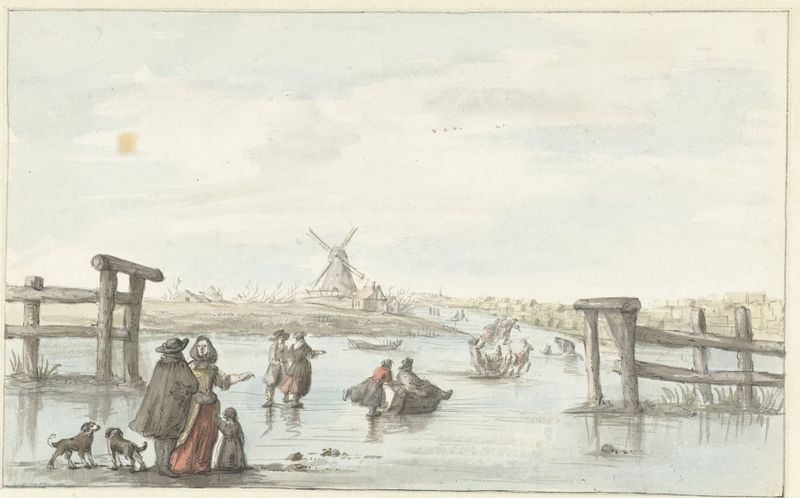
What if beauty was never meant to be finished? In the delicate interplay between winter’s chill and the vibrant life that persists, Wintergezicht te Boom, van het Zwarte Water bij Zwolle captures a moment of transformation that transcends the canvas. Look to the left of the painting, where the skeletal branches of trees stretch out, nearly barren against a soft, muted sky. Beneath them, the icy surface of the water reflects hints of light, creating a shimmering pathway that draws the viewer’s gaze deeper into the scene. The palette of cool blues and soft whites envelops the landscape, invoking a sense of serene desolation, while subtle brushstrokes suggest movement, like a whisper of wind across the frozen expanse. Notice how the artist juxtaposes the stillness of the ice with the life resting in the shadows.
The subtle presence of a lone figure tending to the woodpile hints at human resilience amidst nature's dormancy, inviting contemplation of existence and survival. The painting emits an aura of quietude, yet the presence of life suggests that transformation is always at play, revealing beauty not just in completion, but in the potential of what is yet to come. Gerrit Grasdorp created this work between 1661 and 1693, during a period marked by a burgeoning interest in landscape painting in the Dutch Golden Age. At this time, artists were increasingly focused on capturing the natural world with realism and emotion, reflecting the cultural shift towards appreciating the beauty of everyday life.
Grasdorp's approach not only documents a seasonal landscape but also invites viewers to ponder the enduring cycles of nature and the human condition.