Wintergezicht op het Zwarte Water bij Zwolle — History & Facts
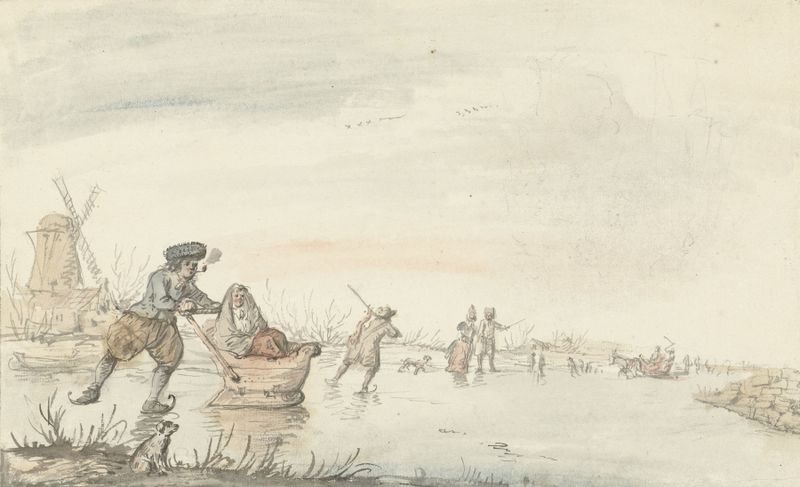
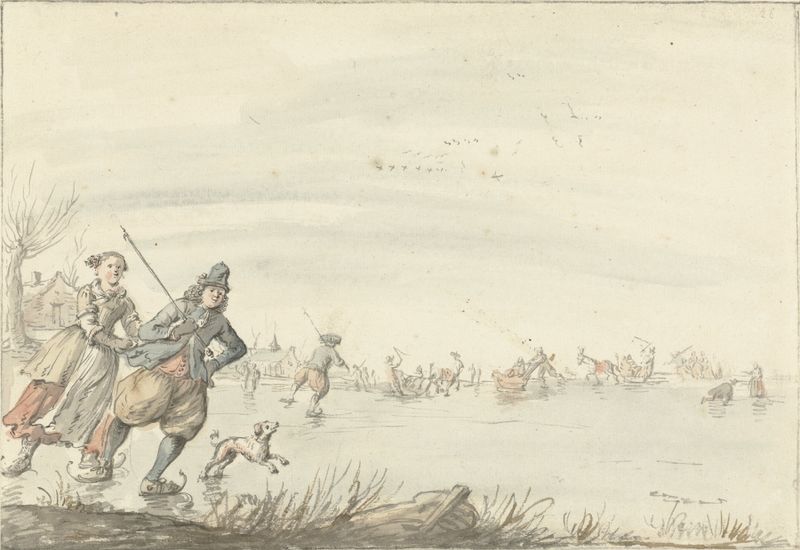
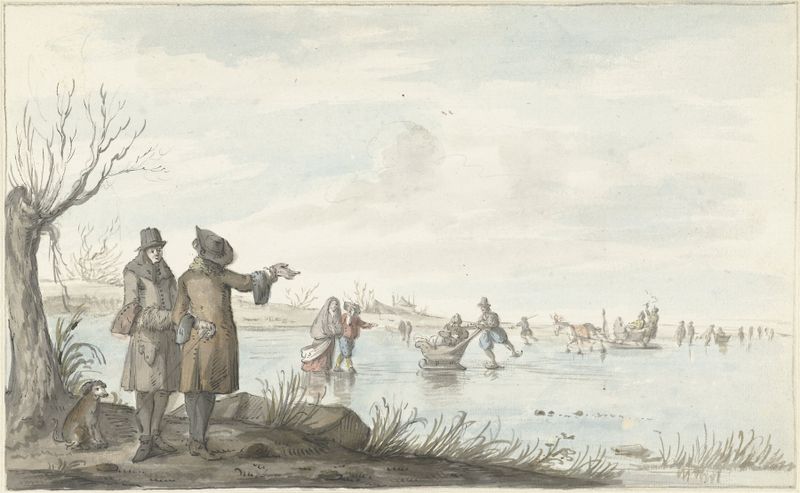
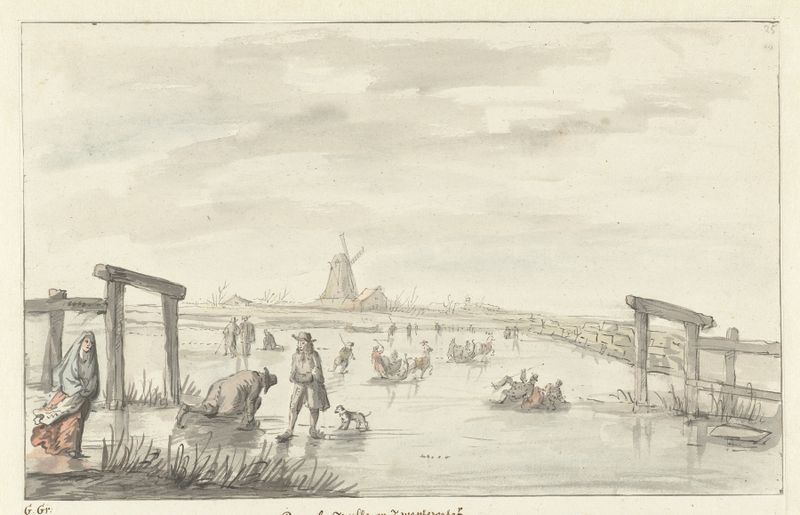
Where does light end, and longing begin? In the quiet, muted palette of winter, transformation hangs heavy in the air, inviting us to explore the depths of both nature and emotion. Look to the center of the canvas, where a soft glow emanates from the horizon, illuminating the delicate interplay of ice and water. The painter’s brush captures the stillness of the landscape, with frosted trees silhouetted against a drab sky, the shades of grey and blue blending together in a melancholic embrace. Notice how the thin layer of ice mirrors the subtle ripples of the water below, suggesting a fragile balance between solidity and fluidity. Beneath this tranquil surface lies a dichotomy of warmth and cold, stillness and movement.
The distant figures, almost ghostly in their presence, evoke a sense of solitude amidst the winter chill. This stark contrast highlights the emotional weight of the season, where each fleeting moment is both an ending and a new beginning, as life stirs beneath the frozen veneer. Grasdorp masterfully encapsulates that breath of transformation, reminding us that even in the harshest climates, nature finds a way to adapt and flourish. Created between 1661 and 1693, this work reflects the artist's deep engagement with landscape painting during the Dutch Golden Age.
Living in Zwolle, Grasdorp was amidst a flourishing period for artists, where nature was increasingly celebrated for its beauty and complexity. The period was marked by a growing interest in capturing atmospheric effects, and this painting stands as a testament to that evolving aesthetic, inviting viewers to pause and reflect on the profound connections between light, nature, and emotion.