Wintergezicht op het Zwarte Water bij Zwolle — History & Facts
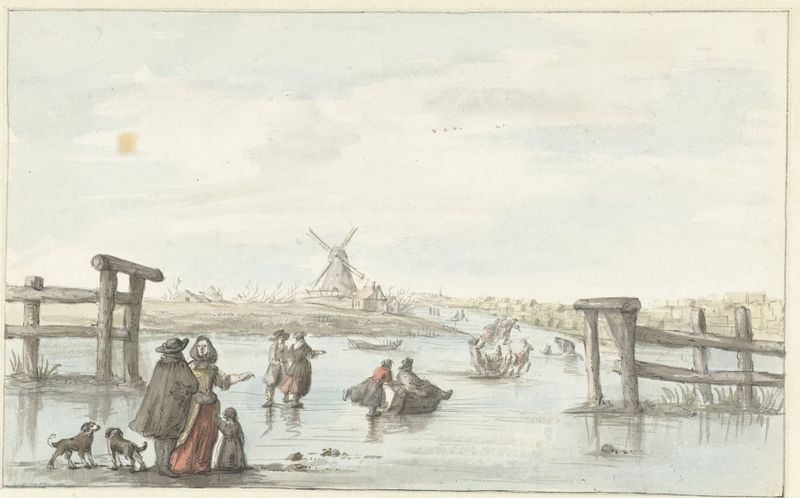
Can paint confess what words never could? Beneath the serene surface of Wintergezicht op het Zwarte Water bij Zwolle lies an undercurrent of unspoken tension, hinting at violence within the tranquility of winter. Look to the icy expanse of the water, where subtle shades of blue and gray intertwine. The horizon is marked by distant trees, their blackened silhouettes stark against the soft pastel sky. Notice how the brushstrokes convey not only the chill of the season but also the heaviness of silence that blankets the landscape.
The delicate interplay of light and shadow reflects both the beauty and the harshness of the frozen world, inviting the viewer into its quiet, yet tumultuous heart. Hidden within this idyllic winter scene is a poignant contrast. The stillness of the ice-bound water belies the potential for violence—a reminder of nature's duality. The barren branches suggest a looming threat, their gnarled forms clawing at the sky.
This tension captures a moment before the storm, where the beauty of the scene might just mask darker emotions, reminding us of the unpredictability of life beneath the surface. Gerrit Grasdorp painted this work between 1661 and 1693, during a period of exploration in the Dutch Golden Age. As the world witnessed both artistic triumphs and the tumult of political strife, Grasdorp’s focus on landscape reflected the intricate relationship between humanity and nature. In this piece, he encapsulated a fleeting moment, allowing viewers to reflect on the complexities of existence and the violence that can dwell beneath even the most serene facades.