
Wintergezicht bij de Montelbaanstoren te Amsterdam — History & Facts
A frozen canal transforms Amsterdam into a stage for winter’s rituals, and the Montelbaanstoren rises at its center like a sentinel from another world. The eye is drawn first to the tower’s warm brick, glowing against the cool, heavy sky—an anchor in a cityscape dusted with snow. Below, the ice is alive with figures: skaters gliding, children tumbling, and adults bent to their tasks or play, each gesture caught mid-movement.
The palette is brisk and clear, the light sharp on the rooftops and gentle on the ice, guiding us from the busy foreground to the distant, silent spire on the horizon. Even the smallest details—the dog darting after its master, the hole cut in the ice—remind us that this is not just a scene, but a day lived. Works like this, painted in 1669 by Abraham Beerstraaten, belong to a tradition that flourished in the Dutch Golden Age, when city dwellers delighted in images of their own world transformed by winter. These cityscapes were often commissioned by prosperous burghers or civic leaders, eager to celebrate the beauty and order of their surroundings.
The Montelbaanstoren itself was a familiar landmark, and its appearance in paintings signaled both civic pride and the pleasures of urban life. History has kept few traces of this particular painting’s journey, but today it rests in the collection of Rijksmuseum Twenthe, a quiet witness to the enduring fascination with old Amsterdam under snow. Look again at the figures on the ice, and imagine the sound of skates and laughter echoing off the ancient stones.
More Artworks by Abraham Beerstraaten
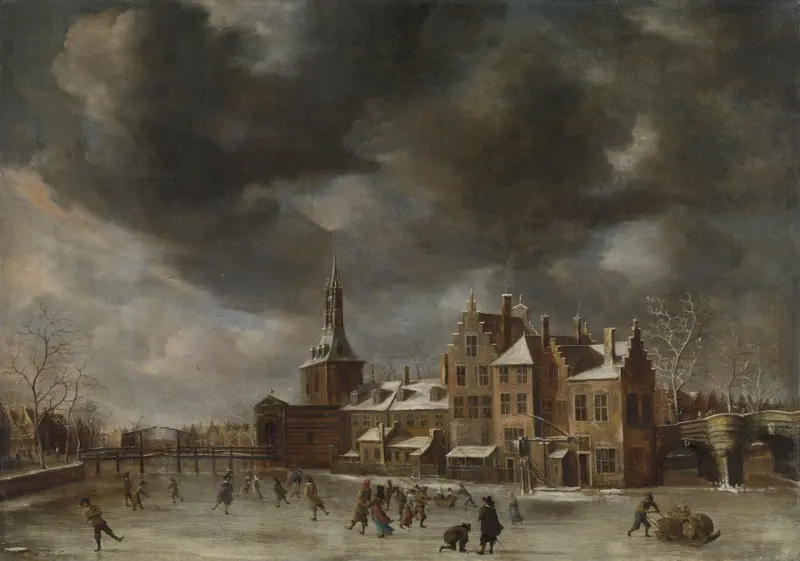
The Blauwpoort in Leiden in the Winter
Abraham Beerstraaten
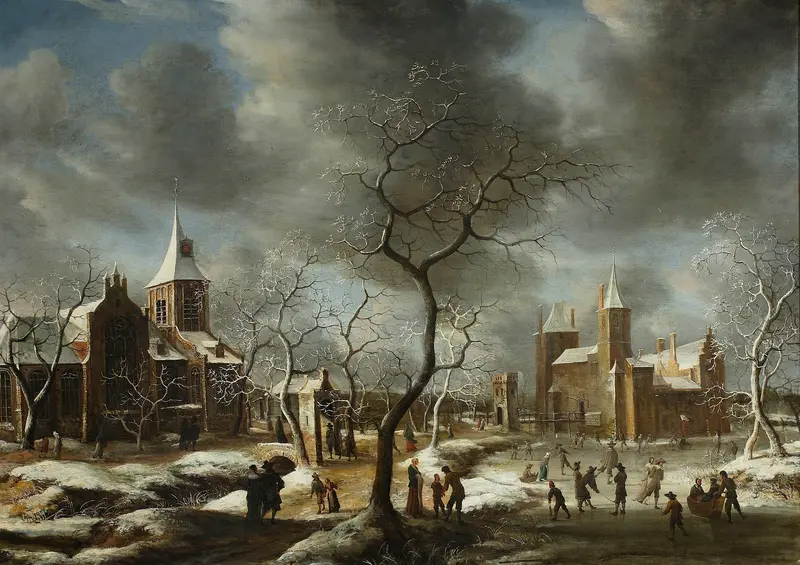
Landscape with ice-skaters
Abraham Beerstraaten
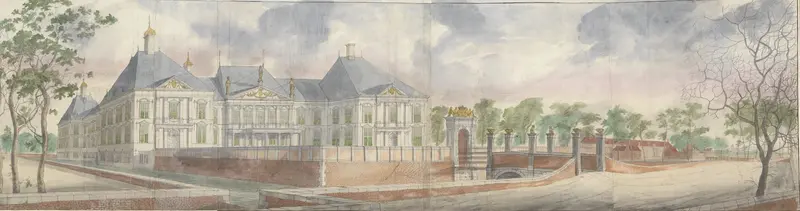
Het Huis te Honselaersdijk en omgeving, over het voorplein te zien
Abraham Beerstraaten
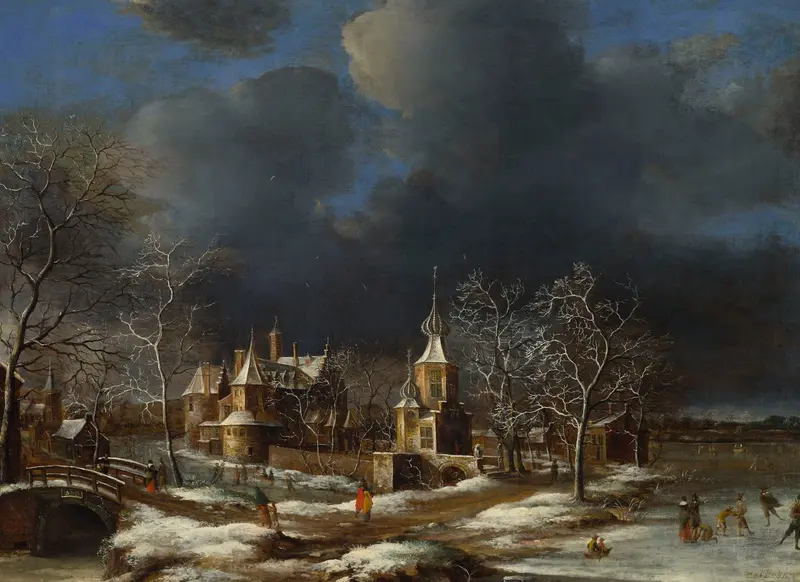
Poelgeest Castle at Koudekerk
Abraham Beerstraaten
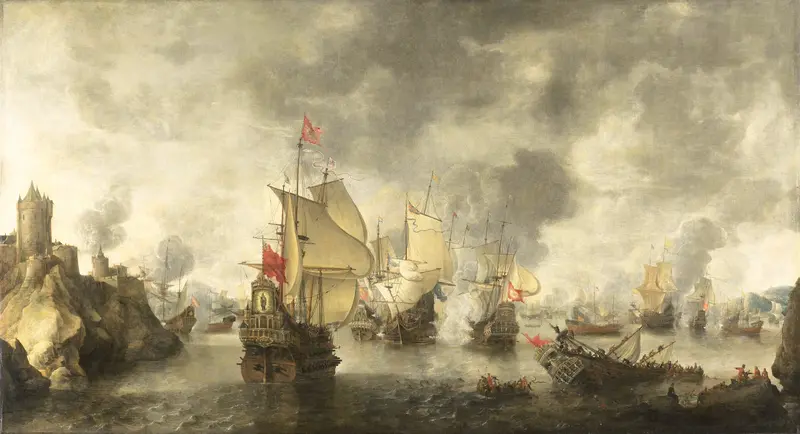
Battle of the Combined Venetian and Dutch Fleets against the Turks in the Bay of Foya, 1649
Abraham Beerstraaten
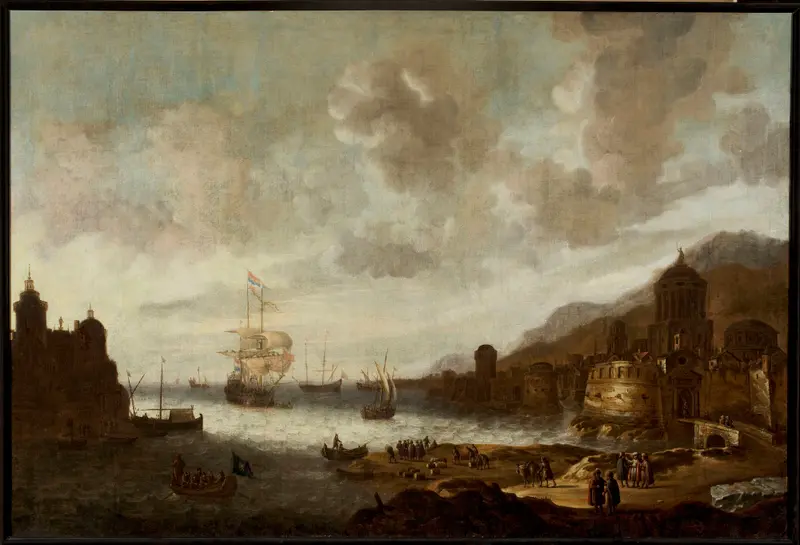
Dutch ship in an exotic port
Abraham Beerstraaten
Battle of the combined Venetian and Dutch fleets against the Turks in the Bay of Foya
Abraham Beerstraaten
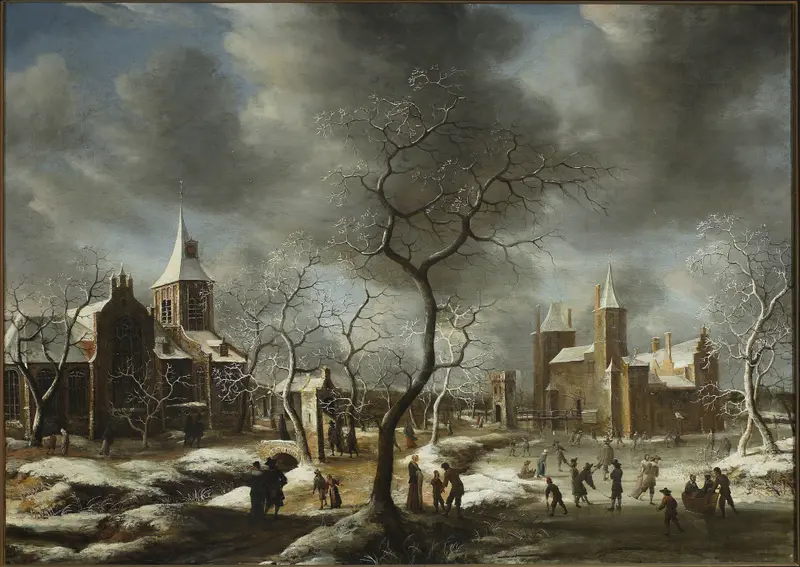
Winter landscape with skaters.
Abraham Beerstraaten
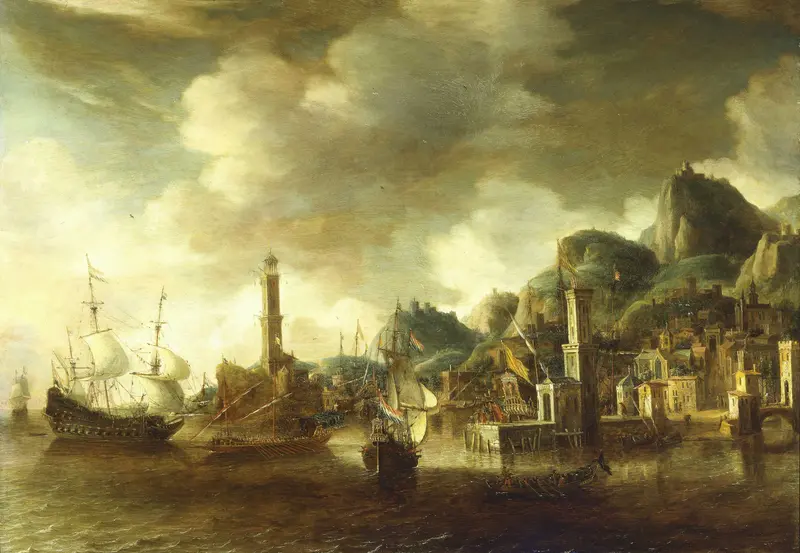
A Dutch Flagship and a Fluyt Running into a Mediterranean Harbour
Abraham Beerstraaten
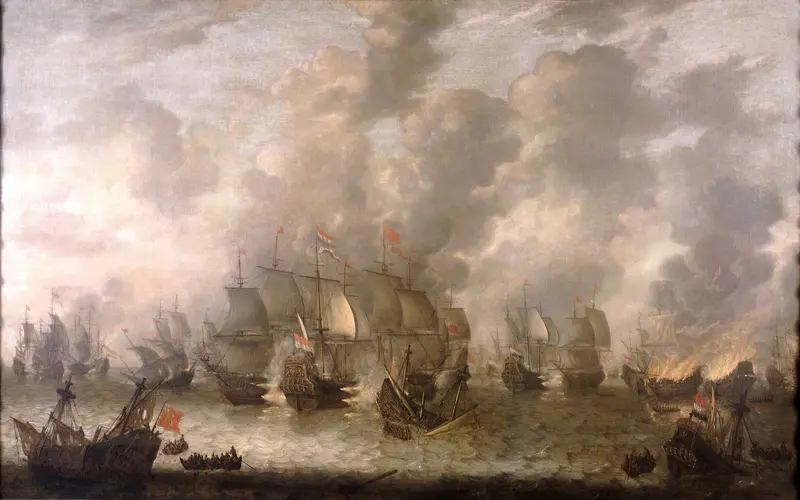
The Battle of Scheveningen, 31 July
Abraham Beerstraaten
More Landscape Art

The Starry Night
Vincent van Gogh

View of Delft
Johannes Vermeer

Water Lilies
Claude Monet

The Grand Canal, Venice, looking north-west from the Ca' Corner to the Ca' Contarini degli Scrigni, with the campanile of Santa Maria della Carità
Canaletto

Windsor Castle
Canaletto

The Grand Canal looking North-East from the Palazzo Dolfin-Manin to the Rialto Bridge
Canaletto