
Winterlandschap nabij Rotterdam — History & Facts
What secret hides in the quiet of the canvas? Beneath the serene layers of snow and sky, a dream emerges, beckoning the viewer to lose themselves in its tranquil embrace. Look to the foreground where the soft, powdery snow blankets the earth, creating a serene stillness that invites contemplation. Notice how the muted palette of whites, soft blues, and grays meld together, forming a harmonious landscape that feels both expansive and intimate. The gentle brushstrokes reveal the textures of the winter scene, while the delicate lines of the bare trees in the distance guide the eye toward a horizon that appears to stretch infinitely. Within this landscape lies a poignant contrast—the stark beauty of winter enveloped in silence, juxtaposed with the hint of life suggested by the faint trails left by unseen travelers.
The cool tones evoke a sense of solitude, yet there’s an underlying warmth that speaks to resilience and the promise of renewal. Each detail, from the distant rooftops to the wispy clouds above, whispers of stories untold, of dreams suspended in time. In 1875, while residing in France, Jongkind painted Winterlandschap nabij Rotterdam, reflecting his deepening engagement with landscape painting. At this time, he was transitioning into a key figure in the Impressionist movement, capturing the ephemeral qualities of light and atmosphere that would define modern art.
His exploration of Dutch landscapes during a period of personal and artistic evolution offers a glimpse into the quiet beauty that would influence generations to come.
More Artworks by Johan Barthold Jongkind
Browse all →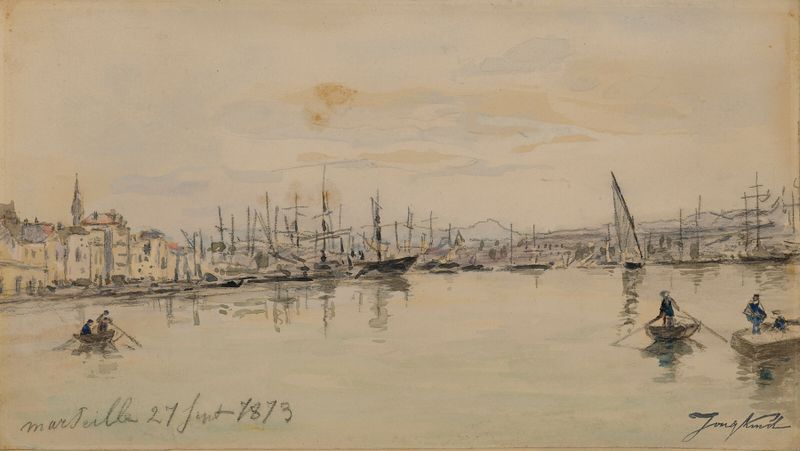
Le Port de Marseille
Johan Barthold Jongkind

Canal Saint-Martin
Johan Barthold Jongkind

Countryside near Brezins, between Grenoble and Vienne
Johan Barthold Jongkind

Notre-Dame vue du quai de la Tournelle
Johan Barthold Jongkind

Environs de Grenoble
Johan Barthold Jongkind

Clair de lune à Overschie (environs de Rotterdam)
Johan Barthold Jongkind

Port de Honfleur
Johan Barthold Jongkind
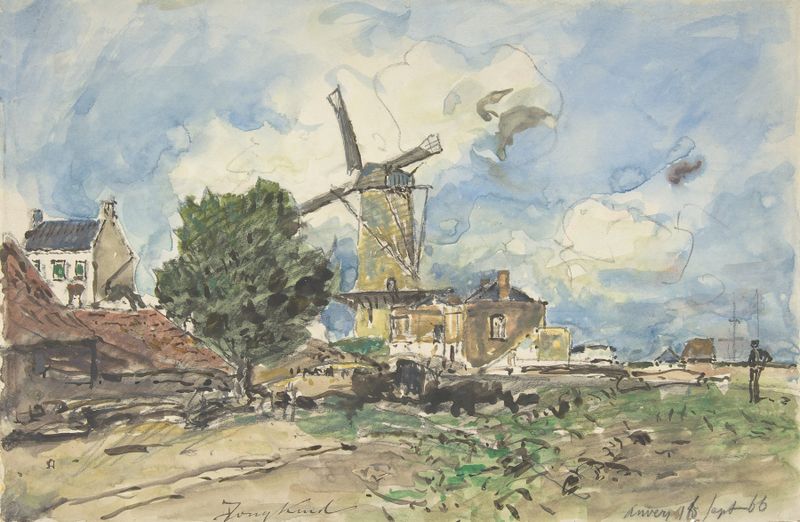
Wind Mill at Antwerp
Johan Barthold Jongkind

Le Havre
Johan Barthold Jongkind

The Church of Overschie
Johan Barthold Jongkind





