Wohnvognen — History & Facts
A moon, impossibly large and pale, hovers at the edge of the scene, casting its cold light across the swirling, restless forms of wagon wheels. In Wohnvognen, August Jerndorff chooses not the whole carriage, nor its passengers, but the wheels themselves—caught in a blur of motion and shadow, as if the night itself is spinning them forward. The spokes radiate outwards, slicing the space between darkness and the faint, golden ground, while the brushwork churns and smears, suggesting both speed and uncertainty.
The eye is pulled along the curve of the nearest wheel, then back to the glowing orb, and finally to the ghostly glimmer of a lantern or window between the spokes—a flicker of human presence in an otherwise mechanical dream. Created in 1890 as an illustration for Holger Drachmann’s "Lygtemænd" in the collection Troldtøj, this image belongs to a world where literature and art were tightly entwined, each feeding the other’s appetite for the strange and the supernatural. The late nineteenth century saw Scandinavian artists and writers drawn to folklore, the uncanny, and the borderlands between reality and imagination. Jerndorff’s work, now in the National Museum of Art, Architecture and Design, stands as a fragment of this era’s fascination with the night, with travel, and with the thin veil between the seen and the unseen.
The painting invites viewers to linger in its shadows, to wonder what stories might be rolling just out of sight.
More Artworks by August Jerndorff

Domorganist i Roskilde, professor Hans Matthison-Hansen,kunstnerens svigerfader
August Jerndorff

Arkitekten Thorvald Bindesbøll i en granskov på Kullen
August Jerndorff
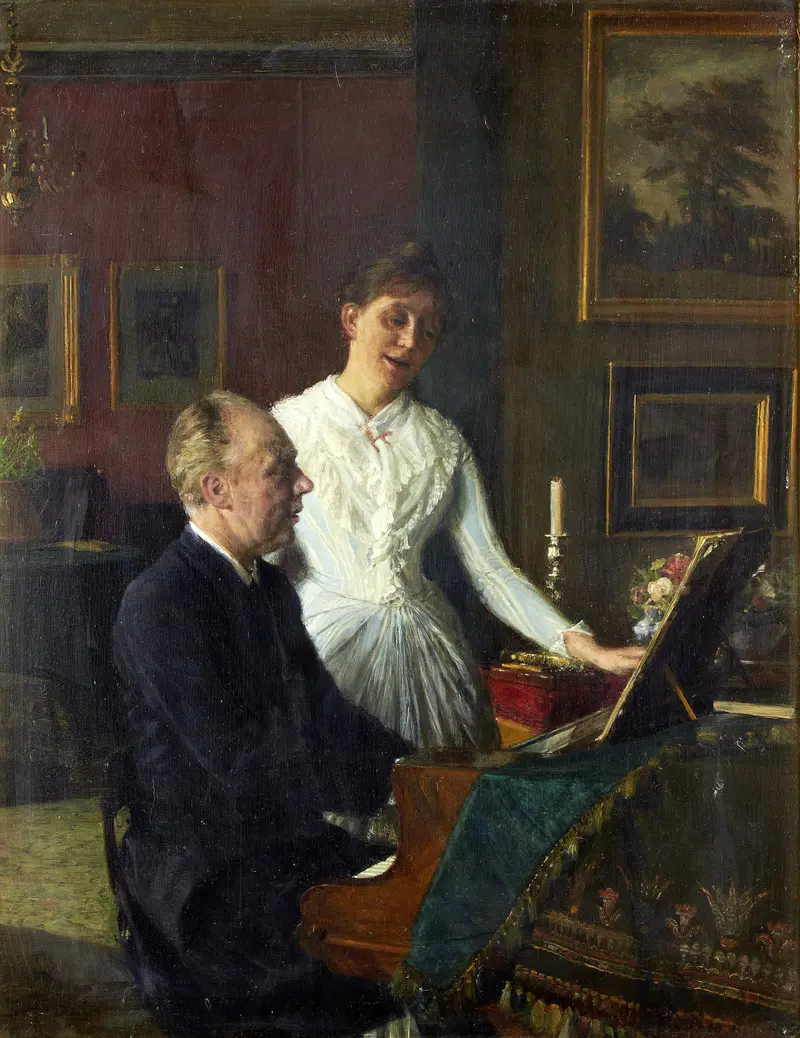
Actor Peter Jerndorff and his wife Amalie at the piano
August Jerndorff
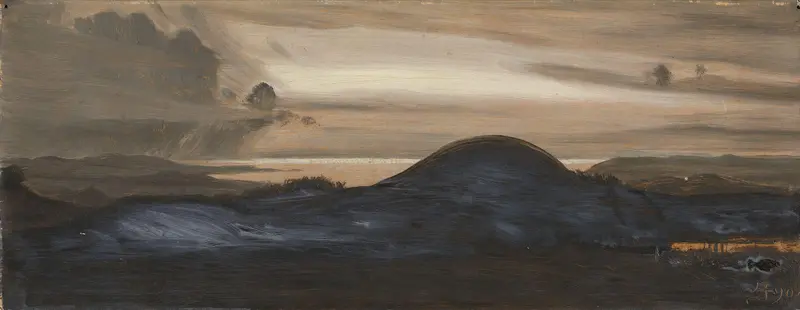
Illustrasjon til Holger Drachmanns "Elverkongen" i "Troldtøj", København 1889-
August Jerndorff
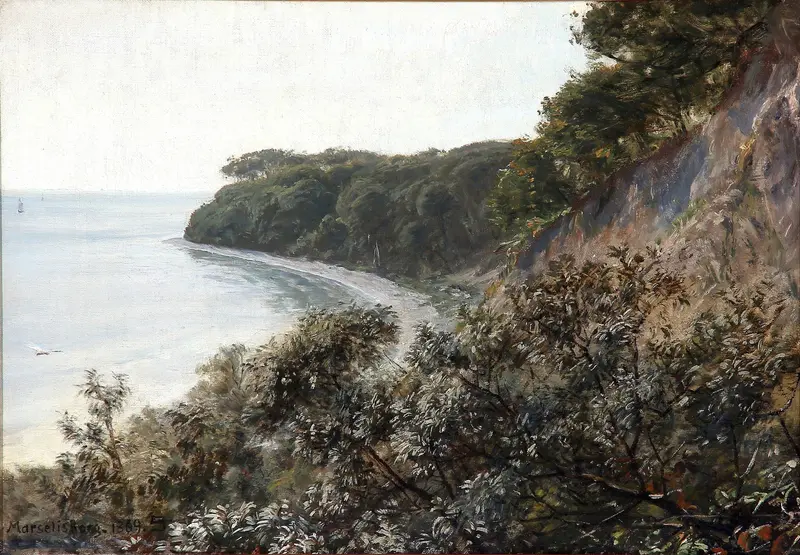
Coastal scene from Marselisborg
August Jerndorff

Huset laa i Byens yderste Udkant, om Sommeren ganske skjult af den tilgroede Have
August Jerndorff
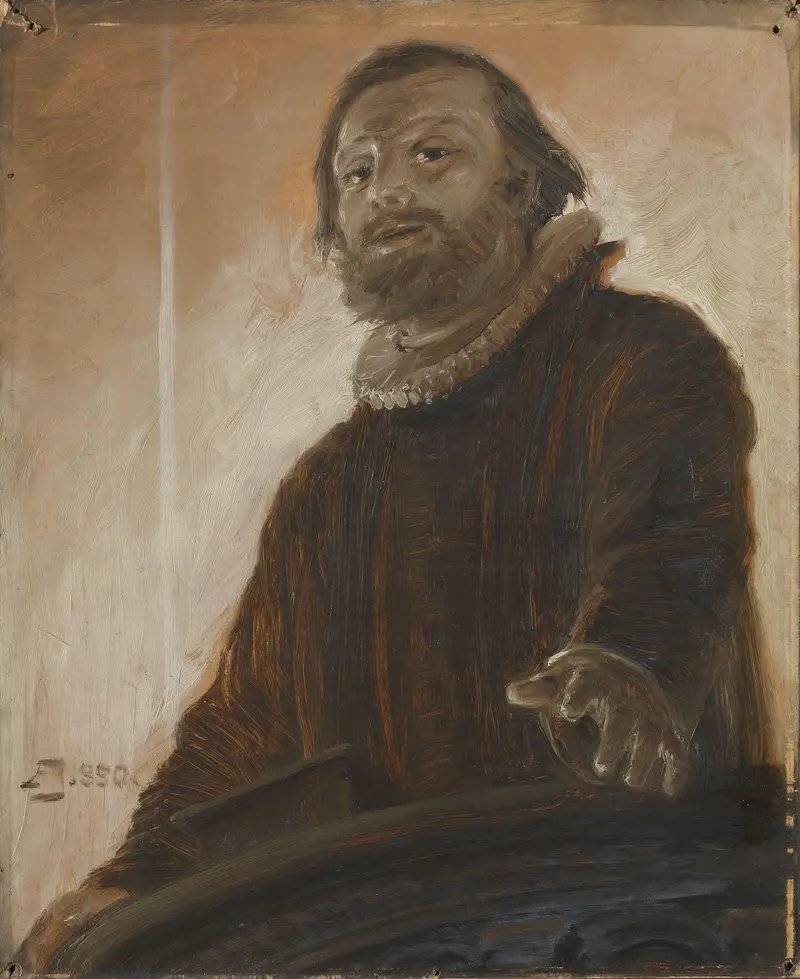
"da saa' jeg op paa ham, han ned paa mig..."
August Jerndorff
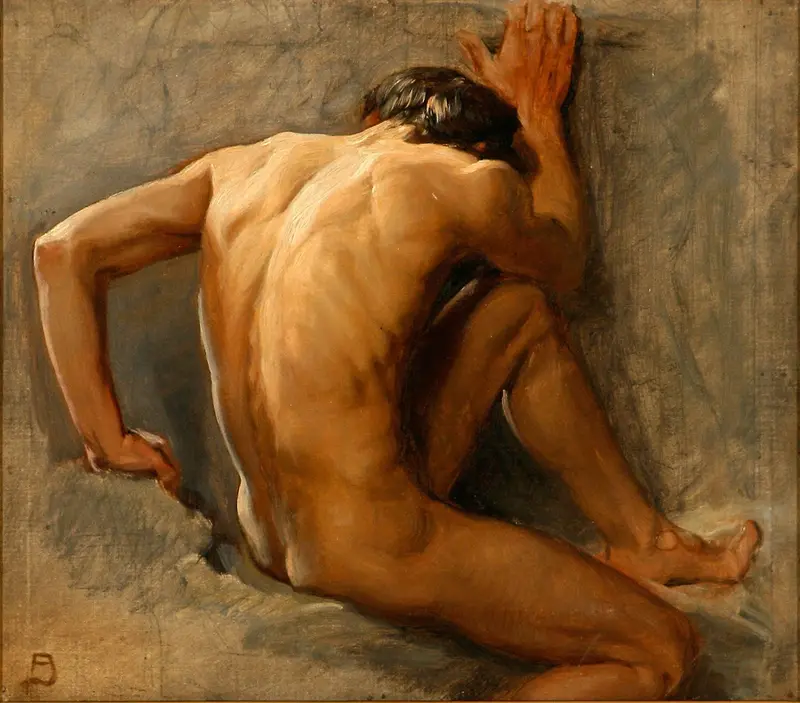
Study of a nude man
August Jerndorff
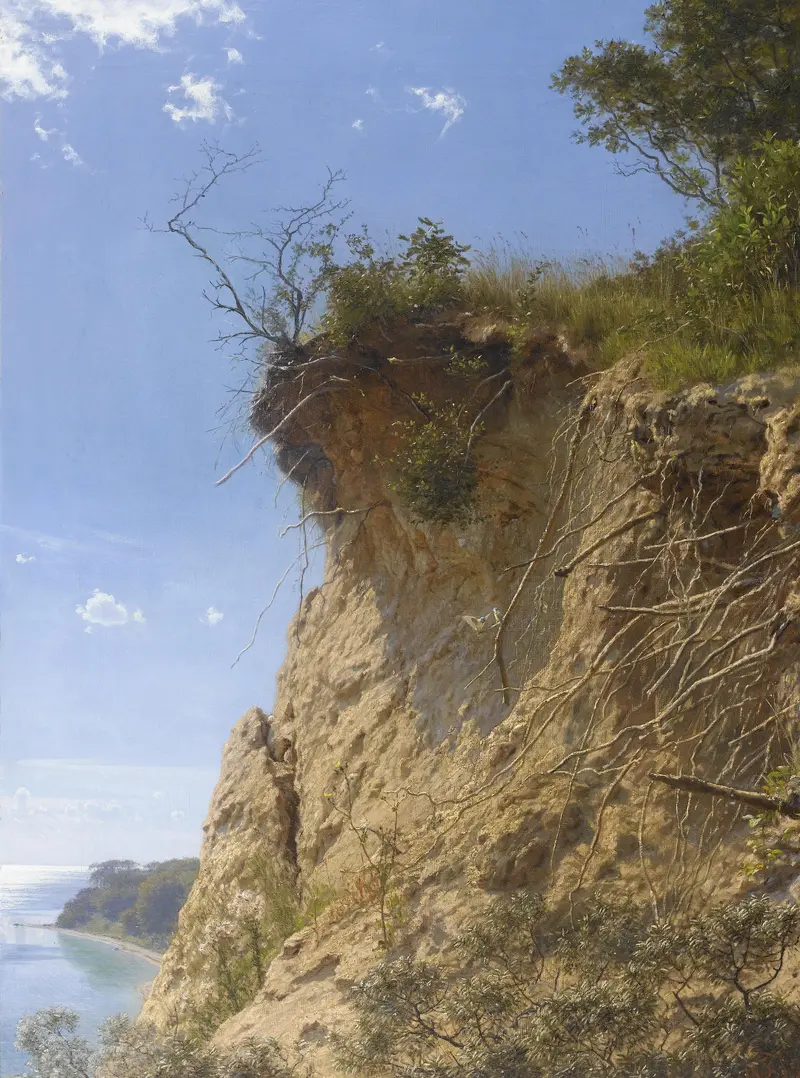
Cliff edge
August Jerndorff
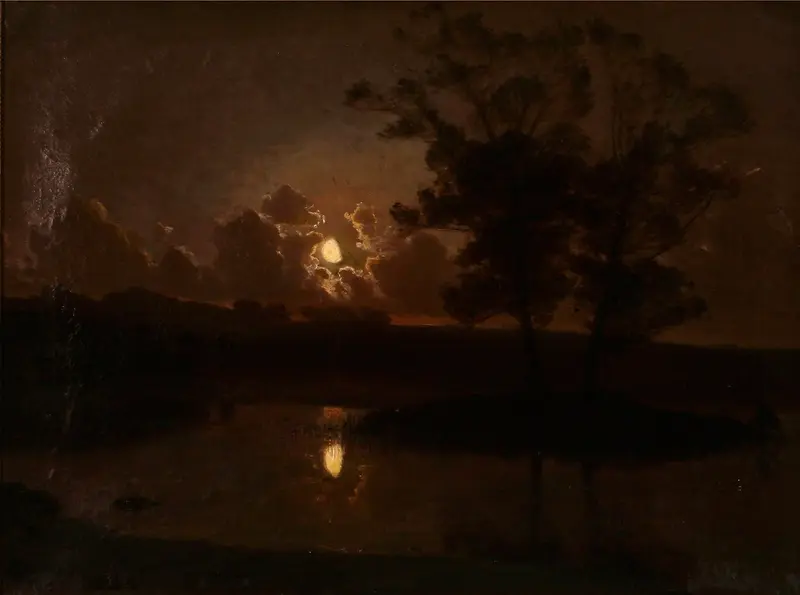
August Andreas Jerndorff Høstaften ved Hjortekæret, Jægersborg Dyrehave
August Jerndorff