
Woman Standing in a Landscape — History & Facts
In each stroke, there lies a yearning, a silent plea to be seen and understood amid the chaos of existence. How does a simple figure, captured in time, evoke such depths of longing? Begin by focusing on the figure to the left, standing gracefully against an expansive landscape. Notice the interplay of light and shadow as it dances over her flowing garment, accentuating the curves of her silhouette.
The soft brushwork gives her an ethereal quality, while the vibrant greens and ochres of the surrounding nature create a tapestry of life around her. The horizon stretches wide, inviting the viewer to explore beyond the canvas, yet her stance remains grounded, a poignant contrast to the vastness around her. This painting speaks to the tension between solitude and connection. The figure’s posture suggests introspection—her gaze directed toward the distance, as if contemplating dreams just out of reach.
The lush landscape, alive with color, juxtaposes her stillness, emphasizing the emotional weight of unfulfilled desires. Each element—the wildflowers at her feet, the distant hills—whispers stories of longing, suggesting that she both belongs to this world and is profoundly apart from it. Chase created this work during the late 19th century, a period when American artists were beginning to embrace Impressionism, blending traditional techniques with new explorations of color and light. He spent much of his time in New York and the artist colonies of Shinnecock Hills and Provincetown, where the changing social dynamics and burgeoning art movements influenced his creative vision.
This painting reflects not only his technical prowess but also the universal human experience of yearning for connection in an ever-evolving world.
More Artworks by William Merritt Chase
Browse all →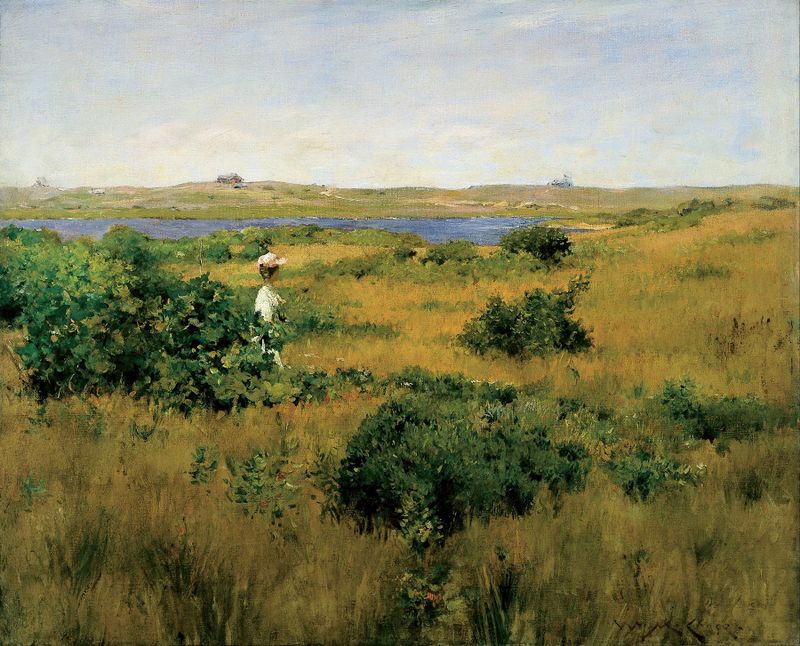
Summer at Shinnecock Hills
William Merritt Chase

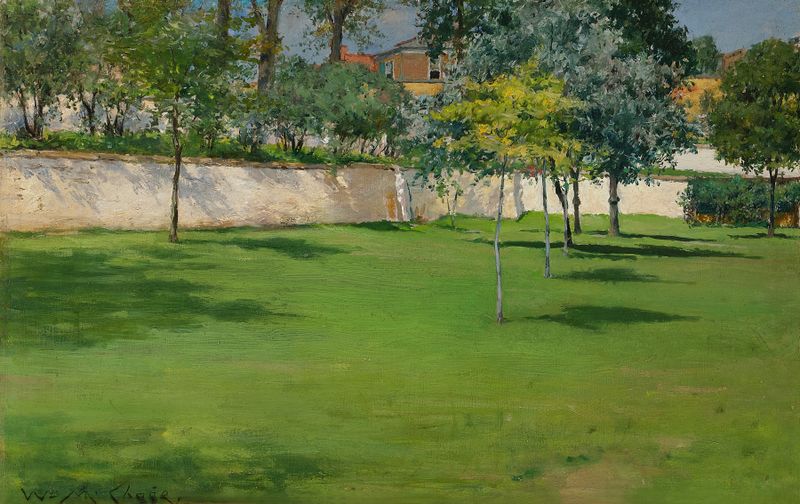
A City Park
William Merritt Chase

Morning at Breakwater, Shinnecock
William Merritt Chase

Shinnecock Hills
William Merritt Chase

Terrace, Prospect Park
William Merritt Chase
Summer-Time
William Merritt Chase
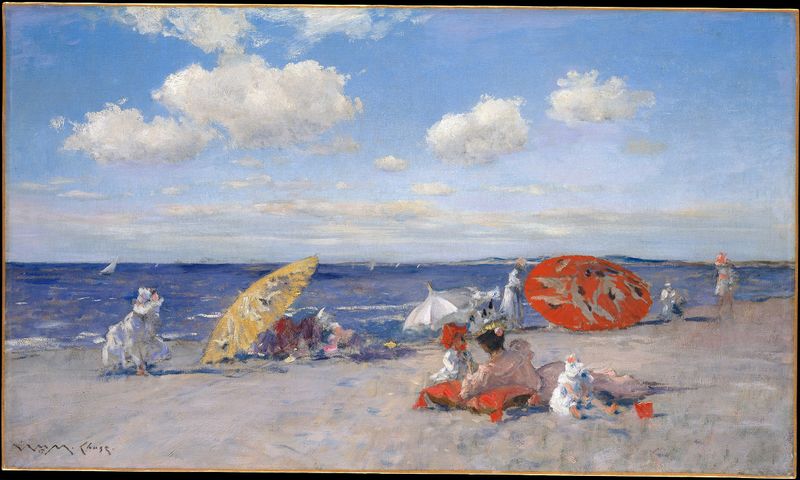
At the Seaside
William Merritt Chase

Idle Hours
William Merritt Chase
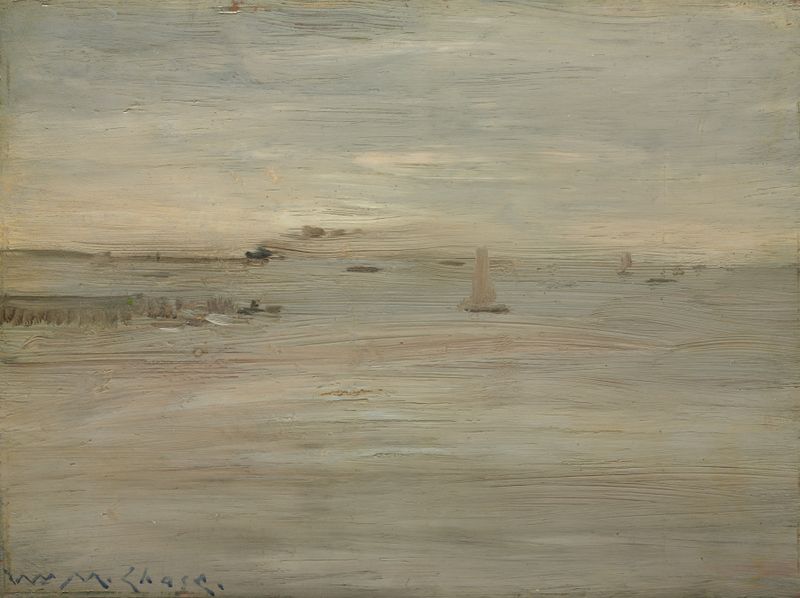
Marine
William Merritt Chase

Wheat Field
William Merritt Chase





