
Yellowstone, Hot Springs — History & Facts
In the mesmerizing landscape of Yellowstone, Hot Springs, a world of decay and rebirth unfolds, inviting us to contemplate the passage of time and the relentless cycle of nature. Begin your exploration in the lower left corner, where vibrant hues of orange and rust dance across the canvas, echoing the geothermal warmth of the springs. Look to the shimmering blues and greens at the center, which pull you deeper into the scene, reflecting the otherworldly nature of the hot springs. The dynamic brushwork evokes movement and life, while the contrasting colors accentuate the underlying tension between vitality and decay—a landscape both alive and eroding, mirroring the duality of existence. The painting’s hidden meanings resonate with the viewer through its intricate details.
Observe how the curvilinear patterns reveal the earth’s shifting landscape, hinting at the transformative power of heat and time. The interplay of light and shadow emphasizes the fragility of this beauty, suggesting that what is vibrant today may succumb to the slow march of entropy. Here lies a poignant reminder of nature’s transient spirit and our place within it, caught between admiration and inevitability. In 1892, as Thomas Moran painted this work, he was at the height of his career, celebrated for his ability to capture the American wilderness.
The late 19th century was marked by growing interest in conservation and the natural wonders of the West, where the first national parks were being established. Moran’s artistic vision played a vital role in the preservation movement, highlighting the beauty of landscapes like Yellowstone, while simultaneously confronting the reality of their fragility.
More Artworks by Thomas Moran
Browse all →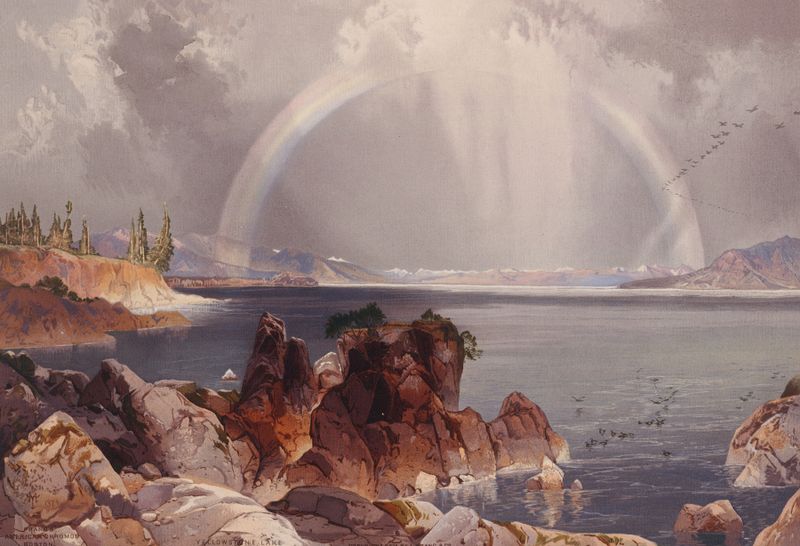
Yellowstone Lake
Thomas Moran

Grand Canyon of the Colorado River
Thomas Moran

Grand Canyon, Colorado River
Thomas Moran

The Towers of Tower Falls, Yellowstone
Thomas Moran
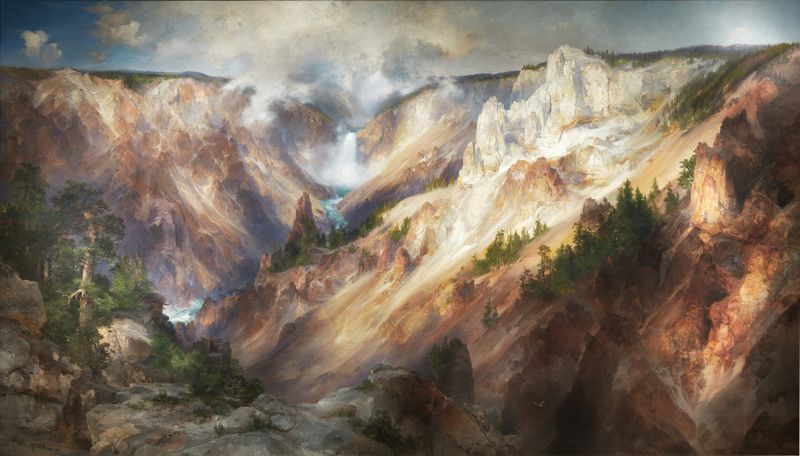
The Grand Canyon Of The Yellowstone
Thomas Moran

Mountain of the Holy Cross
Thomas Moran

Cliffs Of The Upper Colorado River, Wyoming Territory
Thomas Moran
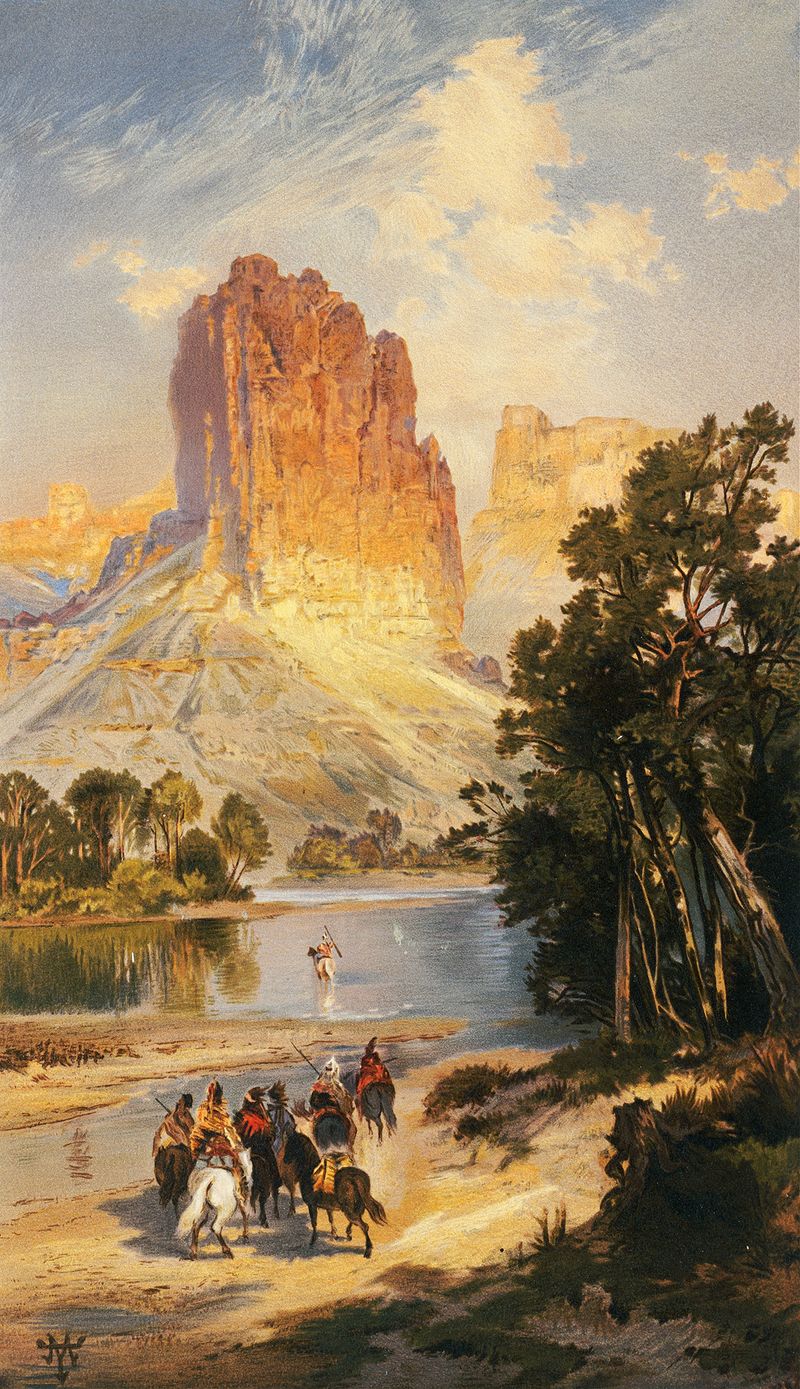
Cliffs of the Upper Colorado River, Wyoming Territory
Thomas Moran

Mammoth Hot Springs, Yellowstone
Thomas Moran
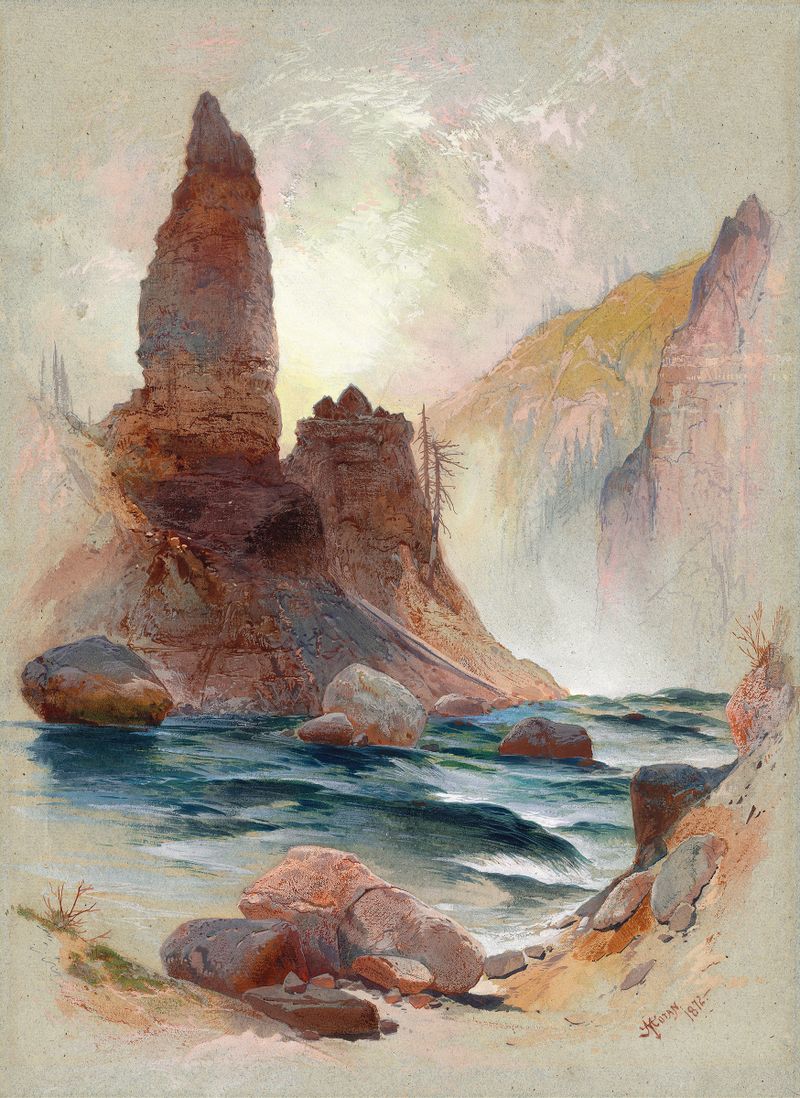
Tower at Tower Falls, Yellowstone
Thomas Moran





