
Yoshiwara — History & Facts
Can paint confess what words never could? In Yoshiwara, the viewer is whisked away to a world where beauty and fleeting moments converge, a realm where the ephemeral dances on the edge of permanence. Look to the left at the vibrant hues of cherry blossoms, their delicate pink petals fluttering against the azure sky. Notice how the artist captures the lively bustle of Yoshiwara, with figures elegantly gliding through the streets, adorned in richly patterned kimonos that sing with color. The intricate lines and soft gradations evoke a sense of movement, while the layering of elements creates depth, inviting your gaze deeper into this enchanting scene. Beneath the surface of beauty lies a poignant tension—the juxtaposition of fleeting pleasure against the inevitability of change.
The playful interactions among the figures hint at a transient joy, echoing the impermanence of life itself. Subtle details, like the subtle expressions and the gazes exchanged, suggest a deeper narrative of longing and desire, drawing on the cultural context of the era, where love and loss intermingle. Created between 1841 and 1842, this piece reflects Hiroshige's mastery during the Edo period in Japan, a time marked by both artistic flourishing and the tension of societal constraints. As the artist navigated the complexities of life in Edo, his work emerged as a bridge between a longing for a more liberated existence and the realities faced in a rapidly changing world.
More Artworks by Utagawa Hiroshige
Browse all →
Sudden Shower over Shin Ohashi Bridge and Atake (Ohashi Atake no yudachi), from the series "One Hundred Famous Views of Edo (Meisho Edo hyakkei)"
Utagawa Hiroshige
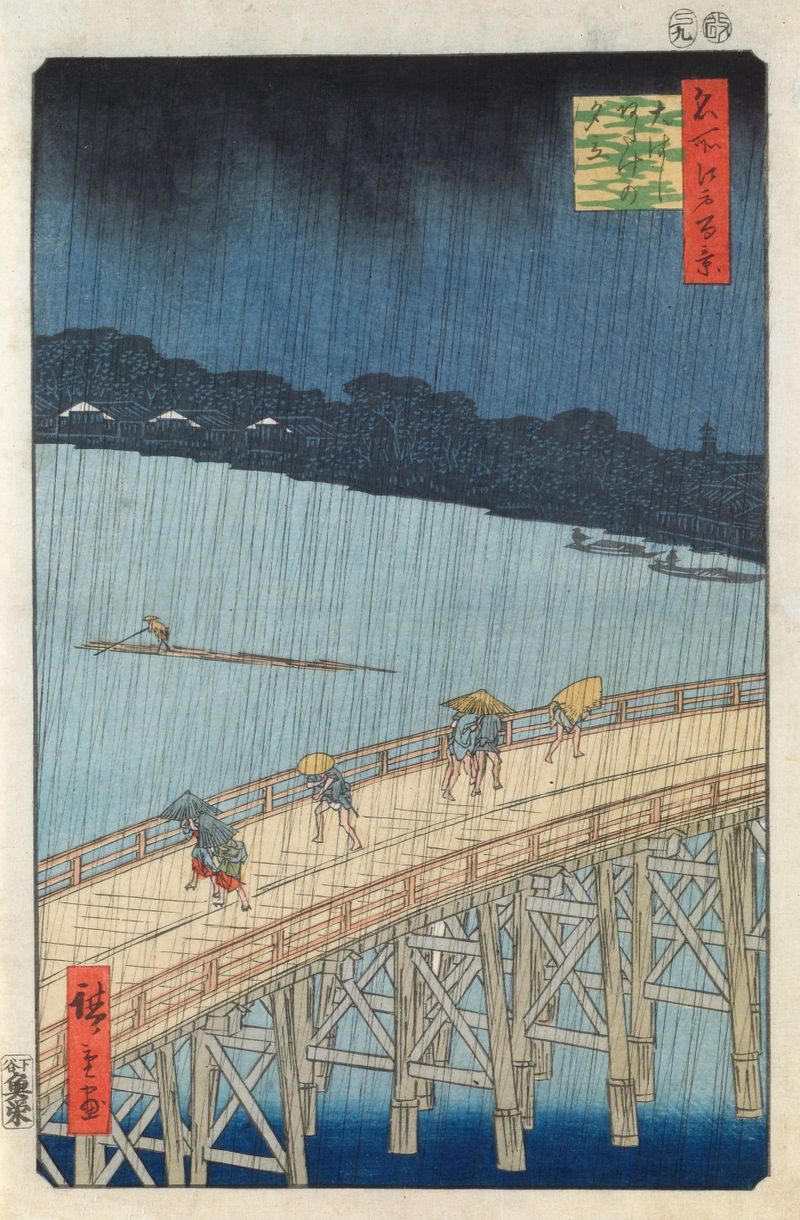
Sudden Shower Over Ohashi Bridge and Atake
Utagawa Hiroshige
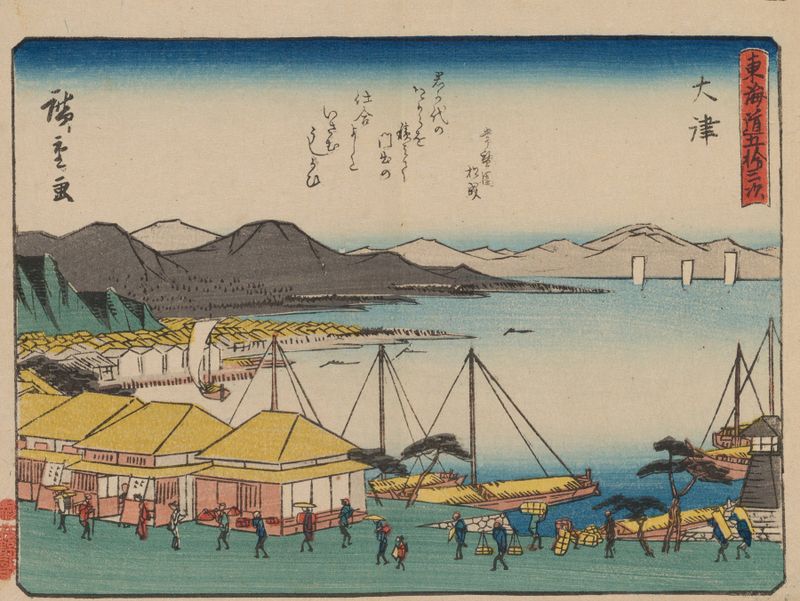
Tokaido gojusantsugi, Pl.54
Utagawa Hiroshige
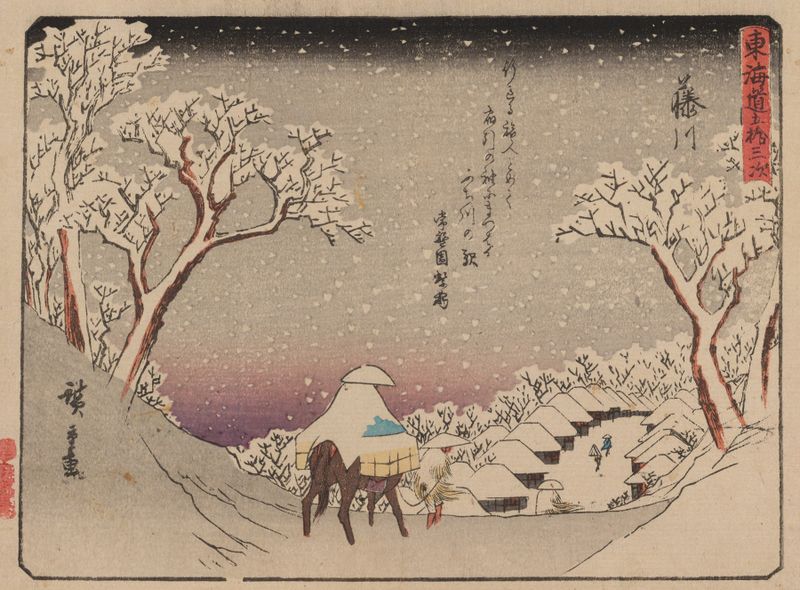
Tokaido gojusantsugi, Pl.38
Utagawa Hiroshige
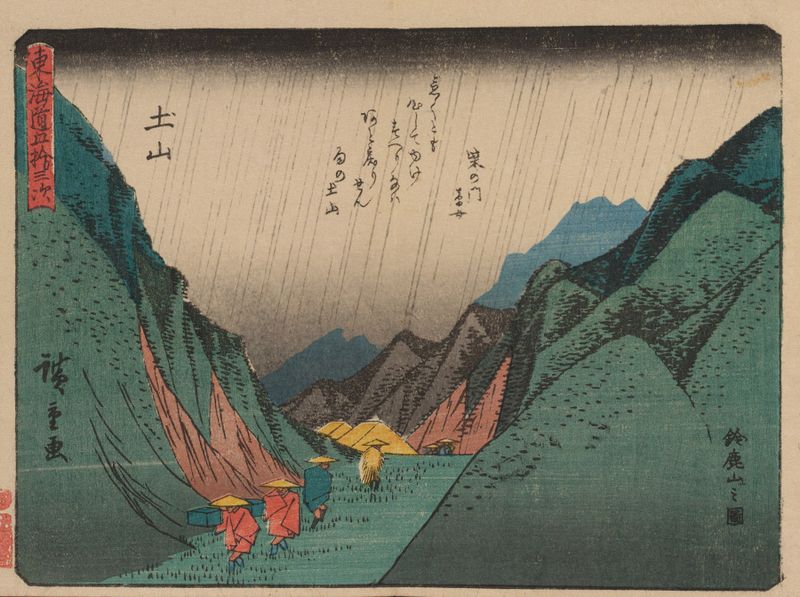
Tokaido gojusantsugi, Pl.50
Utagawa Hiroshige
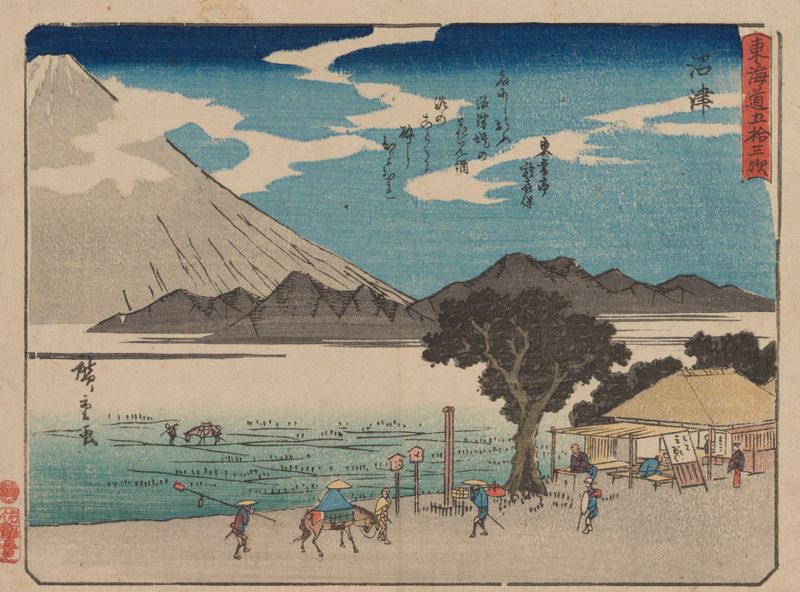
Tokaido gojusantsugi, Pl.13
Utagawa Hiroshige
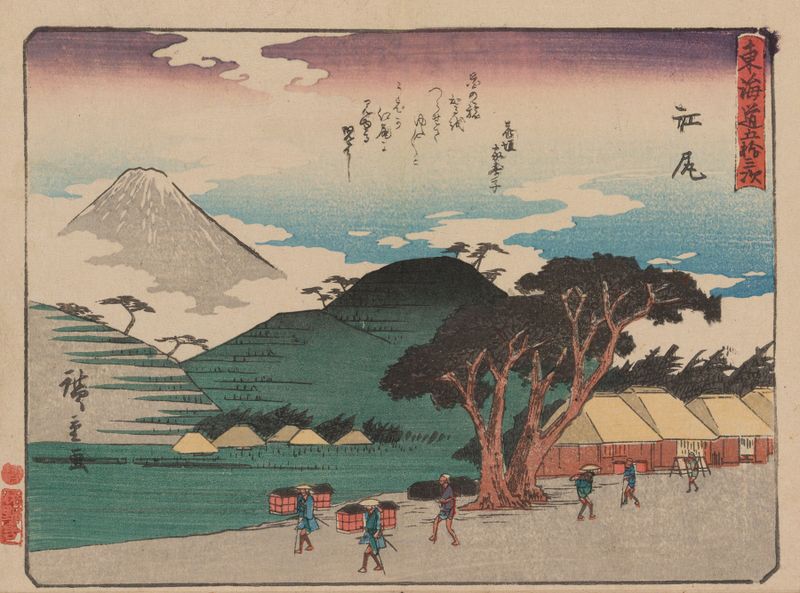
Tokaido gojusantsugi, Pl.19
Utagawa Hiroshige
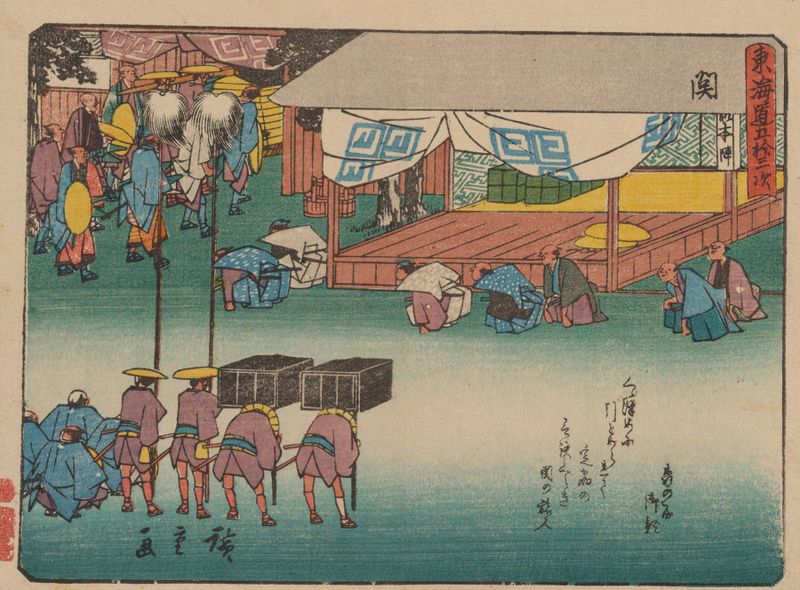
Tokaido gojusantsugi, Pl.48
Utagawa Hiroshige
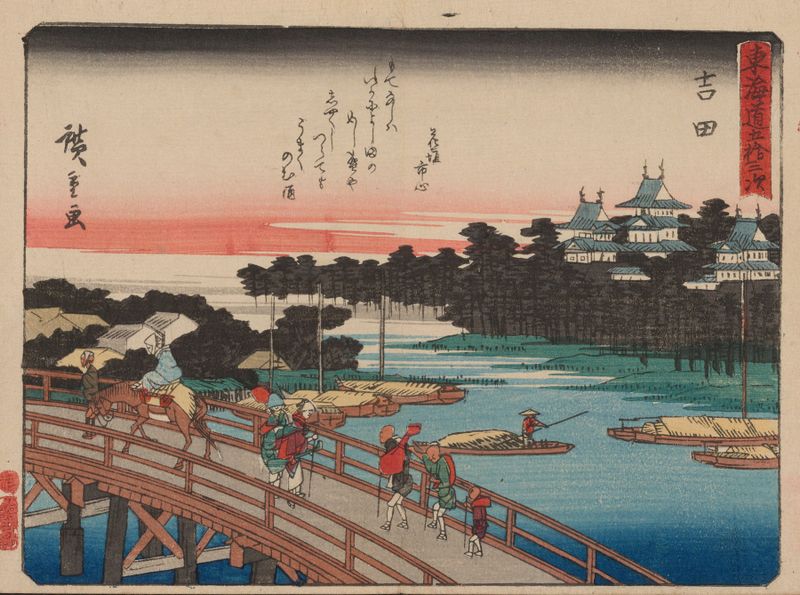
Tokaido gojusantsugi, Pl.35
Utagawa Hiroshige
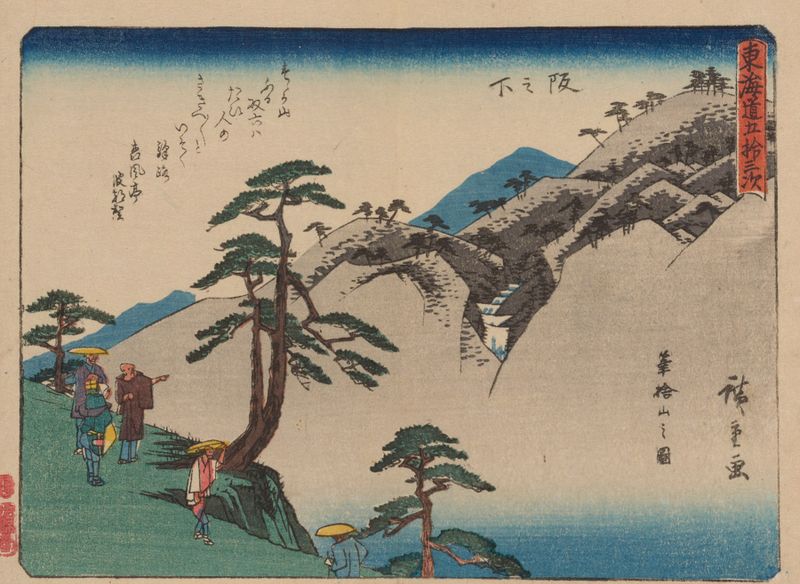
Tokaido gojusantsugi, Pl.49
Utagawa Hiroshige





