
Zamość Pl.6 — History & Facts
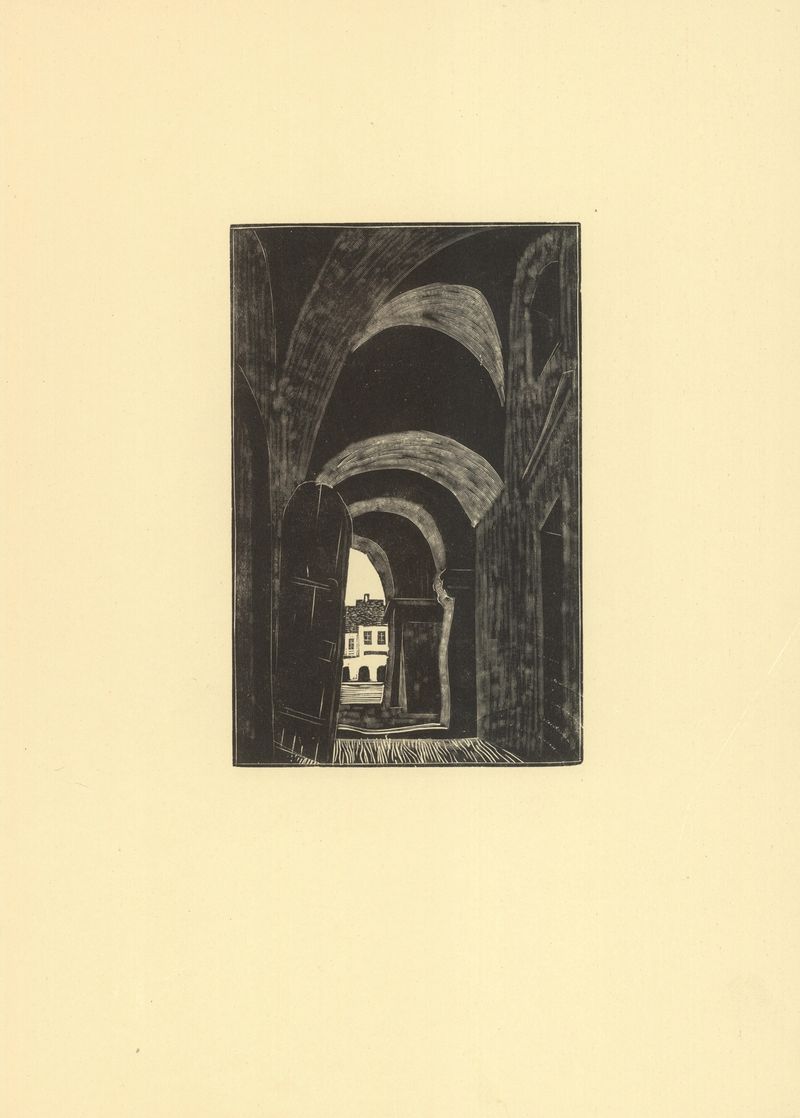
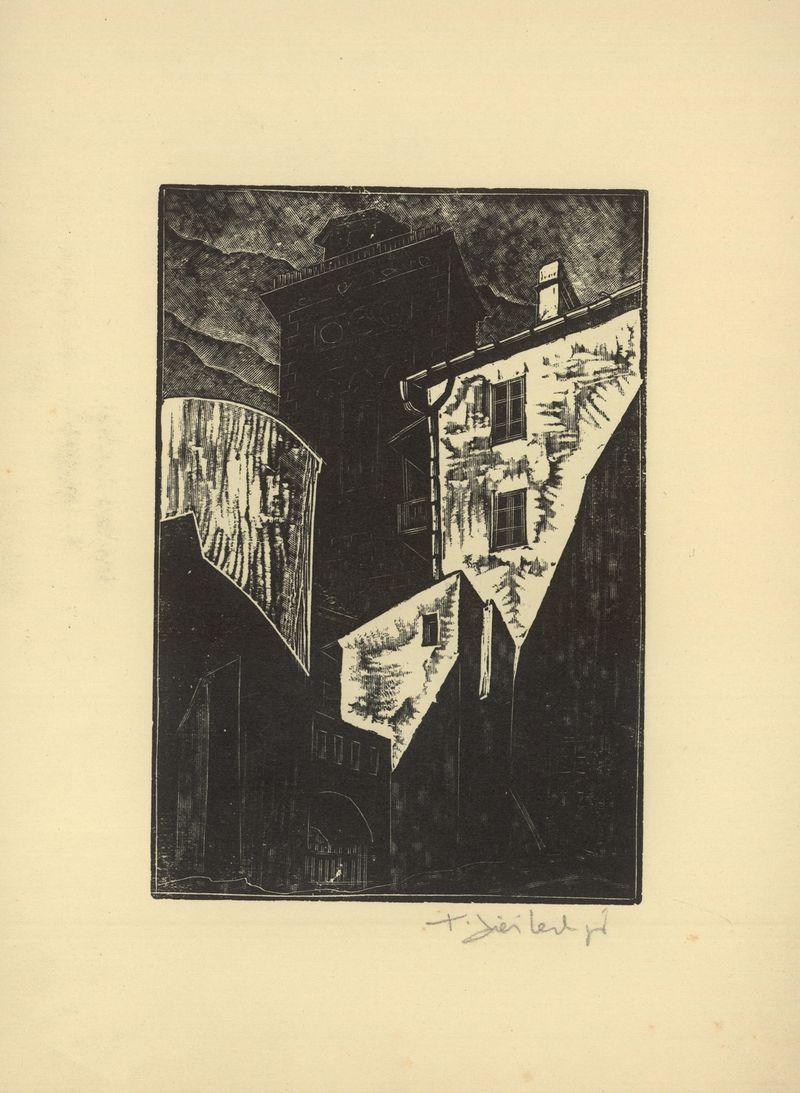
In this stillness, beneath the shadowed facades of Zamość, an unspoken dread lingers, echoing the fears of its inhabitants. Look to the bold geometry of the buildings; they rise with an imposing authority, their facades defined by sharp angles and muted hues. Notice how the light fights its way through the narrow streets, casting elongated shadows that seem almost alive, whispering secrets of those who have walked these paths. The muted colors suggest a somberness, a collective memory etched in the very stones, grounding the viewer in a palpable tension. Within the composition, the interplay of light and shadow serves as a metaphor for hidden truths and the weight of history.
The stark contrasts evoke a sense of unease, hinting at the fears of the times—a community under the weight of uncertainty. The empty streets, devoid of figures, amplify the isolation and introspection of the scene, urging the viewer to confront what lies beneath the surface. Each detail, from the weathered textures of the buildings to the sharp lines drawn by sunlight, contributes to an overwhelming atmosphere of anxiety and anticipation. In 1929, Tadeusz Cieślewski was immersed in the vibrant yet tumultuous world of interwar Poland.
This period was marked by political instability and cultural shifts, reflected in his work. The artist, living in Zamość, sought to capture the essence of his surroundings, infusing his canvases with emotional depth and a nuanced understanding of the human condition, forever linking the landscape to the collective psyche of its people.
More Artworks by Tadeusz Cieślewski
Browse all →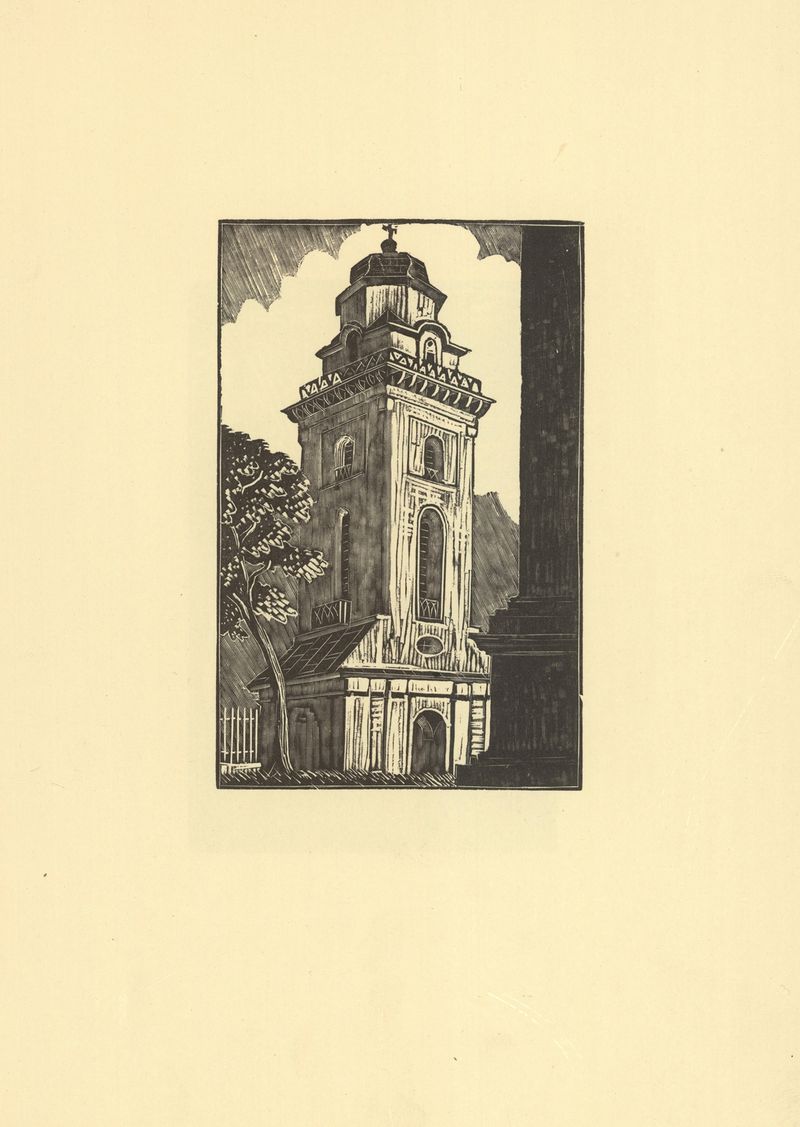
Zamość Pl.2
Tadeusz Cieślewski
Dwanaście widoków Warszawy – Title page
Tadeusz Cieślewski
Mountainous landscape with a river
Tadeusz Cieślewski
Zamość Pl.3
Tadeusz Cieślewski
Zamość Pl.5
Tadeusz Cieślewski
Kościół Dominikanów
Tadeusz Cieślewski

Pomnik Kopernika
Tadeusz Cieślewski
Kamienne Schodki
Tadeusz Cieślewski
Zamość Pl.4
Tadeusz Cieślewski
Wieża Bernardynów
Tadeusz Cieślewski
More Architecture Art
Browse all →
The statue of Liberty
Frédéric Auguste Bartholdi

View of Houses in Delft, Known as ‘The Little Street’
Johannes Vermeer

View of Houses in Delft, Known as ‘The Little Street’
Johannes Vermeer

The Cathedral in Rouen. The portal, Grey Weather
Claude Monet

The yellow house
Vincent van Gogh

The Church in Auvers-sur-Oise, View from the Chevet
Vincent van Gogh