A Bedfordshire Farmyard — History & Facts
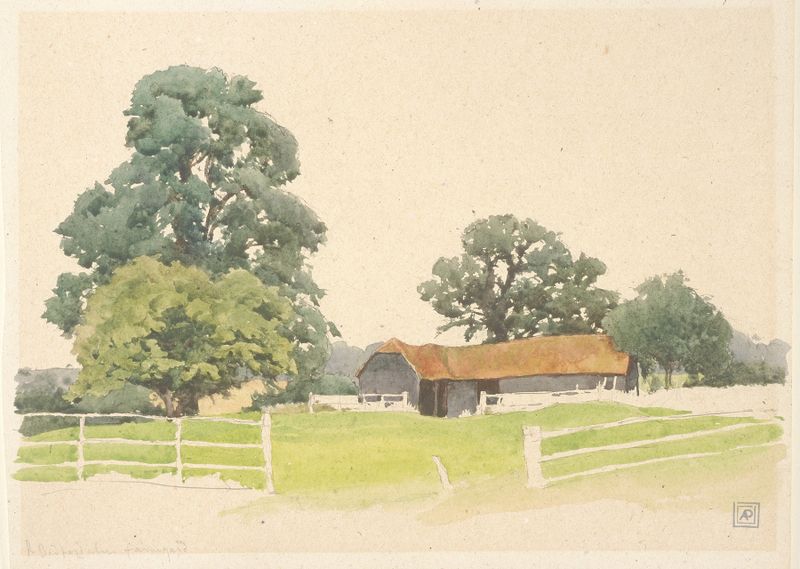
Did the painter know this moment would outlive them? In the stillness of A Bedfordshire Farmyard, time seems to pause, capturing the delicate balance between life and decay. Look to the foreground where a weathered cart sits, its wooden slats worn and splintered, telling tales of labor long past. Notice how the soft light of the late afternoon bathes the scene, casting gentle shadows that stretch towards the horizon. The subtle palette of earth tones—rich browns, faded greens, and soft blues—evokes a sense of nostalgia, as if the very air is thick with memories.
Each brushstroke meticulously reveals the texture of the surrounding environment, inviting viewers to explore the intricate details of both nature and human presence. At first glance, the farmyard appears tranquil, yet a deeper examination reveals a poignant commentary on transience. The vibrant greenery surrounding the decaying structures embodies the struggle between flourishing life and the inevitable march of time. Hidden contrasts arise as wildflowers peek through cracks; their resilience juxtaposes the fragility of the aging farm.
This tension resonates throughout the composition, a reminder of beauty found in the midst of decline. Alfred Parsons painted A Bedfordshire Farmyard in the late 19th century, during a period marked by rapid industrialization in England. He was dedicated to capturing the pastoral beauty of rural life, often infusing his works with impressions of nature's changing moods. As the world around him transformed, he sought to preserve the essence of the countryside, highlighting both its vibrancy and its decay.