A Sundial In A Rose Garden — History & Facts
In a sun-drenched garden, the air shimmers with warmth and the scent of blooming roses fills the atmosphere. A sundial stands resolutely at the center, its shadow slicing through the verdant foliage, marking the passage of time. Nearby, butterflies flit between the blossoms, and bees hum softly, their delicate dance echoing the rhythm of life captured in this tranquil moment. Look to the sundial first, its weathered surface engraved with Roman numerals, each telling a story of hours gone by.
Notice how the golden light caresses the petals of the roses, their vibrant reds and soft pinks contrasting against the cool stone of the sundial. The careful composition invites your eye to explore the intertwining plants and flowers that naturally frame the timepiece, creating a harmonious balance between nature and artistry. Beneath the serene beauty lies a profound reflection on memory and the inexorable passage of time. The sundial symbolizes not just the hours but the fleeting moments we cherish, while the garden encapsulates the ephemeral nature of life—a reminder of both continuity and change.
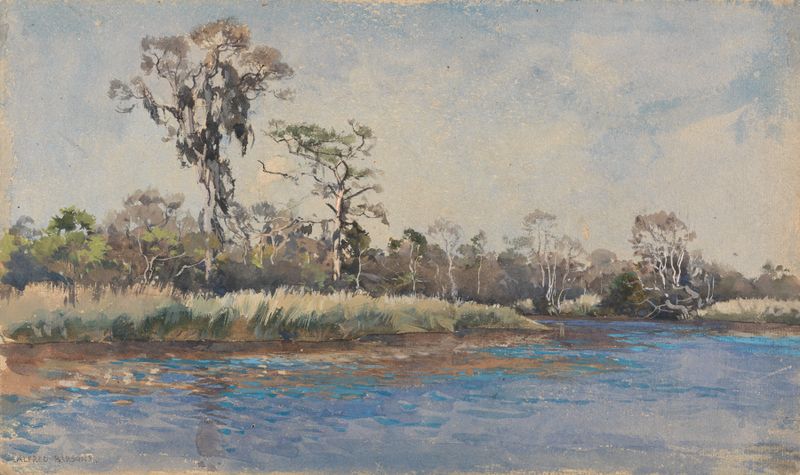
Each rose, in its bloom, represents a memory: vibrant and alive, yet inevitably destined to fade. Alfred Parsons painted this work during a period when he was deeply immersed in the Impressionist movement, likely around the late 19th century. His focus on capturing the interplay of light and nature was indicative of a shift in artistic expression, as artists began to explore more personal interpretations of their surroundings. This painting embodies his dedication to portraying the serene beauty of the English landscape while reflecting on the passage of time through nature's cycles.