Bablock Hythe, Near Oxford — History & Facts
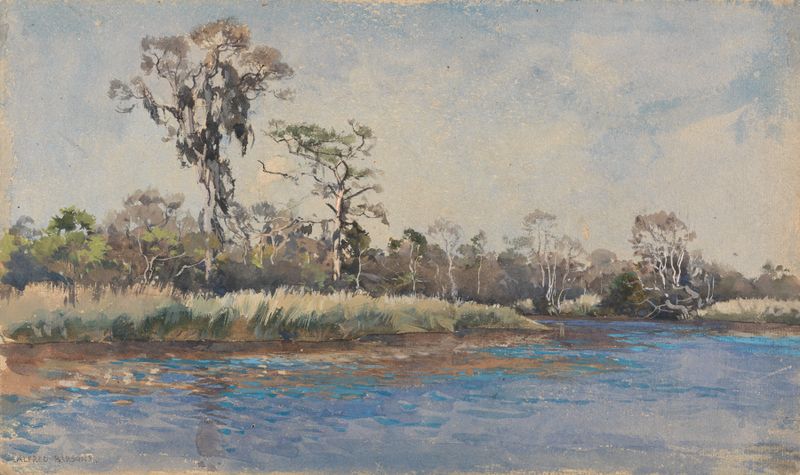
Could a single brushstroke hold eternity? In Bablock Hythe, Near Oxford, the fleeting beauty of a pastoral scene invites contemplation on the transience of life. Look to the left at the gently arching willows, their branches swaying lazily above the water’s edge. The artist employs soft, dappled strokes of green and gold that blend seamlessly into the tranquil reflections below, creating a harmonious dialogue between land and water. The sky, a delicate wash of pastel blues and pinks, casts a serene light upon the landscape, imbuing it with an ethereal quality.
Notice how the winding path draws the viewer’s eye deeper into the scene, suggesting both a journey and the passage of time. The painting contrasts stillness with the inevitability of change. The vibrant flora, lush with life, speaks to the cycles of nature, while the rowboat anchored nearby hints at human presence and the fleeting moments we seize on the water’s surface. This delicate equilibrium between permanence and impermanence reflects a profound meditation on mortality, inviting viewers to consider their own place within the continuum of existence. In 1881, Parsons painted this work in England during a period marked by a burgeoning interest in capturing the idyllic countryside.
As the Arts and Crafts Movement took hold, artists like him sought to celebrate nature and the simplicity of life amidst the industrial changes of the time. This piece stands as a testament to that yearning, encapsulating both personal and collective reflections on beauty and mortality.