
A Camp Scene — History & Facts
It captures the essence of life in motion, of fleeting moments forever preserved in time. In A Camp Scene, the artist immerses us in a world where stillness and dynamism intertwine, revealing the delicate balance between tranquility and action. Look to the left at the vibrant figures bustling around the campfire, their animated gestures conveying a sense of camaraderie and purpose. Notice how the golden light falls upon the tents and the horses, creating a sense of warmth amidst the cool shadows that linger in the background.
The composition deftly guides the eye across the canvas, from the clustered group of soldiers preparing for the day to the distant horizon where the sun begins to rise, hinting at new adventures ahead. Yet beneath this lively surface lies a deeper narrative of impermanence. The juxtaposition of the soldiers’ robust activity with the quiet presence of nature speaks to the transient nature of existence. The scattered belongings, barely visible, suggest the chaos of life on the move, while the serene landscape serves as a reminder of the stillness that envelops them — an emblematic contrast between man and nature, action and rest. In the 1650s, during a period marked by the flourishing of Dutch genre painting, the artist was creating works that reflected the realities and complexities of contemporary life.
Working in Haarlem, he drew inspiration from the vibrant scenes of everyday activities, capturing the momentary and the mundane with exceptional skill. It was a time of exploration, both artistically and geographically, as Wouwerman depicted the rich tapestry of life’s movements.
More Artworks by Philips Wouwerman
Browse all →
Halt of Cavaliers at an Inn
Philips Wouwerman

Halt of Travellers
Philips Wouwerman

Travelers Awaiting a Ferry
Philips Wouwerman
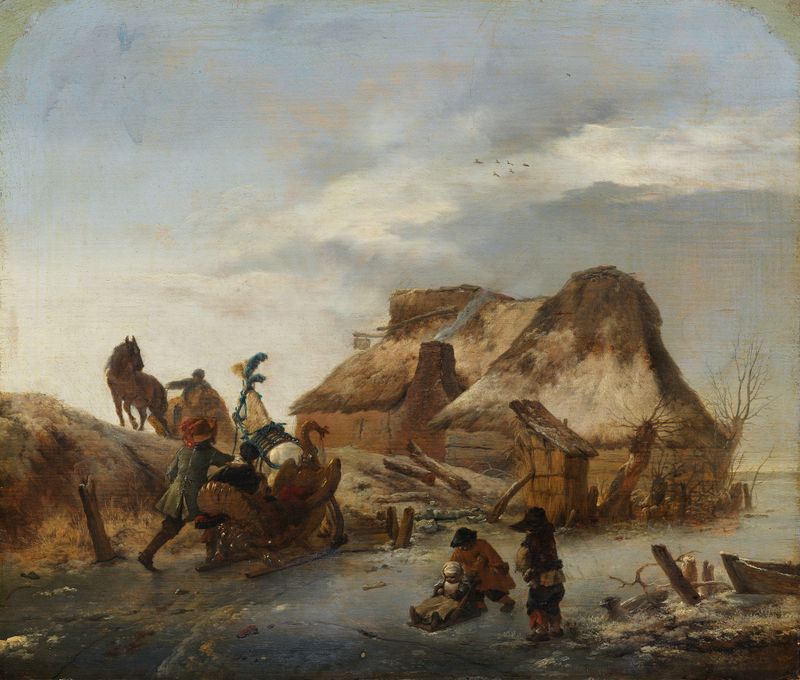
A Nobleman’s Sleigh on the Ice
Philips Wouwerman
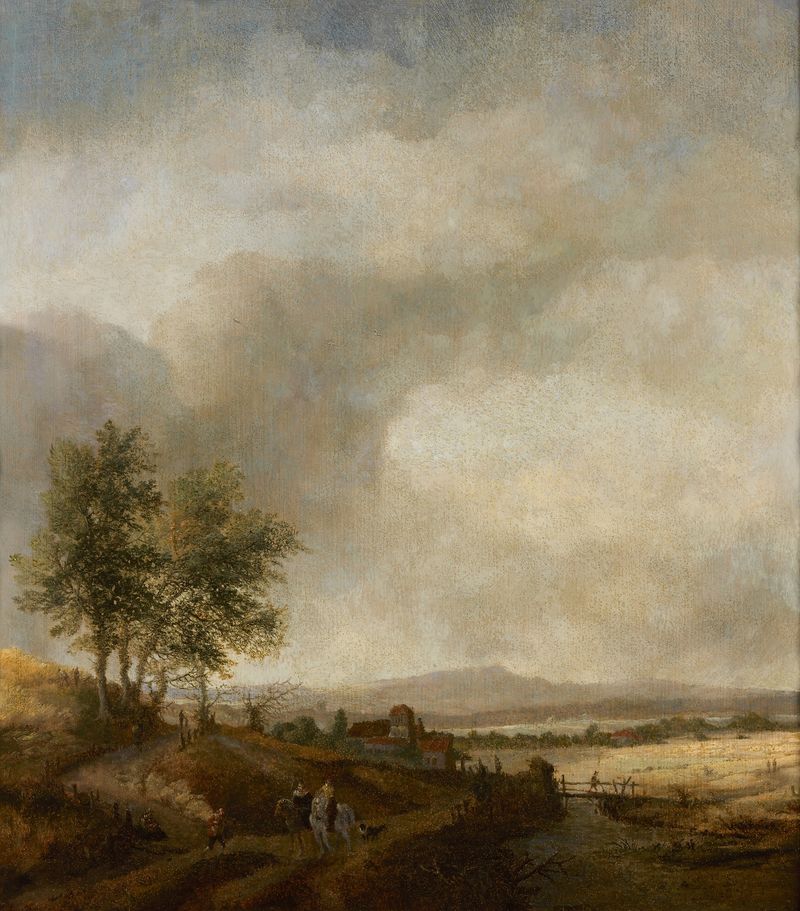
Landschap met ruiters
Philips Wouwerman
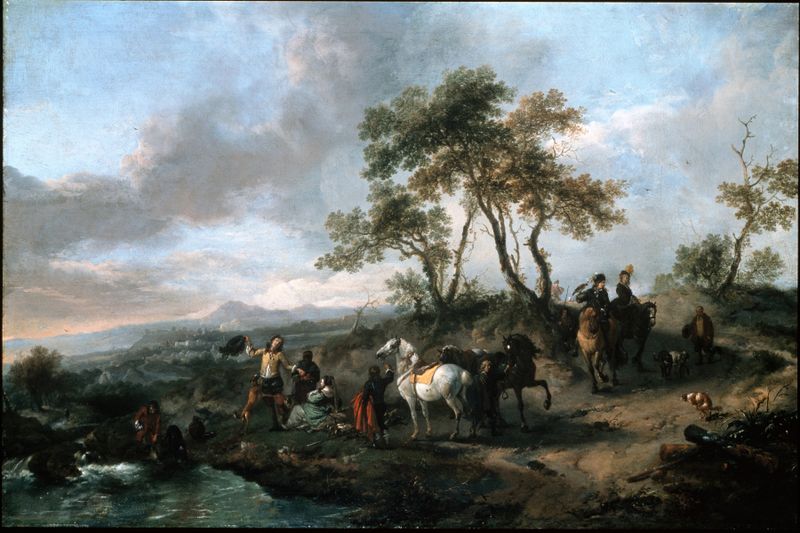
Halt of a Hunting Party
Philips Wouwerman
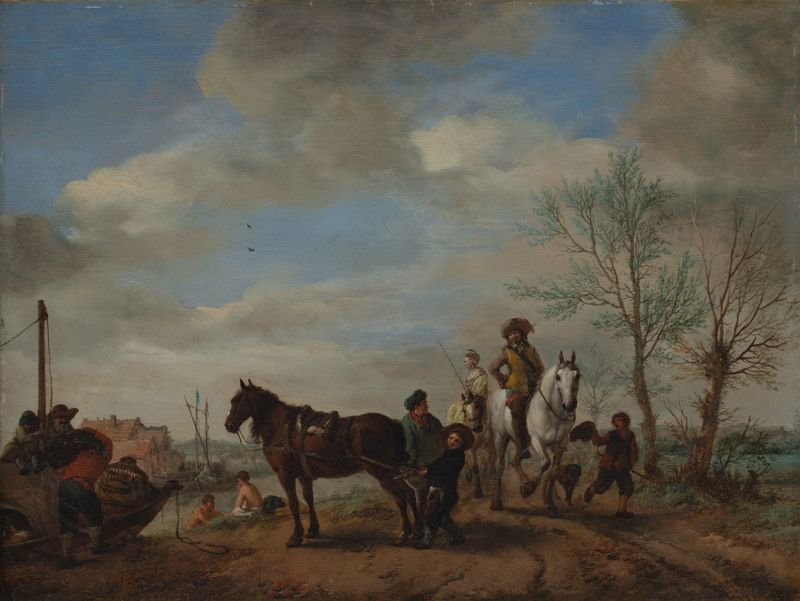
A Man and a Woman on Horseback
Philips Wouwerman
Horsepond on a River
Philips Wouwerman
The Falcon Hunt
Philips Wouwerman

Riders at a Blacksmith’s
Philips Wouwerman





