
A Couple, Traditionally Identified as Mr. and Mrs. Hill — History & Facts
What first holds the viewer in A Couple, Traditionally Identified as Mr. and Mrs. Hill is the charged stillness between the two figures, poised in a room that seems to echo with unspoken conversation.
The woman, seated in a shimmering gown, delicately holds a teacup, her gaze meeting the viewer’s with a composed reserve. The man stands apart, one hand tucked into his waistcoat, the other arm resting at his side, his posture both formal and faintly self-assured. The light falls evenly, giving the silk of her dress a quiet radiance and setting off the pale walls, while the oval landscape above the mantelpiece hints at a world beyond this measured domesticity.
Every detail—the careful porcelain, the empty hearth—serves to heighten the sense of ritual and restraint. Painted between 1750 and 1751, this work belongs to a period when conversation pieces like this were in vogue among the English gentry, who sought to commemorate their refinement and stability in an era of social change. Artists such as Arthur Devis specialized in these intimate group portraits, where the setting and gestures spoke as much as faces: the tea service signals polite sociability, the gentleman’s stance a claim to status, the lady’s composure a model of grace. While history has left few traces of this particular couple, their portrait stands as a quiet testament to the values and aspirations of mid-eighteenth-century Britain.
Look again at the distance between them, the careful arrangement of objects—each detail is a clue to the world they inhabited.
More Artworks by Arthur Devis
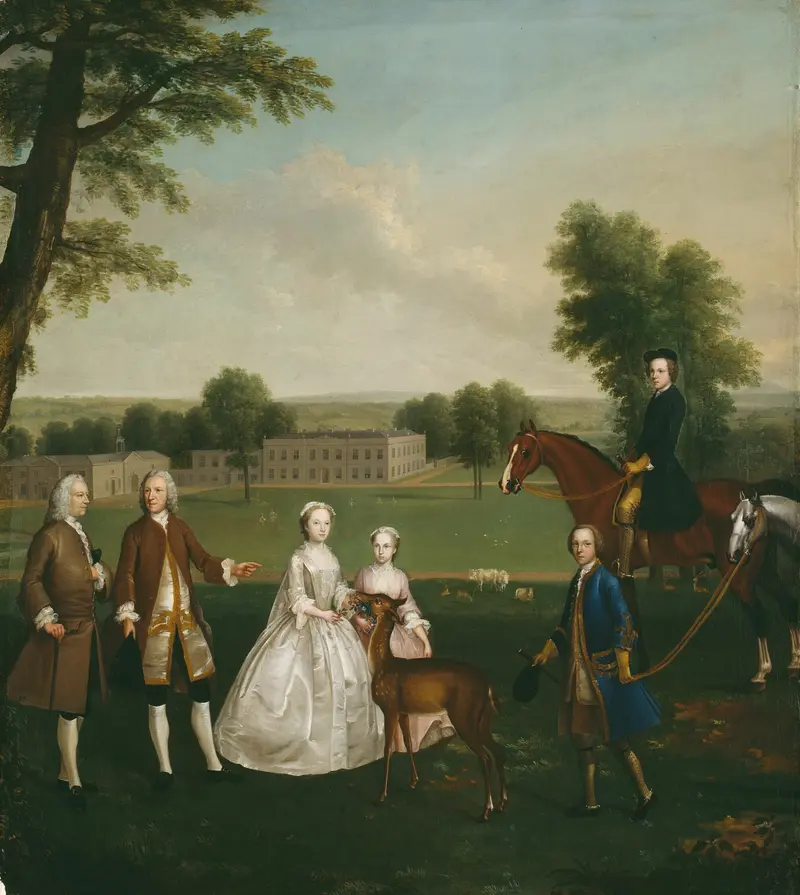
Thomas Lister and Family at Gisburne Park
Arthur Devis

Sir John Shaw and his Family in the Park at Eltham Lodge, Kent
Arthur Devis
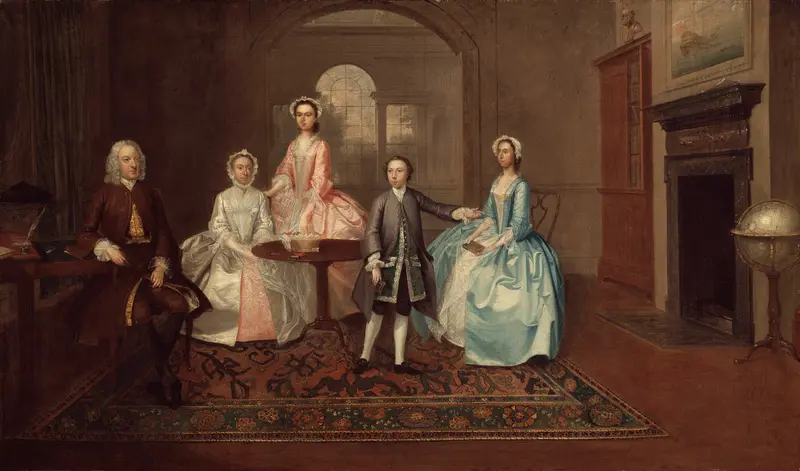
John Thomlinson and His Family
Arthur Devis
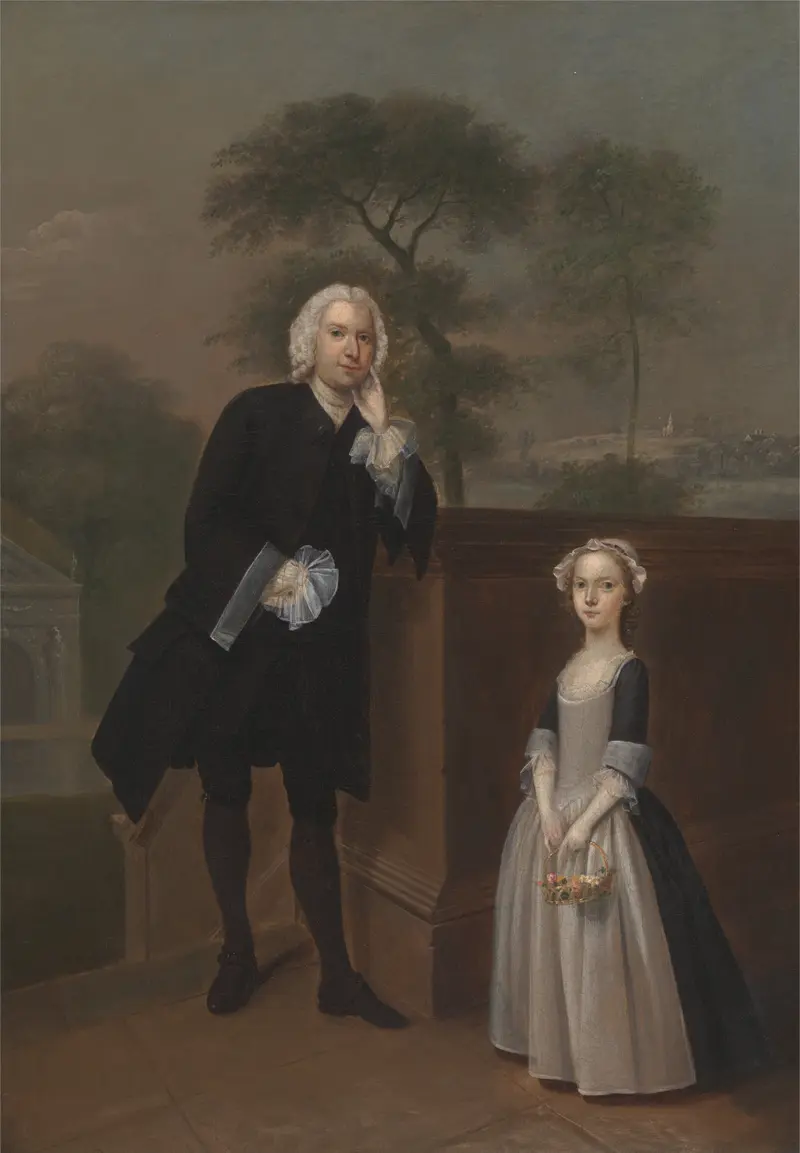
An Unknown Man with His Daughter
Arthur Devis
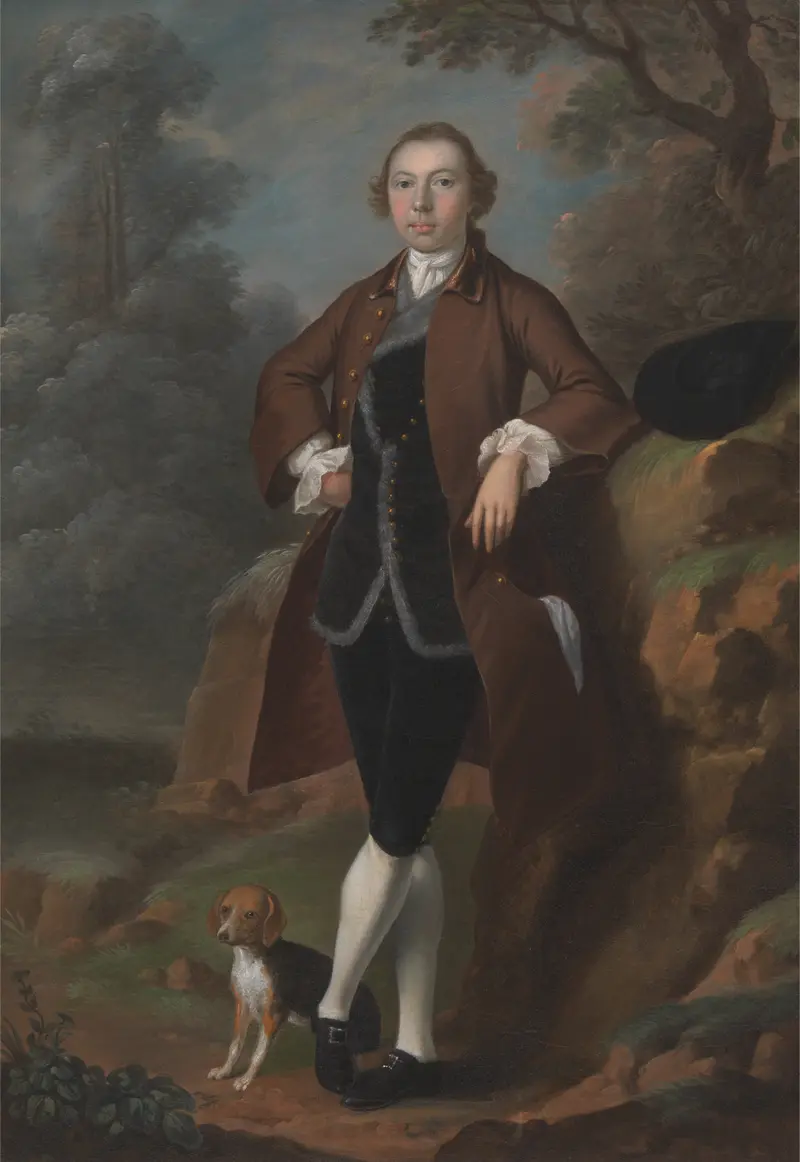
William Farington of Shawe Hall, Lancashire
Arthur Devis
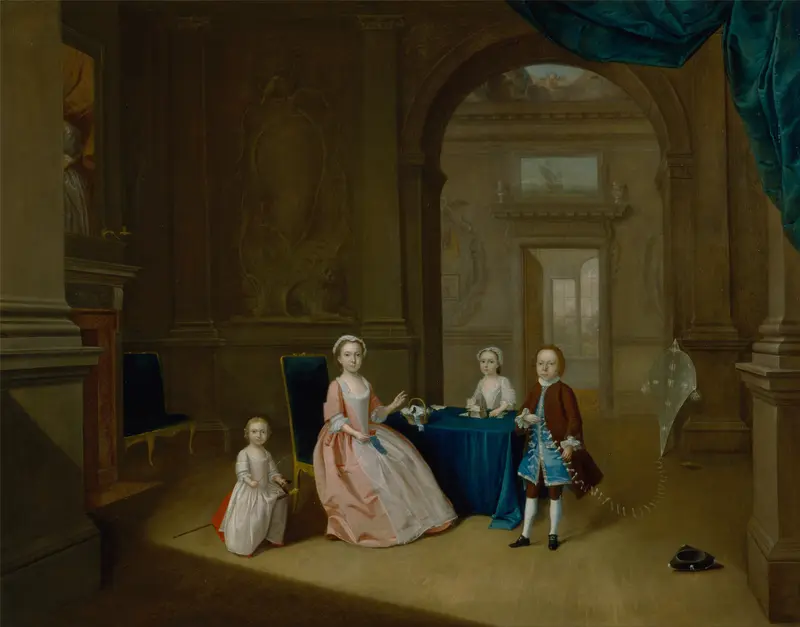
Children in an Interior
Arthur Devis
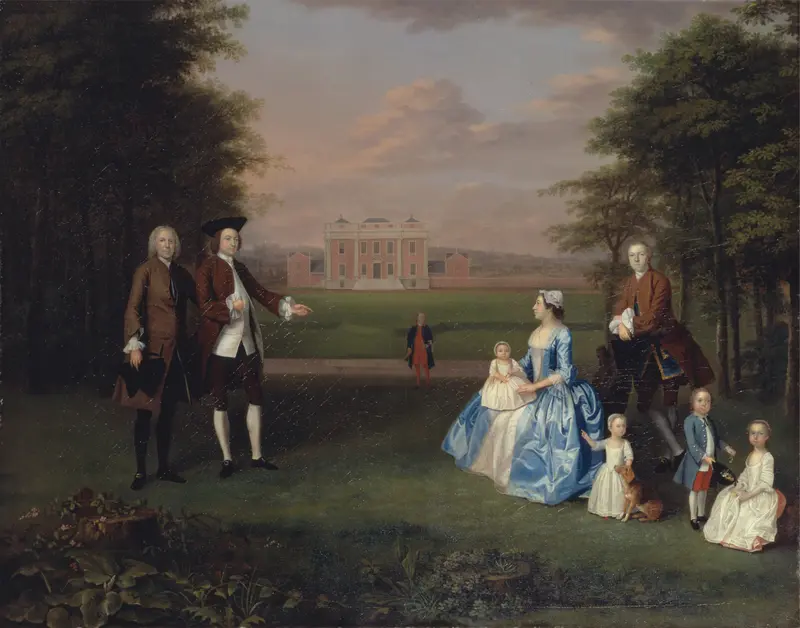
Robert Gwillym, Elizabeth Gwillym (née Atherton), and Their Family
Arthur Devis
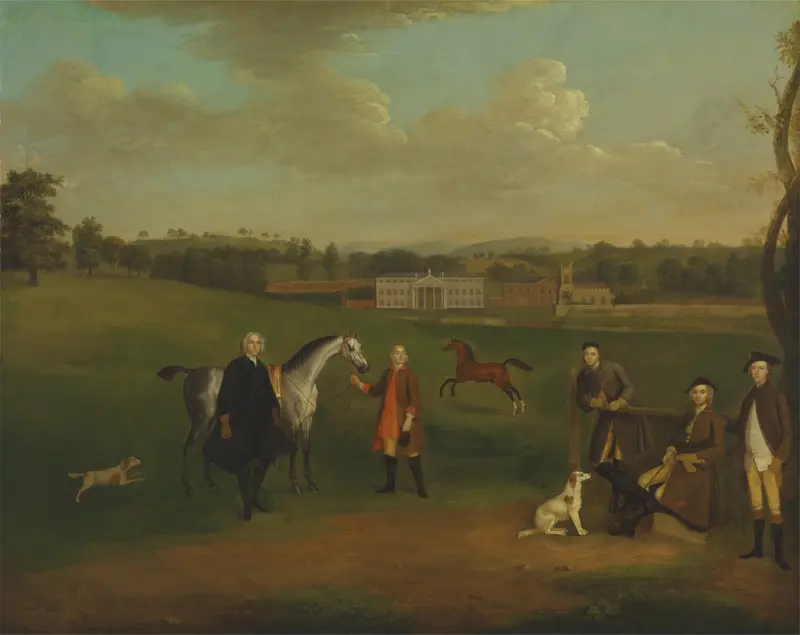
Leak Okeover, Rev. John Allen and Captain Chester at Okeover Hall, Staffordshire
Arthur Devis
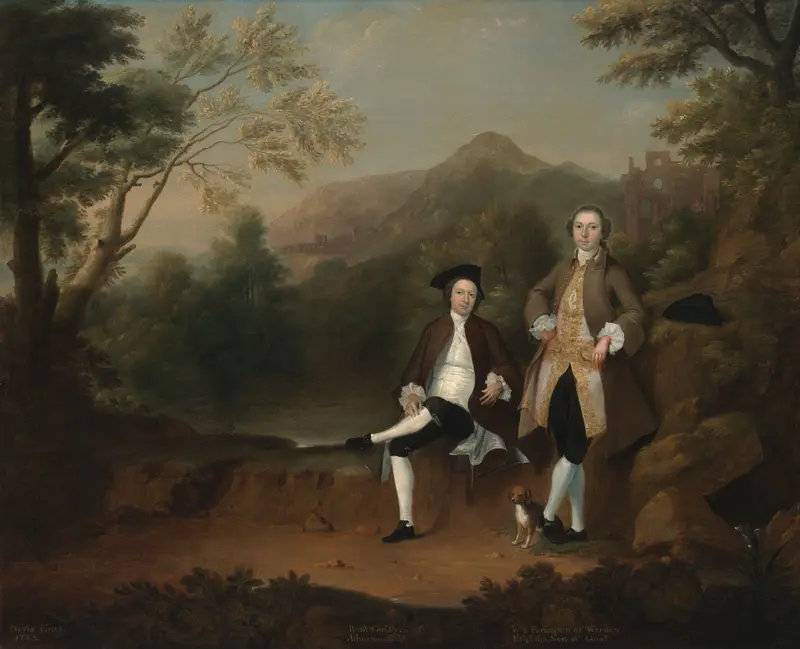
Robert Gwillym of Atherton and William Farington of Werden
Arthur Devis
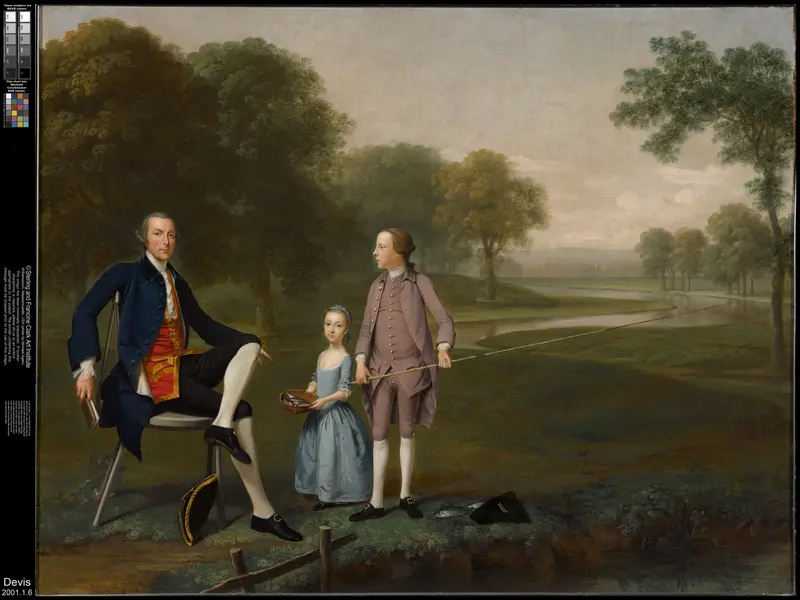
Richard Moreton, Esq. of Tackley with His Nephew and Niece John and Susanna Weyland
Arthur Devis





