
A Doorway in the Acropolis, Athens — History & Facts
The transformative power of art lies in its ability to reshape the familiar into something profound, inviting viewers into a world where creation thrives amid decay. Look to the center of the composition, where the weathered stone doorway stands resilient against the backdrop of ancient ruins. The interplay of light and shadow accentuates the intricate carvings, revealing the texture that speaks of history etched into every surface. Notice how the muted palette of earth tones harmonizes with the brightness of the surrounding sky, evoking a sense of timelessness that envelops the viewer and suggests the eternal dance between nature and human achievement. In this doorway, the contrast between the crumbling architecture and the vibrant life beyond it reflects a deeper narrative of endurance and change.
The archway serves as a threshold, symbolizing the passage between the past and the present, while the delicate flora peeking through illustrates nature's reclaiming of human creations. This tension invites contemplation on the fragility of civilization and the enduring force of life itself. William James Müller painted this piece in 1838 during a period marked by a growing fascination with the ruins of classical antiquity and the Romantic movement’s embrace of nature. Working in Athens, he captured the spirit of a city steeped in history, while also reflecting the evolving European artistic landscape that sought to bridge historical reverence with personal interpretation.
More Artworks by William James Müller
Browse all →
Cleeve, Somerset, with Bridgewater Bay in the Distance
William James Müller

The Bridge at Llangollen
William James Müller

Cairo Bazaar
William James Müller
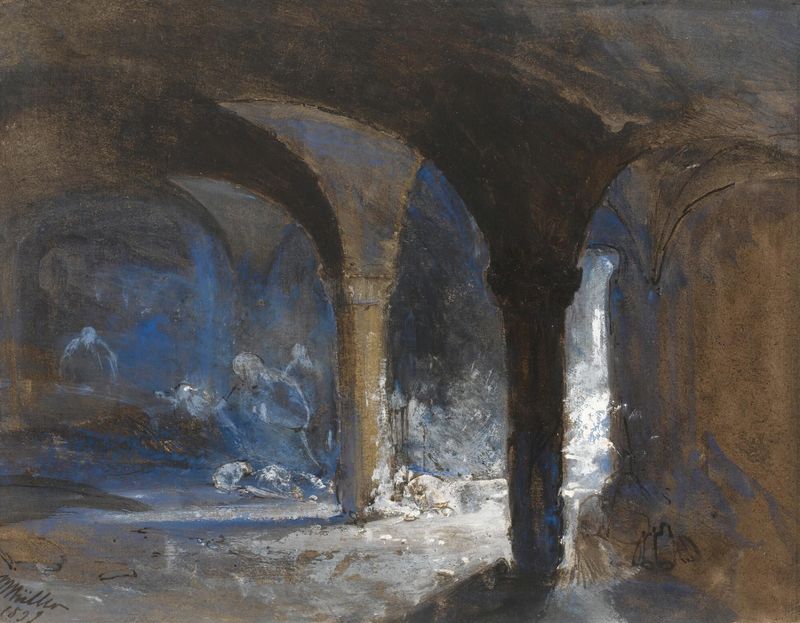
Crypt of the bishop’s palace during the Bristol riots
William James Müller

Near the Caravan Bridge, Smyrna
William James Müller
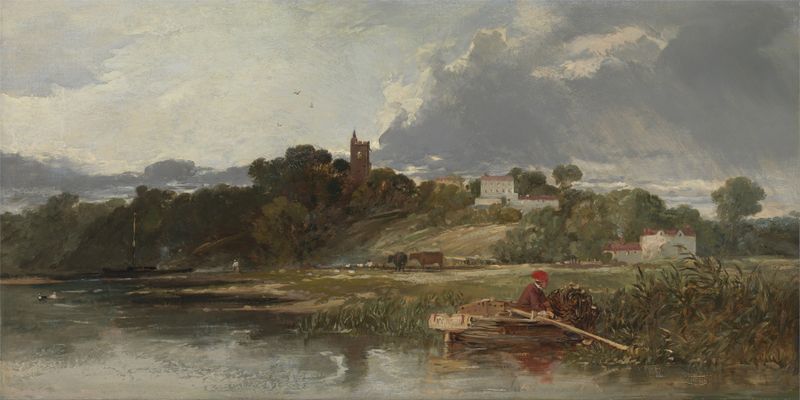
Gillingham on the Medway
William James Müller

The Church of the Holy Sepulchre
William James Müller

A View of Eton and the Fellows Eyot
William James Müller

Tripoli
William James Müller

A Mountain Torrent
William James Müller
More Architecture Art
Browse all →
The statue of Liberty
Frédéric Auguste Bartholdi

View of Houses in Delft, Known as ‘The Little Street’
Johannes Vermeer

View of Houses in Delft, Known as ‘The Little Street’
Johannes Vermeer

The Cathedral in Rouen. The portal, Grey Weather
Claude Monet

The yellow house
Vincent van Gogh

The Church in Auvers-sur-Oise, View from the Chevet
Vincent van Gogh