
A Dune Landscape With A Farmer On A Sandy Road, And A Distant View Of Haarlem — History & Facts
In the quiet expanse of a dune landscape, a farmer toils along a sandy road, his labor echoing the madness of existence amid nature's vast indifference. Look to the left at the undulating dunes, each grain of sand captured in a brilliant cascade of light and shadow. The farmer, a solitary figure, anchors the composition as he meanders through this textured terrain, his muted clothing reinforcing the earthiness of the scene. Notice how the brilliant blue sky, dotted with clouds, contrasts with the muted browns and yellows of the land, creating a tension that feels almost palpable.
This juxtaposition pulls the eye toward Haarlem, faintly visible on the horizon, a reminder of civilization's fragile boundary against the rawness of nature. Within this landscape lies an emotional complexity; the farmer's isolated journey speaks of resilience in the face of madness—an existence defined by toil against the whims of nature. The distant city, a blurred silhouette, represents fleeting dreams and the persistent pull of society, while the vastness around him conveys a sense of existential dread. The interplay of light underscores this dichotomy, illuminating the farmer's struggle against the encroaching shadows of solitude. Created in 1647, this piece emerged during a time when Jacob van Ruisdael was establishing himself as a leading landscape painter in the Dutch Golden Age.
The era was marked by a fascination with the landscape, reflecting both the physical beauty of the Dutch countryside and the deeper philosophical inquiries into humanity's place within it. Ruisdael's works often challenge the viewer to ponder life’s chaos, using nature as a mirror for human experience, an exploration deeply felt in this landscape.
More Artworks by Jacob van Ruisdael
Browse all →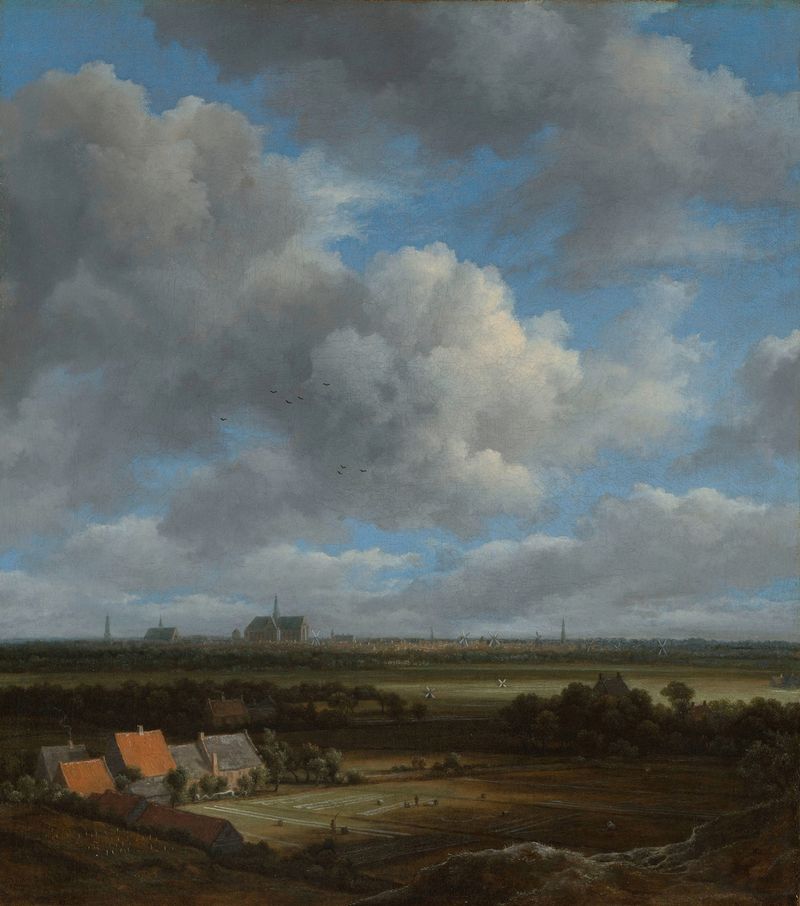
View of Haarlem from the Northwest, with the Bleaching Fields in the Foreground
Jacob van Ruisdael
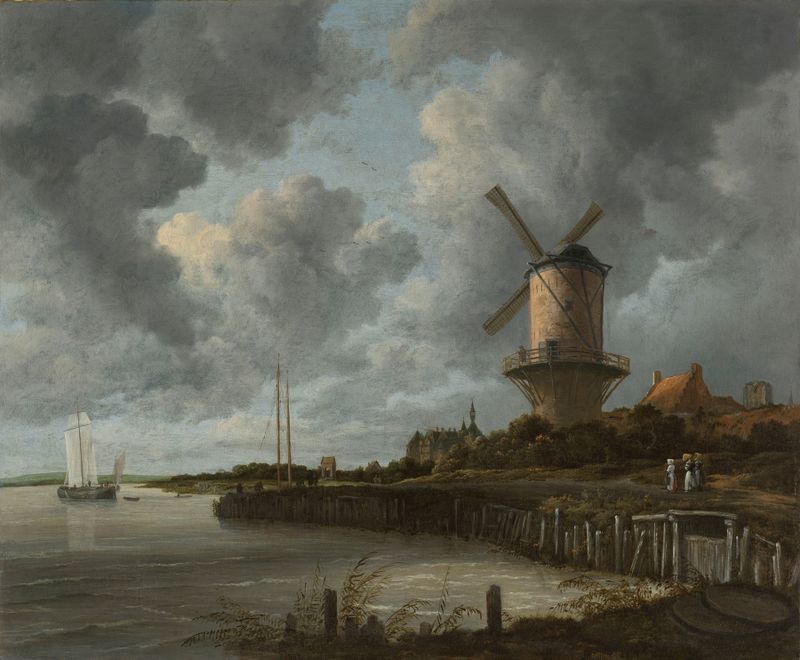
The Windmill at Wijk bij Duurstede
Jacob van Ruisdael
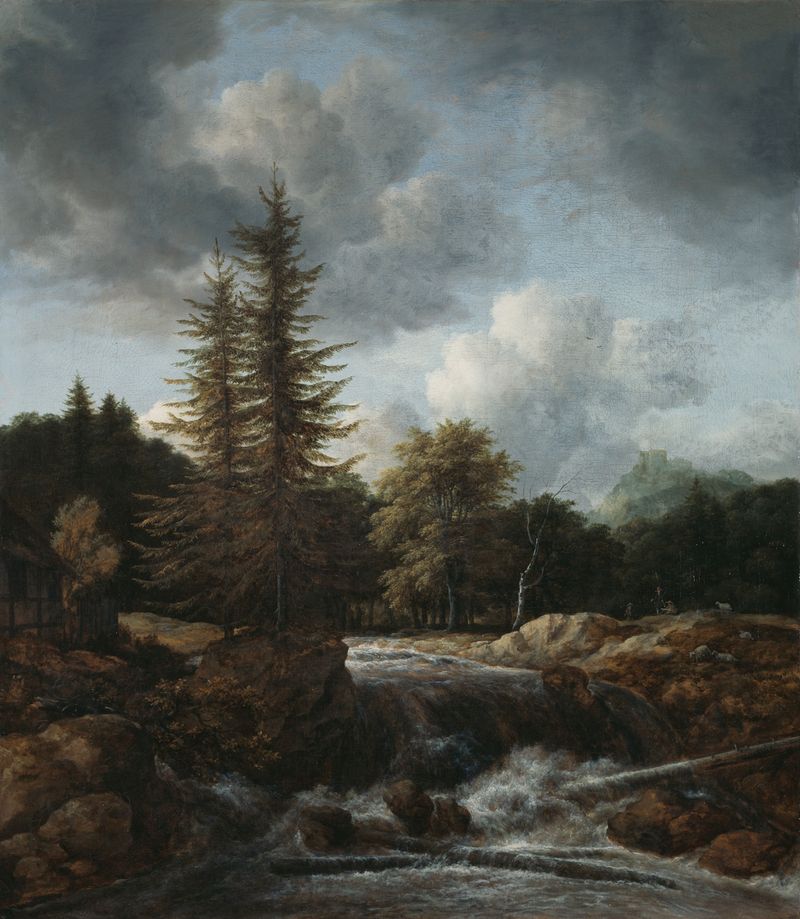
Landscape with Waterfall
Jacob van Ruisdael
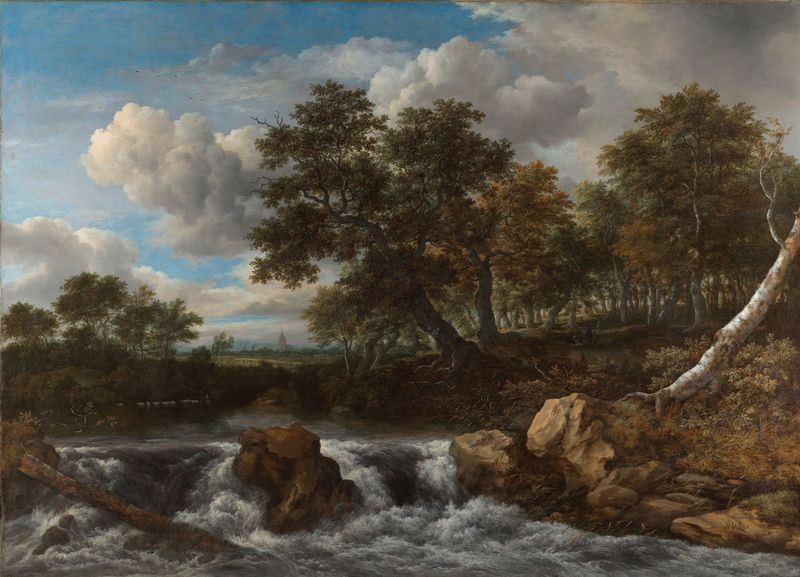
Landscape with Waterfall
Jacob van Ruisdael
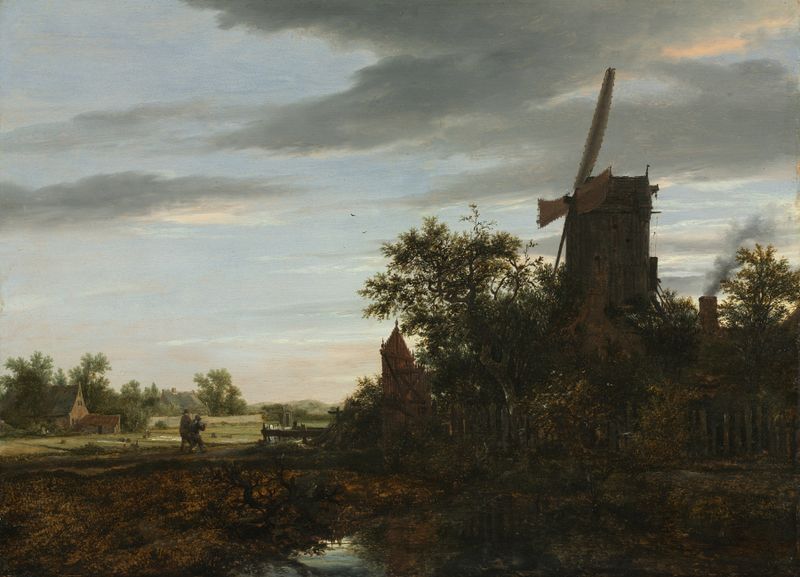
Landscape with a Windmill
Jacob van Ruisdael

Wooded hillside with a view of Bentheim Castle
Jacob van Ruisdael
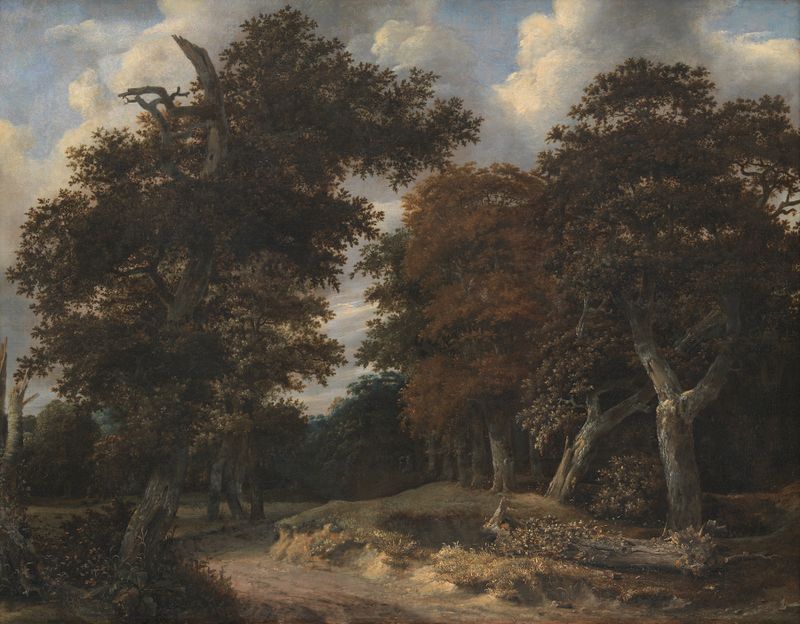
Road through an Oak Forest
Jacob van Ruisdael

Landscape with a Church
Jacob van Ruisdael

The Forest Stream
Jacob van Ruisdael

The Jewish Cemetery
Jacob van Ruisdael





