
A Garden in India — History & Facts
The sun spills golden light over a lush garden, where vibrant blossoms sway gently in the warm breeze. A solitary figure meanders through the verdant pathways, lost in thought amid a symphony of colors and fragrances. The air is thick with the promise of tranquility, punctuated only by the soft rustle of leaves and the distant call of a peacock. Look to the left at the exuberant arrangement of flora, each petal practically bursting with color, from deep magentas to bright yellows.
The artist employs delicate brushwork that captures not just the shapes but the essence of each bloom, creating a sense of lively presence. Notice how the light interacts with the scene, illuminating patches of grass and casting playful shadows that dance across the garden, skillfully guiding your eye deeper into the composition. At the heart of this work lies a contrast between solitude and the surrounding vibrancy. The figure, though surrounded by an abundance of life, appears contemplative, suggesting a connection to nature that surpasses mere observation.
This tension hints at a quest for transcendence, where the beauty of the garden becomes a backdrop for introspective reflection, inviting viewers to consider their own relationships with the world around them. George Chinnery painted this piece during his time in India in the early 19th century, a period marked by the British colonial presence and the intersection of cultures. Living in the vibrant city of Calcutta, Chinnery found inspiration in the rich landscapes and diverse society surrounding him, as the art world was beginning to embrace more personal, romantic interpretations of nature. This garden scene reflects not just the visual feast of his environment but also his internal exploration as an artist seeking connection and meaning in a complex world.
More Artworks by George Chinnery
Browse all →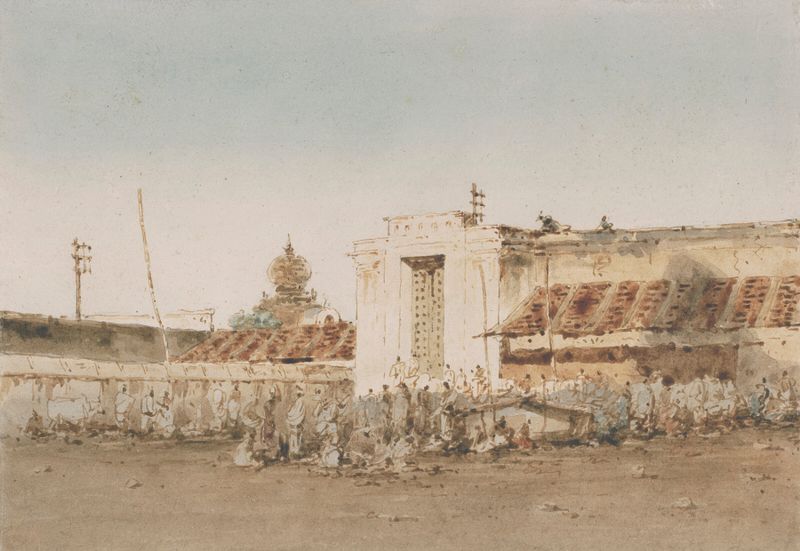
The entrance to ‘the Honourable East India Company’s pagoda’, Madras
George Chinnery
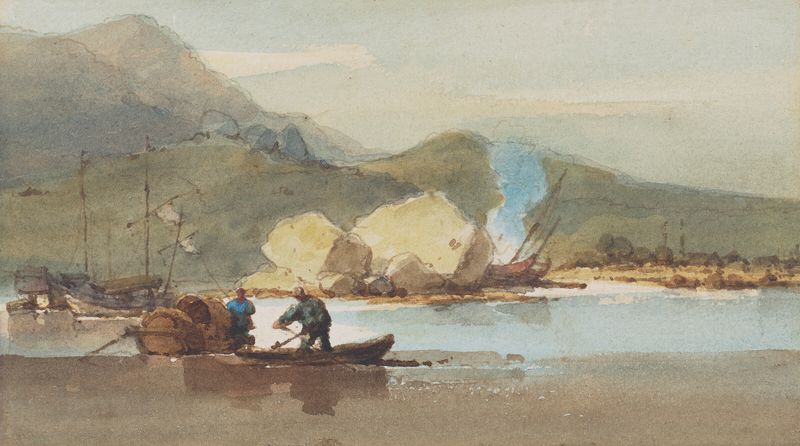
Junks and Tanka boats in a bay, with a beached junk and cooking fire beyond
George Chinnery
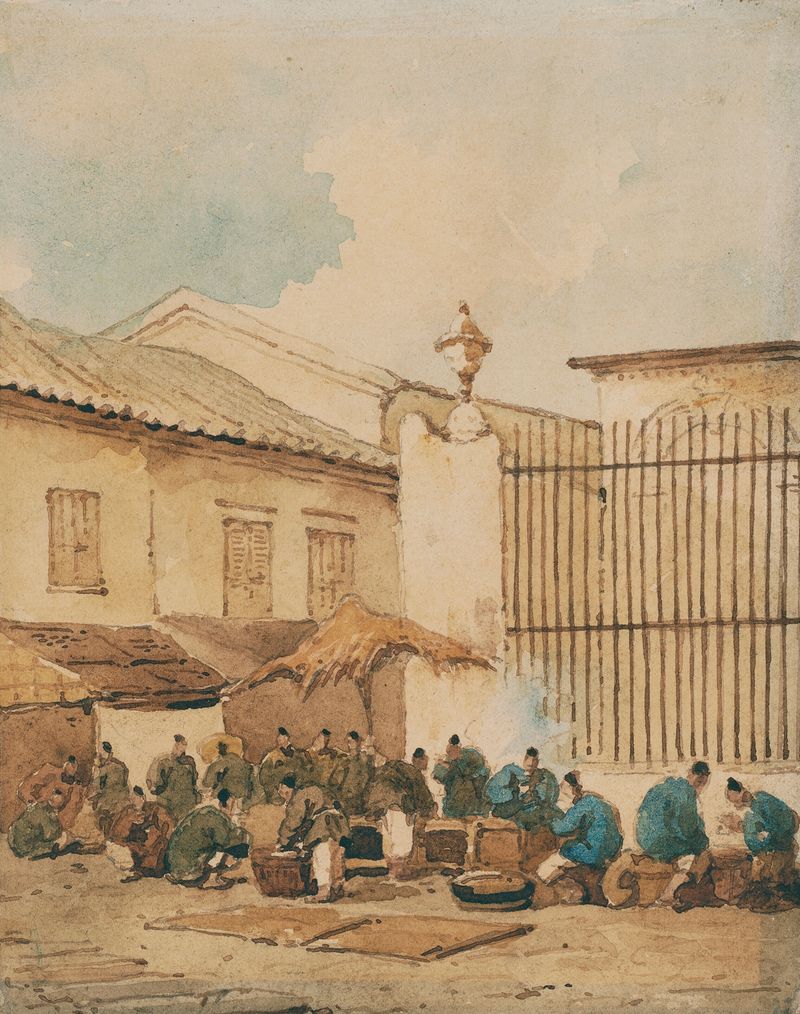
A market outside the railings of St. Dominic’s Church, Macau
George Chinnery

Temple by the Lake
George Chinnery

A River in Ceylon
George Chinnery
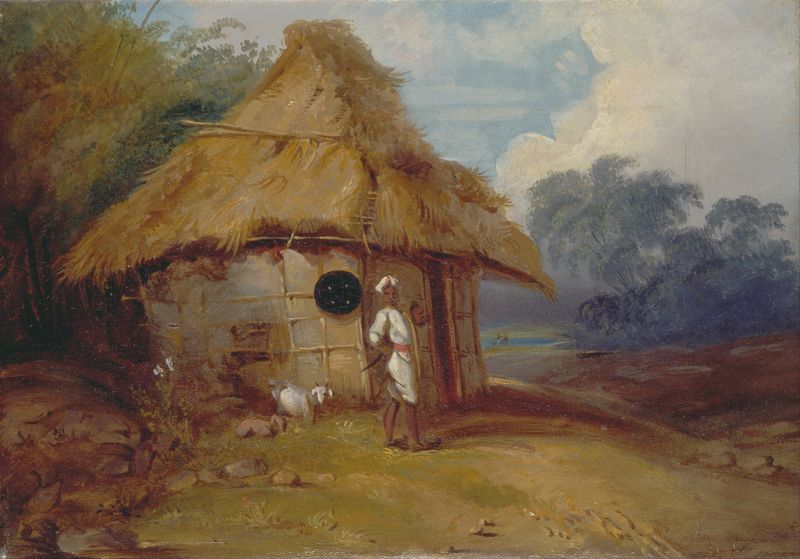
View in Southern India, with a Warrior Outside his Hut
George Chinnery
Indian Landscape with Temple
George Chinnery

Madras, a street scene
George Chinnery
A landscape in Macau with a herdsman walking along a track
George Chinnery

Tanka boat off Macao
George Chinnery





