A Good Friend — History & Facts
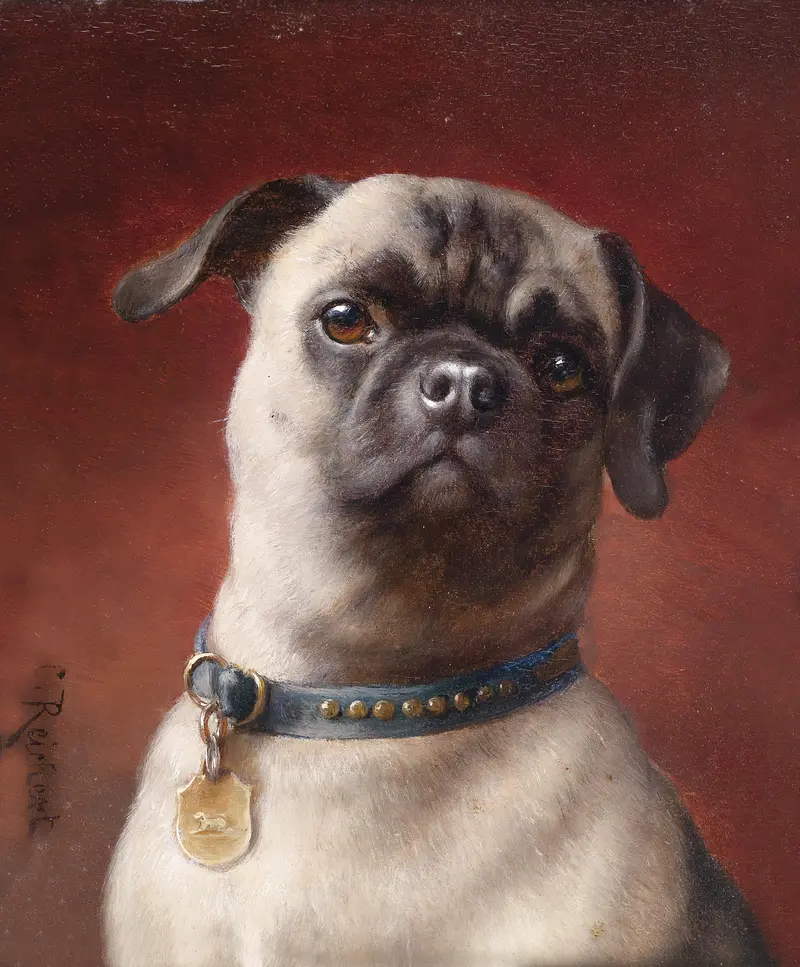
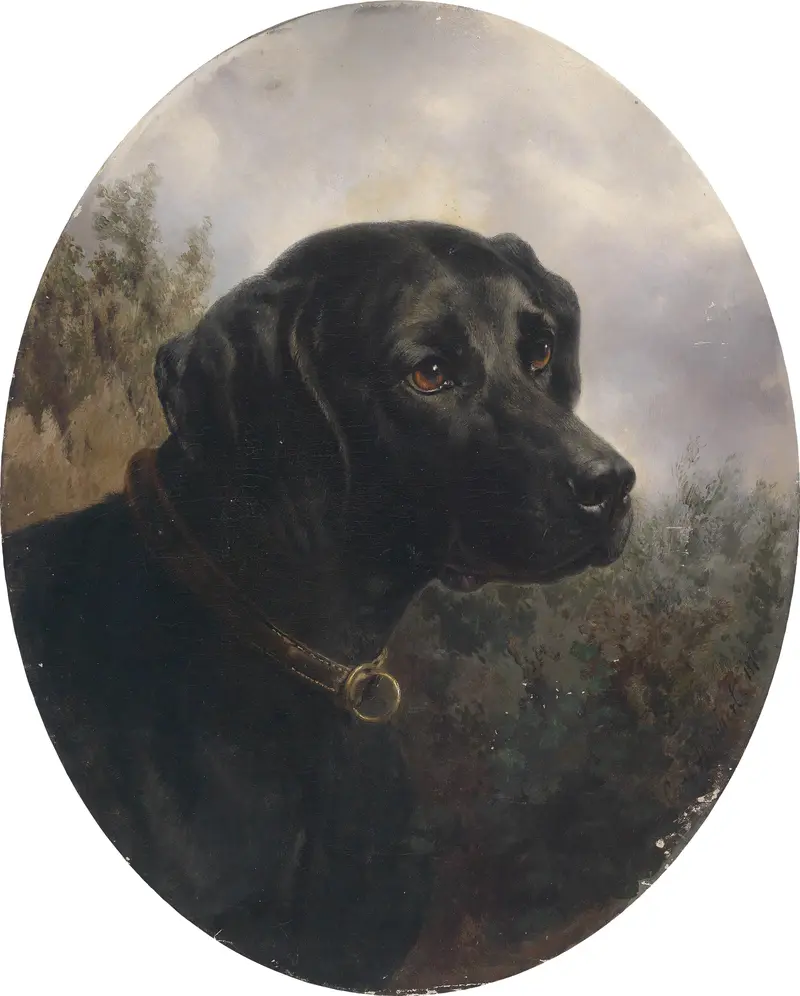
What draws the viewer in first is not the breed or the realism, but the unmistakable weight of feeling in those eyes. The dog’s gaze, heavy-lidded and almost mournful, seems to search for understanding beyond the frame, inviting us to wonder what story lies behind such soulful patience. The artist, Carl Reichert, lingers on every fold of skin and gloss of fur, using light to sculpt the animal’s brow and muzzle, while a muted green background keeps all attention fixed on the subject’s expression.
The glint in the eye is not just a highlight—it is a question, a silent communication between animal and viewer, making the title A Good Friend feel like a gentle understatement. Painted by 1918, this work belongs to a long tradition of animal portraiture that flourished in the late nineteenth and early twentieth centuries, when dogs were celebrated not only as hunters or workers but as companions and confidants. In an era marked by upheaval and change, such images offered reassurance and a sense of loyalty—qualities much prized in a world recovering from war. While history has kept few traces of this particular painting’s early journey, its presence in the Dorotheum collection today speaks to the enduring appeal of animal portraits as tokens of affection and memory.
Look again at the careful modeling of the dog’s features, and you may find yourself reflecting on the quiet bonds that outlast even the most turbulent times.