
A Lakeside Landscape — History & Facts
In A Lakeside Landscape, the glistening waters and serene surroundings serve as a poignant reminder of the illusions we often embrace in pursuit of tranquility. This artwork beckons us to question the nature of beauty—whether it is a mere façade hiding deeper truths. Look to the left at the delicate, rippling reflections in the lake, where the soft hues of blue and green merge seamlessly with the vibrant splashes of golden sunlight. Notice how Gude masterfully blends natural elements; the serene sky above and the verdant trees framing the composition create a harmonious equilibrium.
The brushwork, light, and shadow play subtly, guiding the viewer’s eye from the foreground to the distant mountains, inviting exploration and contemplation. Yet, beneath this idyllic surface lies a tension between serenity and solitude. The solitary figure by the water’s edge evokes a sense of longing, amplifying the emotional weight of the scene. The contrast between the vibrant landscape and the stillness of the solitary individual hints at the complexity of human experience, urging us to reflect on our own journeys amidst nature’s beauty.
Each element, meticulously crafted, intertwines to form an illusion of peace that belies the complexity of the emotional landscape it represents. Hans Gude painted this piece in 1861 while residing in Düsseldorf, a hub of Romanticism. During this period, the artist was exploring the thematic contrasts between nature and humanity, reflecting broader movements in the art world that embraced emotional depth and realism. As Gude navigated his own artistic evolution, A Lakeside Landscape emerged as a representation of both the external beauty of nature and the internal struggles of the human spirit.
More Artworks by Hans Gude
Browse all →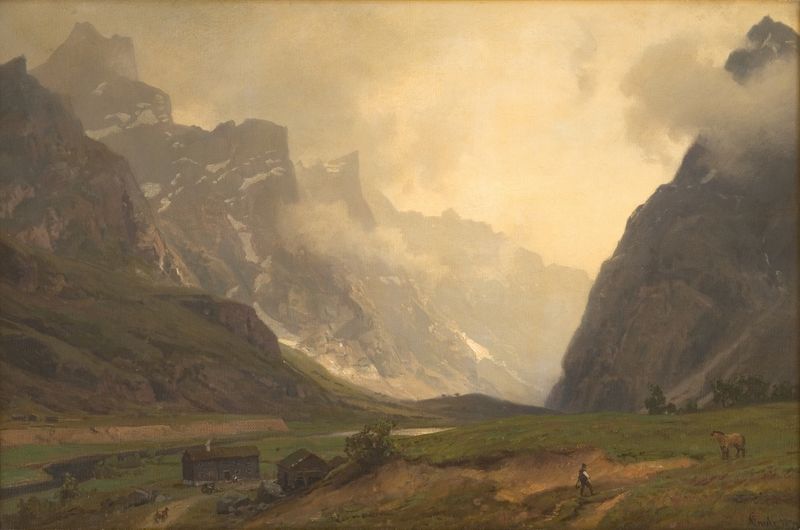
The Troll Peaks in Romsdalen, The Foot of Romsdalshorn to the Right
Hans Gude
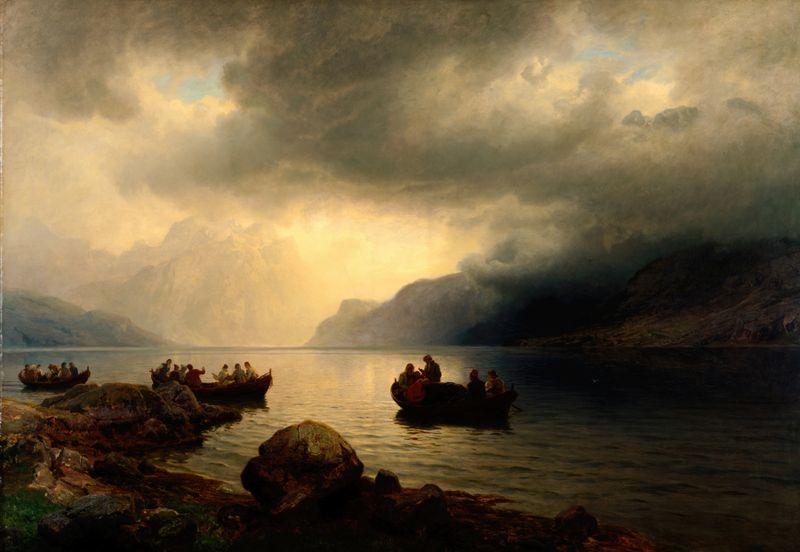
Funeral Procession on the Sogne Fjord
Hans Gude
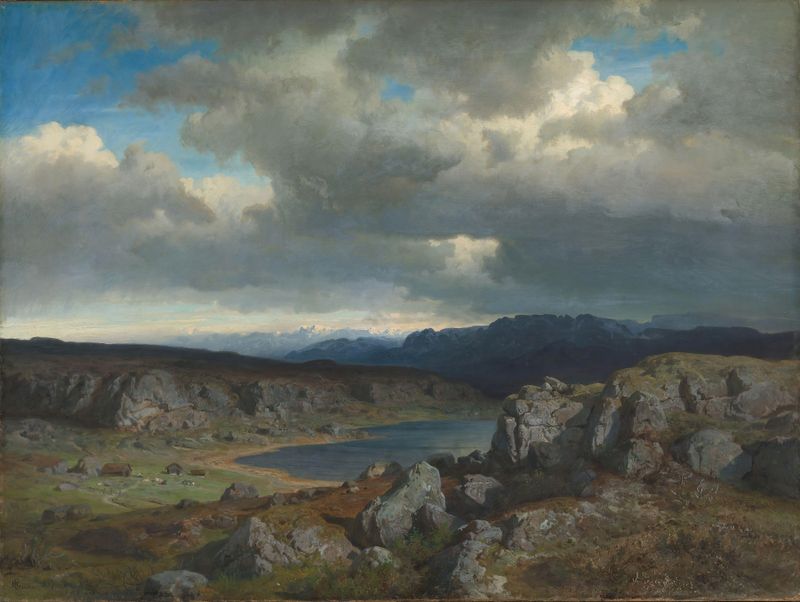
Norwegian Highlands
Hans Gude
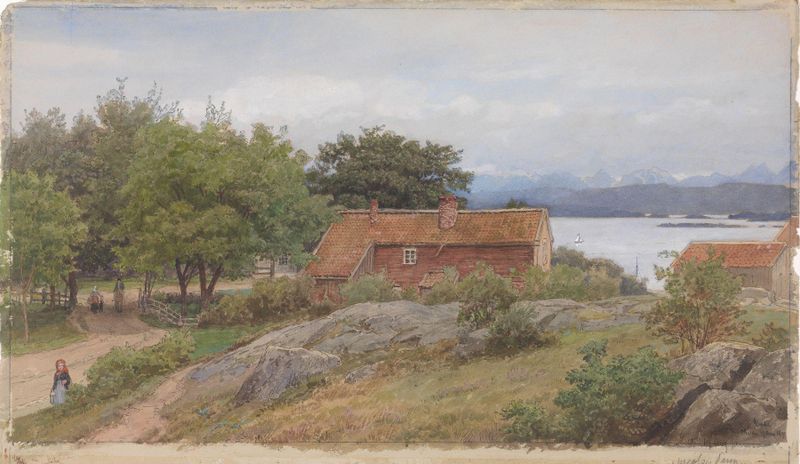
Landskap med bondegård ved Molde
Hans Gude
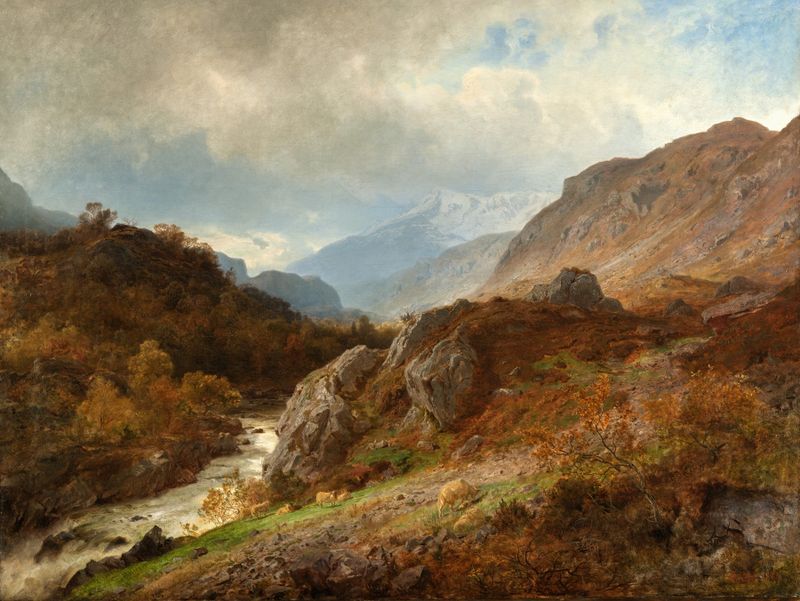
Mountain Landscape
Hans Gude
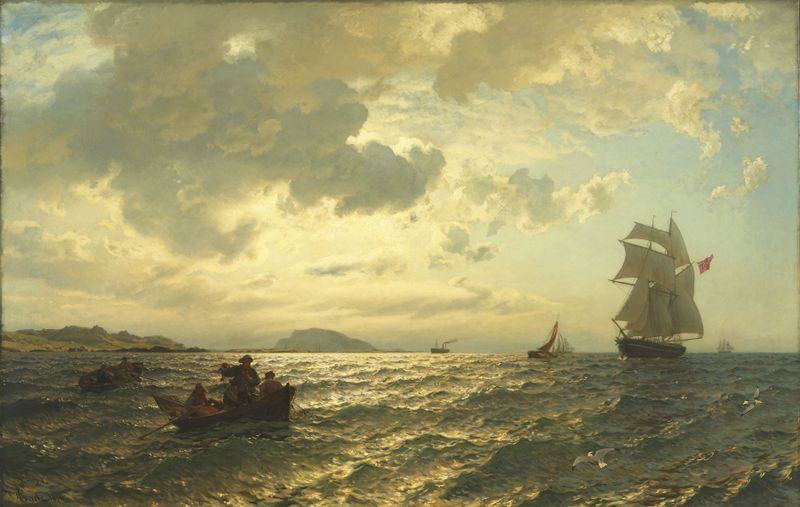
Fresh Breeze on the Norwegian Coast
Hans Gude
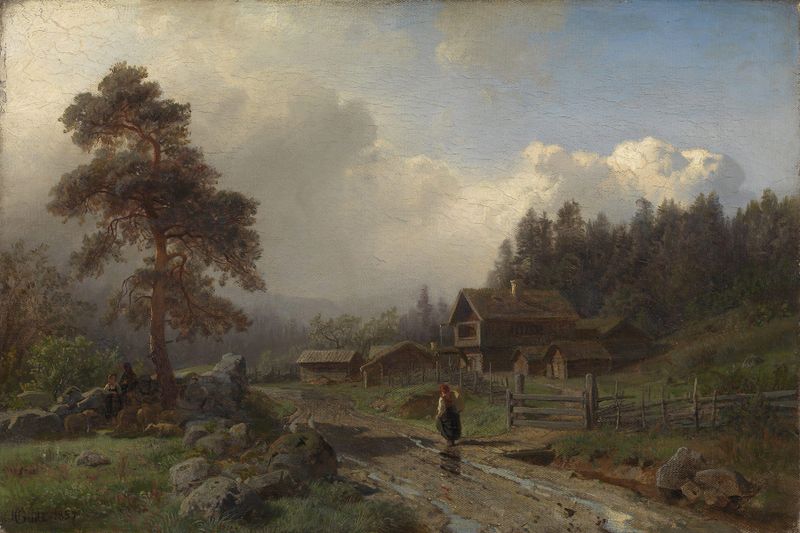
Norwegian Landscape in Rain
Hans Gude
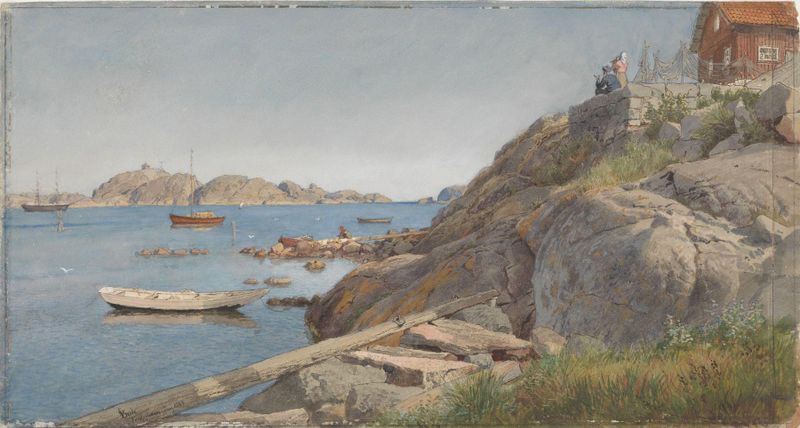
Landscape by Stavern
Hans Gude
Norwegian Highlands in Sunrise
Hans Gude
A Scene at Dusk in Norway
Hans Gude





