
A landscape with peasants — History & Facts
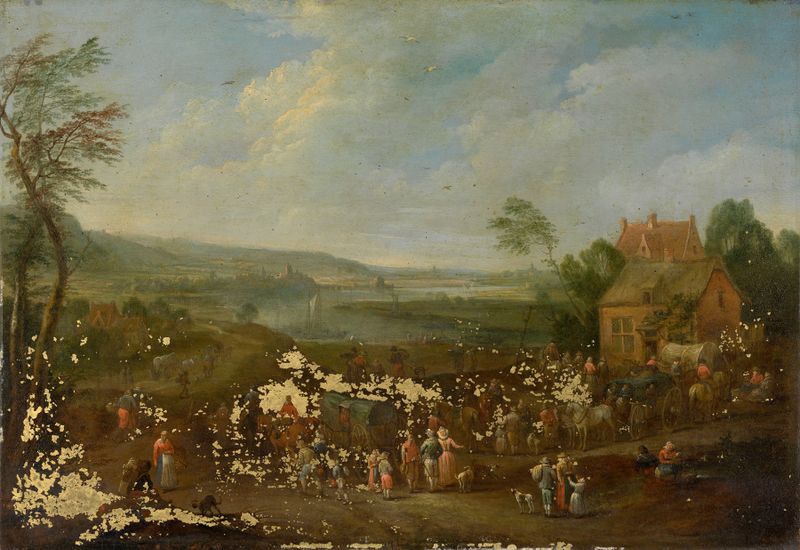
Did the painter know this moment would outlive them? In A Landscape with Peasants, a fleeting tableau unfolds, where the essence of toil meets the eternity of nature. The poignant weight of loss hangs in the air, encapsulating both the life’s labor of the peasants and the relentless passage of time. Look to the horizon, where soft undulating hills cradle a dusky sky, painted in muted purples and greens that evoke a sense of nostalgia. The figures of the peasants are laboriously bent, their silhouettes carved against the fading light, each gesture telling tales of hard work and endurance.
Breydel's technique of blending earthy tones with gentle brushstrokes creates a rich texture, inviting the viewer to step into the scene and experience the weight of each day’s labor. Beneath the surface of this pastoral scene lies the tension between human effort and the natural world. The peasants, while grounded in their hard labor, appear small against the vastness around them, illustrating the humbling relationship between man and nature. The fading light doesn’t just signify the end of a day but also a metaphor for loss—of time, of vitality, and perhaps of dreams unrealized.
The warmth of the setting sun mingles with the chill of dusk, reflecting life’s fleeting moments that are both beautiful and bittersweet. Karel Breydel created this work during an era marked by significant social changes. Though the exact date remains unknown, the artist was likely influenced by the agricultural shifts of the 17th century and the rising interest in themes of everyday life. As a part of the Northern Baroque movement, his work captures a simultaneous reverence for the land and the understated struggles of its people, a sentiment that resonates deeply even today.
More Artworks by Karel Breydel
Browse all →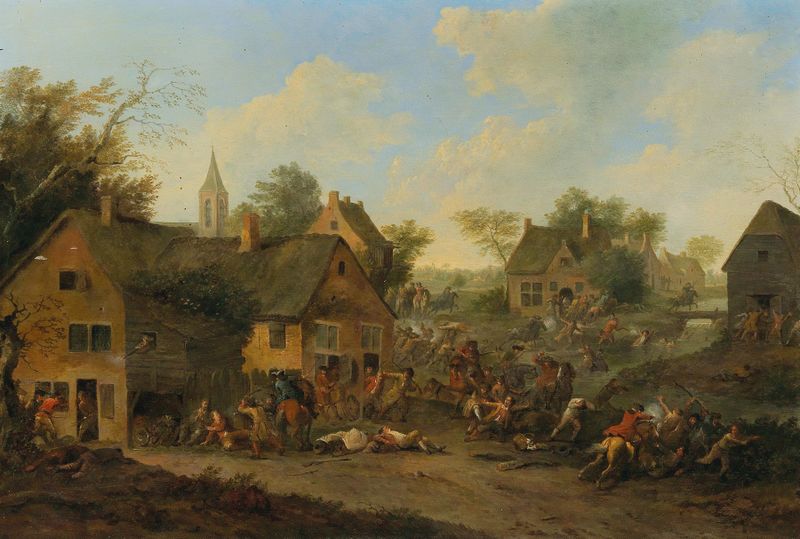
Skirmishers on the outskirts of towns
Karel Breydel
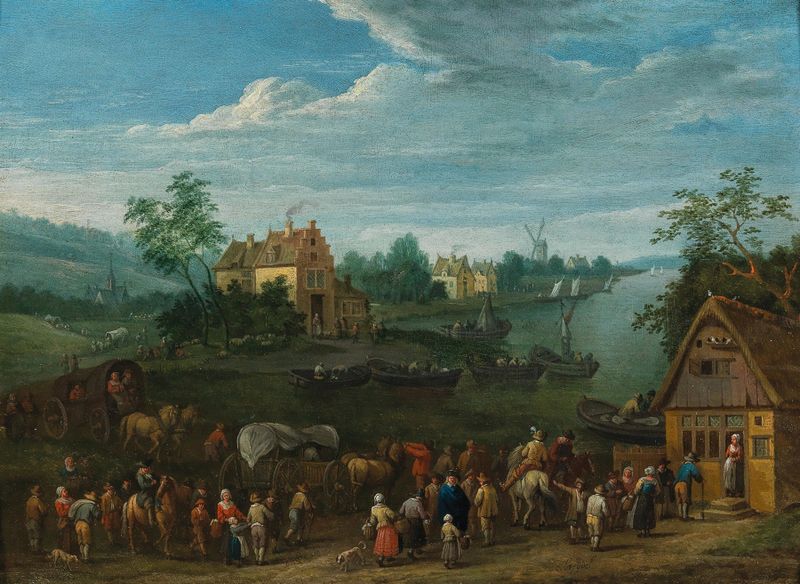
A river landscape with travellers in the foreground
Karel Breydel
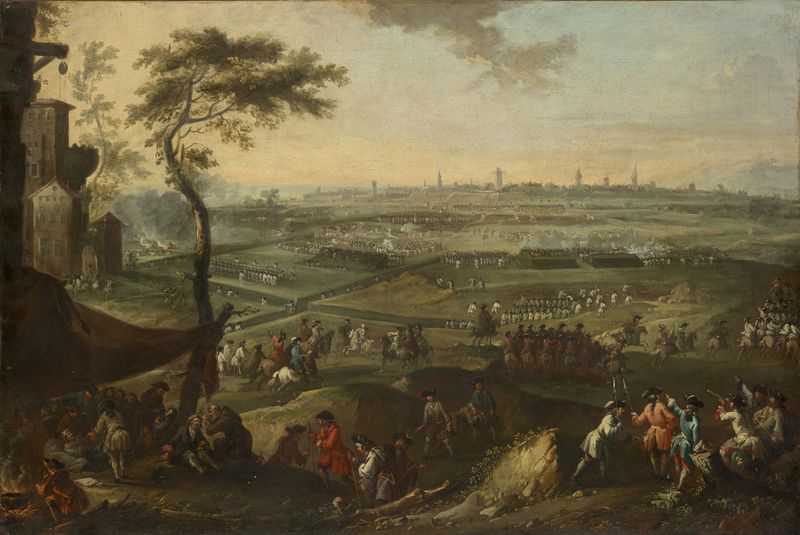
Siege of a Town
Karel Breydel

Skirmishers on the outskirts of towns II
Karel Breydel
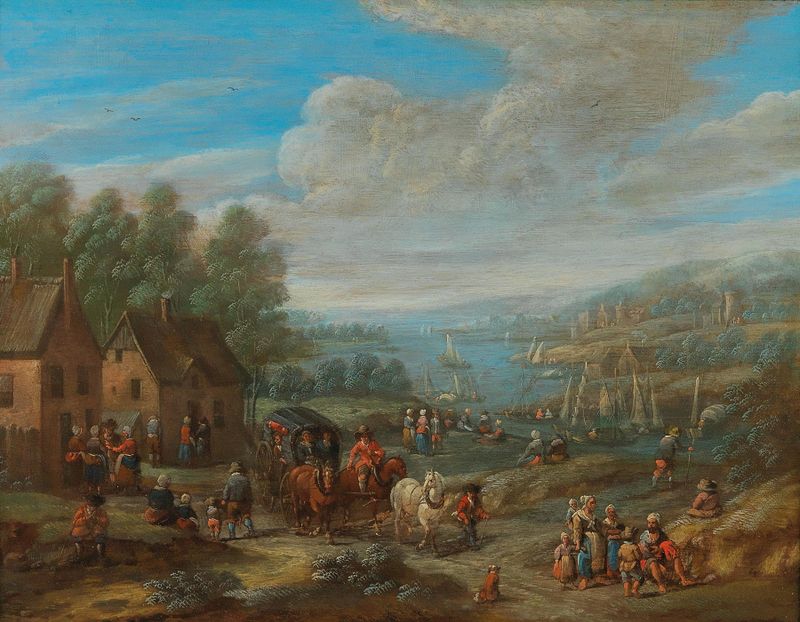
A river landscape with a village and travellers
Karel Breydel

Landscape with Figures
Karel Breydel
Landscape with Figures
Karel Breydel





